
Climate Week Is Not the Full Story
Dear Reader,
Happy Hump Day! If you see our team at New York Climate Week (or the ScienceWriters conference in Corvallis, Ore.), please say hi!
That being said, don’t let the suits descending on Manhattan take up all the oxygen in the room. Here are this week’s top stories on the world’s most pressing health and environmental disparities:
Best regards,
Alex Ip
Publisher and Editor
🪛 ICYMI: The Toxic Cost of the Philippines’ Growing E-Waste Crisis
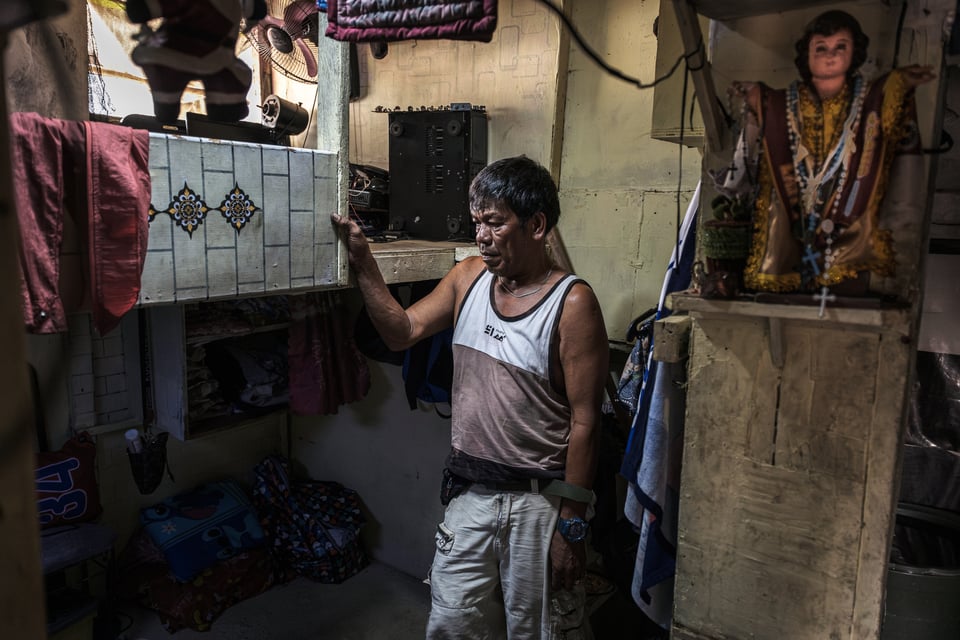
Inadequate recycling facilities push e-waste handling into Manila’s informal sector, exposing entire communities to toxins and serious health problems.
This story is published in English by The Xylom and in Spanish by Planeta Futuro, EL PAÍS.
🍑 A SOUTHERN FLAIR
CAMERON COUNTY, Texas — Judge Allows Transfer of Land in Wildlife Refuge to SpaceX, for Now (Maxine Joselow, The New York Times)
SpaceX’s operations have caused significant damage to the fragile bird habitat surrounding the launch site, according to a New York Times investigation. A rocket launch in 2024 sent debris flying into the refuge, crushing birds’ nests and igniting a small fire, the investigation found.
COVID vaccines for uninsured Tennessee kids in limbo amid federal delays (Anita Wadhwani, Tennessee Lookout)
“This is a big deal,” [Brian Haile, CEO of Neighborhood Health Centers,] said. “We are worried we’re going to have much lower COVID vaccination rates than we could otherwise achieve if the federal government had simply taken timely action.”
MEXICO BEACH, Fla. — ‘Post-Disaster Gentrification’ Proliferates in Florida Towns as Costs Soar Following Hurricanes (Mike Schneider, Inside Climate News)
“It went from a middle-class neighborhood to now a lot of multimillion-dollar investment properties,” Jaques Sebastiao said recently. “None of the people who said they were going to move back here, moved here.”
🟠 TRACKING TRUMP
RFK Jr.’s Enhanced Security Was Funded With Money From Minority Health Office (Liz Essley Whyte, The Wall Street Journal)
The secretary’s office has a large pot of discretionary money that it could have tapped for the cost, those people said. HHS cut $12 million from the minority health office, rather than just the $7 million that represented increased security costs, in part because the secretary’s office has been subject to across-the-board budget cuts, those people said.
The Iran war is driving clean energy development. It’s not enough to help the planet, yet (Jennifer McDermott, The Associated Press)
“Governments are currently doing a dance between acknowledging the importance of clean power while continuing to support fossil fuel expansion,” war studies lecturer Pauline Heinrichs at King’s College London wrote in an email. “We are seeing an old and a new world interact in contradiction with each other.”
Trump is treating federal power like something he owns (paywalled)(Philip Bump, CTInsider)
Chemical industry groups, GAO press DHS to resume terrorist-screening program (Alex Music, C&EN)
Philippine tribe in limbo over US-led tech hub (Pam Castro and Chad Williams, AFP)
Like what you read so far? Subscribe and share it with a friend:
🗺️ WHAT ELSE WE'RE READING
How Afghan Women Are Rebuilding Reproductive Health Care (Geetanjali Krishna, Reasons to be Cheerful)
Many FHHs have had a far-reaching impact on the villages they service. Amini says proudly that they have not seen a single pregnancy-related death in the last seven years. The IPPF assessment found that 88.7 percent of respondents rated FHHs as “very important” for accessing sexual, reproductive, maternal and child health services.
Climate Super-Pollutant from China’s Electric Grid Is Cooking the Planet (Phil McKenna, Inside Climate News)
“It’s such a three-alarm fire if you are venting that gas to the atmosphere instead of recycling it,” Deborah Ottinger, a former fluorinated greenhouse gas emissions analyst for the U.S. Environmental Protection Agency, said of Inside Climate News’ assessment. “It’s a very obvious thing that can be implemented immediately.”
NEW YORK — Overheating at Home (Helina Selemon and Jordan Gass-Pooré, The Margin)
Before he gives in, Brooks weighs whether he has the “right” or a “good reason” to turn on the air conditioner: Is it humid enough? Is there condensation on the wall?
“I still find myself repeating patterns of what my parents did; funny how cycles continue,” he said. “I have my own mental calculations — measuring the angles of the sun, triple-checking the actual temperature, just to make sure it's actually necessary when I do turn on the A/C, because again, utilities are a real thing."
We Mapped All 11,000 Factory Farms in Iowa. Here Are Five Things We Learned. (John McCracken, Sentient)
Iowa hosts a whopping 10,830 factory farms. That’s five times as many as the state’s gas stations, and eight times as many as the state’s grocery stores or public school buildings.
Check the map out: Iowa: How much factory farm manure is in your backyard?
Could disaster recovery include protecting women from domestic abuse and exploitation? (Jessica Kutz, The 19th)
It’s Time We Recognize Science Reporting’s Mental Health Toll (Usha Lee McFarling, MIT Knight Science Journalism Program)
Dialogue Earth at 20: ‘We will not vacate the space’ (Dipankar Ghose, Dialogue Earth)
The Latest Corporate Climate Ruse (Michael Grunwald, The New York Times)


Add a comment: