
Choosing Humanness Over Algorithms
Why Our Editor-at-Large Doesn’t Use AI as a Photojournalist

We’re still $6,500 short of our goal. This is the moment to act. From now through December 31, NewsMatch will match your new monthly donation 12× or double your one-time gift, up to $1,000. In short, your contribution goes much further and helps keep our reporting alive.
There’s power in numbers. Will you join us?
Dear Reader,
I became a photojournalist by accident. I lacked imagination about what I was capable of as a child, and that limitation followed me into adolescence. I didn’t have aspirations to travel — it wasn’t presented to me as an option by my immigrant parents. They made the big move from Taiwan to the U.S., relocating cross-country twice before settling in bland American suburbs— first in Pennsylvania, then in New Hampshire.
And so, that was my world.
I studied ecology and studio art at a small liberal arts college in the Northeast and had left the U.S. only a few times before turning 19 — once to Taiwan and a couple of times to Canada. Making the 2.5-hour drive south to Boston once or twice a year counted as our big annual trip. I was among the 55% of Americans who didn’t hold a valid passport when I entered university.
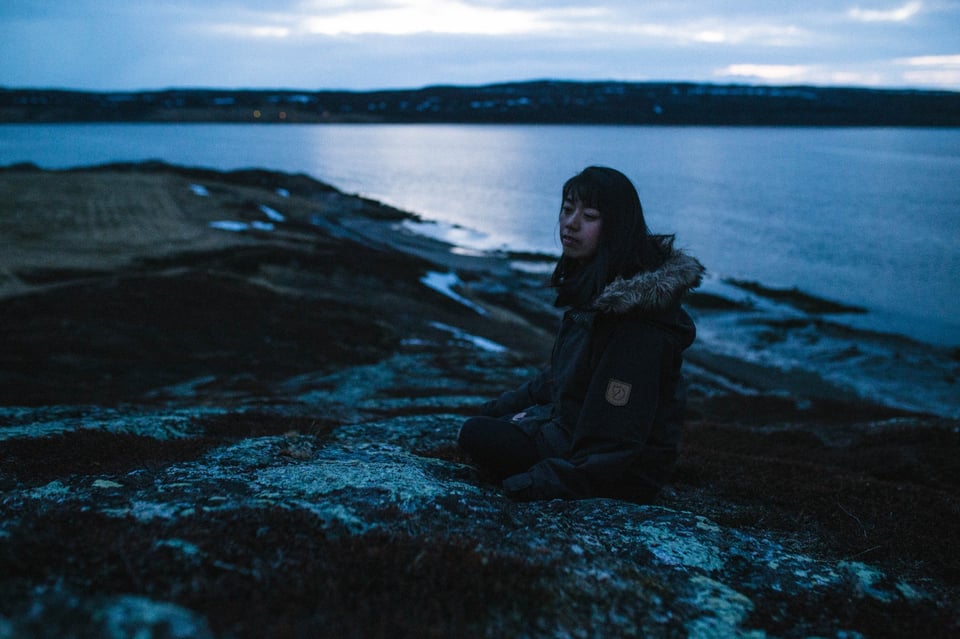
I’ve often brushed off systemic bias in my own life because I’ve generally had access to resources and autonomy. The barriers I faced were more familial or social— such as being seen as a “model minority,” a stereotype that portrays certain groups as uniformly successful and compliant. For me, these were annoyances rather than life-threatening.
I know my growth comes from hard work. I began as an independent photojournalist in Nairobi with no industry connections, learning how to pitch, report, and liaise with editors relying solely on my own drive. There was also a shard of wanting to prove to my brother and my parents that I rejected their outlook on life: work = corporate suffering, and that I was delusional for thinking things could be different.
I’m also different from many of my Caucasian male peers, who expect editors at top publications to accept their pitches after just a couple of emails. I still find myself surprised when editors take me seriously, even after spending most of my twenties working toward exactly that.
I graduated in 2017 and spent the next 18 months wandering in and out of Arctic Norway and Finland on a self-designed postgraduate fellowship, documenting the impact of climate change and technology on traditional Sámi reindeer-herding communities. I was given $15,000 and sent into the wild to figure things out for myself.
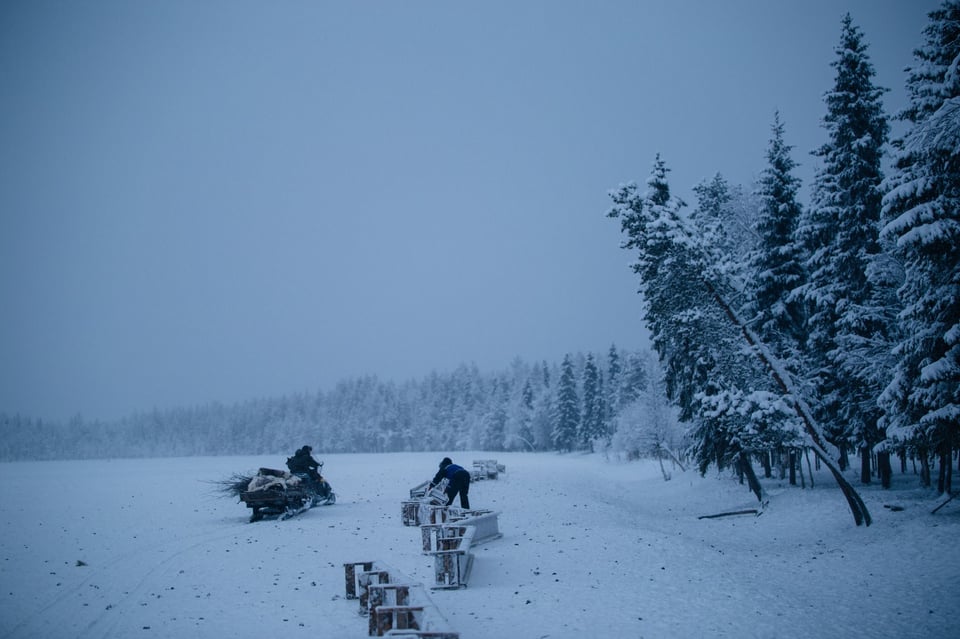
I hoped to get guidance from professors like Ken Bauer from the Asian & Middle Eastern Studies program — an anthropologist who spent years working in western Nepal — on how to prepare for fieldwork at this scale. His reply was just two sentences, essentially saying that one does not simply go and do fieldwork like that.
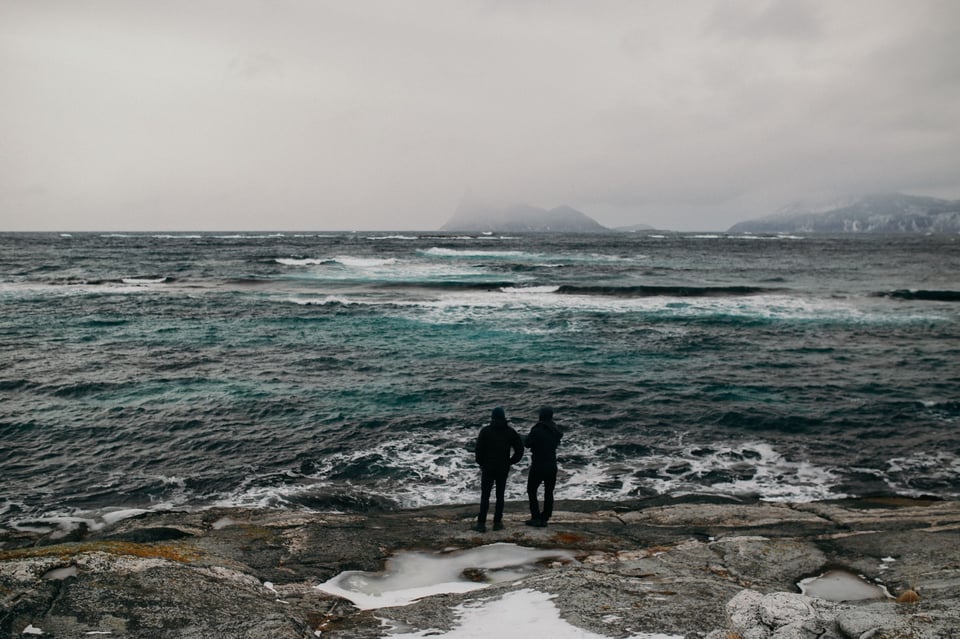
So I did things on my own terms. I emailed the Association of World Reindeer Herders, and after homestaying with Sámi families in Lapland, Finland, I took a train west, crossing through the Swedish mining town of Kiruna, to Arctic Norway. I met a professor of Sámi Studies at the University of Tromsø, who connected me to reindeer-herding families in Finnmark, the northernmost part of continental Europe.
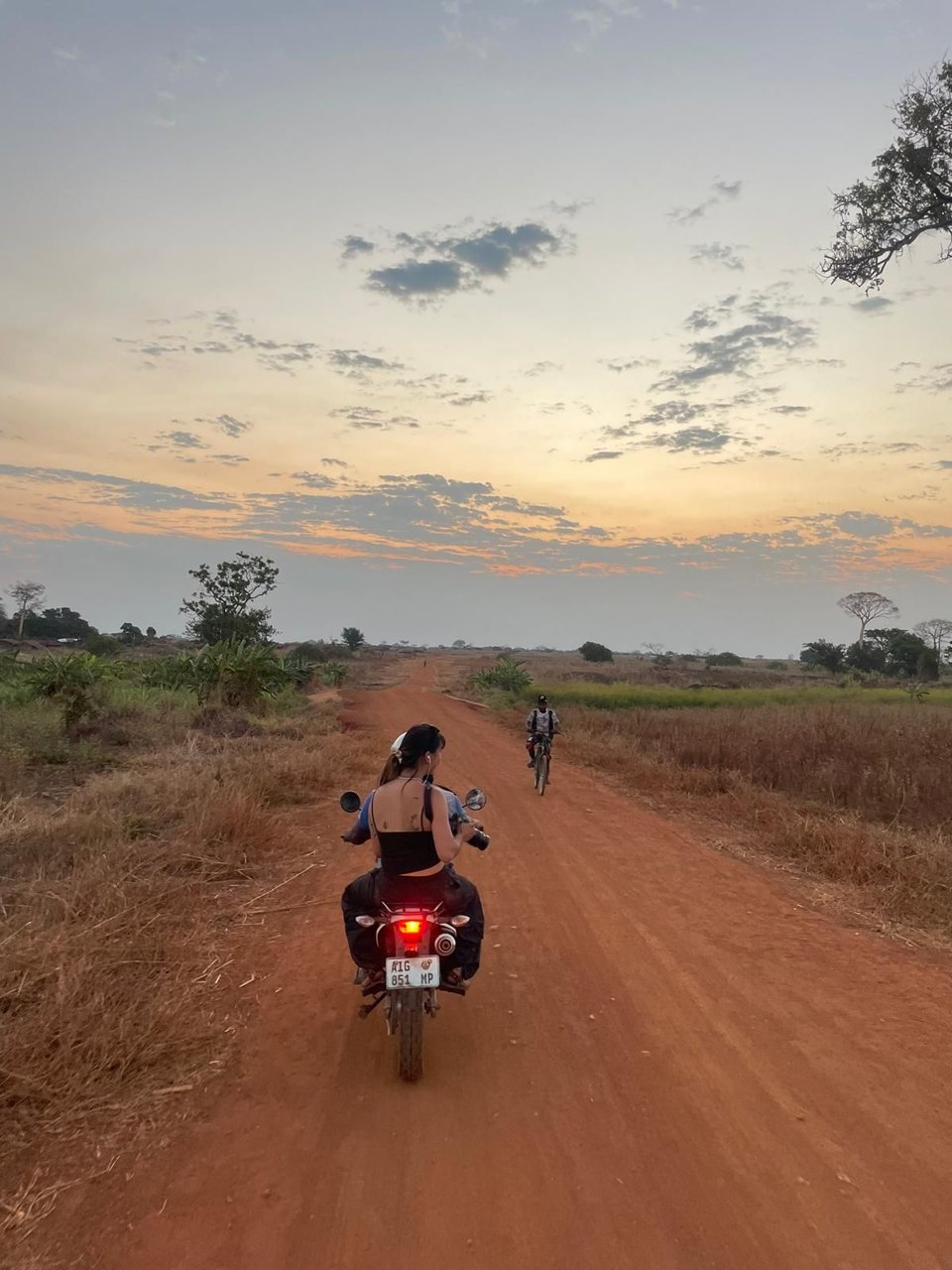
I used to feel self-conscious about how “low-tech” photojournalism seemed, especially as I was starting my career while many of my peers landed jobs in Silicon Valley and reshaped the world’s attention economy.
But now I feel pride in the humanness my work demands. There is no substitute for being on the ground — talking to people, spending time in places most readers will never access themselves. I don’t believe journalism is truly objective, but I don’t see that as a flaw. What matters is being clear-eyed about power: where the money flows, who funds what, and why. But that doesn’t mean we shouldn’t strive for balance.
Five years ago, artificial intelligence wasn’t part of our daily lexicon. Now, images are generated and edited by algorithms (with great defects at times) — but can AI grasp the depth of a subject like a photojournalist does? Photography is a process, extending outwardly but also internally: it’s about engaging with a person, earning their consent, forming some kind of connection — albeit oftentimes brief — and translating an issue into an image with care and creativity. If AI is a satisfactory replacement for photojournalism and journalism, why are any of us doing this at all?
I’m sure I’m part of a shrinking faction that refuses to use ChatGPT for anything (Note: The Xylom does not allow the use of Generative AI in any part of our editorial process, though we may occasionally use AI transcription tools). I’m not trying to live a frictionless life; I want to protect my brain. If this will “leave me behind,” as several people have told me, so be it. In this regard, I fully intend to be left behind.
A human feel is the only thing we can really hold on to in a world of flux — something I seek in all aspects of my life.
Warmly,
Kang-Chun Cheng
Editor-at-Large
✨ NEWS BEHIND THE NEWS
🎉 We exceeded 5,000 unique monthly web visitors for the first time this year! And our readership is up 46% compared to 2024 — with still one week to go. Thank you for welcoming us into your daily life.
✨ The image I captured of passengers waiting in a market area of Nakonde Station in Tunduma, near the Tanzania-Zambia border, was selected for the Pulitzer Center’s 2025 Year in Photos!
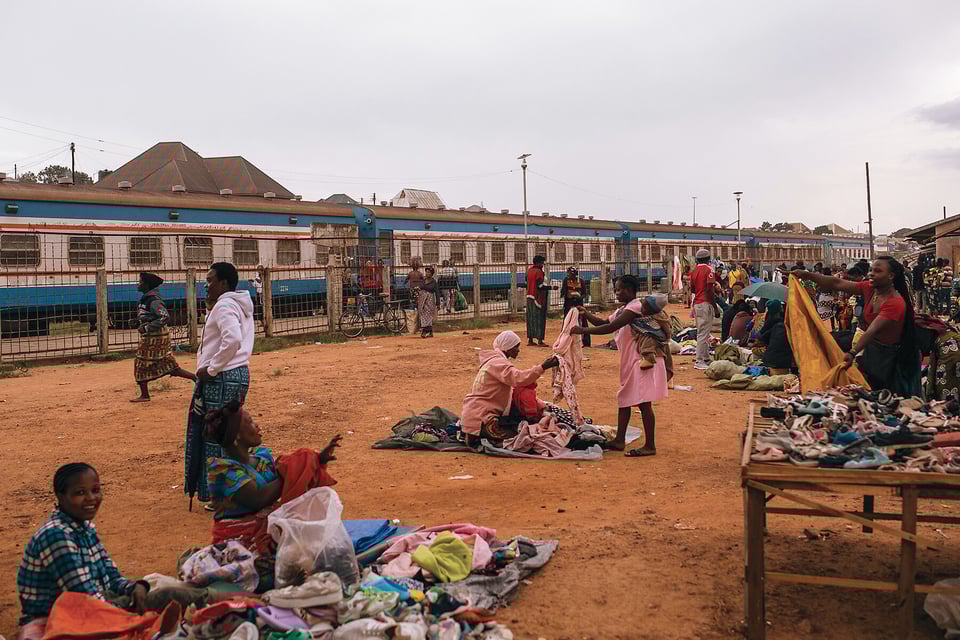
Pictured here, passengers wait in a market area of Nakonde Station in Tunduma, near the Tanzania-Zambia border. The train runs 1,852 kilometers (about 1,150 miles) connecting the ocean to the mines. 📢 Join our WhatsApp channel and help reach users who stay off social media (share this with your friends).
Like this newsletter? Share it with a friend and subscribe below!
🍑 A SOUTHERN FLAIR
NORTH CAROLINA — Surprise! Your health care provider added a fee for that questionnaire you filled out(Michelle Crouch and Charlotte Ledger, North Carolina Health News)
“You are asking people if they feel safe, if they can afford food. Then you charge them,” Steve Hardman, a resident of Charlotte said. “In what world does that actually make sense?”
SAVANNAH, Ga. — Georgia’s hunters take aim at rural hunger (Emily Jones, Grist)
“Not every county or not every region has all these different products, so we rely on a food system that is able, through processing and retail, to combine all these products for the benefit of consumers,” said University of Georgia professor Vanessa Shonkwiler, who studies local food systems.
“But then back to our rural food insecurity — this food system is not necessarily able to reach everyone.”
🗺️ WHAT ELSE WE'RE READING
SIERRA LEONE — Huge ‘blue carbon’ offsetting project takes root in the mangroves of Sierra Leone (Edward Carver and Mohamed Fofanah, Mongabay)
A new blue carbon project has launched in the mangroves of Sierra Leone, involving 124 local communities to protect and restore coastal forests. Funded through voluntary carbon credits sold globally, this initiative has proven beneficial to the Communities, the government, and the environment.
“Now we are being promised money for our communities that we can do meaningful developments,” Sumaila, a female chief said. “I am hopeful that this project will make at least some meaningful changes.”
SAN JUAN, Argentina — The pistachio boom in Argentina clashes with the water crisis (Jorgelina Hiba, Dialogue Earth)
“In San Juan, it rains between 80 and 100 millimetres per year, and droughts are more frequent and longer. We are going deeper and deeper into the aquifer to find water that is 10 to 12,000 years old. If we do not build water awareness, we are heading straight for a wall,” Leandro Salvioli, a researcher at the National Water Institute (INA), a government research body.
SOME OF OUR RECENT STORIES
🏚️ Reflecting on Our Most Powerful Photos of 2025
This year, our journalists and photojournalists worked across 12 countries, four U.S. states, and two disputed regions, bringing readers a visual documentation of the issues we covered.
Behind these photographs lie deeper stories and a myriad of emotions — the quiet joy of a child about to eat a snack, the despair of South Texas residents fighting a losing battle against Big Oil, and the resilience of women adapting and switching livelihoods to survive.


Add a comment: