
Carrying the Weight of Russia-Ukraine War from the Battleground
Our Editor-at-Large reflects on her assignment to Ukraine.

Before you dig into the newsletter, here’s a message from Jake, a doctor from Iowa who just joined our year-end fundraiser:
I have watched countless local formerly-independent journalism outlets be acquired, consolidated, and gutted as plutocrats use media ownership to deny readers the opportunity to hear and see fair and balanced journalism for themselves. The Xylom is timely, it is insightful, and it is important. The work Alex and his excellent team do to bring meaningful stories to our attention is worthy of acknowledgment, I am proud to support it, and you should too.
We are still 22 new monthly members shy of hitting our monthly goal. This is the best time to join The Xylom; all new monthly donations are matched 12 times! You give $10/month, we get $120!
There’s power in numbers. Will you join us?
Dear Reader,
I was recently in Ukraine, supported for the second time this year by the International Women’s Media Foundation. Although I regularly report from remote, conflict-affected regions marked by extreme poverty and deep-rooted systemic exploitation, these places are not active war zones.
My interest in Ukraine stemmed from a curiosity about whether I could bring my experience reporting on environmental and cultural issues in East, Central, and Southern Africa to a completely different context.
Reporting from Kyiv, Odesa, Kharkiv, Balakliia, and Izyum has shown me what tremendous suffering and resistance look like from the ground level. There is an incredible volume of documentation of what’s happening both on the frontline and in civilian areas. Yet the rest of the world remains largely unmoved, with little disruption to the status quo. This dynamic reminds me of what’s going on in places like northern Mozambique, eastern Congo, and Sudan — all the African nations where suffering is not only commonplace, but perhaps expected.
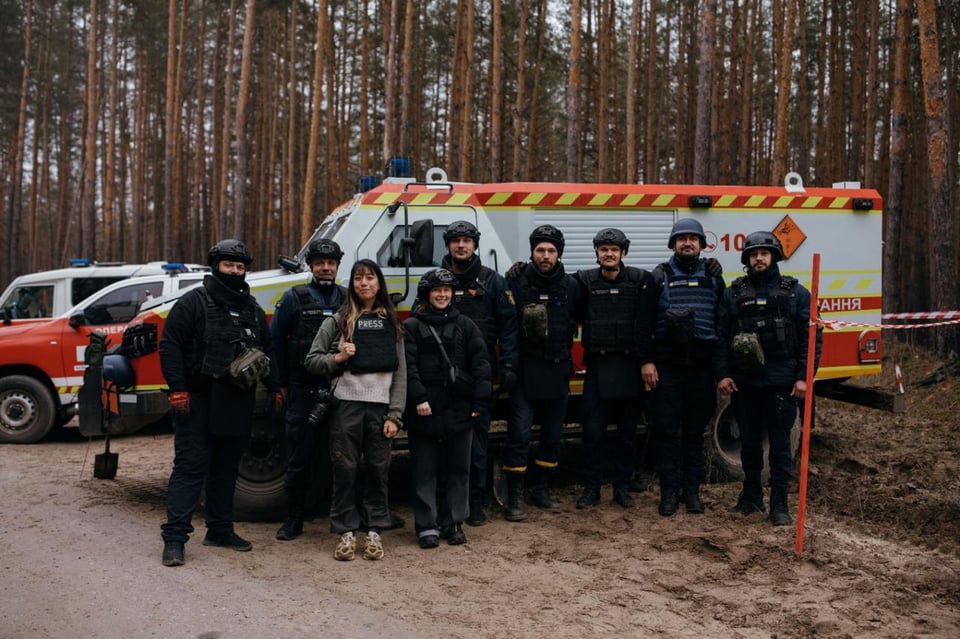
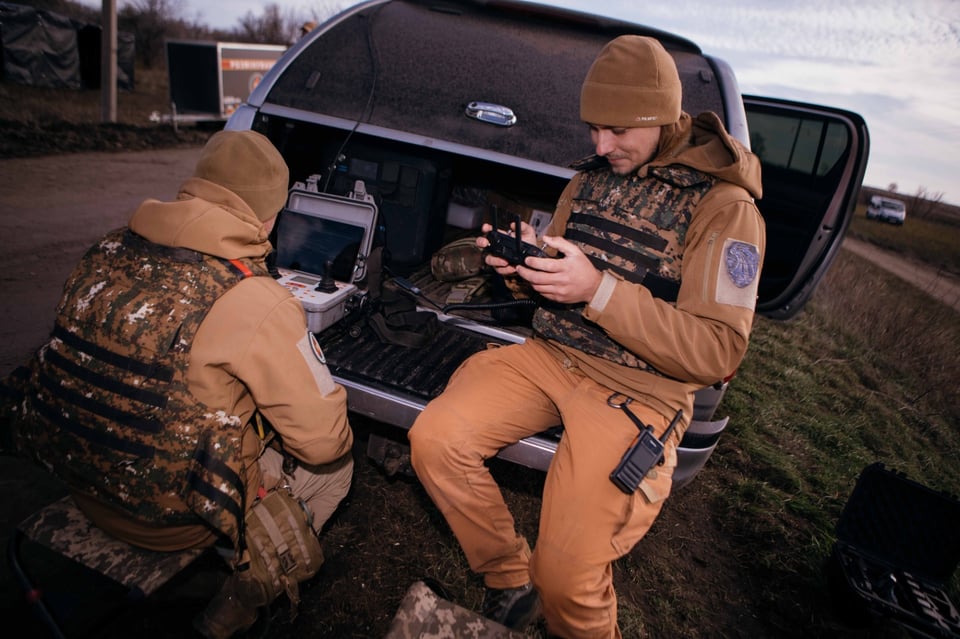
When the war shifted to being driven by drones in late 2023, everything changed. It has become the most technologically advanced war in history, likely reshaping how future wars are fought—an immense deployment of technology for the sole purpose of killing and torturing people.
According to The Telegraph’s podcast Ukraine: The Latest, gangrene has re-emerged for the first time since World War II. Drones have made medical evacuations perilous; one Ukrainian soldier reportedly wore a tourniquet for 33 days after six evacuation attempts failed due to constant drone surveillance. Russia is using banned chemicals such as chloropicrin across the eastern frontlines, and the country’s drones are killing its own soldiers who have decided to surrender. Ukrainian soldiers are trapped in trenches, risking asphyxiation below ground and drone strikes if they emerge for air.
I’m an emotional person — an empath. Over the hundreds of reporting trips I’ve taken, I’m constantly trying to balance my ability and desire to connect with people with the need for appropriate mental shields, so that I don’t leave difficult situations feeling guilty or completely broken. I strongly believe that my innate curiosity about people and my wish for connection are qualities that add depth to my reporting. But at the same time, this is a job, and I have to find ways to protect myself. This push and pull is a lifelong process.
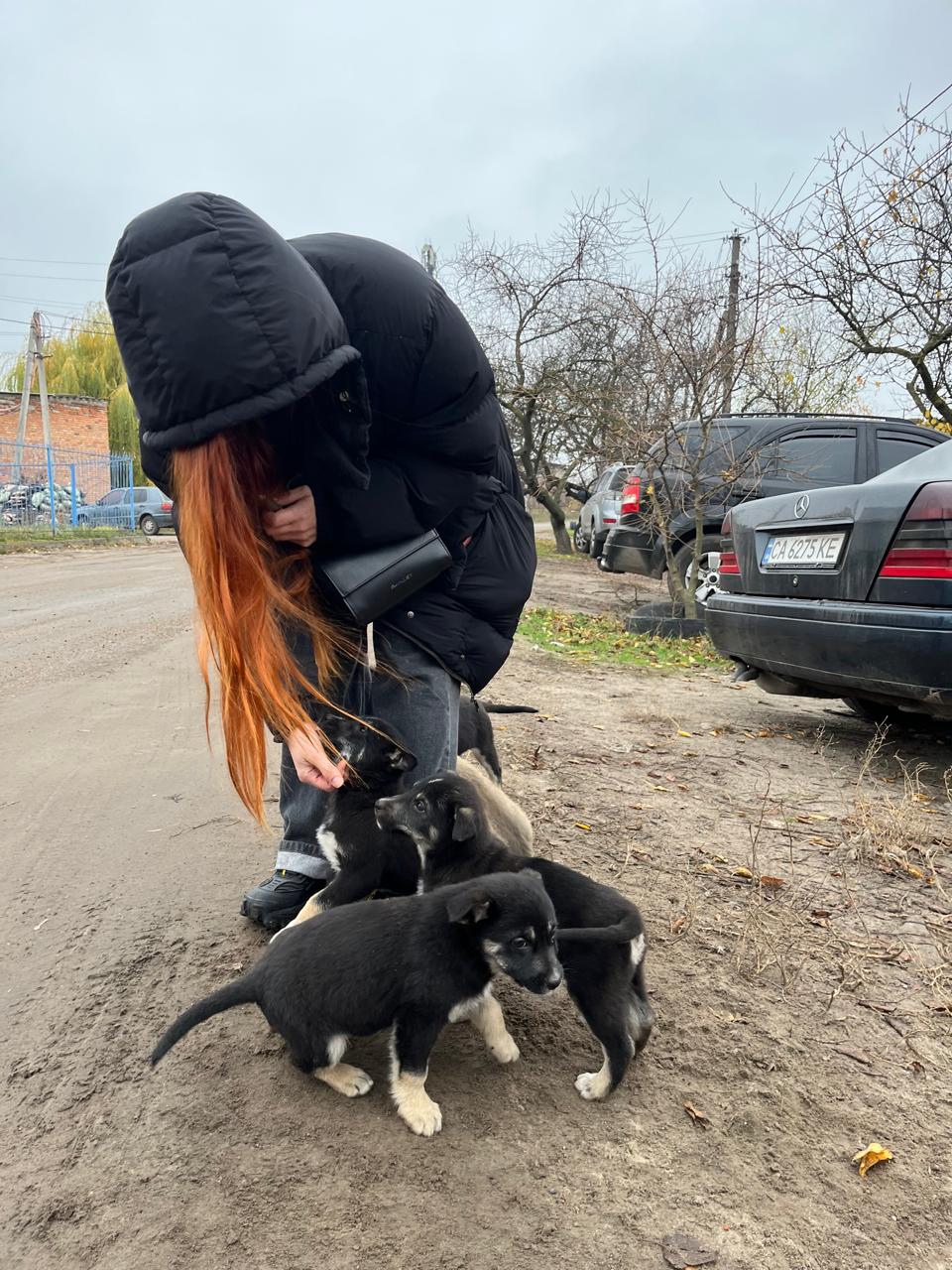
Ukraine has tested a different side of me. I’ve reported from dire situations before, but never from an active war zone. Walking through Kyiv’s beautiful streets in late autumn, I felt a deep cognitive dissonance, knowing Russia is trying to destroy everything here.
On the surface, the city remains beautiful and resilient. Yet, there are clear signs that something is terribly wrong—a lack of men, constant drone alarms, generators crowding the streets, and increasing power cuts as both sides target energy infrastructure, heading into what may be the most difficult winter nearly four years into the war. Due to differences in life experiences and exposure
It may be more difficult for me to relate to a 25-year-old South Sudanese IDP with five children than to a young Ukrainian man who has been drafted into the war. This may sound cliché, but witnessing so much suffering has made me value what I have more deeply and strengthened my commitment to not letting my resources, autonomy, and mobility go to waste.
Warmly,
Kang-Chun Cheng
Editor-at-Large
Like this newsletter? We are joining other newsrooms in the Climate News Task Force to provide a single hub for signing up for all our newsletters. It’s a simple way to access climate coverage — and to support reporting that keeps powerful industries accountable.
Share the bundle with a friend and subscribe below!
✨ NEWS BEHIND THE NEWS
🥇 Congratulations to our contributor Sanket Jain, who won a Gold Medal at the United Nations Correspondents Association (UNCA) Awards in the second week of December.
🎓 Congrats to our former intern Zhenjia Jiang, who just graduated from the CUNY Newmark J-School!
📢 Join our WhatsApp channel and help reach users who stay off social media (share this with your friends).
🍑 A SOUTHERN FLAIR
GEORGIA — The costs of crypto mining in Georgia. Will it be regulated along with new data center rules? (Kala Hunter/Ledger-Enquirer)
“These miners never rely on renewable energy because they plug into the power grid and run 24/7,” Alex De Vries, who has been researching energy consumption of digital assets since 2016.
“If you have a data center or crypto miner coming in and demanding a lot of power, the extra power demand is not going to be provided by renewable energy because those are already in use as much as possible. They will get the power from backup sources, which are fossil fuel-based.”
CAMP LEJUNE, North Carolina — Scientists Thought Parkinson’s Was in Our Genes. It Might Be in the Water (Reporting by David Ferry and photos by Rachel Jessen/ Wired)
“I characterize science as a bunch of 5-year-olds playing soccer,” says another researcher. “They all go where the ball is, running around the field in a herd.” And the ball was decidedly not environmental health. “Donors want a cure,” Langston says. “And they want it now.”
🗺️ WHAT ELSE WE'RE READING
MUMBAI, India — ‘It’s hell for us here’: Mumbai families suffer as datacentres keep the city hooked on coal (Luke Barratt, Atika Rehman and Sushmita, The Guardian)
As Mumbai sees increased energy demand from new datacenters, particularly from Amazon, the filthiest neighbourhood in one of India’s largest cities must keep its major coal plants.
“There are so many cases of skin and eye irritation, cancer, asthma, TB and more, and no assistance from the government,” says Gajanan Tandle, a Mumbai resident.
INDONESIA — What, and who, is behind Indonesia’s climbing coal use? (Nithin Coca, Climate & Capital Media)
“By continuing to support coal projects overseas, Chinese companies are locking in years of preventable disease and premature death,” said Jamie Kelly, who leads the health impact assessment team at the Centre for Research on Energy and Clean Air. “Every ton of coal burned abroad undercuts not only global climate goals but also peopleʼs right to breathe clean air.”
MIDLAND, Texas — PHOTO ESSAY: In Texas, a former Chinese official targeted by Beijing’s surveillance finds refuge (Rebecca Blackwell and Dake Kang/ Associated Press)
Li exudes some of the authority he once wielded as vice mayor. But he’s traded his suit and tie for a jacket vest, the Chinese flag for America’s star-spangled banner, and his podium and phalanx of state journalists for a bright, white LED light and flimsy tripod in a sparse room behind a communal church kitchen.
From here, Li tapes videos for an online audience, fighting a war of words with the party he once swore loyalty to.
SOME OF OUR RECENT STORIES
🧑🏻⚕️ Eighty Years Later, Asian American WWII Nurses Still Await Congressional Recognition
Nearly eighty years after WWII, Asian American nurses still have not received formal recognition for their service. But a women-led coalition is working to change that.
This article was published in partnership with The 19th and More to Her Story.


Add a comment: