
The Norwich Radical - May 2026 Issue
Cymru, the Beats, and the weaknesses of Reform

Welcome to the May 2026 Issue of The Norwich Radical! Like many Mays past, it's been a dramatic month in UK politics. Much has been made of Reform UK's apparent sweeping success in the recent local elections, but as we explore in this issue there is more nuance to be found in the stories of both Farage's new far-right vehicle and these election results.
While Reform won more seats of those available this month than any other party, its overall percentage of council seats nationally is still very low compared to the Tories and Labour. Additionally, the proportion of seats it won out of those available is actually lower than at last year's elections, suggesting that it may already be approaching its peak popularity. Results aside, understanding the ideological and realpolitical background of the new British right is crucial work, and Howard Green makes a compelling analysis of parallels to Bolsonaro's Brazil in this issue.
The feelings of disproportionate negativity about results in the UK seem to also offer a mirror to what is currently happening across Europe - especially with the change in Hungary's government and entire political trajectory, regular good news from Spain (among other places), and the vocal, loud, righteous grassroots social justice movements opposing Italy's cowardly far-right state. Closer to home, as Jonathan Lee examines in our longer read this issue, the recent elections also bring a moment of self-reflection in Wales, about its politics, its history, and its next steps forward.
As always, the world is more than its politics - cultural and historical context shapes us all. In our other piece this month, returning contributor Eve Hilton brings a critical lens to the iconic and iconoclastic Beat generation, dissecting its posturing politics and offering a scathing review of some of its figureheads.
You can support our work financially by visiting our Steady page to set up a recurring donation. If you'd like to volunteer with us as a writer, editor or artist, or to pitch a one-off piece, you can reach us at [email protected].
May 2026 Issue - Contents
AFTER LABOUR: THE END OF WALES AND THE RISE OF CYMRU
—
THE BEAT GENERATION WAS NEVER THAT RADICAL
—
REFORM UK & BOLSONARO: EXAMINING MODERN FASCISM
—

AFTER LABOUR: THE END OF WALES AND THE RISE OF CYMRU
By Jonathan Lee
In 1957, the Welsh nationalist writer Islwyn Ffowc Elis imagined a future Wales that had been completely transformed in his political sci-fi novel, Wythnos yng Nghymru Fydd (A Week in the Wales of the Future). He envisioned dual destinies for Wales in the far distant future of 2033. In one of them, his time travelling protagonist, Ifan Powel, arrives in Cardiff and encounters a confident modern Welsh nation; politically self-assured, culturally alive, and no longer psychologically subordinate to England. In the other, he discovers a dystopian land called "Western England", where the language and sense of identity have died out and the country is rife with petty violence and social tension.
His novel was part science fiction, part political prophesy that dramatized his vision of a Wales where the language flourished, democratic institutions reflected national priorities, and Welsh people viewed themselves not as a regional appendage of Britain but as a nation capable of shaping its own destiny.
For generations, that future seemed impossibly distant. Modern Wales instead became defined by another political inheritance: Labourism.
Read more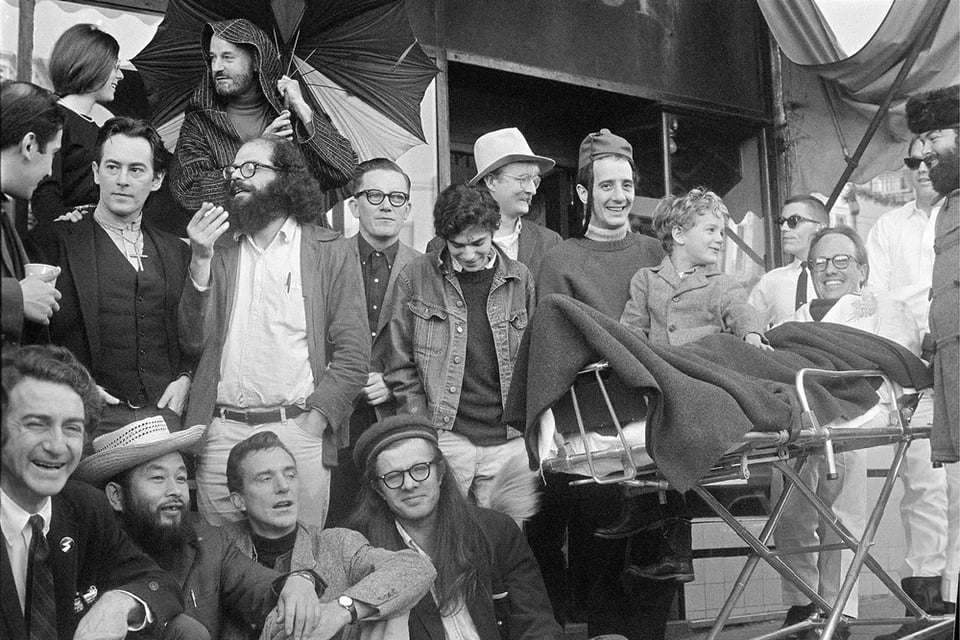
THE BEAT GENERATION WAS NEVER THAT RADICAL
By Eve Hilton
CW: mentions of pedophilia, sexual abuse, racism
The Beat Generation was a literary subculture movement which emerged in the late 1940s and flourished through the 1950s, continuing into the 1960s. Originally centred in New York City’s Columbia University circles, before spreading to San Francisco’s North Beach scene and other urban enclaves across the United States, the Beats formed a loose constellation of writers around figures like Jack Kerouac, Allen Ginsberg, Diane Di Prima, and William S. Burroughs. Bohemian and anti-conformist, they rejected the austere climate of post-war America—marked by Cold War paranoia and suburban domesticity—in favour of literary improvisation and sexual liberation. Films like Howl (2010), and Kill Your Darlings (2013), have since cemented the Beats’ image as one of countercultural rebels.
However, a closer scrutiny of the Beat movement reveals a striking limitation: while culturally audacious, they were far less politically radical than their mythos suggests. Instead, their radicalism was primarily aesthetic and personal, constituting a rebellion against mid-century morality and literary norms rather than a systematic attempt to confront structures of economic exploitation or social inequality.
Read more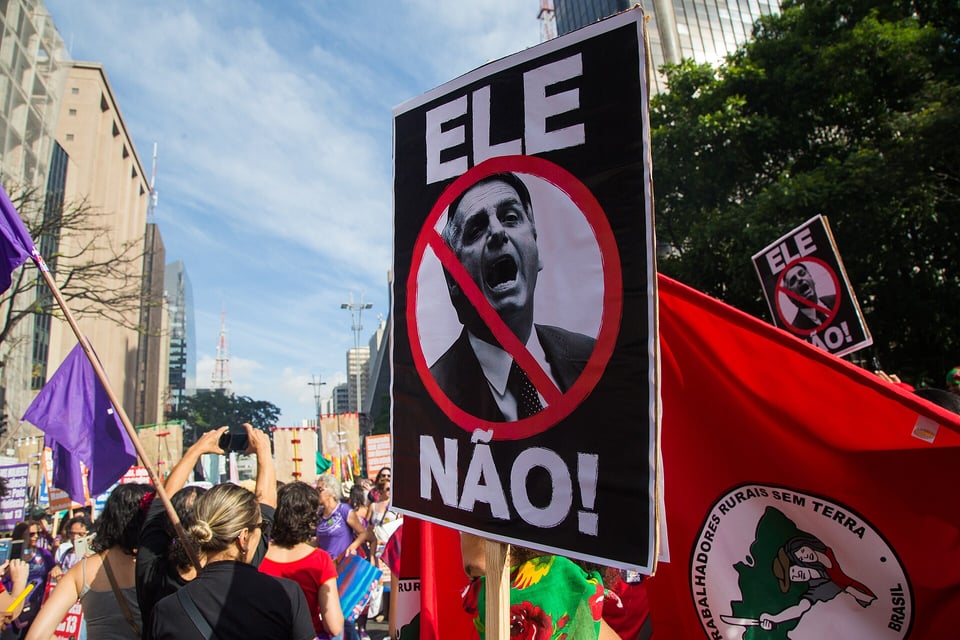
REFORM UK & BOLSONARO: EXAMINING MODERN FASCISM
By Howard Green
Fascism is a loaded ideological term, but a broad one. This ambiguity has followed a number of far-right populist movements, particularly those that have achieved political and electoral success. The movement behind Jair Bolsonaro’s presidency of Brazil, for example, was most regularly compared to that which brought Trump to power in the US. However, this observation risks obscuring the reasons as to why Bolsonaro gained power, and how further far-right electoral movements with fascist associations can be combatted.
There are stronger parallels to be drawn between Bolsonaro’s tactics and those of the newly ascendant Reform UK party – and there are lessons to be learned about the weaknesses of this new British far-right movement from the comparison.
Read moreThe heat of our ever-hotter summers is becoming a somewhat-tired metaphor for the oppression and struggle that characterises the current decade, inescapable and unpredictable as the movements of hot air. We hope that, whether or not the sun shines where you are, you have time for light and laughter in the coming weeks.
Solidarity,
The Norwich Radical Team


