No. 131 New podcast & get my book not through Amazon
"Get my book via Gumroad, join us on our new rom-com podcast, and peep insights on zettelkasten."

No. 131 • 1/21/2026
Dear readers,
Are you interested in getting a copy of my book, but don't wanna go through Amazon to get it? Fear not. You can buy a digital copy via Gumroad, where you'll receive a juicy EPUB file to use on whatever digital reading device supports said files. Howbowdat?
Next question: Are you a fan of podcasts?
Early last year, my friend Mckenzie and I started a podcast. Not on zettelkasten. Not on writing. Not on creativity. Not on spirituality.
On rom-coms.
That's right. It's taken us roughly 3/4 of a year to finally get our stuff together, and put out episode 1 (there are three more recorded, and one more in the pipe). But, the deed is done!
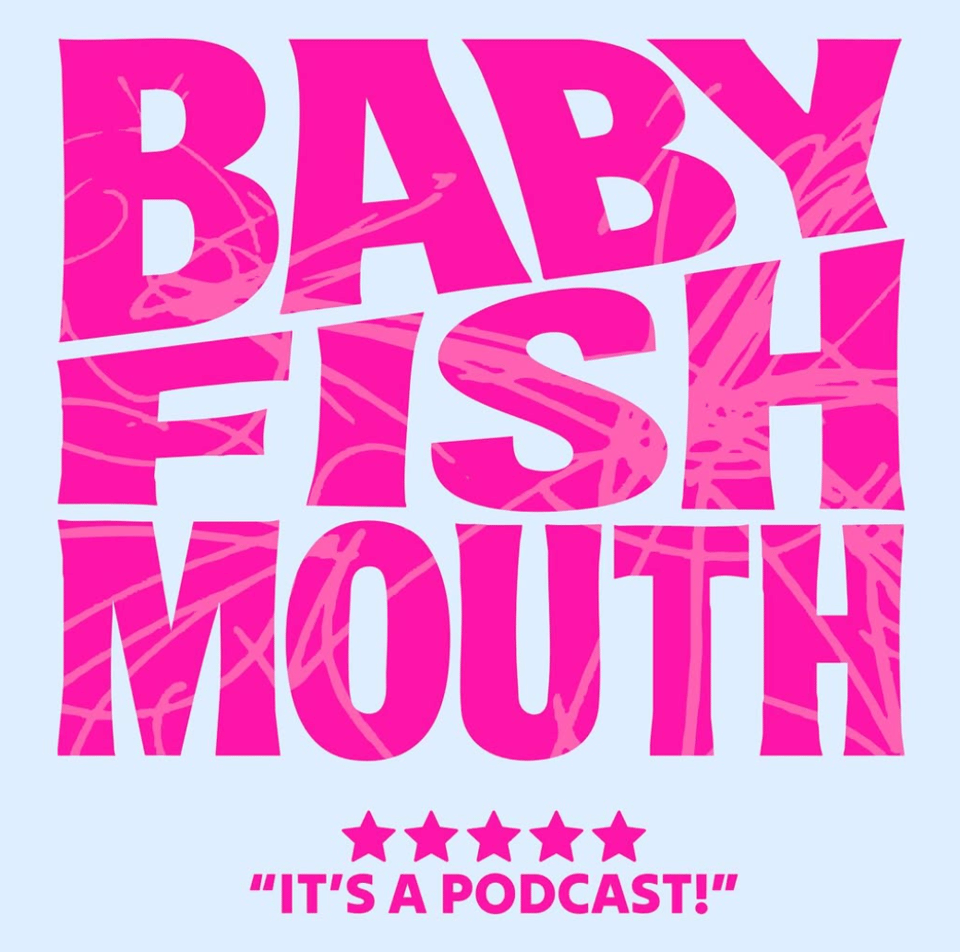
This podcast is based on a simple formula: Mckenzie has seen every rom-com (dozens of times), and I've seen none. She holds down the fort for the scene headz. I give my "Hoping to learn what all the fuss is about" newbie hot takes. She then contextualizes those hot takes in the culture of the canon.
You can listen to our first episode on When Harry Met Sally here.
What I’m up to writing / teaching / speaking….
This week, I've been writing about creative exploration vs exploitation and serendipity. All for the book I'm working on, hopefully out this year (summer or fall).
What we’re up to on the property….
It's gonna be -6 degrees on Saturday. So, we'll be inside, wood stove burning, plowing the snow that fell this week, preparing for the snow that's coming end of this week.
What my book, A System for Writing, is up to....
Passive income is possible when you write for an audience. Ask me how, and maybe I'll teach a course on it.
FROM LAST WEEK'S COMPOSITION...
Working with facts in the zettelkasten
Questions about how to work with facts (read as "unchanging") is a fairly common one in the zettelkasten scene. The post, Applying Zettelkasten ideas to more fact- and project-oriented scenarios, speaks to exactly that:
"One thing that all these texts make more or less clear is that the method is intended to be used for academic writing, and specifically for disciplines that focus very much on cultivating your own ideas like the Humanities. Also, it is intended to be used along a long academic career. Managing knowledge and unchanging facts for a single project is not one of the targets of the method." (emphasis added)
The sheer number of people who ask how to work with facts suggests this is an area needing attention. The fact that some may even feel the zettelkasten isn't built for this kind of information (as the OP mentions above) further proves the point. Clearly there's a gap. Admittedly, while I've devoted a little bit of ink to the topic here and in ASFW, it hasn't been a major focus of mine.
That said, a few people chimed in regarding their heavy employment of facts.
u/Sufficient-Cable-644:
"I would say around 60% of my Analog Zettelkasten is facts. I work from literature reference notes, and then create maincards. Many of my branches off these "fact based" main cards are either my own thoughts, or another supporting or related fact. Each branch builds a larger thought about what the original fact shares. /// I use them for writing and project development all the time."
u/JeffB1517:
"I use my Zettlekasten almost exclusively for fact-based topics. /// Reference notes and literature notes are easier and more common since they are specific. Zettles are based on how you organize topics. Permanent notes are Zettles that have evolved to be stable. You will need MOCs."
u/thmprover gives a reading rec:
"You might want to look at, e.g., David E. Johnson's Douglas Southall Freeman for an example of an historian who used a Zettelkasten-like approach to writing history (see especially pages 110 et seq. and 329 et seq.)."
Additionally, there was one sub member who remarked about their failed attempts to lean into facts in their zk.
u/Barycenter0:
"I completely understand your dilemma and have tried to do something similar in the sciences (coincidentally, I have a background in astronomy and history of astronomy). I have tried to use a ZK in some of those cases and it just didn't work for me. There were a number of reasons - mostly the time to work through atomicity and trying to organize in some formalized directed output. It became a struggle between working hard to keep the ZK in some boxed methodology vs. just collecting information more loosely via notes to assemble into a paper or thesis.
I just gave up and focused on productivity first - meaning, collecting fragments of information with references using Zotero, Adobe Reader and Google Docs so I could have my paper done faster (probably what you're thinking a hybrid approach is). I just collected, combined and drafted my output so much faster."
To read the rest (there are four other takes on the week's discourse, not including the introductory essay), sign up here.
Get my book
Pick up my latest book, A System for Writing, [here].
Got a question or something you'd like me to write about? Send me what you're thinking!