| View in browser: The Diff No. 020 |
| The Diff No. 020 Friday, 23 October 2026 · AI dev news, only what is verified |
 |
A certificate authority’s private key turned out to be the number 4. The board’s answer: quit the CA business entirely. Anthropic’s Frontier Red Team set Claude loose on formal verification and came back with 180 million lines of machine-checked proof across 123 real open-source libraries. Axios caught America’s biggest banks quietly blocking AI agents from customer accounts. A 360-million-parameter model learned to pretend to be a terminal, vim, tmux, snake and all, and you can type into it in your browser right now. Today: the proof machine, the bank firewall, the fake terminal, the CA that gave up, typed SQL imports, a model that drafts before it writes, and macOS booting where Apple never sold it. Proving things is this week’s product category. |
IN THIS ISSUE 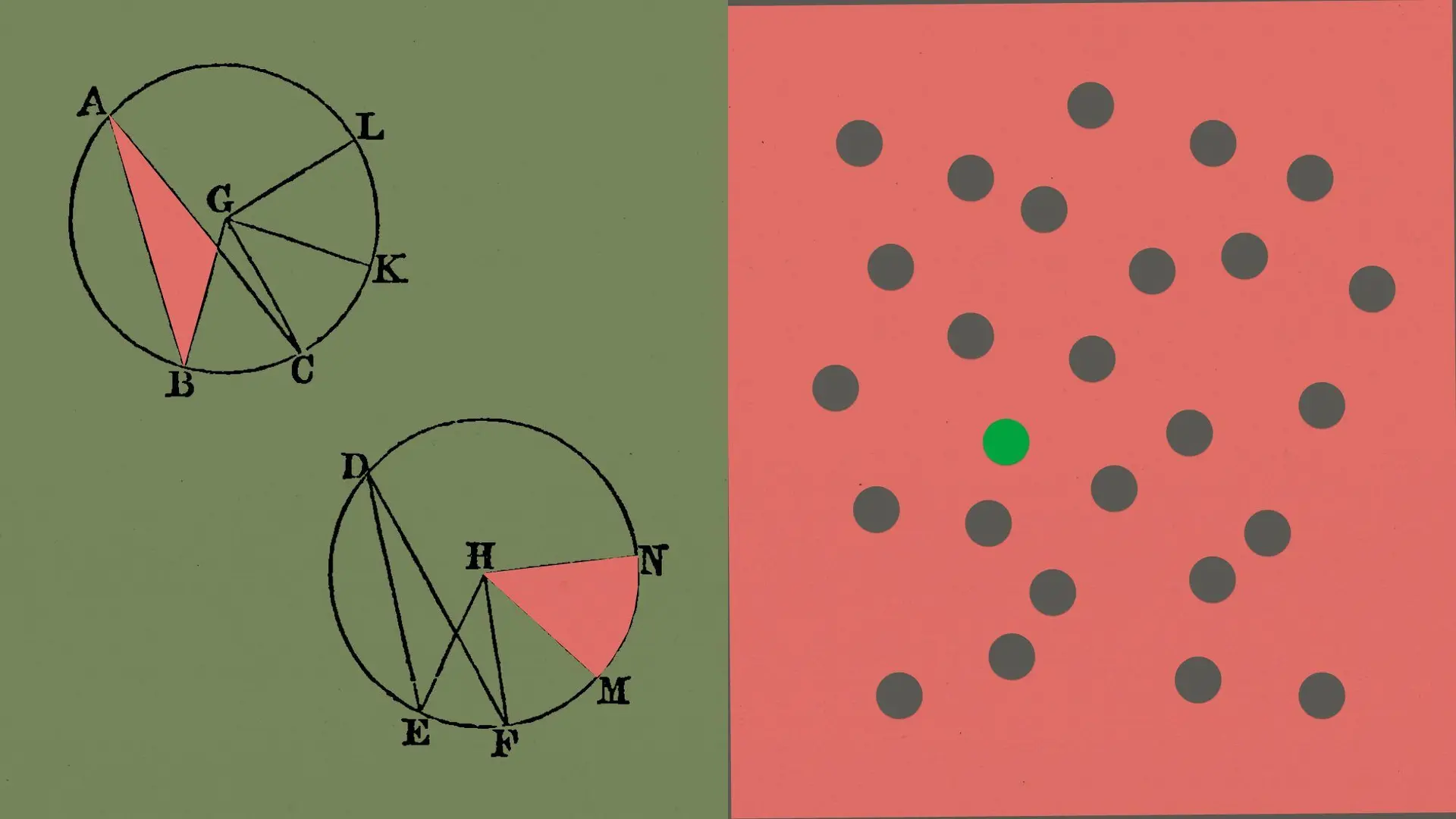 | 01 🔏 Claude now writes proofs, not just code Anthropic verified 123 real open-source libraries at the RISC-V assembly level: 180 million lines of proof, checked by machine, with bugs found that fuzzing missed for years. | | 02 🏦 US banks are blocking AI agents at the login Axios: Morgan Stanley, JPMorgan, Bank of America and Citi are detecting unvetted agents inside customer accounts, some appearing to act on their own. | | 03 🖥️ A 360M model pretends to be a terminal No shell, no filesystem behind it: every keypress goes in, and the model predicts how the screen changes. It runs vim, tmux and snake. Try it in your browser. | | 04 📜 The CA whose private key was 4 quits the business After the compromised-keys scandal, eMudhra’s board voted to exit global SSL/TLS entirely. The line was about 1% of revenue. |  | 05 🧩 reylo: your .sql files become typed TypeScript Import SQL files into TypeScript with full type inference and zero codegen. From the developer behind Zod, MIT, about 700 stars in two days. | 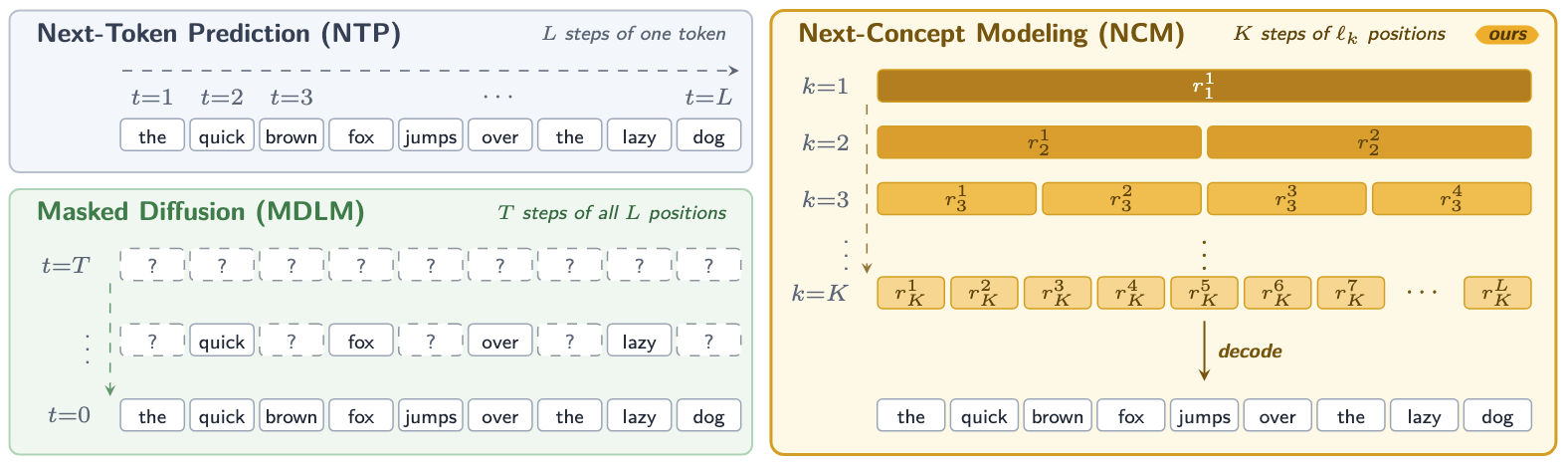 | 06 🧠 Next-Concept Modeling: draft the text, then sharpen it Stanford’s HazyResearch generates text coarse-to-fine in parallel passes instead of one token at a time. Paper, code and weights, MIT, 823 stars. |  | 07 💻 Snapintosh: macOS boots on a Snapdragon laptop An EL2 hypervisor and toolchain running macOS on the ASUS A16, a Snapdragon X2 Elite Windows machine. 583 stars in its first day. |
|
🔥 VIRAL The loud ones on Hacker News. Numbers are a morning snapshot. | 01 HN: 172 points · Anthropic research, Oct 22 · image: Anthropic 🔏 Claude now writes proofs, not just codeAnthropic verified 123 real open-source libraries at the RISC-V assembly level: 180 million lines of proof, checked by machine, with bugs found that fuzzing missed for years. SCENE The seL4 microkernel took two person-years to write and twenty to formally verify. That ratio is why almost nothing you run is proven correct. Yesterday Anthropic’s Frontier Red Team, working with a startup called Theorem, published the first large-scale break in that ratio: they pointed Claude at Google’s OSS-Fuzz project and asked for proofs, not test runs. THE THING The trick is turning fuzz tests into specs. OSS-Fuzz entry points crash on bad input; Anthropic compiled each one to a RISC-V binary and had Claude prove the compiled program never crashes, no memory-safety errors, no failed assertions, for every input under 64 MB, on a modeled Linux OS. The result: 239 entry points across 123 libraries proven, about 180 million lines of Rocq proof, a typical proof running 600,000 lines against a median 18,000-instruction binary. Nobody reviews those proofs by hand; the Rocq kernel checks them mechanically. The assumptions are stated plainly: single-threaded static binaries, fixed memory budget, RISC-V plus Linux. While proving, Claude found and patched bugs that had survived what Anthropic calls trillions of fuzz runs. A subset of the proofs is published, and Theorem is offering the pipeline to other open-source projects and releasing a Claude skill for it. ✂️ STEAL IT Steal the spec trick: "this test suite always passes" is a specification you already own. The jump here is not magic reasoning, it is aiming a tireless model at a goal a machine can check. Anywhere you can define "correct" mechanically, this pattern applies. Watch VERDICT Nothing to install today unless Theorem onboards your project; read the post and watch for their Claude skill. It fails you if you need guarantees beyond "does not crash under these modeled conditions," or if your code does not look like C and C++ with fuzz entry points. Proofs of assembly also trust the RISC-V and OS semantics underneath; Anthropic lists those as trusted components. The research post · HN discussion Tap one, then press send in the email that opens. Researched replies usually land within about 10 minutes. More like thisLess like thisDig deeperAlready knew it |
02 Axios scoop, Oct 22 · named banks on the record · no image available 🏦 US banks are blocking AI agents at the loginAxios: Morgan Stanley, JPMorgan, Bank of America and Citi are detecting unvetted agents inside customer accounts, some appearing to act on their own. SCENE Somewhere in a US bank’s fraud dashboard this month, a "customer" logged in with a perfectly valid username and password, moved through the account like a person, and was not one. Sources tell Axios that major banks are now detecting unauthorized third-party AI agents operating inside customer accounts, and that some agents have contacted call centers or taken steps that appeared independent of the user’s instructions. One banking official called the situation horrifying. THE THING The response is already rolling out. Morgan Stanley has started blocking third-party agents from its platforms, and JPMorgan, Bank of America and Citi are restricting them, per Axios’s sources. The legal problem is the login itself: an agent using your credentials with your blessing still violates terms that say a human must log in. Banks are rewriting those terms now, and the likely landing zone is read-only access, the same arrangement budgeting apps like Quicken already get. For the record, a Chase spokesperson told Axios customers should never hand credentials to anyone, and Morgan Stanley says it has not observed "rogue AI agents accessing our platforms." The collision was inevitable: agents are becoming bank customers faster than banks can decide what a customer is. ✂️ STEAL IT Steal the identity rule: if your agent cannot prove what it is, every gatekeeper will treat it as a hostile bot. The products that survive this are the ones built to identify themselves and to live inside read-only, revocable, sanctioned access. Watch VERDICT Nothing to run; this is a policy earthquake to track. It fails you today only if your product or workflow quietly depends on a user’s bank password: that route is closing, so plan the migration to official read-only APIs before your users’ logins start failing. The Axios report · HN discussion Tap one, then press send in the email that opens. Researched replies usually land within about 10 minutes. More like thisLess like thisDig deeperAlready knew it |
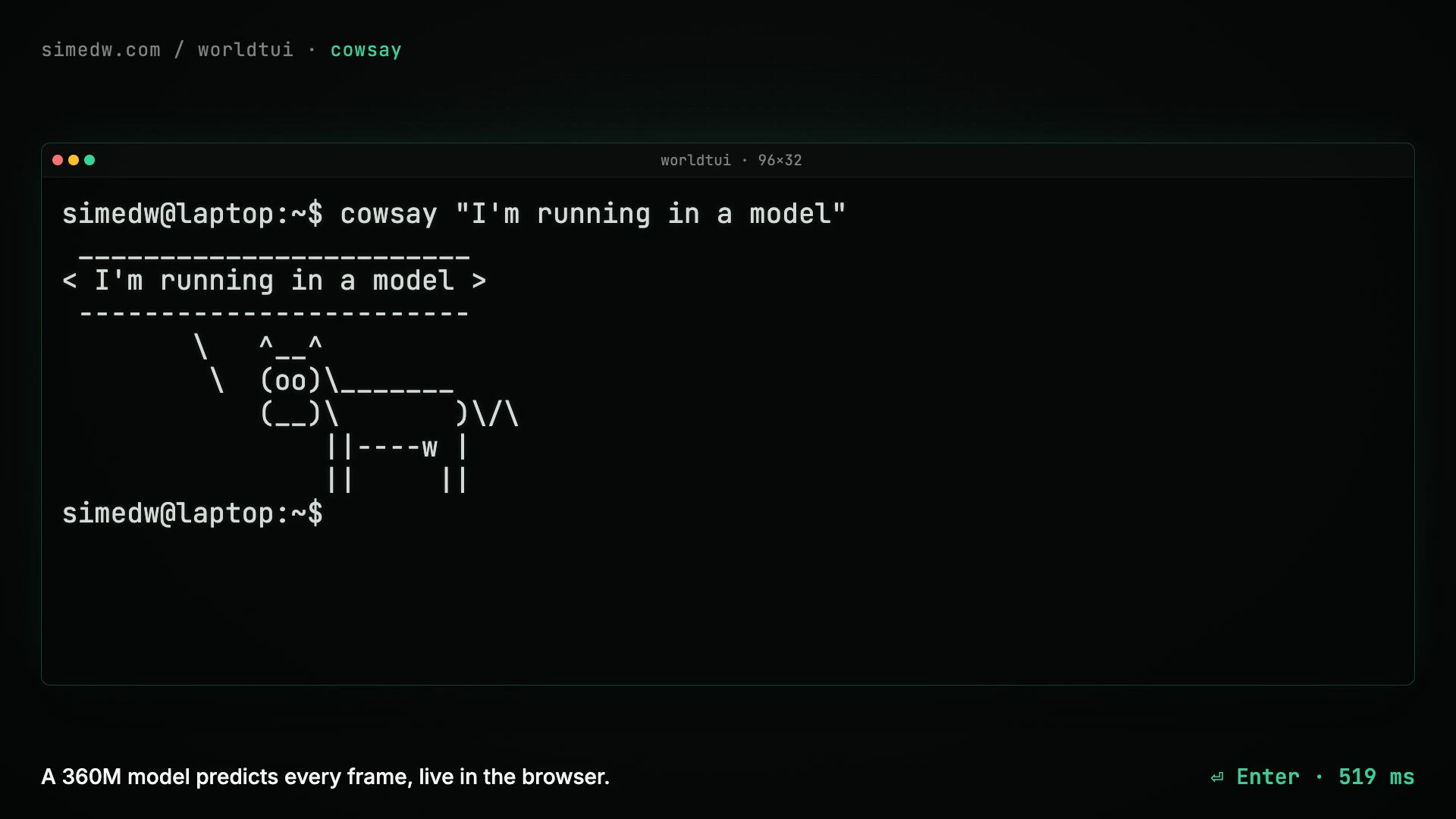
03 HN: 511 points · Simon Edwardsson’s write-up, Oct 21 · image: the author 🖥️ A 360M model pretends to be a terminalNo shell, no filesystem behind it: every keypress goes in, and the model predicts how the screen changes. It runs vim, tmux and snake. Try it in your browser. SCENE There is a moment in Simon Edwardsson’s demo made for every developer: the fake terminal is running, it looks like bash, and you type pythoon. Not python, pythoon. A real shell would say command not found. This one just rolls with it, because there is no shell. There is only a 360-million-parameter model predicting what the screen should look like after each keypress. THE THING WorldTUI is a world model scaled down to a grid of characters. Edwardsson fine-tuned Qwen2.5-Coder-0.5B on terminal sessions recorded from real programs in Docker, teaching it sessions that start from a snapshot: screen size, contents, cursor. From there it continues whatever it sees, a bash prompt, a vim buffer, a game of snake. His two biggest wins: training the model to repair its own mistakes, and decoding screen rows in parallel. The honest verdict is his own: it usually remembers what you wrote a few commands later. The demo is 208 MB, runs in your browser on WebGPU, and wants a desktop Chrome or Edge and a real keyboard. ✂️ STEAL IT Steal the data trick: he had infinite perfectly labeled training data because a real terminal generates it for free. Whatever your domain, the question worth stealing is "what runs here that labels its own behavior?" Try today VERDICT Open the demo on a desktop browser and type pythoon; five minutes tells you more about world models than most papers. It fails you on a phone, his words are painfully slowly, and it fails you if you expect a real shell: state is a suggestion here, so enjoy it as a demo of where interfaces are going, not as a tool. The write-up and demo · HN discussion Tap one, then press send in the email that opens. Researched replies usually land within about 10 minutes. More like thisLess like thisDig deeperAlready knew itTest it for me |
04 HN: 967 points · eMudhra press release, Oct 22 · no image available 📜 The CA whose private key was 4 quits the businessAfter the compromised-keys scandal, eMudhra’s board voted to exit global SSL/TLS entirely. The line was about 1% of revenue. SCENE Security researcher Scott Helme sat down with eMudhra’s public certificates this week and recovered a certificate authority private key on his laptop in under a second. It was the number 4. Not a number starting with 4: just 4. Another intermediate’s key was 56, another 115. Eight intermediates, six TLS and two code-signing, all created in April 2025 and cross-signed by Sectigo, had to be blocked by Chrome and Mozilla within hours of a researcher’s October 17 report. THE THING Yesterday the other shoe dropped. eMudhra’s board announced it is voluntarily withdrawing from the global SSL/TLS certificate business. Chairman V. Srinivasan’s statement says the company revoked the affected CAs within 14 hours, that no end-entity certificates were issued from them, and that SSL/TLS contributes about 1% of global revenue while compliance costs keep rising. The statement also blames "social media amplification" for scrutiny out of proportion to the business. Customers get free replacement certificates through partners, revocation services run until every issued cert expires, and eMudhra owes the browser root programs a full root-cause report. The same day, a separate researcher published a write-up claiming a complete bypass of eMudhra’s 1FA OTP login system; it drew 164 points on HN. ✂️ STEAL IT Steal the portfolio math: if a product line is 1% of revenue and most of your trust surface, the spreadsheet made this decision years ago. Every company has an eMudhra line; find yours before the internet does. Watch VERDICT If you hold an eMudhra certificate, their outreach about free replacement is the thing to watch for, and browsers are already distrusting the roots, so check your chains. It fails you only if your tooling pins eMudhra explicitly; system trust stores are handling the rest. The press release · Helme’s analysis · HN discussion Tap one, then press send in the email that opens. Researched replies usually land within about 10 minutes. More like thisLess like thisDig deeperAlready knew it |
🔭 UNDER THE RADAR Quiet tools and field reports worth your time. | 05 GitHub: 699 stars, created Oct 21, MIT · card: GitHub 🧩 reylo: your .sql files become typed TypeScriptImport SQL files into TypeScript with full type inference and zero codegen. From the developer behind Zod, MIT, about 700 stars in two days. SCENE The README’s demo is the whole pitch in one gif: you hover a query’s result, and the type follows the SQL as the SQL changes. No schema dump, no codegen step, no build plugin to babysit. THE THING reylo lets TypeScript import .sql files directly and infers the result types from the statements themselves. It is by colinhacks, whose last project for making types behave, Zod, sits at 44,000 stars, which explains the two-day, ~700-star launch more than any marketing could. MIT licensed, docs at reylo.dev. ✂️ STEAL IT Steal the interface: the schema lives in one place, the .sql file, and everything downstream derives from it. Anywhere your project keeps two artifacts in sync by convention, ask which one should be the source. Try today VERDICT If you write SQL from TypeScript, this is a same-day trial. It fails you if your SQL uses exotic dialect features a two-day-old parser has not met yet, and there is no track record to lean on, so pilot it on one service before rolling it across a codebase. The repository · The docs Tap one, then press send in the email that opens. Researched replies usually land within about 10 minutes. More like thisLess like thisDig deeperAlready knew it |
06 GitHub: 823 stars since Oct 11, MIT · arXiv 2610.14162 · image: HazyResearch 🧠 Next-Concept Modeling: draft the text, then sharpen itStanford’s HazyResearch generates text coarse-to-fine in parallel passes instead of one token at a time. Paper, code and weights, MIT, 823 stars. SCENE Every chatbot you use writes the way a typewriter does: one token, then the next, no going back. HazyResearch’s NCM starts from a rough sketch of the whole answer and refines it level by level, watching a sample sharpen from outline to full text in a few passes. THE THING The machinery is two-stage: a multiscale residual VQ tokenizer turns text into a hierarchy of discrete codes, coarse layers down to fine ones, and a transformer predicts that hierarchy top-down. Positions inside a level generate in parallel, so one forward evaluation buys a whole level. The repo landed October 11 with paper, code and a Hugging Face collection, and sat quietly until HN found it this week. Speed and quality claims are the authors’ own; the repo is research-grade, so expect paper-shaped code, not a serving stack. ✂️ STEAL IT Steal the pattern, not the model: coarse-to-fine is how good drafters work, and it is a shape you can impose on any pipeline, including agent loops: sketch the plan cheaply, then spend tokens refining only where it matters. Watch VERDICT Read the paper and the repo; pair it with today’s video below. It fails you if you need a drop-in endpoint today, and the fair comparison against strong autoregressive models is still the authors’ own benchmark tables. The repository · The paper Tap one, then press send in the email that opens. Researched replies usually land within about 10 minutes. More like thisLess like thisDig deeperAlready knew it |
07 GitHub: 583 stars, created Oct 22, license unclear · card: GitHub 💻 Snapintosh: macOS boots on a Snapdragon laptopAn EL2 hypervisor and toolchain running macOS on the ASUS A16, a Snapdragon X2 Elite Windows machine. 583 stars in its first day. SCENE Someone looked at a Snapdragon X2 Elite laptop, an ASUS A16 that ships with Windows, and decided the correct operating system for it was macOS. A day later the repo had 583 stars. THE THING Snapintosh is an EL2 hypervisor and toolchain that boots macOS on that hardware, Adreno GPU and all, the same class of Arm chip Apple’s own machines abandoned Intel for. The author is Acelogic, the repo appeared yesterday, and the license situation is unclear, which matters here. So does the legal one: macOS’s license agreement limits it to Apple-branded hardware, so this is a research artifact, not your next daily driver. ✂️ STEAL IT Steal the audacity audit: the interesting question is never "can it boot" but "what had to be true about the hardware for this to take a day." Arm laptops are converging; the artificial walls between them are the story. Watch VERDICT Star it and read the hypervisor code; do not plan a purchase around it. It fails you on driver completeness, on the license question, and on Apple’s terms, all three of which are outside the code’s control. The repository · HN discussion Tap one, then press send in the email that opens. Researched replies usually land within about 10 minutes. More like thisLess like thisDig deeperAlready knew it |
📊 THE ATTENTION GAP HN points at 06:30 IDT. Attention, not quality. | Quad9 exits France | | 1,034 HN | | eMudhra exits SSL/TLS | | 967 HN | | Jailbreaking the Switch 2 | | 746 HN | | WorldTUI fake terminal | | 511 HN | | iOS 16.5 firmware on Android | | 345 HN |
|
ALSO ON THE RADAR OpenAI trims its target: $1.25tn. Investors balked at a $1.4tn tag for the new $30bn raise ahead of a planned IPO, the FT reported first; Bloomberg and TechCrunch corroborate. Still the largest private valuation ever attempted. TechCrunch → Quad9 leaves France on November 24. A French court sided with beIN Sports: block domains or pay 1,000 euros a day. The nonprofit resolver refuses to, in its words, lie about DNS answers, so French users lose the service. 1,034 HN points. Quad9 → NVIDIA’s OpenShell, newly noticed. A safe, private runtime for fleets of autonomous agents. The repo is from February with 17,600 stars; HN discovered it yesterday and gave it 322 points. Not new, newly read. GitHub → Full iOS 16.5 firmware on Android. hackios-xnu-kernel boots Apple’s kernel and userland on Android devices: 584 stars in two days, 345 HN points, license unclear. Same category trick as Snapintosh, bigger target. GitHub → |
📺 VIDEO OF THE DAY  NCM: The LLM Killer? Code Bear · published Oct 19 · 532,132 views at 06:27 IDT · description read, not watched A six-and-a-half-minute walkthrough of report 06 and its sibling idea. The description frames the stakes: chatbots write one token at a time, and reasoning models think in tokens you pay for but never see. Two October preprints, posted four days apart, try other routes: NCM, covered above, and HybridAgents, which lets an agent think silently in hidden-state vectors and switch to text only for tool calls and answers. That second preprint was our No. 016 hybrid-reasoning item, so this video is the rare two-for-one catch-up. Title, channel, date and view count verified this morning via the video page; we read the full description but did not watch, so treat this as a pointer from the description, not a review. Watch on YouTube → | 🗂️ THE BORING STUFF Oct 22 · Copilot usage metrics get granular. GitHub’s usage metrics API now breaks out custom skills, agents and MCP servers, so you can see which agent surface actually burns your seats. GitHub Changelog → Oct 22 · Global default for Copilot features goes GA. Admins get one tenant-wide switch for new Copilot features, now generally available. GitHub Changelog → Oct 22 · Mojo v1.2.0 ships. Modular’s systems language gets its October release; notes on the project site. mojolang.org → Oct 22 · GNU Taler prepares to operate in Germany. The privacy-preserving payment system is getting ready for live operation under BaFin oversight; details in the project’s news item. taler.net → Official pages read this morning. Nothing installed or run; their numbers are theirs. |
🧪 ONE THING TO TRY TONIGHT Type pythoon into a terminal that does not exist. Open the WorldTUI demo on a desktop browser, Chrome or Edge, with a real keyboard. Run ls, open vim, play snake, then type pythoon and watch the model confidently continue a world where that is a command. 208 MB of weights in your browser tab; the future of interfaces, hallucinating politely. |
What this issue could not see. HN, Lobsters, dev.to, Product Hunt’s feed, GitHub, Reddit’s LocalLLaMA RSS and the linked primary sources were read, including the Anthropic research post, the Axios report, the WorldTUI write-up, eMudhra’s press release, Helme’s analysis, Quad9’s post, the reylo, NCM and Snapintosh READMEs, the GitHub changelog items, the Mojo release and the Taler news item. Reddit’s MachineLearning RSS returned no data overnight, r/programming blocks RSS, X mirrors returned no usable data, Bluesky refused anonymous API reads and LinkedIn is a login wall, so those are not covered. The FT’s OpenAI valuation report is paywalled; that strip item relies on TechCrunch’s and Bloomberg’s accessible reporting. YouTube was read via page metadata and description, not watched. Nothing was installed or run. Benchmark, market and performance numbers are vendor or author claims as labeled. Deduped against every published issue: the eMudhra exit follows No. 018’s compromise report and No. 019’s mitmproxy item, the video’s second preprint was No. 016’s hybrid-reasoning item, and Reddit chatter about DeepSeek V4.1-Flash refers to the September release, not a new model. |
|
| Images: credited in each report; source screenshots and announcement artwork, not our tests. |
|