| View in browser: The Diff No. 014 |
| The Diff No. 014 Saturday, 17 October 2026 · AI dev news, only what is verified |
 |
A 28-year-old crypto riddle falls to a timestamp. A ten-person team at Anthropic claimed a three-year bounty by showing the NIST curve seeds came from drand48 seeded with the clock. Postgres slipped a month after AI code review found more defects than the humans could triage. And a Home Assistant update turned into a public fight about who opted you into what. Today: the seeds, the slip, the scan, a 37-year-old OpenBSD bug, a $20 anti-cheat bypass, and a physicist’s satire that actually bites. Defaults and deadlines tell you more than announcements. |
IN THIS ISSUE  | 01 🎲 The seeds were just timestamps A three-year bounty for the NIST curve seeds is claimed: drand48 plus the 1997 clock. |  | 02 🐘 Postgres slips a month; the AI found too much Postgres 19 moves to about November 19 after LLM review surfaced more defects than the beta could triage. |  | 03 🏠 The scanner nobody opted into A Home Assistant secrets check turns into a public fight, an apology, and an off switch. |  | 04 🐡 A bug old enough to run for office A 37-year-old signed counter in OpenBSD becomes a root shell. | | 05 🎮 Beat the attestation with a $20 part mjg59 shows Epic’s new Linux anti-cheat can be fed a fake TPM. | | 06 📚 The Library of Babel, now with an IPO A physicist’s satire on Terry Tao’s blog asks what 722 machine-written math papers are for. |
|
🔥 VIRAL The loud ones on Hacker News. Numbers are a morning snapshot. | 01 HN: 727 points on Anthropic’s post, 47 on the bounty write-up · Oct 16 · image: Anthropic 🎲 The seeds were just timestampsA three-year bounty for the NIST curve seeds is claimed: drand48 plus the 1997 clock. SCENE Three years ago Filippo Valsorda posted a bounty: explain where the seeds behind the NIST elliptic curves came from. The seeds shipped with the standard in 2000, provided by the NSA with no explanation, and the best lore was that the NSA’s Jerry Solinas had hashed a funny sentence and forgotten it. On October 15 at 01:07:51 UTC, a ten-person Anthropic team, including John Wood, Henry de Valence, Nicholas Carlini and Steve Weis, claimed the full bounty. They donated the prize to ISRG, the nonprofit behind Let’s Encrypt, which tripled it to $36,864. THE THING The answer is almost disappointing: the seeds are output of drand48, the old POSIX random generator, seeded with the Unix timestamp at generation time in 1997 and 1998. Valsorda reimplemented the algorithm in Go to check the claim and lists which timestamps produced which curves. Anthropic’s write-up calls it a fun closing chapter and says nobody needs to change anything. Valsorda adds the security math: even if the NSA had picked any timestamp and any early candidate, it had about 30 bits of freedom, not enough to plant the weak-curve backdoor that Bernstein and Lange once sketched. All of this is the teams’ own accounting; we read both posts and ran nothing. ✂️ STEAL IT When a claim is checkable, reimplement the check. Valsorda did not take the write-up on trust; he reran the generator and matched the seeds himself. Steal that habit for every "we verified it" you read. Watch VERDICT Read both posts for the pleasure of a mystery closed cleanly. Nothing to change in your systems: the finding raises confidence in P-256, just as post-quantum signatures arrive to replace it anyway. Valsorda’s post · Anthropic’s write-up · HN discussion Tap one, then press send in the email that opens. Researched replies usually land within about 10 minutes. More like thisLess like thisDig deeperAlready knew it |
02 HN: 182 points · The Register, Oct 16, and a committer’s blog, Oct 9 · image: The Register 🐘 Postgres slips a month; the AI found too muchPostgres 19 moves to about November 19 after LLM review surfaced more defects than the beta could triage. SCENE PostgreSQL 19 was expected in late September or early October. Instead the release target is about November 19, and eight to ten significant features were reverted to next year’s Postgres 20, including SQL Property Graph Queries, which Tom Lane had bet dinner would ship with unfixable bugs. Peter Eisentraut, a committer and VP at EDB whose own features were among those reverted, wrote up what happened on October 9 under the title "The reverts will continue until morale improves." THE THING His account: some reverted features had real architectural defects. But the new pressure is LLM-assisted code review, which finds a long tail of relatively harmless issues fast. His image: you are staring at about forty defect reports, each a three-line fix, and the fixed overhead of each report eats the beta period. The features were written before LLM review was useful, so the quality bar rose after the code landed. He is explicit that this is not vibe coding, and says the cycle should sort itself out if the tools keep improving. A heavy security year he calls the Vulnpocalypse also pulled senior reviewers away. His claims, on his blog; we read it and The Register’s report and tested nothing. ✂️ STEAL IT If review gets cheaper, the bottleneck moves to triage. When you add AI review to code that is already written, budget defect-handling overhead per report, not per line of fix. Watch VERDICT A healthy failure mode, but a real schedule slip. If you are planning around a Postgres 19 feature, check the revert list first; REPACK CONCURRENTLY and logical replication of sequences are still in. Eisentraut’s post · The Register report · HN discussion Tap one, then press send in the email that opens. Researched replies usually land within about 10 minutes. More like thisLess like thisDig deeperAlready knew it |
03 HN: 202 points · GitHub issue thread, Oct 16 · card: GitHub 🏠 The scanner nobody opted intoA Home Assistant secrets check turns into a public fight, an apology, and an off switch. SCENE On October 16 a user who writes as Viss, who says he runs security consultancy Phobos Group, filed an issue against Home Assistant 2026.10.1: he never authorized an integration that scans his secrets and sends anything up the line, and he wants it opt-in. Home Assistant founder frenck first replied that it is not a privacy invasion, pointing to the k-anonymity design, and closed the issue as won’t fix. Other users piled in, one calling the response dismissive. By late evening frenck apologized for being dismissive and posted the off switch: ha security options --pwned=false. THE THING The feature is a pwned-passwords check against Have I Been Pwned, and frenck says it has been part of the Supervisor for years: hashes only, built for privacy, the same approach 1Password uses. Viss says he knows HIBP well and still objects to any outbound check he did not approve. Both can be true: a careful design, and a default nobody was asked about. We read the full thread; every position quoted here is the speaker’s own. ✂️ STEAL IT If you run Home Assistant and want the check off, the command is ha security options --pwned=false. If you ship software, note what actually closed this fight: not a design defense, but a switch and an apology. Try today VERDICT HA users can flip the switch in a minute and decide for themselves. The failure mode to watch is assuming a privacy-preserving design settles the consent question. This thread shows it does not. The issue thread · HA on the check · HN discussion Tap one, then press send in the email that opens. Researched replies usually land within about 10 minutes. More like thisLess like thisDig deeperAlready knew it |
🔭 UNDER THE RADAR Quiet tools and field reports worth your time. | 04 HN: 169 points · Calif research, Oct 16 · image: Calif 🐡 A bug old enough to run for officeA 37-year-old signed counter in OpenBSD becomes a root shell. SCENE Andrew Griffiths of security firm Calif reported a set of bugs to OpenBSD earlier this year. One traces back about 37 years to the original BSD sources: the shared-memory attach counter, shm_nattch, was a signed 16-bit short. Fork enough processes with shared memory attached and the counter wraps past 32,767 into negative territory, opening a use-after-free through a race. OpenBSD fixed it in errata 026 and 018. THE THING The write-up walks the full path to local root with KARL, SMAP and SMEP all enabled: map and unmap 127 SysV segments, fork 259 processes to wrap the counter, groom the heap using malloc stats from sysctl, win the race, then use a -1 out-of-bounds write on a multicast socket option to flip a page-table entry from user to supervisor. No info leak needed, because OpenBSD’s kernel allocators are deterministic even while KARL randomizes the kernel image. He suggests mitigations: safe-unlinking, randomizing the page-table slot, and nondeterministic allocation. This is his research; we read it and ran nothing. ✂️ STEAL IT Grep your own code for narrow signed counters left over from older assumptions. A short that made sense in 1989 is an overflow target today. Watch VERDICT A beautifully written exploit post, and already patched, so update and enjoy the read. The lesson generalizes: randomizing code does not help when allocator layout is predictable. Calif’s write-up · HN discussion Tap one, then press send in the email that opens. Researched replies usually land within about 10 minutes. More like thisLess like thisDig deeperAlready knew it |
05 Lobsters: 35 score · mjg59’s blog, Oct 15 · text-led report 🎮 Beat the attestation with a $20 partmjg59 shows Epic’s new Linux anti-cheat can be fed a fake TPM. SCENE Epic announced version 2 of its Easy Anti-Cheat for Linux: eBPF monitoring anchored in secure boot, measured boot and TPM remote attestation, so the server can check your kernel is unmodified. Matthew Garrett, mjg59, a longtime Linux security developer, looked at the design and found the seam: the quote has to come from a real TPM, but not necessarily your TPM. THE THING Two attacks, both his reasoning rather than a demo. On many desktop boards the TPM sits on a plugin module with an exposed reset pin; short it to ground and the TPM returns to its initial state, ready to accept whatever measurements userland writes. Or spend about $20 on a USB-to-SPI bridge and a spare TPM module, point the kernel at that one, and replay measurements from a clean boot; the modified kernel can simply lie to the eBPF agent. His verdict: remote attestation on PCs fails wherever you cannot bind a specific TPM to a specific machine. Epic could still ban TPMs server-side as cheat detection fires, which raises the cost. We did not build any of this. ✂️ STEAL IT If your security design leans on attestation, ask the binding question out loud: proof from a genuine device is not proof from the device in front of you. Watch VERDICT Read it before you trust any attestation-backed claim on consumer hardware. It is analysis, not a published exploit, so treat the ease as argued, not measured. mjg59’s post · Lobsters discussion Tap one, then press send in the email that opens. Researched replies usually land within about 10 minutes. More like thisLess like thisDig deeperAlready knew it |
06 HN: 196 points · guest essay on Tao’s blog, Oct 15 · text-led report 📚 The Library of Babel, now with an IPOA physicist’s satire on Terry Tao’s blog asks what 722 machine-written math papers are for. SCENE In early October OpenAI published what Rikab Gambhir calls every mathematician’s childhood dream: a list of 722 write-ups of possibly-true mathematical facts. Gambhir, a theoretical particle physicist, answered with a guest essay on Terry Tao’s blog, and it is the sharpest thing written about the event. His opening reworks the famous confession: then they came for the physicists, and it was actually really cool, and they gave out free tokens. THE THING His frame is Borges and the Library of Babel: a library holding every possible book already contains every proof, so by the research standards of 2026 it would be the most successful institution in history. The charge: generating probabilistically correct-looking text outsources the tedious, unprofitable work of checking and understanding to the community, and removes the old bottleneck that you had to understand a solution to count it. It is satire, clearly labeled, from a working physicist, on the blog of a mathematician who runs serious AI-assisted math projects himself. Tao notes the post was converted from another file format using AI, which is either irony or commitment to the bit. ✂️ STEAL IT Before you celebrate a corpus of generated results, ask the Gambhir question: who pays the cost of checking it, and who reads it? If the answer is the community, for free, that is the story. Watch VERDICT Ten minutes, funny, and it will sharpen how you read the next "N theorems generated" announcement. It is opinion, not reporting, and the 722 count is the event’s own. The essay · HN discussion Tap one, then press send in the email that opens. Researched replies usually land within about 10 minutes. More like thisLess like thisDig deeperAlready knew it |
📊 THE ATTENTION GAP HN points at 06:45 IDT. Attention, not quality. | Anthropic ECDSA post | | 727 HN | | Mercor benchmark map | | 422 HN | | Claude Code review post | | 258 HN | | HA secrets issue | | 202 HN |
|
ALSO ON THE RADAR Mercor maps AI benchmarks onto the US economy. Its index of 29 benchmarks covers 208 of 923 O*NET occupations and 924 of 18,797 tasks; Computer & Math is best covered, healthcare barely. Mercor sells AI labor data, so the gap also argues for its product. Mercor Benchmark Map → Follow-up: Muse Spark Open on Apple silicon. After No. 013’s lead, Apple’s ML team shows the model serving from Mac Studios with MLX distributed inference. Apple ML Research → Follow-up: PS5LM doubles its stars. No. 003 covered llama.cpp on a jailbroken PS5 at 67 stars; back on HN this week at 380, GPL-3.0, still jailbreak-only. cobanov/PS5LM → Follow-up: Gemini 4 Argon plays StarCraft. A Show HN from No. 011’s Argon model: live benchmark matches you can watch. StarSkirmish bench → |
📺 VIDEO OF THE DAY 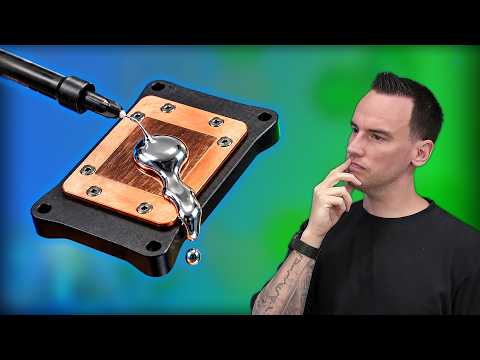 How Liquid Metal Really Reacts! Analysis & a 2-Year Test der8auer EN · 138K views in two days, published Oct 15 · not watched Roman "der8auer" Hartung tears down two years of liquid-metal thermal interface on real hardware to see what it does to contacts and coolers. Title, channel and view count verified this morning; we did not watch it, and the readable description was mostly sponsor credits, so treat this as a pointer, not a review. Watch on YouTube → | 🗂️ THE BORING STUFF Oct 15 · FLUX 3 Image Klein. Black Forest Labs released a 5.6B open-weights image model with native 4K and up to 10 reference images; the INT8 build runs on 8 GB of VRAM, per vendor numbers. BFL release post → Oct 15 · Forgejo v17.0. The self-hosted forge adds a FUNDING.yml Donate button and issue/PR auto-completion; watch two breaking changes, absolute links now resolve to repo root and action-run webhooks are deprecated. Forgejo release post → Oct 15 · Rust 1.99.1. Point release fixes an FFI bool miscompilation on x86_64, a missing wcslen that broke UEFI std builds, and rust-lld failing to find libLLVM on macOS. Rust blog → Oct 15 · How the Claude Code team does code review. Anthropic says its monorepo went from about 2,500 changes a day in May to over 30,000 in September, merged PRs doubled while reverts fell over 40%, and the goal is at most one human in the loop per PR. claude.dev post → Official pages read this morning. Nothing installed or run; their numbers are theirs. |
🧪 ONE THING TO TRY TONIGHT Check one default you never chose. The Home Assistant fight started with a security check that was on by default for years. Pick one service you run, list its outbound calls and opt-outs, and flip the one you would not have chosen. HA users: `ha security options --pwned=false`. |
What this issue could not see. HN, Lobsters, dev.to, Product Hunt’s feed, GitHub, YouTube and the linked primary sources were read, including the full Home Assistant issue thread and both seed posts. Reddit’s RSS was read overnight as rank without scores. X mirrors returned only access-queue pages and Bluesky refused anonymous API reads, so neither is covered; LinkedIn is a login wall. Nothing was installed or run, and the video was not watched. Benchmark and performance numbers are vendor or author claims as labeled. Deduped against every published issue; the Apple and StarCraft items are marked follow-ups. |
|
| Images: credited in each report; source screenshots and announcement artwork, not our tests. |
|