| View in browser: The Diff No. 027 |
| The Diff No. 027 Friday, 30 October 2026 · AI dev news, only what is verified |
 |
A Binance hot wallet signed fifty EIP-7702 delegations and lost billions in 204 seconds, Mistral put a 1-trillion-parameter cyber model on Hugging Face, and Martin Fowler has notes on how your prose sounds. Security week, day four, and the biggest incident yet is a story about a signature. Overnight, Binance’s busiest Ethereum hot wallet authorized a contract it should never have met, and the contract emptied the wallet in one call. The mechanism is a brand-new Ethereum feature, and every team with a signing pipeline should read the reconstruction today. Also today: Mistral releases the weights of its flagship coding-and-security model, Palo Alto firewalls rooted via a chained PHP exploit with an AI-assisted toolkit, Fowler on LLM voice, a world model dreaming games on a $10 microcontroller, YC’s agent colonies, and a scheduler that finds 27% more GPUs in the same racks. Fifty signatures, 204 seconds, billions gone. Plus Mistral’s open weights and Fowler’s red pen. |
IN THIS ISSUE | 01 🔓 Fifty signatures, 204 seconds, billions gone from a Binance hot wallet The wallet signed fifty EIP-7702 delegations at 20:20:59 UTC; one contract call later it held nothing. The digest a signing service sees for an authorization is indistinguishable from a transaction hash, so every policy engine checked nothing. | | 02 🐘 Mistral releases the weights of Large 4, its trillion-parameter defender Two days after Google gated its cyber model to vetted defenders, Mistral put its flagship on Hugging Face under a modified MIT license: free to use, modify and commercialize, unless you sell it as a service. | | 03 🧨 PHP2Shell chained with a kernel 0-day rooted 25 Palo Alto firewalls, including US government ones One unauthenticated HTTP request: a PHP2Shell pair plus the Fragnesia kernel LPE. Unit 42 verified the attacker’s tooling, and the post-exploitation kit shows AI fingerprints. |  | 04 ✍️ Fowler: you can’t edit the LLM voice out of a draft Martin Fowler’s advice to authors is blunt: never let the model write the first draft, because the uncanny valley of prose survives editing. His own policy: AI for search only, verified at the source. | 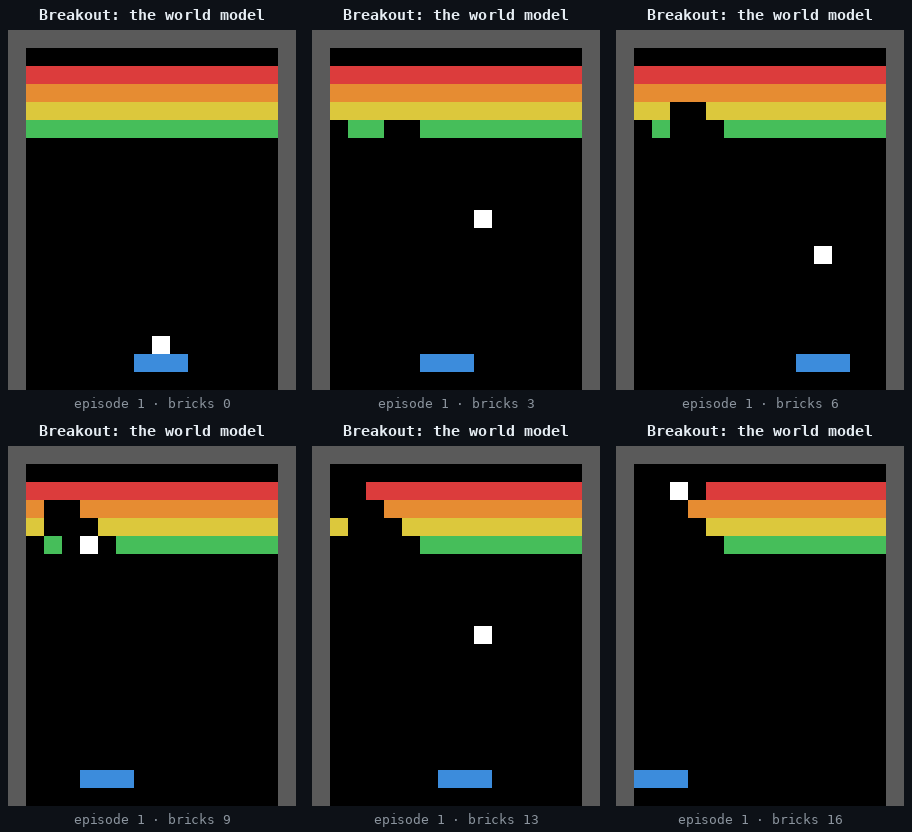 | 05 🎮 A world model dreams games on a $10 microcontroller, and an agent learns inside the dream tinyworldformer runs two small networks on a Raspberry Pi Pico 2 W: an int8 looped transformer that generates the next frame, and a stream-x agent that learns to play the dreamed game. No real game runs on the chip. | | 06 ⛏️ YC built a Minecraft civ of 25 agents and open-sourced the harness YC Labs and Olam Labs are running long-lived agent colonies in Minecraft and Mindustry to study swarm dynamics: roles, hierarchies, coordination. The Minecraft agent harness is public. | | 07 🗄️ Your GPU cluster has 27% more GPUs than your scheduler thinks SkyPilot’s case for topology-aware scheduling on NVL72: rack-local jobs get the NVLink fabric, scattered jobs fall back to InfiniBand and lose 43% of training performance. Their fix: placement, in-place failure recovery, defragmentation. |
|
🔥 VIRAL The loud ones on Hacker News. Numbers are a morning snapshot. | 01 HN: 772 points at 06:28 IST · BBC + CoinDesk + 808bits, Oct 29-30 · no image available 🔓 Fifty signatures, 204 seconds, billions gone from a Binance hot walletThe wallet signed fifty EIP-7702 delegations at 20:20:59 UTC; one contract call later it held nothing. The digest a signing service sees for an authorization is indistinguishable from a transaction hash, so every policy engine checked nothing. SCENE The timeline reads like a heist. From October 28, the attacker paid gas from Tornado Cash in three batches, then ran the entire attack twice with a test wallet. At 20:20:59 UTC on October 29, a transaction carrying no value and no calldata landed in Ethereum block 26300753: an EIP-7702 authorization list, fifty entries long, every one signed by Binance 14, one of the exchange’s busiest hot wallets. Three minutes and twenty-four seconds later, one contract call swept 167,464 ETH, 1.615 billion USDT and 63 more tokens to an address that had never received anything. That wallet alone was worth $2.5 to 2.8 billion at the time, per 808bits’ reconstruction; Arkham’s aggregate across linked wallets ran to $5.7 billion and change. THE THING EIP-7702, shipped in the Pectra upgrade, lets an ordinary wallet delegate its account to contract code with one signature. The fatal detail, from 808bits’ analysis: an authorization is a signature over a 29-byte digest, and "a signing service that is handed 32-byte digests cannot tell this digest from a transaction hash." A policy engine that checks destination, amount and calldata never gets a look, because the object has none of those. The response moved fast: Tether froze $1.567 billion in USDT, Circle froze over $800 million in USDC, and Binance says it froze roughly $3 billion itself, suspended all deposits and withdrawals, and says it will "cover all losses," promising a full post-mortem. CZ, no longer running the exchange, cited an estimate that net losses land "probably somewhat more than $1 billion." ✂️ STEAL IT Steal the audit question, word for word: can your signing pipeline distinguish an EIP-7702 authorization digest from an ordinary transaction hash? If your HSM, custodian or multisig service signs opaque 32-byte blobs, the answer today is probably no, and your policy engine is decoration. Watch VERDICT Watch Binance’s promised post-mortem for how the signatures were obtained; that is still unknown. It fails you as a reason to move funds in panic: Binance says losses are covered, but that is the exchange’s word, and withdrawals were still suspended at publication time. The 808bits reconstruction · BBC · CoinDesk · HN discussion Tap one, then press send in the email that opens. Researched replies usually land within about 10 minutes. More like thisLess like thisDig deeperAlready knew it |
02 HN: 1,218 points at 06:28 IST · mistral.ai, Oct 29 · image: Mistral 🐘 Mistral releases the weights of Large 4, its trillion-parameter defenderTwo days after Google gated its cyber model to vetted defenders, Mistral put its flagship on Hugging Face under a modified MIT license: free to use, modify and commercialize, unless you sell it as a service. SCENE The contrast writes itself. On Tuesday Google announced Gemini 4 Carbon, cyber-tuned and gated behind a government-aligned testing process. On Thursday Mistral answered with Le Chonk: the 1-trillion-parameter Mistral Large 4, weights downloadable today, deployable with vLLM or SGLang, also on OpenRouter, Azure Foundry and as an NVIDIA NIM. The license is the new "Mistral Ecosystem Open-Weight license," a modified MIT: free to use, fine-tune and commercialize, with one carve-out - businesses running a Model-as-a-Service offering need a separate commercial license. API pricing drops to $0.70 per million input tokens and $2.10 per million output. THE THING The pitch is coding plus defensive security, and every number is Mistral’s own: leads open weights on Cognition’s private FrontierCode 2.0 at 19.7%, ties GLM-5.3 on the Artificial Analysis Coding Agent Index at 48% "while using 47% fewer tokens per task," jumps 13 points on Terminal-Bench 4.0 to 41%, scores 51% on the AA Cyber Index, refuses 96.6% of malicious cyber requests, and resists 97.1% of attacks on the B3 agent-security benchmark. A vetted pentest variant goes to design partners like Orange Cyberdefense under contract. The sovereignty framing comes with endorsements from Booz Allen, Cisco, Cloudflare, Fortinet, Rubrik and Zscaler. ✂️ STEAL IT Steal the release mechanics: preview, harvest feedback, three more weeks of RL, then open the weights with the benchmark deltas in the same post. "Gains continue to accelerate, with no signs of saturation" is marketing, but the before-and-after table is a real artifact. Try today VERDICT If you have the GPUs, the weights are on Hugging Face and the API is priced below most frontier rivals. It fails you as an independent verdict: every benchmark quoted is self-reported, FrontierCode 2.0 is private, and the cyber endorsements come from partners with contracts attached. The announcement · HN discussion Tap one, then press send in the email that opens. Researched replies usually land within about 10 minutes. More like thisLess like thisDig deeperAlready knew itTest it for me |
03 HN: 226 points at 06:28 IST · dreamgroup.com, Oct 26, updated Oct 29 · no image available 🧨 PHP2Shell chained with a kernel 0-day rooted 25 Palo Alto firewalls, including US government onesOne unauthenticated HTTP request: a PHP2Shell pair plus the Fragnesia kernel LPE. Unit 42 verified the attacker’s tooling, and the post-exploitation kit shows AI fingerprints. SCENE Dream’s researchers found the whole operation sitting in artifacts: target lists, exploitation logs and about 40 custom post-exploitation scripts. The chain is two exploits in one request - CVE-2026-109618 and CVE-2026-109619 against the PAN-OS management web server, the same surface that fronts GlobalProtect portals, escalated to root with a kernel privilege-escalation bug they call Fragnesia, CVE-2026-46300. Twenty-five firewall and management servers across the US, Japan, Taiwan and South Korea were rooted; the attacker then focused on three servers in a US government-affiliated environment and went after Active Directory, with recovered artifacts confirming credential extraction. THE THING The AI angle needs the caveats attached. Claude Code was installed in the attack infrastructure, an offensive-security platform called aiscan was configured with DeepSeek and Kimi, and FOFA API keys were present. Dream’s own words: "we have no direct evidence that the AI tools were specifically used to write the exploit," though the code structure across the scripts suggests AI-assisted development, and "this operation does not appear to be a fully autonomous nation-state attack." Palo Alto’s Unit 42 independently verified the tooling and results, and fixed PAN-OS versions are rolling out across affected branches. ✂️ STEAL IT Steal the exposure check: if your firewall’s management interface or GlobalProtect portal answers the public internet, that is the whole attack surface here. One request, no credentials. The audit takes an afternoon; the incident takes a quarter. Try today VERDICT Inventory any internet-facing PAN-OS management interfaces and apply the fixed builds. It fails you as a finished story: Palo Alto’s advisory details are still landing, and the AI-attribution claim is inference from tooling, not provenance. The research · HN discussion Tap one, then press send in the email that opens. Researched replies usually land within about 10 minutes. More like thisLess like thisDig deeperAlready knew it |
04 HN: 355 points at 06:28 IST · martinfowler.com, Oct 29 · image: martinfowler.com ✍️ Fowler: you can’t edit the LLM voice out of a draftMartin Fowler’s advice to authors is blunt: never let the model write the first draft, because the uncanny valley of prose survives editing. His own policy: AI for search only, verified at the source. SCENE His bliki post opens with the sensation every heavy reader knows: "I get the growing feeling that I’m reading the output of an LLM. I can’t necessarily define why, although there are the common tells (it’s not the em-dashes, it’s the load-bearing tapestries). As I do this my desire to read on atrophies, sometimes to the point of revulsion." Detector tools miss the point, he argues: by the time you reach for one, the revulsion has already happened. THE THING The practical rules: do not get an LLM to write a draft, because "even if it’s edited by a human, it’s very hard to expel the LLM-Voice"; even accepting rephrasing suggestions is dangerous; using one for outline and structure "may be ok, but only as far as an outline." His standing policy on martinfowler.com: authors declare how they used AI in the acknowledgments; his own use is as a search tool, verifying everything at the source. He carves out real exceptions - accessibility, translation, form letters to officials - and the deeper worry: delegate the writing and you delegate the thinking, because writing is how the thinking gets done. ✂️ STEAL IT Steal the disclosure norm: a one-line "how I used AI" note in the acknowledgments costs nothing and teaches readers which uses actually work. It is also quietly enforceable culture on any team that publishes. Try today VERDICT Read it before your next launch post; then read your last one aloud. It fails you as a detection method: he admits his own ear is unreliable, and some of what reads as LLM voice is just generational change in language. The essay · HN discussion Tap one, then press send in the email that opens. Researched replies usually land within about 10 minutes. More like thisLess like thisDig deeperAlready knew it |
🔭 UNDER THE RADAR Quiet tools and field reports worth your time. | 05 HN: 92 points at 06:28 IST · github.com/SheepSeb · image: the project 🎮 A world model dreams games on a $10 microcontroller, and an agent learns inside the dreamtinyworldformer runs two small networks on a Raspberry Pi Pico 2 W: an int8 looped transformer that generates the next frame, and a stream-x agent that learns to play the dreamed game. No real game runs on the chip. SCENE The setup belongs in a museum of cute ideas. Network one is the world model: given the current frame and an action, it predicts the next frame and the reward. Network two is the actor: given a frame, it picks an action. On the chip, neither ever touches the real game - the actor only sees frames the world model dreams, and the world model only receives the actor’s choices. Both run on core 1 of the RP2350 while core 0 handles USB and the display. Any button press hands the dream to you. THE THING The engineering is why it fits: the world model is a looped transformer, one block applied repeatedly with the same weights, quantized to int8, 26k to 131k parameters depending on the game, at 2 to 8 million multiply-adds per frame; the actor is a 9k-16k parameter MLP trained with streaming RL, either in the real game or inside the dream itself. Games - Breakout, Pong, Flappy, a Doom-lite with a minimap - are a few hundred lines of numpy each, written so every frame holds the entire state. The same no_std engine compiles to WebAssembly and runs the whole loop in a browser page. ✂️ STEAL IT Steal the evaluation trick: he wrote the real games in numpy specifically so every dreamed frame could be checked against ground truth. "How wrong is the dream?" becomes a number instead of a vibe. Try today VERDICT The README has the full reproduce path, and the WASM build runs in a browser if you compile it. It fails you as a product: 11 commits, one author, and a dream that drifts - that is the charm, not a roadmap. The repo · HN discussion Tap one, then press send in the email that opens. Researched replies usually land within about 10 minutes. More like thisLess like thisDig deeperAlready knew it |
06 HN: 115 points at 06:28 IST · labs.ycombinator.com · no image available ⛏️ YC built a Minecraft civ of 25 agents and open-sourced the harnessYC Labs and Olam Labs are running long-lived agent colonies in Minecraft and Mindustry to study swarm dynamics: roles, hierarchies, coordination. The Minecraft agent harness is public. SCENE The framing is alignment research with a Twitch stream. YC’s labs team argues multi-agent dynamics need empirical study, not just formal models, citing "the thousand-agent swarms that recently obliterated hundreds of open mathematical problems" as the useful end and "the recent OpenAI-Hugging Face incident" as the dangerous one. So they built colonies: Civ50 in Minecraft, and a fresh colony of 25 GPT-6.1 Terra agents you can watch live. THE THING The shippable part is the harness, open-sourced at github.com/yc-software/minecraft-agent-harness: agents observe, reason, remember, act, message each other and write and execute scripts, built on Mineflayer with the core loop running on Pi - "attributes of a frontier agentic harness like Hermes, OpenClaw, and our own QM in-game." They built it because a long-running Minecraft agent harness did not exist; now it does. ✂️ STEAL IT Steal the experimental design: pick an environment humans already read fluently. Minecraft makes emergent behavior legible to non-specialists, which is why the stream works as both research and communication. Watch VERDICT Watch what the colonies produce; emergent coordination claims are the lab’s own. It fails you as a benchmark: a Twitch colony is a demo environment, not an eval, and the incident it cites as motivation is only referenced, not detailed. The project · The harness · HN discussion Tap one, then press send in the email that opens. Researched replies usually land within about 10 minutes. More like thisLess like thisDig deeperAlready knew it |
07 HN: 102 points at 06:28 IST · skypilot.ai, Oct 29 · no image available 🗄️ Your GPU cluster has 27% more GPUs than your scheduler thinksSkyPilot’s case for topology-aware scheduling on NVL72: rack-local jobs get the NVLink fabric, scattered jobs fall back to InfiniBand and lose 43% of training performance. Their fix: placement, in-place failure recovery, defragmentation. SCENE The premise is a hardware fact with a scheduling consequence. NVIDIA’s NVL72 connects all 72 GPUs in a rack on one NVLink fabric, an order of magnitude more bandwidth than the alternatives - but only inside the rack. SkyPilot’s number for getting it wrong: the same distributed training job over InfiniBand instead of NVLink degrades 43%. Multi-node jobs that land across racks silently pay that tax. THE THING Their platform work attacks the three ways locality dies: placement (keep tensor-parallel and expert-parallel traffic, the all-reduce and all-to-all on the critical path, rack-local), in-place recovery when a GPU fails mid-run, and automatic defragmentation as jobs finish and scatter free capacity. The headline claim, 27% more usable GPUs from the same racks, is the vendor’s, from their own cluster data. ✂️ STEAL IT Steal the framing for any infra pitch: "you already own the performance, your scheduler is losing it" is a stronger budget conversation than any new-hardware ask. Watch VERDICT If you run NVL72 or are priced against it, the ideas transfer even if the platform does not. It fails you as neutral measurement: every figure is SkyPilot’s, in a post selling the SkyPilot platform. The post · HN discussion Tap one, then press send in the email that opens. Researched replies usually land within about 10 minutes. More like thisLess like thisDig deeperAlready knew it |
📊 THE ATTENTION GAP HN points at 06:28 IST. Attention, not quality. | Mistral Large 4 open weights | | 1,218 HN | | Binance wallet drain | | 772 HN | | LLM Voice (Fowler) | | 355 HN | | PHP2Shell PAN-OS chain | | 226 HN | | NetBSD atto editor | | 142 HN |
|
ALSO ON THE RADAR Claude Duet gets a rare rave. Fig.blue tried Muse, Dot, NanoClaw and friends, and calls Duet the first personal-assistant harness that is more useful than tedious: fast responses, self-organizing channels, per-channel GitHub repo policies, and it never asks for your credentials. One reviewer’s week with it, not a benchmark. The review → NetBSD ships atto, a tiny Emacs-like editor. A new default text editor in the base system, announced on the project’s Mastodon. Minimal, and unapologetic about it. The announcement → noalloc: zero heap allocations in Go, enforced. Tooling and libraries that make no-allocation a build-time contract instead of a code-review hope. The repo → dontallow: auto-dismiss macOS’s local-network prompt. A tiny utility that kills the "Allow app to find devices on your local network?" dialog for you. Convenient, and a small reminder of how much security UI is now trained dismissal. The repo → Follow-up: eMudhra’s macOS gap is still open. No new update on the disclosure site since October 28: Apple’s bundled git, curl and python3 still trust the compromised intermediates as of that post. Lobsters sent the Apple-specific page to 116 points yesterday. No. 026 has the full story and the self-check. The status page → Follow-up: Alpine’s GitLab is still down for the rebuild. No change to the incident post since October 28; the instance has not reopened. The password-reuse warning stands if you had an account. The incident post → |
🗂️ THE BORING STUFF Oct 29 · DoorDash to acquire Instacart. The official announcement: one delivery giant buying the other. Terms and regulatory path are theirs to state; expect a long review. DoorDash → Oct 29 · Launch HN: Simantic (YC F26). Firmware simulation for AI agents: let the agent break the device in simulation before it touches hardware. Fresh out of the fall batch. Launch HN → Oct 29 · Mistral Large 4 lands on NVIDIA NIM day one. Per Mistral’s announcement, the new model ships as an optimized NVIDIA NIM container for vLLM serving, with NeMo AutoModel for customization. Mistral → Official pages read this morning. Nothing installed or run; their numbers are theirs. |
🧪 ONE THING TO TRY TONIGHT Read the transaction that emptied the wallet. Free and five minutes: open Ethereum block 26300753 on any block explorer and find the zero-value transaction carrying the fifty-entry EIP-7702 authorization list, signed by Binance’s hot wallet at 20:20:59 UTC on October 29. Then look at the next call, three minutes and twenty-four seconds later. Security incident reports make more sense once you have seen the two transactions with your own eyes. |
What this issue could not see. HN, Lobsters and GitHub were swept overnight and this morning, and primary sources were read: 808bits.com, bbc.com, coindesk.com, cointelegraph.com, panews.io, mistral.ai, dreamgroup.com, martinfowler.com, github.com/SheepSeb/tinyworldformer, labs.ycombinator.com, skypilot.ai, fig.blue, mastodon.sdf.org, about.doordash.com, emudhra.we-have-a-problem.com and alpinelinux.org. Reddit is absent again: anonymous access from hosted networks is blocked by policy and the official app-registration route is unresolved, so no Reddit source was consulted. X blocks anonymous access, so quotes from CZ, Ardoino and Allaire are as relayed by the cited outlets. The Binance figures are moving targets from named sources: $2.5-2.8B for the Binance 14 wallet (808bits), ~$5.7B aggregate (Arkham via CoinDesk), $2.4B in issuer freezes and ~$3B frozen by Binance itself (BBC), and a net-loss estimate of "somewhat more than $1 billion" (0xngmi, quoted by CZ via PANews); how the signatures were obtained was not public at publication. Mistral’s benchmark, refusal and resistance numbers are all self-reported, and its endorsers are commercial partners. The PHP2Shell AI-assistance claim is Dream’s inference from tooling, with their own caveat that there is no direct evidence. SkyPilot’s 27% and 43% figures are the vendor’s. The tinyworldformer and YC colony claims are their authors’, untested by us. Nothing was installed or run. Deduped against every published issue, No. 001-026. |
|
| Images: credited in each report; source screenshots and announcement artwork, not our tests. |
|