| View in browser: The Diff No. 025 |
| The Diff No. 025 Wednesday, 28 October 2026 · AI dev news, only what is verified |
 |
Twenty-four hours after OpenAI published a manuscript titled "The Exponential Time Hypothesis Is False," Anthropic answered: its own refutation, bylined Claude, with a Lean formalization attached. The priority fight started the same afternoon. The ETH story from yesterday’s No. 024 got its second act overnight, and it is a messier, more interesting one: a second lab claiming the same refutation, a public dispute about who built on whose work, and an expert panel OpenAI convened now at odds with OpenAI’s own release process. The rest of the day refused to be quiet too: Google DeepMind announced Genie 4, Ghostty shipped the release of its life, and CPython began removing the experimental JIT. Today: the dueling refutations, the terminal, the world model, the removed JIT, Wikipedia’s human cleanup crew, a 38-million-line Lean formalization, an offline survival AI, and Google’s fuzzer-versus-agent scoreboard. Dueling ETH refutations, the fastest terminal release of the year, and the volunteers keeping Wikipedia human. |
IN THIS ISSUE | 01 ⚔️ Two labs now claim the Exponential Time Hypothesis is false Anthropic’s formal-math repository holds a 2^o(n) algorithm for 3-SAT it says an internal Claude model discovered, plus a Lean 4 formalization. Hours earlier, an Anthropic mathematician had publicly questioned the originality of OpenAI’s claim. | | 02 👻 Ghostty 1.4.0 shipped, and it is a monster Seven months, 172 contributors, 2,889 commits, the first complete Kitty graphics implementation outside Kitty itself, and two security fixes worth the update on their own. | | 03 🌍 DeepMind announced Genie 4, a world model that adds sound and dialogue The new generation of DeepMind’s world simulator is natively multimodal: music, ambient noise and interactive dialogue generated alongside the world itself. | | 04 🐍 CPython is removing its experimental JIT The Steering Council paused the project in June pending a PEP. The PEP never landed, and now the just-in-time compiler is on its way out. |  | 05 🧹 Wikipedia’s AI cleanup crew is still human WikiProject AI Cleanup has hunted machine-generated text since 2023. IEEE Spectrum shadowed the volunteers as the tells disappear. | 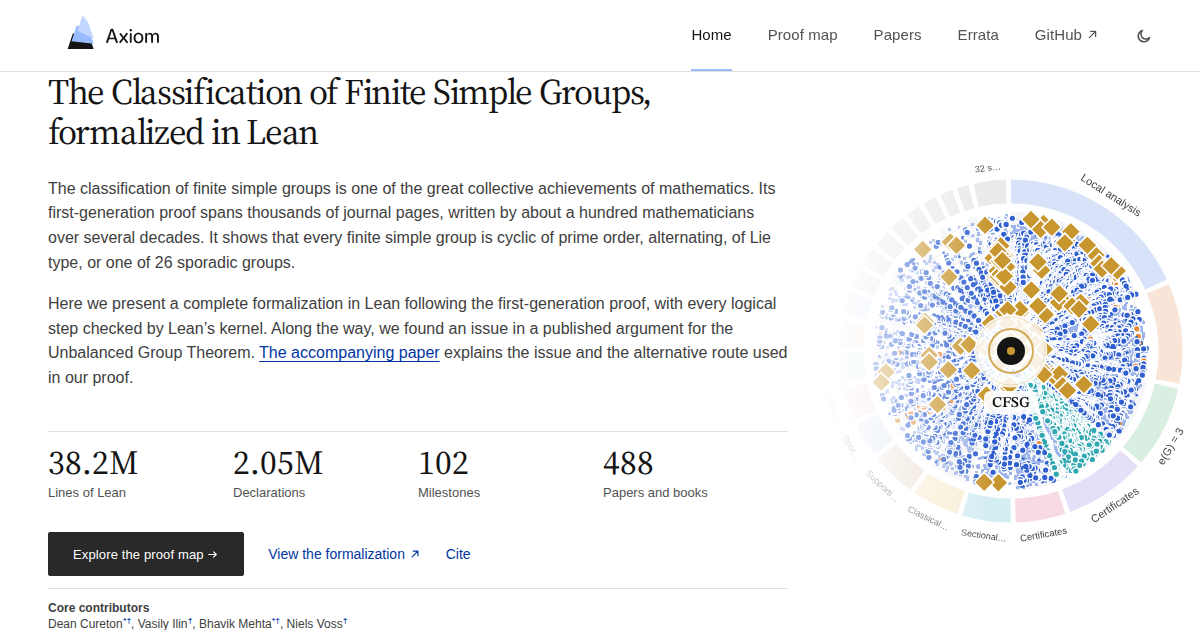 | 06 📚 A small team formalized the classification of finite simple groups in Lean, and found a hole in the literature 38.2 million lines of Lean, every logical step checked by the kernel, and counterexamples to a closure assertion used in a published route to a named theorem. | 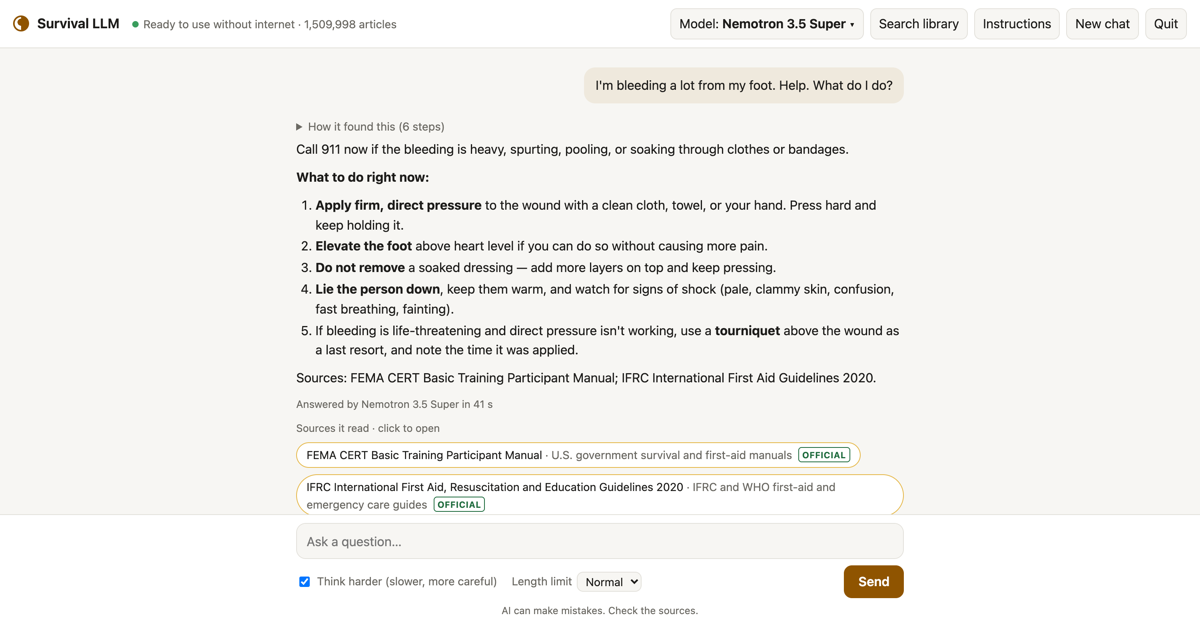 | 07 🆘 Survival LLM: an AI that still works when the internet doesn’t A free emergency assistant that runs entirely on your own computer, with 1.5 million articles and sources shown for every answer. |  | 08 🐛 Project Zero scored it: AI agent 45, fuzzer 37 Six months, same JavaScript engine, same reporting pipeline. BigSleep found more V8 vulnerabilities than Fuzzilli, and a substantial share of each side’s bugs were invisible to the other. |
|
🔥 VIRAL The loud ones on Hacker News. Numbers are a morning snapshot. | 01 Follow-up to No. 024 · anthropics/formal-math, Oct 27 · no image available ⚔️ Two labs now claim the Exponential Time Hypothesis is falseAnthropic’s formal-math repository holds a 2^o(n) algorithm for 3-SAT it says an internal Claude model discovered, plus a Lean 4 formalization. Hours earlier, an Anthropic mathematician had publicly questioned the originality of OpenAI’s claim. SCENE The README does not hedge either. "A deterministic algorithm solves 3-SAT on n variables in time 2^o(n), which refutes the Exponential Time Hypothesis (ETH)." The algorithm in fact solves the harder #3-SAT counting problem. The paper in the folder is bylined "by Claude (Anthropic)"; the repo says the result "was discovered by an internal research Claude model" and that the Lean 4 formalization was "written by AI models." And it prints its own caveat in the same breath: "The result is purely asymptotic and says nothing about solving formulas in practice." THE THING The sequence matters. TechCrunch reports that Anthropic mathematician Levent Alpöge first suggested OpenAI was basing its solutions on pre-existing work, and that Anthropic released its own refutation hours later. Scientific American reports that OpenAI’s release process violated a clarifying statement from AGMAI, the expert advisory panel OpenAI itself organized, and that OpenAI has tapped outside experts to vet its claim. The Anthropic formalization is real code you can read: MainResults.lean states the two claims as definitions on Mathlib’s Turing machines, and Solution.lean says it closes both from a counted-operations chain. What we could not do: compile it, audit the whole tree for placeholders, or find an independent qualified review confirming either lab’s claim. Both are lab-published results awaiting outside verdicts. ✂️ STEAL IT Steal the receipt format. Anthropic’s repo separates the claims file from the proof tree, states the machine model, publishes the paper, and prints its own caveat in the README. If your system produces a claim you cannot evaluate yourself, that is the bar: statement, artifact, limits, in public. Watch VERDICT Watch the vetting, not the victory laps: outside experts are reviewing OpenAI’s manuscript, and Anthropic’s formalization is public for anyone with a Lean toolchain to check. It fails you as settled mathematics: no independent review has confirmed either refutation, the priority dispute is unresolved, and on crypto implications all we have is an attributed comment from OpenAI science lead Dan Roberts that they checked and were "reasonably confident" nothing breaks. Anthropic’s repository · OpenAI’s manuscript · TechCrunch on the dispute · Scientific American Tap one, then press send in the email that opens. Researched replies usually land within about 10 minutes. More like thisLess like thisDig deeperAlready knew itTest it for me |
02 HN: 848 points at 06:26 IST · ghostty.org, Oct 27 · image: ghostty.org 👻 Ghostty 1.4.0 shipped, and it is a monsterSeven months, 172 contributors, 2,889 commits, the first complete Kitty graphics implementation outside Kitty itself, and two security fixes worth the update on their own. SCENE The release notes tell you what kind of project this is before you read a single feature: they were hand-written by the maintainers, "painstakingly and lovingly," a combined 16-plus hours of work, with the full changelog and a security section up top. Ghostty 1.4.0 landed Tuesday with seven months of work from 172 contributors across 2,889 commits, large performance and memory improvements, and SSH integration improvements. THE THING The headline technical claim: a 100% complete Kitty graphics implementation including animation and relative placements, the first non-Kitty terminal to do it. The reason to stop reading and update: GHSA-4hwh-wx3w-3fqg, a paste-protection hole where carriage returns were not treated as line endings, so a paste could run a command without confirmation in programs that do not use bracketed paste, plus a malicious-graphics fix, GHSA-mhff-mv4q-fp63. HN kept it near the top of the front page all night. ✂️ STEAL IT Steal the release-notes culture: security first, full changelog, written by the humans who shipped it, with the contributor count printed like a thank-you. It is why a terminal emulator can put up 800-plus points on a day dominated by AI news. Try today VERDICT Update for the paste-protection fix alone, then read the notes for the fun of it. It fails you as a reason to switch terminals: the Kitty graphics completeness only matters if your tools draw in the terminal, and if yours do, you were already waiting for this. The release notes · HN discussion Tap one, then press send in the email that opens. Researched replies usually land within about 10 minutes. More like thisLess like thisDig deeperAlready knew it |
03 HN: 792 points at 06:26 IST · deepmind.google, Oct 27 · no image available 🌍 DeepMind announced Genie 4, a world model that adds sound and dialogueThe new generation of DeepMind’s world simulator is natively multimodal: music, ambient noise and interactive dialogue generated alongside the world itself. SCENE The announcement post, from Raia Hadsell, Diego Rivas and the Genie team, makes the pitch in one sentence: "Genie 4 is natively multimodal, enabling audio-like music, ambient noises, and interactive dialogue to be simultaneously generated with the world." You set an event in motion, and Genie 4 simulates what happens next: how the world responds, how it sounds, and how the people in it move, react and speak. THE THING Under the hood, per the post, Genie 4 builds on the Gemini family: Gemini Omni anchors the simulations in real-world appearance and behavior, while other Gemini models supply the reasoning that keeps a simulation coherent. DeepMind frames the work as AGI infrastructure: safe, infinitely variable simulations for training and evaluating agents. What the post does not include, as far as we could verify: a public access program or any independent evaluation. The demo videos are DeepMind’s own. ✂️ STEAL IT Steal the product framing: each generation of Genie adds one modality layer to the same world-simulation bet, and the blog post says plainly what the bet is for. Roadmaps read better when the thesis survives contact with the demo. Watch VERDICT Watch for access and independent hands-on reports; until then every impressive clip is a lab’s own render. It fails you as something to build on today: no API, no weights and no evals accompanied the announcement that we could find. The announcement · HN discussion Tap one, then press send in the email that opens. Researched replies usually land within about 10 minutes. More like thisLess like thisDig deeperAlready knew it |
04 HN: 463 points · Lobsters: 86 · discuss.python.org + LWN, Oct 26 · no image available 🐍 CPython is removing its experimental JITThe Steering Council paused the project in June pending a PEP. The PEP never landed, and now the just-in-time compiler is on its way out. SCENE On June 5, the Python Steering Council posted "An announcement from the Steering Council regarding the JIT project": the experimental JIT merged for CPython 3.13 in 2024 would stay paused until its proponents produced a PEP describing how it could become a properly supported part of CPython. In that thread, Mark Shannon explained why the JIT was built inside CPython at all: the code-generator-heavy design is what makes it maintainable by volunteers, not just full-time professionals. THE THING This week LWN reported, and InfoWorld confirmed, the outcome: the JIT is being removed after its maintainers, Brandt Bucher and Savannah Ostrowski, missed the formalization deadlines. Python 3.15 final shipped on October 9 without the JIT ever leaving experimental status. The council’s June post is careful to credit the work: "the recent performance improvements are real and encouraging." The decision is about what a volunteer-run project can carry, not about whether the engineering was good. ✂️ STEAL IT Steal the governance: a big experimental feature got a public deadline and a PEP requirement, and the project actually enforced both. Most projects let experiments linger until they become load-bearing folklore. Skip VERDICT Nothing to do for almost everyone: the JIT was off by default and most deployments never enabled it. Watch what the freed-up core-team attention lands on instead. The Steering Council announcement · InfoWorld’s report · PEP 836 Tap one, then press send in the email that opens. Researched replies usually land within about 10 minutes. More like thisLess like thisDig deeperAlready knew it |
05 HN: 435 points · IEEE Spectrum, Oct 21 · image: IEEE Spectrum 🧹 Wikipedia’s AI cleanup crew is still humanWikiProject AI Cleanup has hunted machine-generated text since 2023. IEEE Spectrum shadowed the volunteers as the tells disappear. SCENE Ellia Lebleu is a founding member of WikiProject AI Cleanup, a volunteer effort launched in 2023 to find and remove AI-generated material that breaks Wikipedia’s guidelines. When the cleanup began, Spectrum’s Eliza Strickland writes, AI writing was often betrayed by conspicuous clichés. That era is over: the text got better, and the volunteers’ job got harder. THE THING The story is the people: a standing crew of editors doing provenance work at encyclopedia scale, while the generation tools improve monthly. It is the human side of the same arms race the security teams in today’s fuzzing report are running, except the artifacts are sentences and the fix is a deletion log. HN sent it past 400 points, most of the thread arguing about where disclosure should live. ✂️ STEAL IT Steal the operating stance: treat generated text as a supply-chain problem. Provenance first, removal when it breaks the rules, and no pretending the detector alone will save you. Watch VERDICT Read the feature, then watch whether other user-generated platforms adopt the same crew model. It fails you as a doom story: the project has been at this for three years and is still shipping deletions, which is the more interesting headline. The IEEE Spectrum feature · HN discussion Tap one, then press send in the email that opens. Researched replies usually land within about 10 minutes. More like thisLess like thisDig deeperAlready knew it |
🔭 UNDER THE RADAR Quiet tools and field reports worth your time. | 06 HN: 187 points · cfsg.axiommath.ai · image: the project site 📚 A small team formalized the classification of finite simple groups in Lean, and found a hole in the literature38.2 million lines of Lean, every logical step checked by the kernel, and counterexamples to a closure assertion used in a published route to a named theorem. SCENE The classification of finite simple groups is one of the great collective achievements of mathematics: a first-generation proof spanning thousands of journal pages, written by about a hundred mathematicians over several decades. The site that went up this week presents a complete formalization of it in Lean, following the first-generation proof, with every logical step checked by Lean’s kernel: 38.2 million lines, 2.05 million declarations, 102 milestones, 488 source papers and books. The core contributors listed are Dean Cureton, Vasily Ilin, Bhavik Mehta and Niels Voss. THE THING The finding inside the formalization is the story. While formalizing the first-generation proof, the team found counterexamples to a closure assertion used in a published route to the Unbalanced Group Theorem; an accompanying paper explains the issue and the alternative route their proof takes. That is the formal-methods pitch working exactly as advertised: the machine read the literature, and the literature had a hole. Keep the same discipline as today’s lead: this is the project’s own site and paper, and the proof is public for anyone with a Lean toolchain to audit. ✂️ STEAL IT Steal the errata culture: the site puts an Errata page in the top navigation next to the proof map. If your project claims machine-checked correctness, the corrections ledger belongs on the homepage. Watch VERDICT Dig in if formal mathematics is yours; for everyone else, the number to remember is 38.2 million lines, and the fact that the hole surfaced because someone finally made the proof machine-readable. The formalization · HN discussion Tap one, then press send in the email that opens. Researched replies usually land within about 10 minutes. More like thisLess like thisDig deeperAlready knew itTest it for me |
07 HN: 234 points · brangus.io · image: the project site 🆘 Survival LLM: an AI that still works when the internet doesn’tA free emergency assistant that runs entirely on your own computer, with 1.5 million articles and sources shown for every answer. SCENE The product screenshot is the whole pitch. The question: "I’m bleeding a lot from my foot. Help." The answer comes back as numbered first-aid steps, followed by a Sources line naming the FEMA CERT Basic Training manual and the IFRC first-aid guidelines, each tagged OFFICIAL, with a "How it found this" trace and a model picker reading Nemotron 3.5 Super. The footer says what every such tool should: "AI can make mistakes. Check the sources." THE THING The project, from an indie maker at brangus.io, is a free AI assistant and emergency library that runs entirely on your own computer: 1,509,998 articles, no connection required, each answer showing exactly where it came from. The claims are the maker’s and we did not install or test it, but the design alone is worth the points it collected: citation-first answers from named official manuals, offline by construction. ✂️ STEAL IT Steal the answer design: numbered steps, then sources with provenance labels, then a reminder to check them. Any assistant that gives consequential advice should look like this. Try today VERDICT If offline resilience is your thing, download it before you need it; the entire point is that it works when the network does not. It fails you as medical advice: it is a retrieval layer over manuals, and it says so on the label. The project · HN discussion Tap one, then press send in the email that opens. Researched replies usually land within about 10 minutes. More like thisLess like thisDig deeperAlready knew it |
08 Lobsters discussion · projectzero.google, Oct 27 · image: Project Zero 🐛 Project Zero scored it: AI agent 45, fuzzer 37Six months, same JavaScript engine, same reporting pipeline. BigSleep found more V8 vulnerabilities than Fuzzilli, and a substantial share of each side’s bugs were invisible to the other. SCENE Google’s Project Zero ran the comparison everyone argues about and almost nobody runs cleanly. Same target, Chrome’s V8 engine; same window, the past six months; same pipeline, bugs reported through Clusterfuzz into Chrome’s issue tracker. Fuzzilli, the special-purpose fuzzer, runs continuously. BigSleep, the LLM agent, runs once a day over new commits and writes proof-of-concept testcases for what it finds. Samuel Groß wrote it up. THE THING The scoreboard: BigSleep found more vulnerabilities than Fuzzilli, 45 to 37, with a 25% overlap in the specific bugs reported, and the authors caution the methodology tends to underestimate overlap. The sentence that matters: a substantial portion of vulnerabilities were discoverable by only LLMs or only fuzzing. Project Zero’s recommendation is not a coronation: fuzzing and LLMs are complementary, and vendors should run both. ✂️ STEAL IT Steal the methodology: two systems in production on the same code with the same reporting path are fairly directly comparable, and the write-up says where the comparison is weak before you can ask. Try today VERDICT If you own a fuzzing pipeline, add an agentic pass over new commits; if you own an agent pipeline, keep the fuzzer. It fails you as a ranking: 45-to-37 is Google’s own measurement on one engine, with the overlap caveats stated by the authors themselves. The Project Zero post · Lobsters discussion Tap one, then press send in the email that opens. Researched replies usually land within about 10 minutes. More like thisLess like thisDig deeperAlready knew it |
📊 THE ATTENTION GAP HN points at 06:26 IST. Attention, not quality. | US Gov’t secret court ruling (not our beat) | | 853 HN | | Ghostty 1.4 | | 848 HN | | Genie 4 | | 792 HN | | Python JIT removed | | 463 HN | | Wikipedia AI cleanup | | 435 HN |
|
ALSO ON THE RADAR tar-codec: uv’s new tar parser. From Astral’s William Woodruff: starting with 0.13, uv parses source distributions with tar-codec, a Rust crate he calls roughly twice as fast as the previous implementation while shrinking uv’s attack surface. His benchmarks, not ours. The post → Shitty Screenshare: OBS straight into the call. Tired of browser screenshare quality? This tool pipes OBS or FFmpeg directly into a video conference over WHIP, so you configure and control exactly what the other side sees. The site → Follow-up: Tailscale answers the Tailworm disclosure. After the uncoordinated Tailscale SSH disclosure in No. 022/023, the vendor published its investigation update: most issues concern privilege escalation by users already authorized to connect, fixes are being prepared, and it is not recommending everyone disable Tailscale SSH. The update → Follow-up: php2shell, the trend data. Wiz published exploitation-attempt and remediation trends for the bug class No. 024’s video walked through: real-world attempts are running slower than feared, and millions of installs remain unpatched. The data → |
🗂️ THE BORING STUFF Oct 27 · Apple M6 Macs. A new 14-inch MacBook Pro with M6, rated up to 24 hours of battery, and a new iMac with M6, per Apple’s newsroom; Bloomberg reports touch-screen MacBooks are the next bet. Apple → Oct 27 · LFM3. Liquid AI’s new foundation-model family puts text, vision, audio, omni and decision models on one shared backbone, in the 2B-parameter range, on Hugging Face today. Liquid AI → Oct 27 · Discord, searchable. Starting November 16, conversations in Discord’s Discoverable Servers will be easier to find through web search, per Discord’s own blog. Discord → Oct 27 · Claude, drug development. Anthropic reports early progress from research partnerships with six drug-development organizations, including Bristol Myers Squibb and Enveda, plus discovery efforts of its own. Anthropic → Official pages read this morning. Nothing installed or run; their numbers are theirs. |
🧪 ONE THING TO TRY TONIGHT Update Ghostty, then check your paste habits. GHSA-4hwh-wx3w-3fqg is the rare terminal bug with a cinematic exploit path: a copied command with a carriage return can execute on paste without confirmation in programs that do not use bracketed paste. Ghostty 1.4.0 fixes it. Whatever terminal you use, it is a good morning to know whether your editor and shell use bracketed paste. |
What this issue could not see. HN, Lobsters, GitHub, dev.to and YouTube page metadata were swept overnight and this morning, and primary sources were read: anthropics/formal-math and openai/math, TechCrunch, Scientific American, deepmind.google, ghostty.org, discuss.python.org, LWN/InfoWorld, IEEE Spectrum, cfsg.axiommath.ai, brangus.io, projectzero.google, astral.sh, tailscale.com, wiz.io, apple.com, liquid.ai, discord.com and anthropic.com. Reddit is absent again: anonymous access from hosted networks is blocked by policy and the official app-registration route is unresolved, so no Reddit source was consulted. X blocks anonymous access. Both ETH refutations are lab-published claims: OpenAI’s manuscript is unverified mathematics, and Anthropic’s Lean formalization is published by the lab itself; we read the statement and proof files but did not compile or independently audit them, and no independent qualified review had confirmed either claim at send time. The Alpöge pre-existing-work account is TechCrunch’s reporting, attributed. The AGMAI process dispute is Scientific American’s reporting. Project Zero’s 45-to-37 score is Google’s own measurement. Survival LLM’s claims are its maker’s, untested by us. The CFSG formalization and counterexample claims are the project’s own. Genie 4’s demo materials are DeepMind’s own. Nothing was installed or run. Deduped against every published issue; the ETH report follows No. 024’s manuscript coverage, and the Tailscale and php2shell items are labeled follow-ups to No. 022/023 and No. 024. The US Government secret-court-ruling story led HN but sits outside this newsletter’s beat. |
|
| Images: credited in each report; source screenshots and announcement artwork, not our tests. |
|