The Crime Lady: Police Procedurals and Homicide: New York

Dear TCL Readers:
When my editor at the New York Times Book Review asked me to put together a list of recommended police procedurals, I hesitated. For years I have struggled with this subgenre and how it reflects reality — or really doesn’t, a gulf that’s only widened in the last year and a half or so. In so many ways we are living in the age of “copaganda” and what it has wrought, and the entertainment industries have a lot to answer for in terms of what narratives got pushed and what stayed ignored.
But as I went through the history of procedurals, roughly eighty years old in America if you date it to Lawrence Treat’s V as in Victim (1945) or earlier if you accept, as I do, that Georges Simenon’s Inspector Maigret novels count, I realized my anxieties could be quelled somewhat. Police procedurals are fantasy novels, because we fantasize about a world where chaos neatly resolves into order, where flawed human beings still make the most moral and just choices (and when they don’t, have to struggle in its aftermath) and where communities end up better off as a result. Procedurals tell emotional truths and serve, at their best, as vehicles for hope or at least, something better than what came before.
The resulting starter pack lists many expected favorites, from Ed McBain to PD James to Joseph Wambaugh to Michael Connelly to Tana French, as well as some lesser-known gems (Derek Raymond’s Factory series, Fred Vargas, Qiu Xialong). No doubt I’ve missed many more that even the “You might also like” tags didn’t cover, because that’s always how these lists work.
**

Late last month, Netflix premiered the second season of Dick Wolf’s true crime series Homicide: New York, and the show quickly went to #1 in the US (and #4 globally.) It’s been a strange trip for me, who appears on episode 4 of the season, “Your Eyes or Your Life,” which focuses on the 1989 murder of Lourdes Gonzalez, the other women her perpetrator harmed, and its eventual, shocking connection to the Central Park Jogger case.
If that story sounds familiar, it’s because the episode draws significantly from my 2019 feature for The Cut, and then goes even further. When I watched the episode, I wasn’t expecting to see “Melissa”, Meg, and Amanda, the survivors I had interviewed for my piece, on camera — and found myself deeply moved and in awe of their courage to show their faces on-screen. So, too, did Lourdes’s children, Antonio Serrano, Carlos Vega, and Amanda Serrano, just three months old when her mother was murdered. “Your Eyes Or Your Life” is a tough watch because of the story and its ripple effects, but I’m very glad to have taken part.
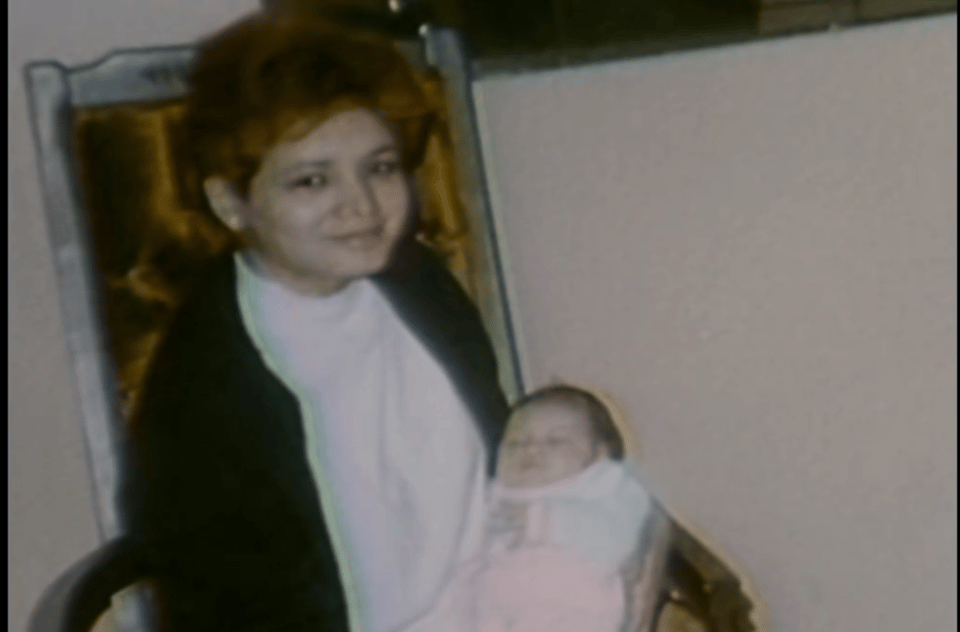
Life continues to be difficult for Lourdes’s children, above all for Carlos Vega. Though he appears in the episode, it ends with a postscript that he is currently serving time in a Colorado state prison. The bizarre case, best summarized by a Denver Post story from last November, stemmed from a bar fight on July 11, 2021 when Vega’s girlfriend randomly licked a woman’s face — and the woman happened to be Jessica Edwards, star of “Bachelor in Paradise” and a prior contestant on “The Bachelor.”
The ensuing melee ended in Edwards’ boyfriend being stabbed in the hand by Vega, who was convicted and sentenced to serve five years. At the sentencing, letters from Homicide: New York producers as well as the three survivors pleading for leniency were read in court. “I’ve read and heard details about the incident that led to his conviction. Carlos was defending himself and the woman he was with, after being attacked by a much larger man,” one producer wrote. “I have spent much time talking to Carlos about his trauma, and because he saw his mother murdered in front of his eyes while he watched helpless, he’s fiercely protective of his loved ones.”
The judge, however, said she had to take into account Vega’s criminal history (three years earlier, he had been paroled after serving time for manslaughter in a case with a fraught judicial history) and surveillance video showing Vega “reaching around a bartender who was breaking up the fight to stab the other man,” according to the Post. Vega will be eligible for parole next year, and the three survivors have told me they are hoping for an early release.
**
Let me close this newsletter with some more recommendations. This week brings the release of two excellent nonfiction books by writers I admire, London Falling by Patrick Radden Keefe and Here Where We Live Is Our Country by Molly Crabapple, both of which have been on my mind months after I read them and particularly during the Passover holiday. While wildly different in tone, style, and structure, and story, I can’t quite shake the notion of a conversation between both books about the far-reaching tentacles of inter-generational trauma during and after the Holocaust.
I also had a great time reading Yesteryear by Caro Claire Burke, a debut novel deserving of all of the buzz and hype, its central character so committed to her bit even though the reader is far more privy to the real story through the biting satirical voice. I wasn’t looking to read a novel about the vicissitudes of contemporary tradwifery but am I ever glad I did.
“The Idiot,” the new podcast from Serial productions, held my attention more than any recent podcast I’ve listened to in a very long time. I’m hoping to write more at length about it elsewhere but I found M. Gessen’s disdain for their criminally-minded cousin very relatable, along with their struggle to locate any compassion for him when they could in past reporting (on the Tsarnaev brothers, for example.) Gessen’s conversation with Harriet Clark is also worth a listen.
Lastly, I took the weekend to read Madame Bovary for the first time. I enjoyed the exacting depiction of small-town French life and Emma’s rage at being stuck, but Flaubert, in all of his desire for detail, couldn’t think that his heroine might be in want of a confidante of some sort? (Even Jane Austen knew.) Needless to say the novel (translated in my paperback edition by Francis Steegmuller) is a skeleton key for so much fiction that emerged over the next century-plus.
Could it be, now that spring is here, I will be sending newsletters on a more regular schedule? Stay tuned to find out, because I’m curious as well!
Until next time, I remain,
The Crime Lady

