The Crime Lady: Now at Flaming Hydra, Books of the Months, and More
Dear TCL Readers:
With so much bad news that it’s frankly impossible to keep up (and all to easy to dissociate), I’m pleased to announce some good news in my world: I have joined Flaming Hydra, a writers’ cooperative that publishes newsletters every weekday. I’ve been a subscriber for a while and love the breadth and depth of culture and literary essays, and primarily wanted to join as a means to flex some of my non-crime writing muscles.
Fate, however, had other plans: my first piece for FH turned out to be kind of a body horror story, on finding out that my longtime dentist was not only in the Epstein Files, but also Epstein’s dentist:
Everyone is powerless in a dental chair. Supine, with a mouth full of rubber dams or painful X-ray cards, you cede every iota of autonomy. Try to speak and helpless muffled garbling comes out. Most of the time the dentist’s mask of sanity stays on, with a silky, professional focus on clean, healthy, and expensive teeth.
All it takes, though, is one slip. For the mask to slide off and reveal the jagged imbalance underneath, and all the more so if you are a young, powerless girl living at the pleasure of predatory, powerful men. For everyone else, all it takes is willful ignorance, for the numbing agent to disappear, for a scalpel to probe too sharply. For the mouth to fill with blood until one chokes on complicity.
As I write in the piece, I had successfully avoided writing about the Files because the sheer malevolence (and millions of documents) felt overwhelming to process. Burnout was also clearly a factor after the publication of Without Consent — I’m proud of the book and always will be, but I can’t say I’m sorry that the promotional window for the hardcover is done and I am moving on to other projects already.
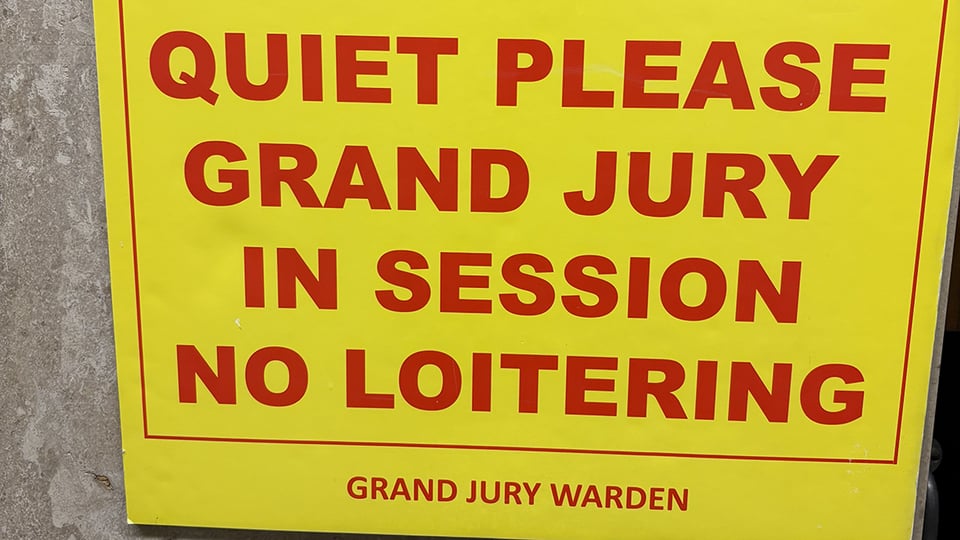
But sometimes an experience is too strange and unique not to write about. Which was also the case for my second essay for FH, on the peculiar experience of being a crime writer serving on a grand jury. Here’s now it opens:
My grand jury summons arrived in the mail on a Friday afternoon, hours after I’d turned in final edits on a new book. Men trakht, Gott lakht (Yiddish for “man plans, God laughs”) resounded in my head. Here I had just finished months of grueling work on a book about rape trials, including one I’d sat through in person in a different state, and now I was being called to serve as a juror myself. But I was also strangely elated. What were the odds that I, a crime writer—whose prior jury duty experience consisted of sitting around in a room for hours and being dismissed early, never having been picked—would end up serving on a grand jury?
Pretty high, as it turned out. They picked me because they pick almost everybody selected for grand jury duty; fewer than 30,000 get that summons in New York County each year, compared to nearly 600,000 tasked for regular jury (or “petit jury,” in official parlance). Excuses can work for avoiding grand jury duty, if you can’t find childcare, or you are a caregiver. You might get lucky if you’re seated farther away from the front or if your name doesn’t come up in the name lottery. Mine did, though, in the first batch.
Which is how I spent two weeks in March 2025 clocking in every morning at the Manhattan Criminal Courthouse at 100 Centre Street to serve alongside twenty-two other jurors in hearing dozens of cases. By a fluke, I became the assistant foreperson, basically an understudy but mostly a sounding board: I’d gone to the wrong room first, and all the other seats had been taken.
This one has been gestating for about a year, and I knew even as I was writing the first draft back in late March 2025 that the piece needed to sit for a while. Write in haste, revise at leisure is an axiom I live by. I’m glad, though that I can finally share this essay on what it was like to participate in one of the earliest proceedings of the criminal legal system, and how it changed the way I work — and also how it didn’t.
**
By a calendar quirk, both my February and March Crime & Mystery columns ran this month, which meant waiting until now to talk about some of the other crime novels published recently that I read and recommend.
February’s column reviewed new books by the civil rights lawyer Ben Crump, Devon Mihesuah, C. William Langsfeld, and Yosha Gunasekera, which I flat-out loved and think taps into the energy that fueled last year’s NYC mayoral election. The Midnight Taxi is a New York City crime novel for our current moment, highlighting communities (and boroughs!) we don’t talk about nearly enough. I can’t wait for more entries in this series.
I wish I’d had room to review To Kill A Cook by W.M. Akers, another standout NYC crime novel but set in the 1970s. It’s spiky and funny and full of mouth-watering prose. This looks to be a series as well, and I hope to get to future installments. And I was glad to see Claire Olshetsky’s Evil Genius get attention. It’s quietly deranged and really does the “reader knows lots more than the narrator” trick. Finally, all of the hype for Murder Bimbo by Rebecca Novack is deserved and then some — I loved the tripartite structure that gets readers as close to the truth as is possible, but that never loses narrative control.
March’s column was a way for me to say farewell to the great thriller writer Thomas Perry, and writing his final Jane Whitefield novel (very good, well worth your time) was the appropriate sendoff. I was also bowled over by Frances Crawford’s debut and Malin Persson Gioloto’s short story collection, and Masuteru Konishi’s fusion of cozy mystery with “healing fiction” was an interesting experiment.
This month offers an addition bevy of crime and thriller riches. The new Tana French? Yup, it’s great (the paper’s review is coming soon.) T Kira Madden’s Whidbey? Terrific and probes all of the deepest, uncomfortable truths about surviving sexual assault, who has the right to tell stories, and who gets to mourn people who have done terrible things. Lisa Unger’s Served Him Right is a delicious revenge thriller. And though it’s more speculative fantasy than crime fiction, I’ll read whatever Francis Spufford writes, and Nonesuch ruled — bring on the sequel!

As for April, though it’s too early to talk about what’s in that column, I am pleased to announce that I’ll be in conversation with Miguel Angel Hernandez for his marvelous book The Pain of Others, a blend of crime investigation and autofiction that interrogates the ethics of this genre we call true crime. The event’s at Books Are Magic on Thursday, April 23 at 7 PM, and registration details are right here.
**
Passover is on the horizon, and and preparing for it is about to take up all of my spare time. I’ll be back after it’s over, in the middle of next month.
Until then, I remain,
The Crime Lady