Welcome to the Art of Wellbeing Newsletter
A deep dive on The Architect - The first of 16 creative archetypes used to explore your wellbeing.
Hello and Welcome to the first official Art of Wellbeing Newsletter. This monthly letter is for the creatively curious.
Each month I'll be doing a deep dive on one of the 16 Creative Archetypes that act as your guide. These deep dives include the archetype's energy signature, expanded invitation, sunlit and shadow sides, real-world examples, and simple activities you can try in five minutes or less.
In addition to the deep dives, I'll be writing about app updates, real stories from my own journey and community, early access to workshops, and new products before anyone else hears about them.
Plus so much more!
Make sure to subscribe so you can take advantage of valuable information and discounts I'll be sharing here first!
Subscribe now
What is The Art of Wellbeing anyway?
The Art of Wellbeing is a framework, a workshop, and a growing collection of tools created by me, Kailey Fry, that blends health coaching with creative processes like design thinking and play.
At its core is the Creative Compass; a system of four energies and 16 creative archetypes, that guide people to explore their wellbeing in a way that honors their current capacity. It meets them exactly where they are, and uses creativity not as an artistic skill but as a language for emotions, pain, hope, and self-discovery. It currently exists as a live virtual workshop, a self-guided web app, a workbook, a card deck that's in development, and a shop full of supportive resources.
No art skills required, just curiosity.
With that said, let's begin where all good structures start: the foundation. This month, we're building with The Architect.
Meet The Architect
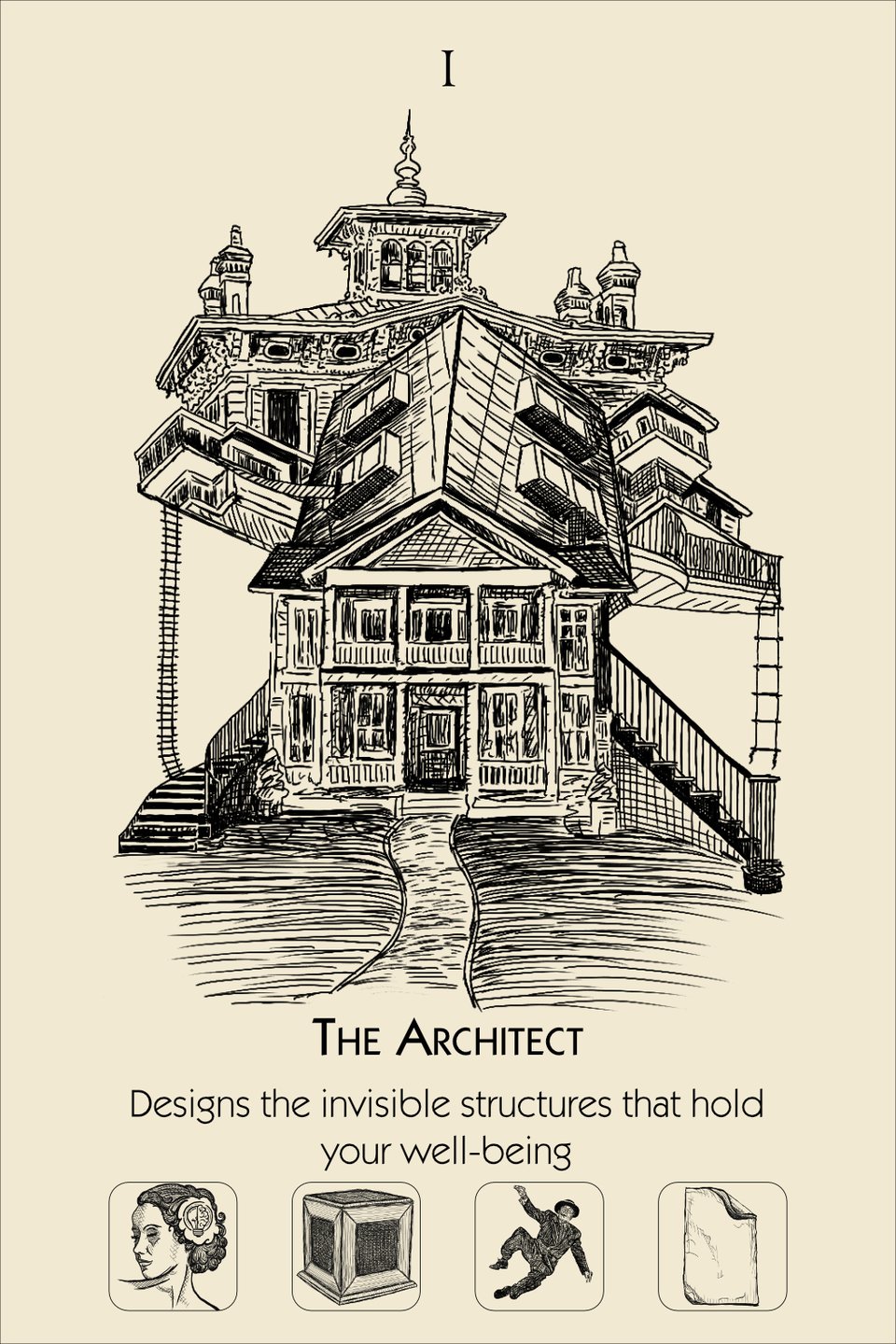
The Architect invites you to build order from chaos and design supportive frameworks for your life. When you organize your outer world, your inner world finds permission to rest.
There is a specific kind of relief that comes from a well-made thing. That relief is not trivial. That relief is The Architect at work.
How is this a creative archetype?
Creativity is often seen as painting or writing. But The Architect reminds us that creativity is also design. It's the act of shaping your environment, routines, and systems into something that supports you. You are not just living inside chaos; you are allowed to rearrange it. That is a creative act.
How can I use this for my wellbeing?
When life feels overwhelming, most people react by pushing themselves harder – which leads to burnout, sickness, or unhealthy coping habits. The Architect knows something wiser: you don't need more effort. If you slow down and find clarity, you can design the structure you need. A sturdier container. A better-designed plate. An invisible structure that holds your weight so you don't have to hold it all yourself. That's self-care.
“The future doesn’t just happen. We are building it, and we are building it all the time.” - Hannah Fry
The Architect’s Energy Signature
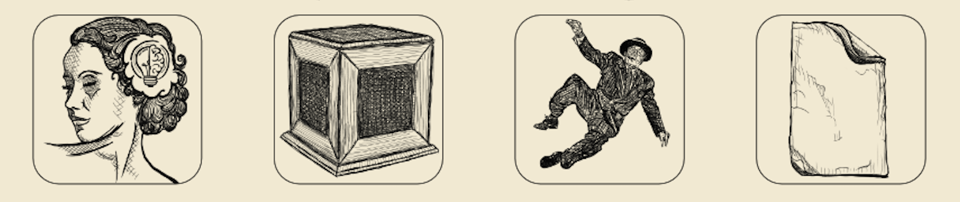
Mental + Concrete + Expressive + Blank Slate
What it means for The Architect
Mental - You think in systems, patterns, and relationships between parts.
Concrete - You build with real objects: paper, sticky notes, furniture, the actual stuff of your environment.
Expressive - You design for your own eyes first. This structure doesn't need to impress anyone but you.
Blank Slate - You begin with nothing and decide what belongs. No template required. Just your needs.
The Architect asks questions like:
"How do these pieces fit together?"
"What can I physically arrange or build right now?"
"Where will my build live and who will it serve?"
"What could I build to bring me ease instead of more effort?"
"If nothing existed here yet, what would I want it to hold?"
The Expanded Invitation
You are being called to build order from chaos. The Architect appears when life feels overwhelming; not to add more to your plate, but to help you design a sturdier plate, one crafted intentionally to hold the unique shape and weight of your needs. You have a deep-seated need for clarity and a mind that naturally seeks to create systems and beauty from the ground up. When the external world feels turbulent, or your inner world feels scattered, The Architect arrives to remind you of your innate power to design supportive structures.
Think of the timeless principles of architecture itself: the non-negotiable need for a strong foundation, the way a well-designed space can lift your spirit, the intention behind every supporting beam that holds up a sanctuary.
“The space within becomes the reality of the building” - Frank Lloyd Wright
The Architect within you knows that our external environment and routines deeply influence our internal state. A cluttered space can mirror a cluttered mind; a day with no rhythm can leave you feeling untethered. This archetype isn't about rigid control, but about compassionate design. It’s about asking: What routine would support my energy levels? How can I arrange my space to invite calm? What "rituals of care" can I build into my week to ensure I'm nurtured?
This is your permission to stop simply enduring the chaos and to start consciously designing the frameworks, for your time, your space, and your energy that will truly support you. You are the designer of your life. What invisible architecture will you build to hold what you truly need?
The Architect’s Sunlit Side (upright)
The Architect's energy builds supportive frameworks so your inner world can rest.
Signs this energy is available is when you have:
A deep need for clarity when things feel scattered
A natural instinct to create systems (even just for yourself)
Relief when you can see a structure; a layout, a routine, a template
Frustration when things are disorganized but not in a critical way – more like "this could be easier"
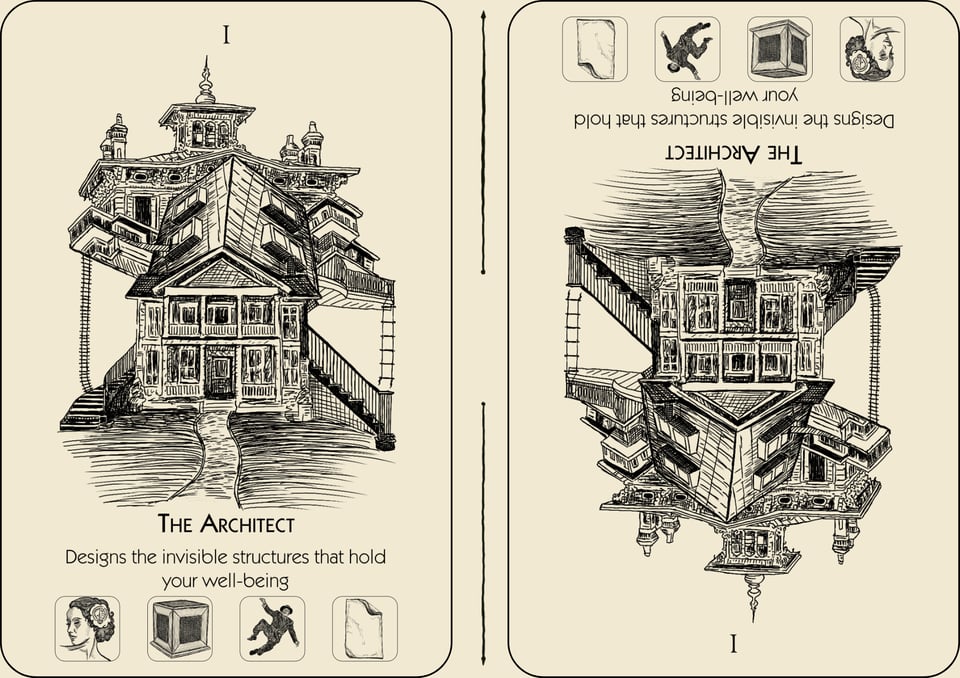
The Architect’s Shadow Side (in reverse)
The Architect can become rigid. Too much structure can become a cage instead of a sanctuary.
Signs you might be resisting this energy (or using it against yourself):
You keep designing systems but never use them
You believe if you just found the perfect structure, everything would be fine
You organize other people's lives while your own feels hollow
When you feel resistant to The Architect look for the small pieces of your structures that feel good. Those are the first bricks.
Real-World Examples of The Architect
You have met The Architect before. You may have even been them once or twice.
Daily life - The person who reorganizes their kitchen so the coffee cup is exactly where they reach first at 6 AM
Pop culture - Monica Geller (Friends) – not just clean, but organized in a way that soothes her anxiety.
History / Art - Maya Angelou – rented a hotel room and removed all distractions to build a container for her writing.
Health journey - A person who builds a symptom tracker using only three symbols (green/yellow/red) – no words, no fatigue.
Parenting - Someone who organizes the car with "zones"- snacks in the passenger door, wipes in the back seat pocket, tissues in the center console.
Work life - Someone who designs a "closing shift" ritual: close tabs, write tomorrow's top three tasks, shut down. All so they can actually leave work.
Where or when have you played The Architect in your life? What did you build?
Three Core Activities
ACTIVITY 1: Design a Wellbeing Dashboard
Create a single-page template to hold key info about your chosen topic at a glance. Use lines, colors, and boxes to make the layout feel clear and supportive. Get started by picking the most essential categories of your topic to create the structure of your dashboard.
Ways to Use This:
Low-Energy Option: Draw 3 empty boxes. Label them - Energy / Need / One Win. Fill in the boxes.
Journal follow-up: Which box felt most helpful to fill out? Which felt like a chore?
Shared version: Share a photo of your dashboard to a friend or family member. Then ask them about what their dashboard might look like.
Digital alternative: Use Apple Notes, Notion, Canva, or your chosen digital tool. Create a template you can duplicate each morning.
Archetype pairing Add a Symbol of Hope from The Dreamer into your dashboard– color or shape only, no words.
ACTIVITY 2: Design a Supportive Space
Reimagine the layout of a room or a single corner to be more supportive to your needs. Make it your own through a detailed sketch, or simply by moving three objects to new homes.
Ways to Use This:
Low-Energy Option: Move just one object. A pair of socks. A notebook. A water bottle. That's it.
Journal follow-up: "How did my body feel before moving the objects? After?"
Shared version: Ask a friend or partner: "If you could move one thing in this room for my ease, what would it be?"
Digital alternative: Use a room planner app (or just sketch on an iPad). No physical lifting required.
Permission statement: You do not need to redecorate. Moving a single pen to a better spot is architecture.
ACTIVITY 3: Build a Comfort Kit
Assemble a small box or tray with objects that engage your senses and offer comfort for a tough day.
Ways to Use This:
Low-Energy Option: Find one object nearby that feels good to hold. Put it in a designated spot. That is your kit.
Journal follow-up: "What sensation do I most need on a hard day? (Warmth? Pressure? Softness?) What object delivers that?"
Shared version: Build a small kit together with someone who lives with you. Take turns choosing items.
Digital alternative: Create a "digital comfort kit" folder on your phone using screenshots, songs, photos, a voice memo from someone you love.
Archetype pairing: Add a Talisman from The Alchemist to your physical kit.
If You’re Feeling Resistant
The thought of building anything can feel like too much. That is not laziness. That is often exhaustion, grief, or overwhelm speaking.
Try this instead:
Take one breath.
Look around your immediate space.
Name one thing that is already working. A shelf that holds books. A mug that fits your hand. A window that lets in light.
You do not have to build anything new to be The Architect. Noticing what already supports you is also architecture.
Pairing & Contrasting
Some archetypes work beautifully together. Others offer a gentle correction when you've leaned too far in one direction.
Architect + Engineer – The Architect builds the structure. The Engineer tweaks it until it feels good. Design then refine.
Architect + Dancer – The Architect craves order. The Dancer craves flow. One is not better – they are medicine for each other.
Prompt: If you have been living in Architect energy too long (over-structuring, controlling, unable to rest), what might The Dancer offer you today?
If You've Been Avoiding The Architect
Maybe chaos feels safer. Maybe systems feel suffocating. That's okay.
If that's you, ask yourself this: What is one tiny structure you could tolerate today?
A mug you always put back in the same spot.
A playlist you don't have to think about.
A five-minute window where you do absolutely nothing on purpose.
Your Turn
Answer this question in your journal, notebook, your mind, or wherever else feels natural.
"What is one small structure you could build today to hold something tender – not to control it, but to support it?"
Something tender might be:
A grief you're carrying quietly
A hope you're afraid to name
A part of you that feels fragile after a hard week
A memory that still needs a soft place to land
Not a life overhaul. Not a perfect system. Just one small, kind container.
That is architecture. That is care. That is just one creative version of you.
Next Time in the Deep Dive Series
Meet The Engineer – Troubleshoot and tweak until life feels easier.
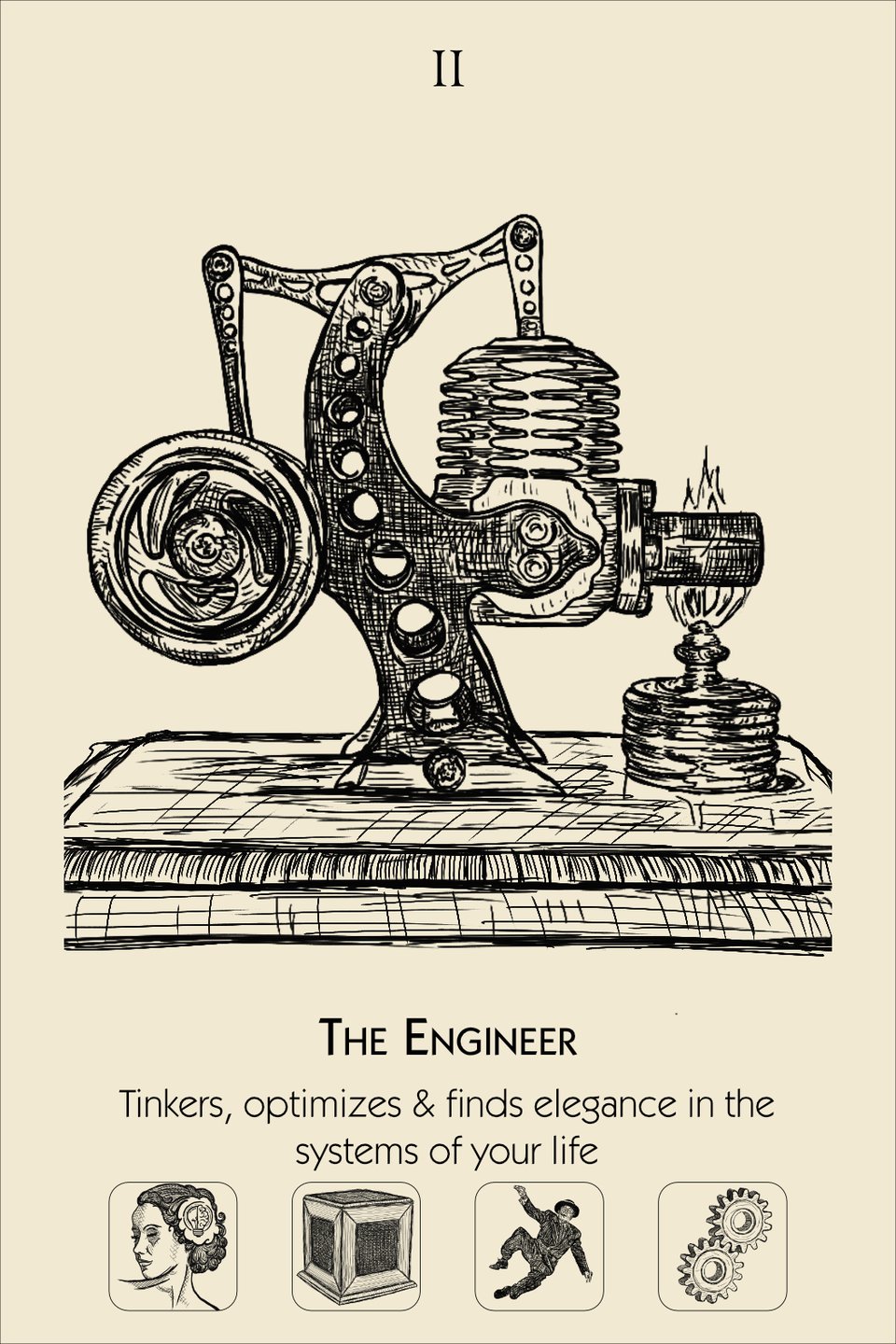
Where The Architect builds from nothing, The Engineer looks at what already exists and asks: "What if this worked better?"
We'll fix one small, broken thing together.
Until then, build gently.
Made with ❤️ Kailey Fry
Enjoy this deep dive?
Reply to this email, or tag me in your socials! I'd love to hear what kinds of things you’ve been building.
Instagram- @kfrycoaching
Explore the Art of Wellbeing App Shop Here Go to Coaching Site

