
On Tragedy
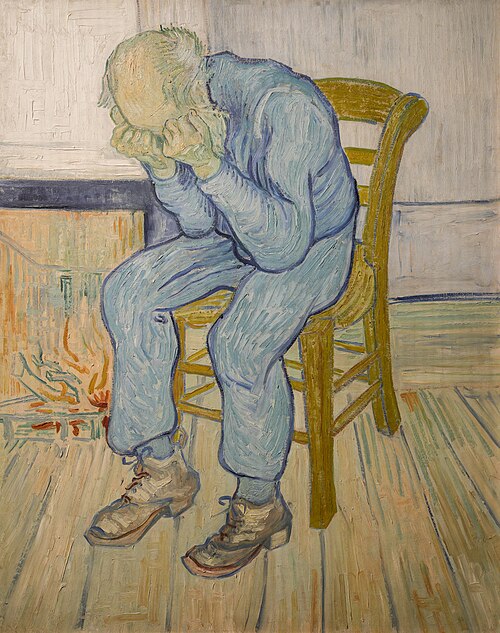
I
As humans, we are most often confronted with that which we are least capable of facing: tragedy. We will do everything in our power to convert those moments to instances of simple injustice, of cruel punishment, of just retribution, of deserved severance. We will search high and low for these justifications, spilling hundreds of pages worth of ink to locate the precise mechanism by which to exonerate ourselves not of the sins of what we commit but the moral complexity we would be faced with were they to persist. This comes in part from an overarching moral simplicity we see in many people across cultures; there is a desire to have, at root, something good and something bad, to know which has overcome the other and thus whether to celebrate or mourn. Being confronted with dual-aspects, let alone mottled ones, where virtue and sin are alloyed together unevenly, denying us the simplicity of our responses, we grow agitated and annoyed. It feels like a trick. We seek clarity, a broad and useless term, by which we mean only and exclusively simplicity. We view these complexifying details as impurities to be filtered out so that we can look at the narrow object, the one we already know how to respond to. In this way, we make ourselves children, unable to face the polyvectored reality of true life, unable to understand ecosystems of thought and being, unable to exist within a world that has no center and no truthful directionality of its moral force. We deny ourselves a real wisdom in pursuit of a flippant and infantile actionable one.
Tragedy is buried within everything; there is no act, subtle or grand, miniscule or massive, that is without tragedy. Sometimes, it is hard if not impossible to see. For instance, the viciousness that happened within the Epstein entourage is challenging to find a complex moral tragedy when the simplicity of heinous evil is so much more apparent. We can construct a rubric within which to see tragedy; an ecosystem of thought and being, where we see how people capable of such are evil are guided and attenuated to bit by bit shed their moral interiors until evil comes natural and to thus find the greater tragedy of these broader socio-economic and socio-political forces. It is, after all, a rough paraphrase of Marx's thoughts within the Brumaire, possible his most powerful piece of writing. But we also know that this is intellectualizing a matter that is abundantly obvious. That tragic vector exists, certainly, but it is not the primary or most important one, either ontologically or in terms of calls to action. Beyond, it ignores somewhere all of the pivot points where individual agency, often so small and useless a force on its own despite what we tell ourselves, could easy have shifted that mountain to other configurations. After all, we see in those same files people who were likewise tempted with easy avenues of power at the expense of their soul having the bravery and moral certitude to deny that torpitude offered.
But there is also a greatly disfiguring aspect to our flippant tendency to reach to extremes. This is not a rhetorical act we do in good faith; these extremes are not invoked to suss out keen details that need a subtle knife to perfect but instead to dismiss entire points out of hand. That they might and often do have applicability in more common situations, the ones they are designed truthfully to address, is of no matter; in our contrived scenarios, they fail, at least at first blush, and so what further consideration is merited? That this is profoundly intellectually disingenuous in turn is considered rude to point out, especially seemingly when it is on topics attempting to confront a readership or an audience with their own complex moral failings. We seek so often and so exclusively a morality that allows us to castigated others and dole out fit punishments. The same systems when applied on us we see decried as cultural Christianity, rebuking the notion of how we may have overextended ourselves morally in our rage and pain because we can't bear the discomfort of being told that we corrupted ourselves in pursuit of frankly obviously venal ends. It feels often like talking to children throwing tantrums, people more emotionally invested in justifying their outbursts than serious consideration of themselves, others, the world, history, morality, ethics, pain, justice and compassion.
Tragedy emerges precisely when two agented figures have justifications for themselves, reasonable and emotionally legible hearts, hearts which cause them to pursue vectors that make sense to us but draw them into inevitable conflict with one another. Tragedy is when you see harm coming from a hundred miles away and see no way to stop it that wouldn't somehow be more cruel; or perhaps your choice to head off disaster no matter its cost is itself the tragedy in question. We refuse to witness tragedy on its own terms because the idea of a dual complicity and an unsimple blame frustrates us, makes us uncomfortable. You can see this mirrored in the self-therapeutic language people deploy, how they pursue accepting their actions and finding a way forward before they pursue understanding the situation they are in. The response of animal panic, to extract ourselves from pain and then flee, takes primacy over the humane desire to compassionately witness the breadth of the situation we are enmeshed in or that we witness. The cost of this approach is invisible at first; I, justified, am allowed to thrash and lash out at will to achieve my morally-defensible extraction from pain, which you are criminal to disallow. It is only later when we witness the damage we have done, physically and socially and emotionally, in our seemingly justified actions that we begin to look back, perhaps, in a regret we could have carried earlier. Most often, this regret too is absent, and so these cycles of reciprocal pain continue, tragedies within tragedies, witnessed and unwitnessed.
II
The first blockage in our perception of tragedy is our fixation on agency. We developed this notion in the West, broadly speaking, in juxtaposition to a previous notion of Fate. This conflict stems all the way back within the broad and contradictory philosophical schools of antiquity. They were vexed, as Hegel and Marx and Gramsci would be later, by the seeming tendency of history to take certain shapes regardless of individual action contrasted heavily by the personal gravity of specific action. Can an individual save a nation from despotism? This is unclear. But can an individual save someone from early death, or perhaps willfully cause that early death themselves? This feels much more obvious. Where that dividing line emerges, where will and agency dissolve into the dialectical self-agented motions of time and culture, is ambiguous. At what level of social complexity does a group stop being a collection of individuals but acquires enough molecular gravity to act as a social molecule and no longer disjunct social atoms? How might we interrogate the notion of agency within such larger and complex operations? These questions are precisely what drive, in left-wing political space, the continued divide between Marxist-Leninist and more broadly anarchistic strains of thought. In the wiser strains of each, there is a concession to some truth to the other, that all structures of all complexity act upon the world not just by their own abstract sociopolitical gravity but also by the real actions of the individuals within them. But likewise, a number of individuals acting on concert creates that same tidal force that we otherwise ascribe to communities, to governments, impersonal and often anti-human.
The first invalidity in our fixation on agency is our tendency to focus on actions we conceive of post-facto that were not taken. This makes perfect sense from a certain vantage; given reflection, why was X done instead of Y? But we do this ignoring the obvious fact of the pressured nature of presentness. Even in otherwise calm times, we are beset by things on our minds, fantasies, dreams, desires, anxieties, duties, tasks, tediums, not to mention the common forgetfulness of people. This last one touches on the primary issue; we ascribe to others, and almost exclusively to others, a kind of supreme rationalism and will that pervades every action. No one is ever impaired, whether it be by fatigue or intoxicants or mental illness or pressure, and so every action can be treated as deliberate and willed and thus devoid of any trace of tragedy. Notably, we extend this cruelty only toward those we have already determined guilty; we have a rubric for looking at those whom we predecide innocence, that being pressured action, a conscious awareness that certain conditions can greatly increase the likelihood of actions that otherwise wouldn't be taken. We maintain this duality exclusively to extend or deny grace to those we have already decided deserve it or not. This in turn is why most ethical or moral discussions go nowhere; we are not really discussing the mechanics of our moral decision making but speaking obliquely about baseline stances that we refuse to name. This refusal isn't terribly shocking; we live in a world that wants us to believe rape victims had it coming, that people who get murdered are stupid, that those brutalized by systems of power need only to have made smarter decisions. These statements are of nebulous truth, which we know because those of us who have been victim to those dynamics often immediately go over our own culpability first. It is in fact one of the deepest-set hurdles those of us who have been so wronged must overcome within ourselves; reclaiming a sense of agency in defiance of a notion of perpetual perfect victimhood within the world robbing us permanently of all potential safety.
Agency becomes not a dual-edged sword but an inconsistent and hypocritical one. We are quick to ascribe supreme agency to those who do things we do not approve of, to deny pressure or even mere banal thoughtlessness let alone clear disability to what they do, while at the same time denying agency to ourselves when it comes to our responses to the world. If we had choice, we are aware, then our responses of cruelty toward others rooted in our real and understandable pain would be morally suspect, and so instead of facing that moral complexity inside of ourselves, that sometimes good hearts can be brought to desire evil things, we instead rewrite reality to exonerate ourselves and further castigate those we have already deemed guilty. We deny a sense of antiquated Fate and yet likewise rely on it, make fait accompli our responses to the world or the responses of those we respect and seek to defend. What else is to be done?, we ask ourselves, pontificate openly to no one at all. And yet in the same breath, we cannot condone or even understand how someone would be brought to harm, frustrate or even just vex us without doing so with a measure of deliberacy.
The second complicating factor beyond agency is complicity. This is a complex issue in its own right, but not for the reasons those that invoke it tend to lean on. Complicity in a brute sense exists at all times for all actors in all scenarios. There are no scenarios in which there exists no agency whatsoever for both parties; there may be constrained agency, sometimes to the point of being functionally non-existent, but the only thing which has truly no agency whatsoever is the wholly inorganic and unalive. We when perceiving an event remainder or offer agency based on our existing sympathies; complicity, its negative inverse, is something we likewise gift or remainder based on whom we wish to extend blame. Fuller accounting of the events of our lives, including the agency of both parties and the complicity of each, presents us with a morally vexing situation, one that lacks at least immediately a figure fit for clean judgment. This is where most panic. We are not only not fit to sit with these painful complexities but are actively encouraged to strike them out. The purpose of ethics and philosophy and politics, we are told, is to cleave down and make simple these events so we know the easy definitive action to take in response. We are actively discouraged from retaining complexity in its original form, from accepting that there is no mathematical triage in the real world that does not result in data loss. We kid ourselves when we believe the data loss is acceptable, despite encountering again and again in our common lives and our daily dramas the cost of these short-sighted triages.
We tend to fear these more complex ethical maneuvers due to a justifiable rejection of victim blaming. We sometimes forget, however, the reason we reject victim blaming. It is not because victims, or we ourselves, have no power whatsoever in determining our own lives. It is in fact precisely because those who are victims of obvious egress will catalog obsessively all the ways they could have avoided their fate, ways which are often horrifically true if inactionable post facto. We refute victim blaming because it is unnecessary, salting an open wound, not because we want to convey to people that they possess no power or agency in protecting themselves. This intensified paranoia is in fact a driving factor in the increased conservative shifts in people over time; we have found a strong correlation between perceptions of personal threat and conservative politics, something that makes sense when seeing them through the lens of creating a constrained in-group which is protected against a marginalized out-group. In rejecting this mindset, we must be careful and thorough in interrogating where our constructed vectors of shame, reprisal and punishment are backdoors for this kind of cruelty of the heart and whether they might better be replaced by something more sympathetic. We fear sympathy due to a base and level cruelty in our hearts, one we see affirmed at all angles regardless often of political or social ideology. There is a reason that Christian, Islamic and Buddhist philosophical structures err eventually away from that kind of punitive judgment of the individual toward a broader systemic understanding of the world and how it generates its internal figures. However, we balk at this understanding, horrified on an existential level but the sudden awareness of the likewise cruelty of the lack of individual agency we have in the face of the world. This bidirectional paradox is the baseline and initial tragedy.
III
Tragedy in common parlance is any lamentable thing; in the better Grecian theatrical context, it is precisely an event that is both detestable and unavoidable. It is not tragic if I simply decide to shoot you. It is tragic if contrived if I am forced to shoot you by someone else threatening us both. It is more tragic still if, after years of PTSD, I sleep with a gun under my pillow, less to act with and more to quell the obsessive paranoiac terror rattling my body, only to be jolted awake when you forget your key and have to jimmy the door open, an act which in the dark causes me to fire rounds into you, each of us innocent of malevolence but nonetheless confronted with horror. But we don't need to reach to such theatrical heights to find tragedy. In fact, as stated previously, these more grandiloquent examples exist most often not to disprove a generalized shape but instead to strain to disprove its universality, to find some highly-contrived scenario where the thesis fails so we can disregard any potential insights from it entirely. The most common tragedy, the one that suffuses the world, is misunderstanding.
Autism teaches you about misunderstanding whether you want to learn the lesson or not. Your mind, wired differently but not wrongly, will receive information it does not understand intuitively. At first, you will not even know it is meaningful information, communications encoded deliberately, so you will ignore it entirely and find yourself acting foolish or even hurtful toward others as a result. You will protest that your innocent heart must at some level be meaningful and you will be rebuffed; intent, you will be told, is meaningless in the face of impact, and you are just as guilty as if you had maliciously sought to hurt someone else. Now wracked with shame and paranoia, you will begin scraping every interaction you have for microscopic data hooks, which you will then in turn read in repetition through every permutation you can muster to draw out as much potential information there as you can. It will overwhelm you. You will have too much to understand, much of it contradictory, and your effort for clarity will overwhelm you. You will not act, and by not acting you will again harm others, a fact that they will now find as proof of your generally harmful nature, given it occurring twice now.
You will repeat this process, discarding perceived datum and keeping others, and you will often be wrong. The fact of your earnest attempt will not matter. You will either continue striving to perfect a system you do not understand and are prohibited from asking about or you will give up, become cold and resentful, begin to consciously hurt others to compensate for how it always seems to happen anyway. This latter path will be read as antisocial and misanthropic even though it comes from pain and confusion and a sense of understandable helplessness, if people sought to understand at least. You will not know what else to do and to shake the terrible burden of cursed complicity, you will seize up agency, even if that is toward hurtful things, because maybe if you control it you can make anything go different from how it always has. If you stay virtuous, you will continue to suffer, only able to solace yourself due to the nobility of your heart even as the impacts of your actions seemingly refuse to change. Your pride in remaining valorous will be read as narcissistic and arrogant given how your actions don't seem to lose their hurtful character. You will have a choice to heed those words and become consciously cruel or ignore them and appear idiotic and harmful.
On the other side of this same process, people are confronted by someone they likewise don't understand. That the information they exchange is in fact a language, the anxiety of communicating the desires and state of self encoded in everything from words to posture to tone of voice to physical contact to physical proximity to the clothes that we wear and the cultures we advocate for, is taken for granted by those who are either less autistic or not autistic at all and in a way that is genuinely not antagonistic. Things which are intuitive to a certain degree disappear from view; we perceive that which we train our eyes on and, just like a musician or athlete after much practice, we measure mastery almost precisely by what doesn't need to be thought about anymore, what becomes automatic and pre-willed. This isn't to imply that the allistic, the less-autistic, are somehow stupid. Being blind to our competencies is immensely human, something all of us partake in whether knowingly or not; it is precisely why self-knowledge and mindfulness are such powerful tools generally across the human spectrum. The autistic are forced to be consciously mindful of failures and blindspots we sometimes actually cannot fix, but this doesn't mean people who are led by the course of life to expect those competencies are doing something willfully violent.
We come then to another angle of agency versus complicity. The non-autistic are certainly complicit in this expectation of social and emotional conduct that is ableist at heart, non-actionable for a population segment we are becoming aware is larger than we previously knew. But it is also often an unagented complicity, one that isn't willfully pursued for the purpose of cruelty but assembled instead by happenstance. Just as the autistic figure does hurtful things without knowing, landing at their own complex crossroads of agency versus complicity, so too are the conditions and ground for that hurt laid truly but not consciously by others. We can just as easily say that a broader awareness of the differences in cognitive ability and accommodations around them would fix this issue as endlessly berating autistic people for being unable to fix what they cannot see, like screaming at the blind for not obeying traffic lights. I can't pretend that I have an immediate solution to this knotted problem, but it does outline this notion of tragedy well. The conflict, fully explored, becomes clearly inevitable, if not today then tomorrow or the day after, and the more we look at it the more assigning blame feels flippant, useless and whose only purpose is to exonerate one end of a many-angled problem.
That we resist awareness of tragedy is obvious and frustrating. To allow it as a rubric of understanding, we have to relinquish the simplicity of blame, of punishment, of castigation. We have to lay down our anger at least as a justified actor, see it as a human response to frustration and hurt but not a morally permissible force. This vexes us. You will see this vexation in thinkers high and low and across the political spectrum; that they might achieve gainful ends without the fire of anger, or without anger being wielded as a speartip, seems incomprehensible to them. How can you pursue justice without those nourishing fires? How do you set yourself against the crimes of inhumanity we are plagued by? But this suffocating intoxication, like an alcoholic with a barrel of wine, with the forces of anger are also what choke out interpersonal conflict, existential frustration and the crises of common life. I, 37, have no retirement fund, no savings, and have not achieved near enough for me to be happy with the shape of my life. I could cleave to anger, and in truth there are many systemic forces that deprived me of elements of that life I do actively want, but if this anger doesn't provide me with that betterment, if instead it poisons me and makes my loved ones find me impossible and frustrating, what good has it given me? Truth is not the only value, and sometimes simplistic fixation on truth value of statements and feelings makes us blind to their repercussions.
And yet once more we are struck by another manifestation of tragedy. So much of the pains of life are built out of fixation on the repercussion of feelings, of actions, to the point of paralysis. We freeze ourselves motionless in lives, become so constrained by our sense of complicity and powerlessness that we refuse to act and so find ourselves locked in the tides of repeating pain, frustration, lack of fulfillment, lack of love. We blame people we see bursting free of these chains. To cheat on a partner is the greatest social sin, regardless of what depth of pain or frustration the act came from. We are broadly uninterested in what would cause someone to betray someone that they truly love because to examine that would be to become sympathetic to the enduring existent pain that pervades the world and complicates the simple venal punishments of our perpetual anger. We tell people not to quit jobs without another lined up, a noble sentiment in one practical sense, but one that also often robs those in these positions of the will and capacity to actually gainfully look for other employment. Often these acts are cries for help, a brick through the window to let in some light, and instead of sitting with these people to examine the tragedy that led to this moment, our first social impulse is to triage the broken glass, repair the window, and set them back to their lightless room.
IV
Tragedy as conceived in Greek theater cannot be extracted from the divine. The Moirae were less a set of goddesses as a loose personification of a force. Tragedy was the fruit of their loom; whether it be the end of the cord that signified the termination of a life or the tangled knot they might weave pitting lives against one another, it was a tapestry marked on all edges not by the individualist intoxicants of simple ethics but the ponderous weight of fate set against virtue and venality. Oedipus' fate, for instance, was not proclaimed to his family as a punishment for some deed but a simple fact of existence; a calamity would fall, a life would be taken, and it would not make sense. The act of madly seeking to avoid that fate ultimately did nothing to stop it; on the surface, it appeared to create the conditions of the fate itself, but there is no way to know by nature of that precluding act whether Oedipus at home would have found himself in the incestuous embrace of Jocasta all the same.
This tragedy is not presented as an ethical tale, which in our contemporary moment we cleave to like idiot children to simplify a world that frightens us like apes in the cave shirking away from the fire, but instead as a meditative form. Who is guilty, truly? Is Laius guilty for attempting to save his own life? Is Jocasta guilty for being incapable of killing her infant? Is the farmer guilty for raising a boy? Is Oedipus guilty for defending himself on the road from strangers? Is the sphinx that he bested by wit to blame for picking, of all places, Thebes? These questions are, of course, nonsensical. The end, that murder of a father and the incestuous union which so destroys the family at its revelation, is lamentable to its core, but it is not the fruit of failure or fault. Our best effort to assign blame, that of Laius refusing to accept his fate, is still one that is understandable, if perhaps morally vile to us as a question of murdering his own child. The simple and stupid ethics we are brought up with fails here; is Laius receiving a fate we might think he deserves worth the damnation that his son, the thing he hoped to kill, as well as his wife and his kingdom? We are brought to tears but are not given a statue at which to lay our grievances at the feet. We are asked instead to carry the discomfort of the turning of the world, which can turn well-intentioned and understandable actions on their end. We are not, and this is pivotal, called to rebuke those intents because of the fruit they bear. Neither negates the other. That act of simplification is an attempt to escape the real thing we are asked to comprehend.
We can draw this example backward to the first of Sophocles' Theban plays, albeit the second in the chronology of the narrative, Antigone. There, the primary conflict flows downwind from Antigone ignoring the command of her uncle who sits on the throne to go beyond the city walls to retrieve her brother's corpse for burial despite him being in a technical and legal sense a traitor unfit for burial in honored ground. The central question at play is by what definition do we draw honor. In the uncle's case, he took the throne following the appalling revelation about the nature of Odysseus and Jocasta's relationship, effectively terminating the legitimacy of that line's right to rule and, as such, necessitating his tightening of the reins over the throne to reestablish legitimacy not just for himself but also for Thebes more broadly to stave off its ever-circling foreign enemies. For the brother, it is a matter of defending the honor of his family, not just of his mother and father whom he loves dearly despite the tragic nature of their relationship but also of his siblings who are innocent of the crimes against the gods that his parents are accused of and thus not fit for punishment, only going for armed rebellion when his own flesh and blood refuses to allow his kin access to the throne. Antigone's case is far simpler; grateful to her uncle for giving her a place in the palace despite everything though she is, that is her brother rotting under the sun, and honor demands that she serve her family even if she finds their paths at times foolhardy. In time, all three will be drawn to the shores of Hades and put to judgment before cold king Hades himself, who along with his bride Persephone determines whether the actions of a life are filled with or lacking honor, fit for the blessed fields of Elyssium or the damned burning pit of Tartarus. So, who is right? And who, in defiance of just honor, shall find damnation in their stead?
This is a question that post-modernists of a certain stripe will discount, enamored with a phraseological undermining of universal law as they are, but while this is true it is again a matter of being blinded by truth and missing the salient point at hand. Something like The Glass Menagerie or the theatrical works of Sartre handle this question better. We are presented a frustrating reality: all three positions have credible claim to honorable action and each of the three only become dishonorable through the lens of each other, not themselves. We look for a universal law to make sense of them or to discard them and find instead that their internal logic preserves each despite the paradox. Real morality, real ethics, is more complex than simple arithmetic and we cannot be assured of goodness by logic alone. This is because justice and morality are questions of the passions as much as the mind. The Stoics sought to drive pathos from the soul to be replaced by sanctified reason, but Nietzsche sees truest the idiotic nature of a conflict between Dionysus and Apollo. Ethics may flow downwind from law, be arguable in legalistic terms, allow structures like power and oppression to modify their value. Morality though is absolute, a cry of the heart, ironically unbending despite arising from the mouth of the king of chaos, wine, poetry and theater, the only artform that privileges lies over truth for telling, ironically, the truth itself. Thus we are set by a new vexation.
In this view, the brother is morally just for fighting for his family and the honor of his parents, despite knowing that he will die to do so. Forsaking what he knows to be his passion for cowardly self-preservation would be ignoble and a stain on his heart, despite the immense cost. Likewise, the uncle is morally just for thinking of Thebes and not just his own family, being weighed down by the burden of slaying his own blood, one of the greatest sins in Hellenistic socio-religious structure there is, in order to preserve the greater good of his people. Antigone is morally just in preserving her brother's body from the ignobility of open rot even though it damns her, and the uncle too is just in slaying her to show all others that he is not merely playing favorites toward his family in the baseness of nepotistic corruption. What do we make of the suffering generated by honor and duty? We weep. Tragedy is the name of this state, a pain we volunteer ourselves toward because to abandon it would be worse.
Think of Asterion and the Cretan vexation. Who of them deserves their punishing existence? Who of them are innocent? And does the nature of their innocence or lack thereof remove or even lessen the punishment they receive merely for their lot in life?
This requires a certain mindset, obviously. The coward does not encounter tragedy but they have no inner law, passion or conviction that compels them. Cowardice comes in all shapes and social positions. It is the revolutionary who sells out their kin, it is the community member who turns against their own for private gain, it is the friend who chooses the simplicity of anger over the complexity of reconciliation. Those harder paths are not bereft of difficulty; far from it. But the cost of a moral heart, those vicious passions of Dionysus, is that we lay ourselves open to wounds in their pursuit because the spirit will be wounded deeper if we do not. Dionysus was tortured and crucified, fittingly, punished for his passions, much like another famous crucifixion enthralled by their passions. Would it have been wise to recant in order to save their own life? Certainly. But wisdom, like truth, only has conditional value, and a wisdom that stands for nothing has no use, no meaning, no purpose, and can be snuffed out at any time with no loss. Not that a human life ever has absolute value. Again, another vicious tragedy of being.
Because this too is at the root of the Grecian understanding of tragedy. A human life, per the Hellenistic model, is eventually despite its virtues and evils, its triumphs and its agonies, brought to the waters of Styx where it is slowly washed clean of color and memory. The psyche, led magisterially by the psychopomp to those grim sandy shores, is drained slowly but perfectly of all individuating color. No human life is sustained; everyone and everything is inevitably erased completely. Only when the psyche is perfectly clean is it sent back above to be born again. This is reincarnation of the coldest sort. The transmigration of souls leaves no room for regression or sudden memory of lives once lived; they are eradicated utterly and completely. A soul is not recycled to learn lessons and accumulate wisdom until it is free. A soul is recycled out of a laziness of the divine order, making use of trash instead of acquiring something pristine and new. No honor survives nor any deprivation. Your efforts to save your own life will one day fail and you pay the same price for cowardice as the honorable do for their duty. Water comes for you and drinks up everything. Someone short-sighted might ask why be honorbound in the face of that guaranteed erasure, but so too is the question of why be cowardly. Nothing is gained in either instance and preserving your life likewise has no value. We resist that ultimate tragedy, the negation of all value.
V
Samuel Beckett is one of the few writers who grappled successfully with that question. In the face of that absolute nihilism, most flinch. Life, they say, must have some meaning, even if that meaning is merely my own pleasure. But the coward that shirks duty to pursue hedonism is no better than the coward enslaved to duty without purpose at the cost of their own joy. The solace of duty is the same as the solace of forsaking it, trapped in that same idol of false power. Beckett offers no salvation to his characters. Let's take Waiting for Godot, a farce of a tragedy, two half-(whole?-)mad buffoons wandering a desert of the real, waiting for something that never comes. A flippant read is that Godot stands for God, never appearing, but this puts too fine a button on everything. They are fixed forever, preserved by this phantasm, contemplating or even attempting suicide until they remember it is coming, it is coming, they must be ready. It is meaning and purpose. It is the glimmer of light that keeps them from killing themselves. The farce is that it not only doesn't come but it never will and it never has. They preserve themselves for nothing.
This bitterness mirrors The Turin Horse, Bela Tarr and Laszlo Krasznahorkai's film about a lame carriage driver, his old and dying nag, and his youthful daughter who has abandoned life to look after her father in the desolation of their farm. They cook plain potatoes that they eat with their hands, or sole hand in the driver's case, awaiting something. But then strangers come who are attacked and rebuked, and their water disappears from their well, as though punished by the angels for their cruelty, and they seek shelter beyond their farm but turn back wordlessly without the audience ever being able to see what turned them back. Darkness comes, blotting out the light of the day. Their movements become lethargic. Only those plain potatoes and the kitchen table, everything else dark now. "We must eat," cries the driver. "We must eat." His daughter doesn't even move anymore. She just stares at the potato in the dark, waiting. "We must eat." Fin.
In this cinematic case, the cold focus on that truth is cruel to the extreme. Inevitably, the dark falls on us. There is nothing there in the belly of death. Even belilef in the relief of non-existence misunderstands the vastness of that great cold nothing. We are right to be terrified of it. We simply have no defense against it. Every life we can build will be swallowed up. What is to be done?
Beckett answers us with tragedy. To live is madness. We are presented no ground upon which to justify our own existence. Nothing makes us fit for life. Nothing makes us worth saving. There is no greater universal injustice in the death of an infant than the death of a mass killer. Our hearts rebuke this, that passionate Dionysian fire of honor and morality, but the cold wisdom of Apollo from that dim sun remits no comforting glow. The sun is cold and wine is hot in our bellies. And yet Beckett, despite his grimness, does not write paeans to suicide. His characters live, madly, dumbly, but they live. Because there is likewise no value in wisdom over madness, sanity over stupidity. Even suicide is robbed of its value. What are you trying to prove? That you cracked the code? That you figured it all out? The truth in your hands is as valueless as any lie. When it is said that nothing persists, that is nothing, complete nothing, with no virtue or concept surviving that tide. What is tragedy? Everything. All laughter is tragedy and so is every ounce of pain. Marx refers to history first as tragedy, next as farce, but the two are already always the same. Every tear shed is worthy of mockery given the nothing it gestures to, and every farce is bitterly sad because everything mocks itself by its own being-in-time already. It's edgy instead of a valuable insight only because its true; this irony affirms rather than destroys it.
We are remanded back to a life of passions that are no more or less worthy than any other. These make up the vectors of lives which have no objective value over one another. You can choose your anger and the wrath that pours from it, you can justify it with every genocide and assault in the world. You can forgive and forgive and forgive. Both versions of you will be wrong and yet you are forced to pick. You can change sides as many times as you want chasing the truth. You can argue till you are blue in the face that you don't have to forgive anyone if you don't want and you can forgive them anyway.
VI
So what endures in this void? Character alone.
We come to a place where morality and its passions, ethics and its laws and reasons, lose their ontological ground qua themselves. But what they don't lose is what they reflect about ourselves. Forgiveness may mean nothing, but you are yet still forgiving. Your anger toward injustice may have no value, but you are still righteous just as you are still wrathful. We can tell ourselves that our wrath is justified, but now you are simply two things, justified and wrathful, rather than just justified. You can be foolish and forgiving but these two do not cancel one another out no matter the depth of the foolishness or the heartfulness off the forgiving. You can argue certainly that character and characteristic have no value just as nothing else does and you won't be wrong and it still won't change that this is the only thing that really endures and becomes historical fact. A life may have no grand effect but it is inscribed in the stones of time, a knot in Indra's net set with yet another gem. Tragedy complicates our morality by asking us to consider our opposite. You are full of anger; why do you not forgive? You justify the actions of others; what is the process of their penitence? People rebuke tragedy because it calls them to process rather than position, that you become an active agent in the resolution of tensions. The uncle does not witness a passive killing take place; he declares the sword be drawn. Antigone does not see her brother buried by another; she ventures out, she damns herself, and she honors her brother. Tragedy is the cost of true action in rebuke of moral positionism. Tragedy is to be stained. We are all stained, every inch of us. Sometimes its nothing but stains.