Goodbye, Instagram
Hi everyone,
Today is, I hope, the last day I’ll use the telos.haus Instagram. I was never really good at posting, and I’ve wanted to do this for a long time… it feels like this has been years in the making—at least since I first took a (personal) break from Instagram after realizing that being able to quietly envy what everyone around the planet was up to wasn’t good for me.
A sense of cascading urgency has seemed to grip the collective conscience, including mine, in the last several months. There’s this Subway Take with 6.6M views from November that lives in my head rent-free, and a recent viral Substack article titled It is urgent and imperative that we all permanently exit Instagram. Australia also just banned social media for kids under 16, and, on a more personal level, a writer I am inspired by, August Lamm, is leaving social media entirely.
I am a bit worried that some of you might feel I’m holier-than-thou proselytizing for a new, trendy neo-Luddite movement, but pleeease know I just wanna document my personal references, reasons, and sentiments behind my decision to leave. It would be a bonus if some of this resonated with you. I just learned that you can leave public comments on Buttondown by replying to this email—I’d love to hear your thoughts.
First, I feel a huge sense of relief that by getting off IG, I simply won’t have the option to make some silly ahh reels anymore. I should probably contextualize this. For much of 2025, I felt this sink-or-swim, life-or-death obligation to start making short-form content for telos, primarily on Instagram, or else the brand would get “left behind.” Everyone else was doing it, and I had seen the way a viral reel could put a business on a rocket ship. I wanted to go to the moon (lol) so bad. But, for one reason or another, I could never bring myself to actually film and edit and post them, and it strangled my headspace, which in turn made it impossible to think of anything else besides how everyone else was getting ahead… 🥲 It never occurred to me that I could simply choose to not play the game. Because it really is a game, I think, a slot machine, especially when it comes to reels. I am so relieved.
I recognize that as long as other businesses continue to use Instagram and people continue to give their attention to it, any business that actively chooses to not use the platform is at a competitive disadvantage—but I think I’ve made my peace with that. I don’t need telos to go to the moon anymore. There are alternative ways to land among the stars~
Tangentially related to the above, there were some financial and social costs about maintaining the telos Instagram that were kinda annoying. A very basic event flyer from my preferred graphic designers would usually cost $150–200, and it was hard to justify this expense for every single event, particularly the smaller-scale/community-driven/unprofitable-by-default events… then, as the telos Instagram grew, event hosts increasingly wanted and pushed for their event to be re-posted or re-shared, and I was getting a bit worn down trying to figure out ways to tactfully say I’m sorry, I don’t think this event is the vibe for our feed. Sometimes the discussion ends there. Sometimes it doesn’t. But without an Instagram, just as with reels, there is no posting discussion.
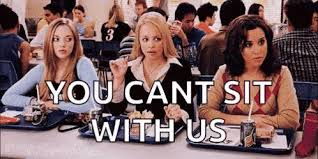
I will say though—my hesitance to re-share certain events because they’re “not the telos vibe” or “don’t look good enough” is, I think, symptomatic of this over-attachment we’ve all developed to curating a polished feed, and the related paranoia about breaking your audience’s perception of your brand… At risk of oversimplifying, it’s digital you can’t sit with us. Ultimately, I think it’s kinda toxic. And it’s the way things currently are.
I’ve always always always really fucking loved how photos, and to some extent, phones, are taboo or totally restricted at nightclubs. If you’ve worked with me before, you’ve probably seen the Basement sticker I keep on my laptop, under my left palm—the one they stick over your front and rear camera when you enter the club. I love this little black sticker and what it represents.
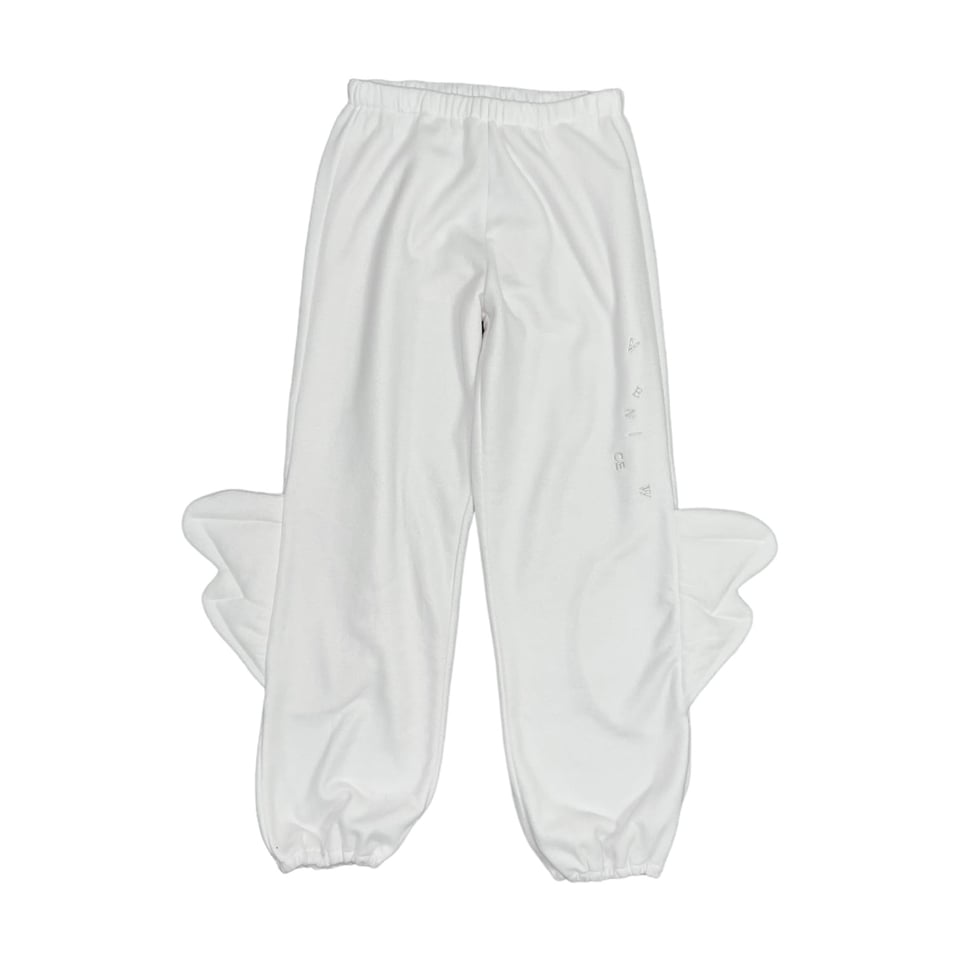
Back in May, I was on the dance floor of Nowadays for the first time, and I was with my girlfriend, and she was wearing these adorable VeniceW sweatpants with wings on the sides that would flap with every movement she made, so I of course unpocketed my phone to take a video. No phones! she lightly scolded me when I showed it to her. I’m not sure how to explain it, but I enjoyed (and enjoy) being told to put my phone away. Like, yes, encourage me to be present, PUH-LEASE. (If we are ever eating together at a restaurant and I pull my phone out, please call me out.)
There’s this collective resistance against the non-immediate experience—or, to put it positively, a collective desire for the digitally-unmediated experience—that seems to be socially enforceable only at clubs. We’re back to digital reality as soon as we step out of the club or off the dance floor… I want telos to feel immediate by default.
If you haven’t watched the Subway Take I linked above, there’s this particularly poignant exchange between Maddy Kelly (the guest) and Kareem (the host) that I’ve transcribed below:
Maddy: You and I work for Meta for free. I had a good month last month. Okay? Virality-wise. I got 5 million hits in a month.
Kareem: And how much money did they give you?
Maddy: They gave me $5.
Kareem: Hey, you could get a cappuccino.
Maddy: I can’t get a cappuccino, I live in New York.
I love this exchange so much, not just cause it’s damn funny, but because it encapsulates how, for a very specific type of person—(me)—it’s particularly repugnant to feel like you are getting fucked the short end of the stick in an arrangement.
I recently got sent back in time to high school cause I had to refamiliarize myself with the concept of sharecropping. Per Google:
Sharecropping was a post-Civil War agricultural system in the US South where landowners allowed tenants, primarily formerly enslaved people and poor whites, to use land in exchange for a share of the crop. It emerged as a replacement for slavery, often forcing farmers into a cycle of debt, poverty, and land bondage.
I kid you not, back in 2006 (that was 20 years ago btw) Nicholas Carr was already writing about how, on MySpace and Facebook, we are essentially digital sharecroppers. This is what Maddy Kelly is getting at when she gets paid five bucks for five million views: one ten thousandth of a cent per view. (I’ll be honest, I never really felt why artists are so pissed at Spotify, but now it’s beginning to make sense.) Everyone knows that if the thing is free then you’re the product, but what is the mechanism?
One of the fundamental economic characteristics of Web 2.0 is the distribution of production into the hands of the many and the concentration of the economic rewards into the hands of the few. It’s a sharecropping system, but the sharecroppers are generally happy because their interest lies in self-expression or socializing, not in making money, and, besides, the economic value of each of their individual contributions is trivial. It’s only by aggregating those contributions on a massive scale – on a web scale – that the business becomes lucrative. To put it a different way, the sharecroppers operate happily in an attention economy while their overseers operate happily in a cash economy. In this view, the attention economy does not operate separately from the cash economy; it’s simply a means of creating cheap inputs for the cash economy.
As of writing, Zuckerberg is worth $252 billion dollars. His wealth jumped $22 billion on Thursday, after Meta stock beat fourth-quarter earnings estimates. The dude is operating in a cash economy I’m not even invited to by fracking my attention. I’m opting out of the game.
Thanks
I wrote way more than I expected, so if you’ve read this far, thank you. Writing this was fun and I hope to do it more often. Your attention means a lot to me.
I wanna thank my friend Nick Plante, who is kinda the guy who knows everyone in the analog scene, and who writes a wonderful newsletter with wonderful events called NYC OFF TECH that you should definitely subscribe to.
I’ve done personal Instagram breaks before, but exiting as a business is much scarier. Nick is the person who introduced me to the concept of information parity, which I understand to mean building a sizable audience on a non-extractive platform, rendering a social media page redundant or useless. Which is to say, now that I am saying bye bye to Instagram, it means more to me now than ever when you share telos with interested friends and family.
Resources
This guide really helped me get clear on what role Instagram serves in my life, and how I can go about systematically replacing it with friendlier alternatives.
Appstinence offers free 1:1 coaching on how to de-platform.
How to Break Up with Your Phone by Catherine Price, which I read when I was like, 20, provides a gradual, 30-day phone detox plan that I enjoyed. Not sure if still useful today. Please let me know if you try it.
Add a comment: