Forager, field note #5
hello,
this is the last field note before Forager is released into the world tomorrow. first i wanted to share a recent review of the album (preview, really) that i found quite beautifully written and very evocative of the mood i was going for here. these words come from Stonewashed a music newsletter from Matthew Hiram:
“We open with a gorgeous work from St. Silva’s upcoming album on the stalwart AKP label. Vermont composer Ben Dexter Cooley twists time and sequence into new shapes, forming a fluffy, cool pillow woven from wild-harvested Sphagnum moss. Forager evokes the ancestral mode of gathering from naturally available sources, holding a tidy mirror to the artist’s creative practice and the emotional landscape of the work itself.”
you can read the rest of the (short) review, alongside other recommendations from Matthew, on his Substack.
in previous notes i wrote a lot about field recording. this time, i want to take some time to document the instruments and techniques used on the album.
especially with this piece of work, i have a hard time dividing the “natural” sounds of field recordings with the “synthetic” sounds of synthesizers. my goal from this start of this concept was to blend the two in a way that felt seamless, like you can’t tell where one ends and the other begins. i find the sounds of birds equally as melodic as a synth line. the texture of crickets and insects sounds equally interesting to me as white noise and tape hiss.
that being said, electronic instruments were part of how the St. Silva project was born. so here are some of the tools that were used to make Forager.
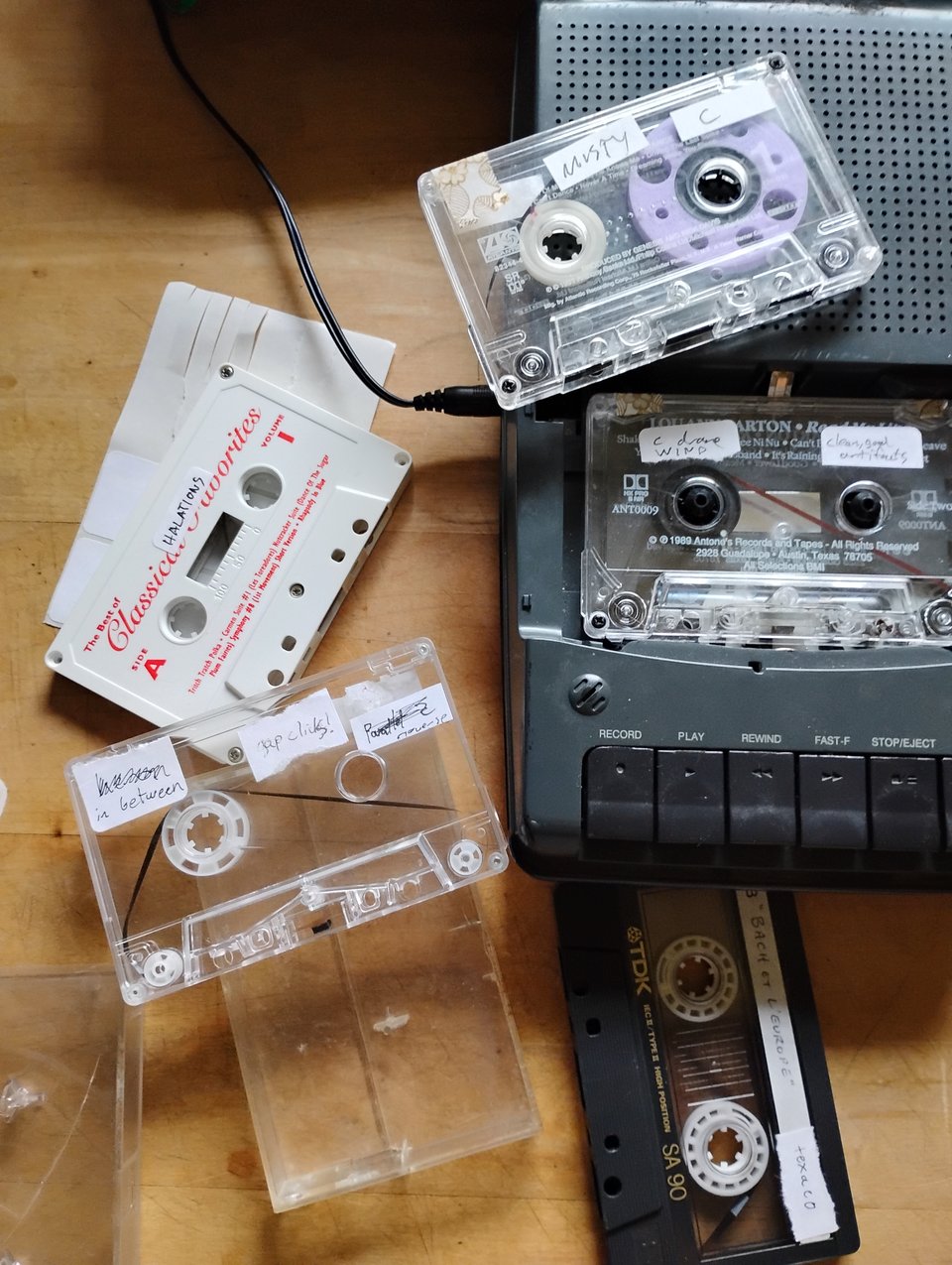
this album would not be what it is without tape loops. for those unfamiliar, a cassette tape loop is made by taking apart a cassette, cutting a splice of magnetic tape, taping the ends together into a loop using scotch tape, and then inserting it back into the cassette in a loop layout. the result is an infinite loop of sound. cutting about 9in will give you 5 seconds of audio looping.
i started making these tape loops a few years ago. whenever i found a cassette at goodwill that had screws in the corners (making them easier to pull apart and reassemble), i would buy it. over time, after making a batch of tape loops, i would record some audio over the original music. sometimes this was a few random notes on a piano, other times it was a wall of sound like a drone.
the thing i love about using tape loops is each takes on its own character. by its very nature, cassette tape breaks down over time: it gets warbly and distorted. so the age of the tape before it landed on my desk is an unknown factor.
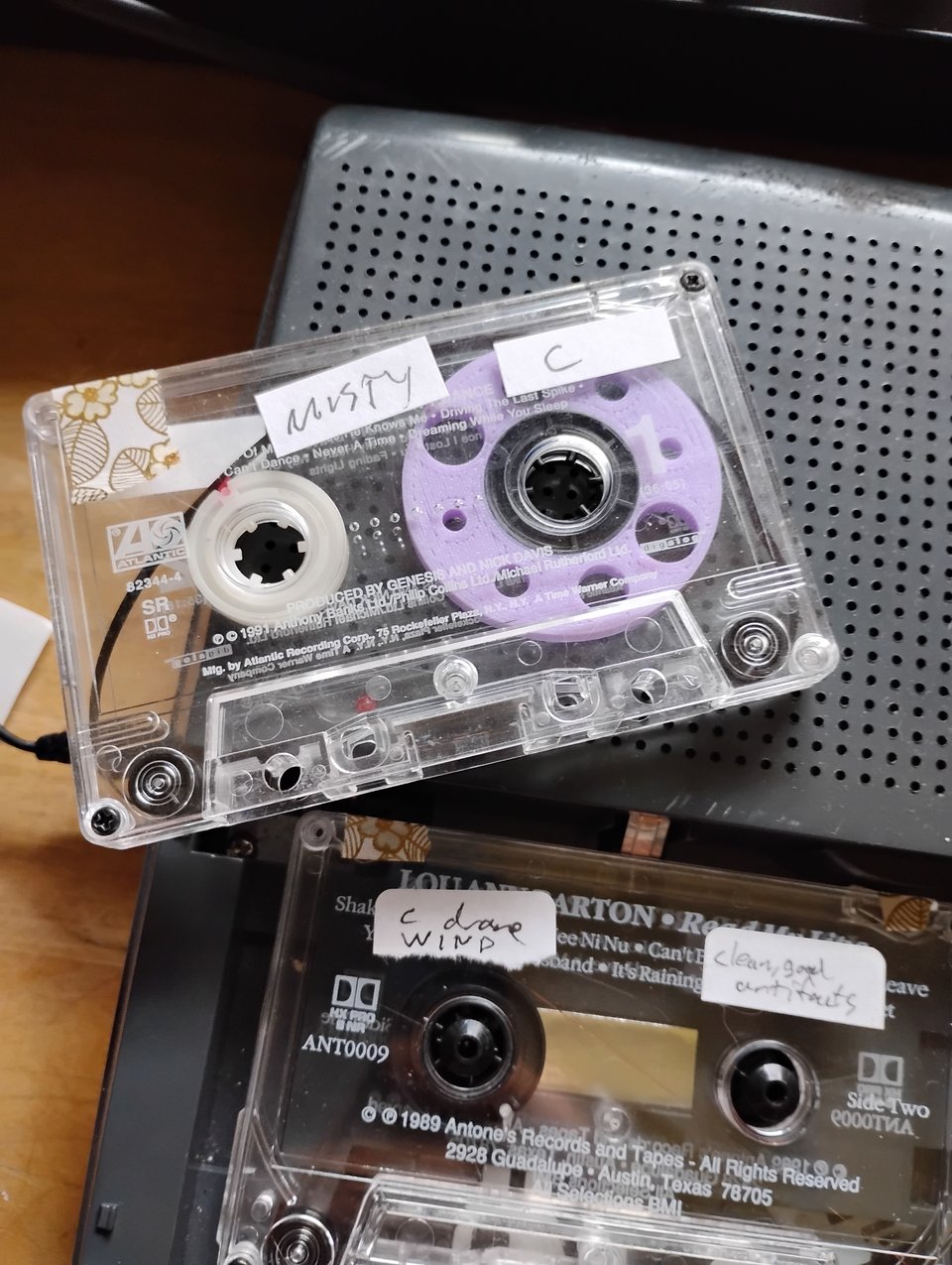
and then there is the recording process. i can’t always explain it, but weird things happen when you record onto old cassette tapes. strange artifacts and clicks appear. random audio dropouts can happen. i love the randomness this introduces into the loops. these are things i would never think of, and actually may sound like mistakes if i were creating a loop on my laptop or inside of a guitar pedal.
and of course, there is the ever present tape hiss, that gentle white noise that acts as a bed for whatever melodic sounds sit on top. in the heyday of cassettes, this was something to resist (high-bias cassettes were graded on their ability to reduce the amount of hiss noise on albums). but now i find it desirable in small amounts.
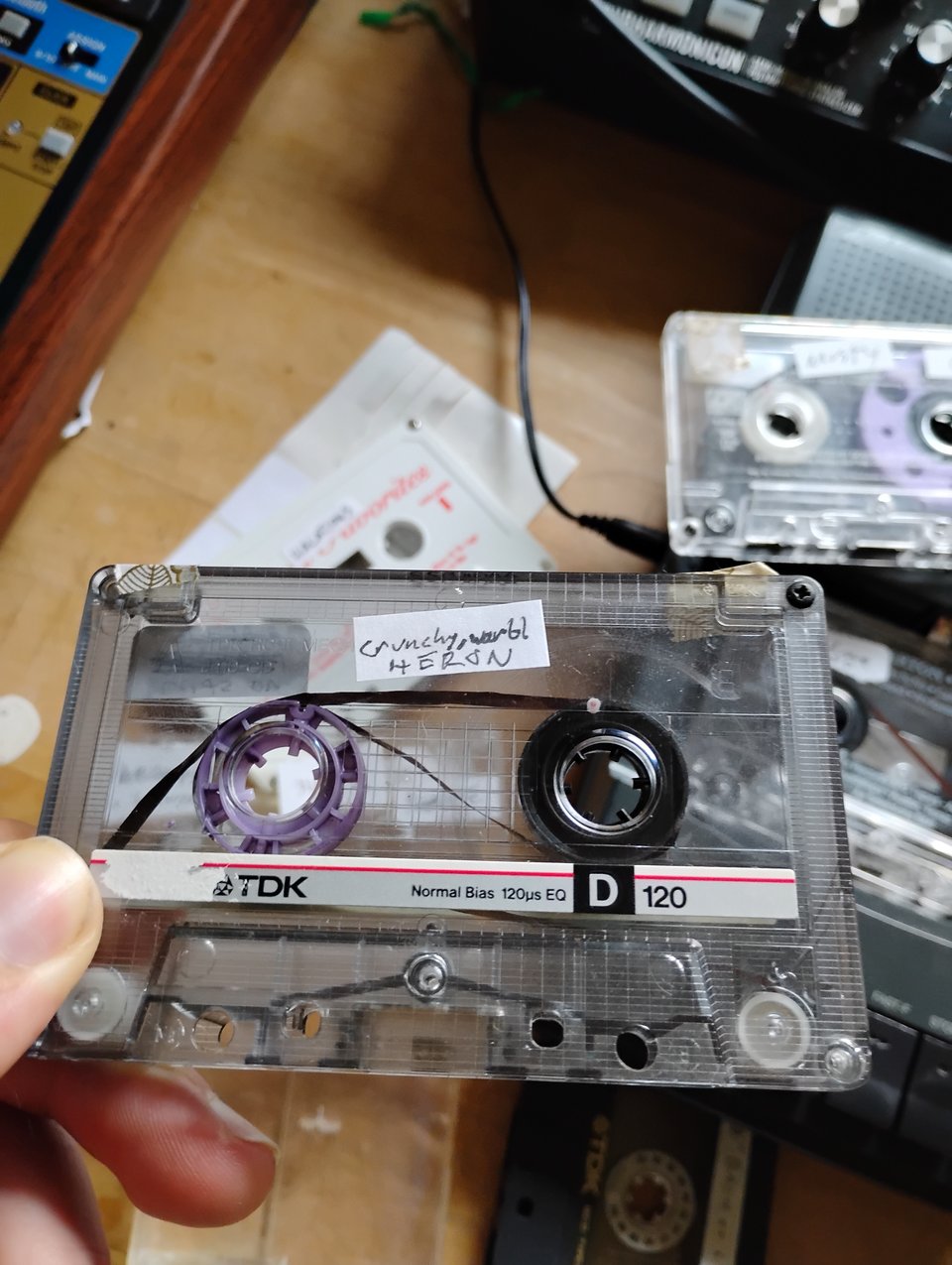
you can also get creative with how you position your loops inside the cassette to increase the time. in this layout below, i doubled the loop back on one of the wheels to give myself 8 seconds of audio time instead of 5.
i could go on and on, but instead i’ll leave it up to you if you want to go deeper on tape loops: Andrew Huang has a pretty good intro video.
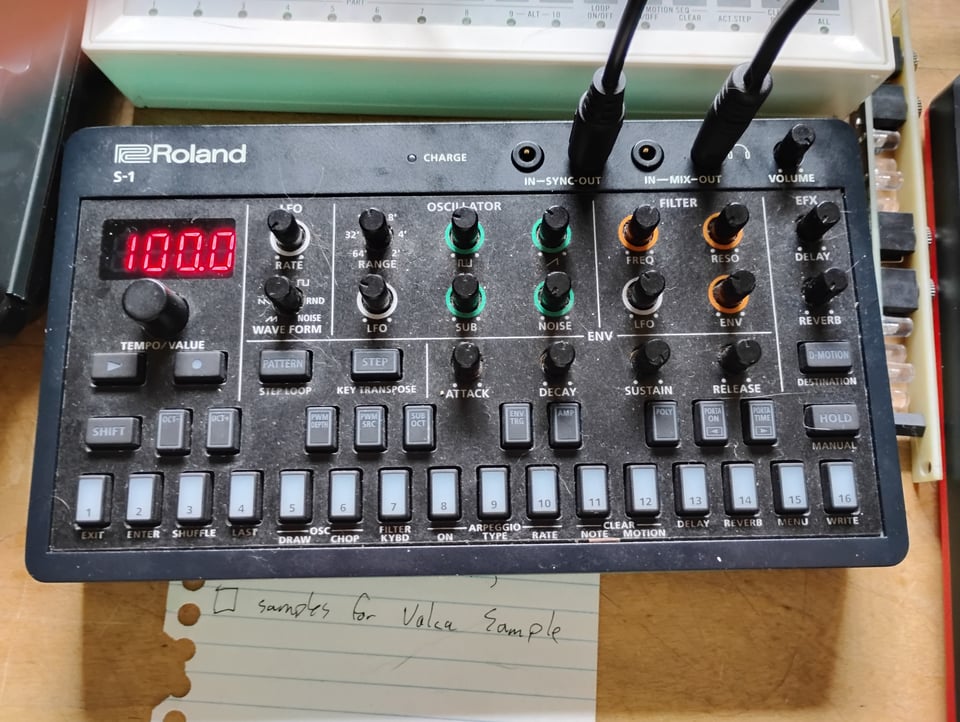
one of the main synthesizer instruments you will hear across the album is this little Roland AIRA S-1. i have tried numerous portable, battery powered synths over the years, but this one has stuck with me the longest. it’s a simplified clone of the Roland SH-101. the sounds you can get out of such a small package are super varied and i like quickly you can get a sequence programmed to start tweaking. i throw this synth in my backpack all the time. most of the synth melodies you will hear on Forager were written on trains, or by a lake, or on a bus using this little machine. you can tell from the dust, scratches, and cat hair that it is well loved.
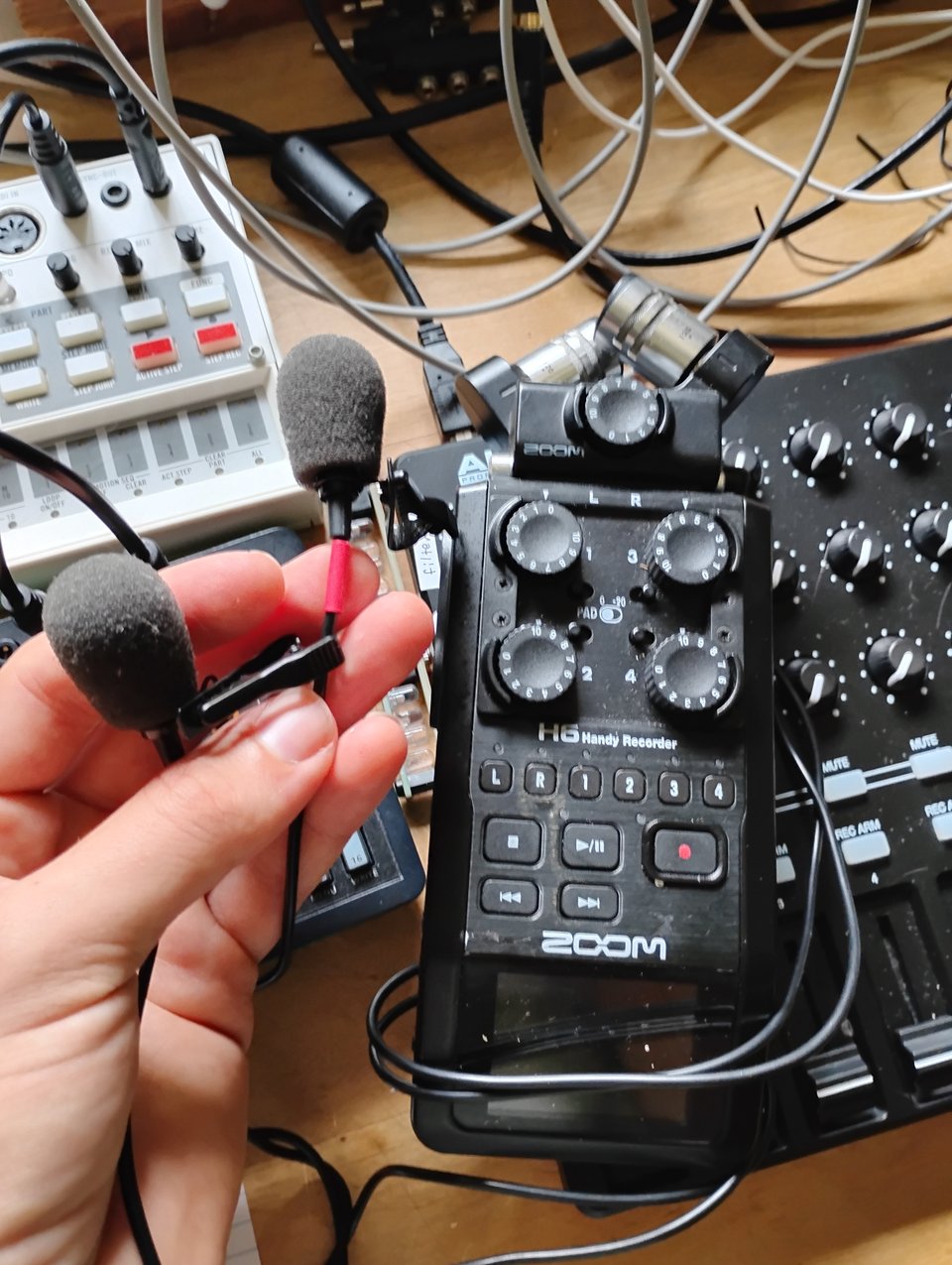
speaking of gear that is often in my backpack, the main way i captured field recordings for the album was a combination of the Zoom H6 recorder and a stereo pair of Clippy microphones. these mics are well respected in the field recording community and sound astonishingly good for how small and relatively inexpensive they are. i also like how they come with clips, which i often used to clip onto nearby branches or leaves when capturing audio in the woods.
there are two more pieces of gear that i want to mention, and both are responsible for all the “processing” that you will hear on Forager. many of the sounds are simple on their own, and intentionally so. for me, the glue that holds all of the songs on this album together is how these sounds were looped, sampled, chopped up, and recombined.
one way i did this was with a modular synthesizer. i’ve been building out a system for around two years now, slowly. modular synths break the mold of desktop synthesizers. they allow you to dedicate one type of processing to one module and then combine them in new and unconventional ways.
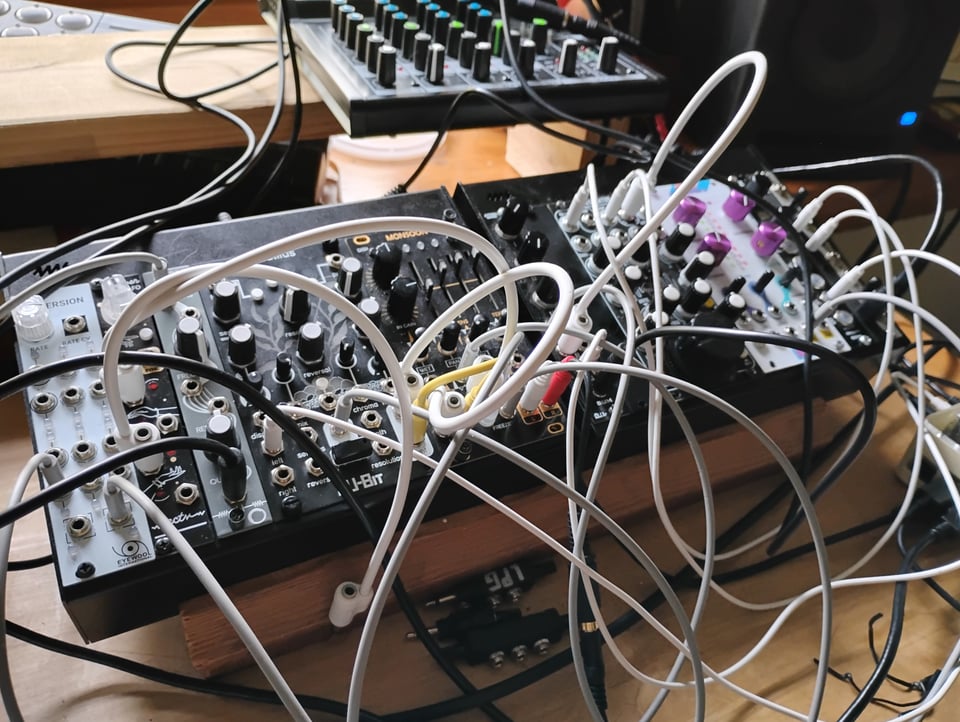
i mainly relied on granular processing for a lot of the effects on the album. the After Later Audio Monsoon (clone of Clouds) did most of the heavy lifting here, with plenty of modulation from a Coven Quad LFO. i also enjoyed using a module called “Dispersion” which very slowly modulates a signal over the course of entire songs. it was build by my good and talented friend Taylor Sullivan-Peters. one technique i kept coming back to was freezing the audio buffer of some melodic phrase and then making the start point jump around to different sections.
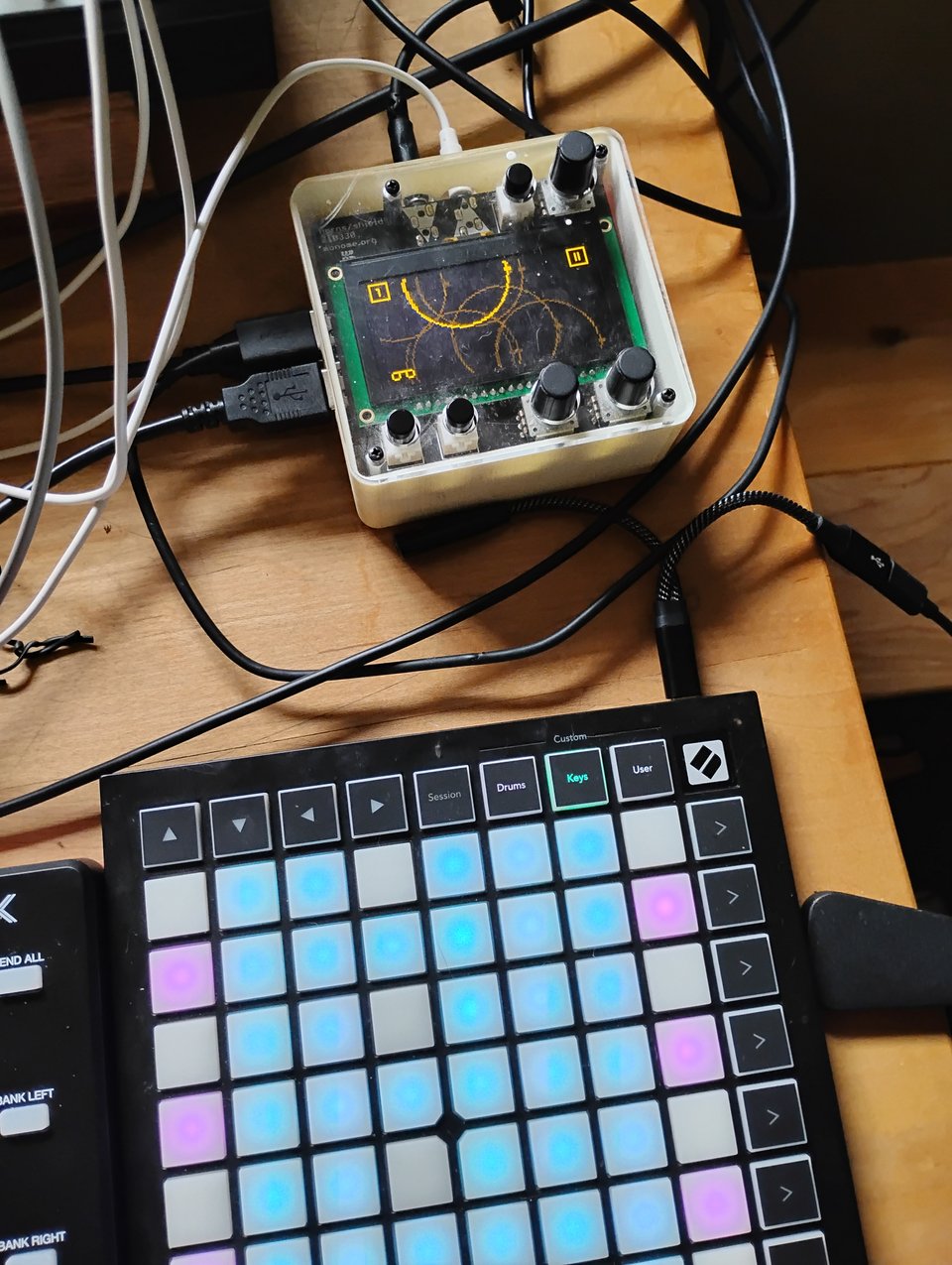
the other key tool used for processing work is the monome norns. i really cannot say enough positive things about monome. they create beautiful instruments using an open source ethos that allow musicians everywhere to write their own scripts to bring musical ideas to life. this bit of gear was really essential in bringing Forager to life and also changed the way i think about making music with loops quite a bit.
alright, i think that’s enough gear talk.
Forager comes out tomorrow :)
if you haven’t already, you can order a tape here. and for my local Vermont friends, i hope to see you at the album release show next friday, july 25!
ben // st. silva