
ISSUE 01 ✦ BOL INoLVIDABLE
i. bienvenidos a puerto rico
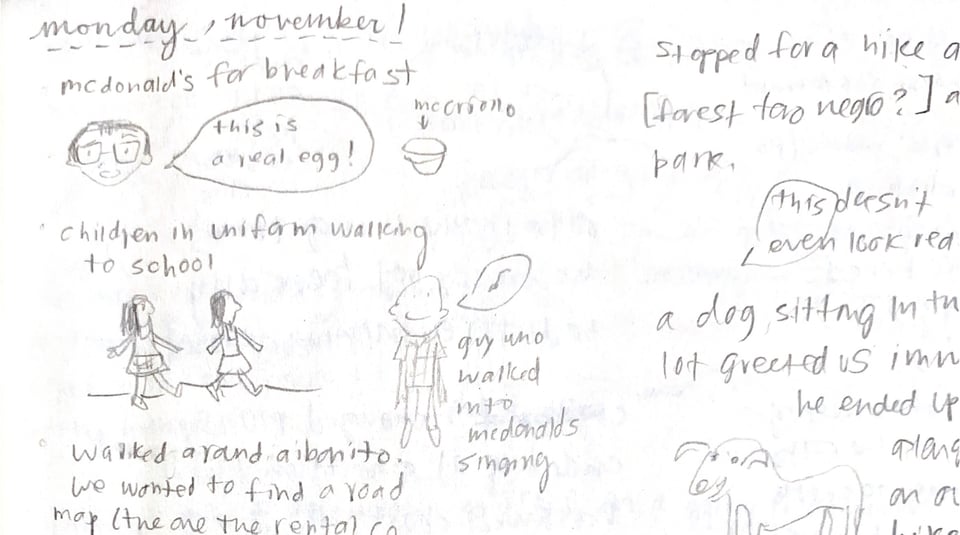
Rudely awakened by the dawn’s early light, my eyes open to the pale gray ceiling of a car that’s not mine. I’m slumped in a passenger seat that refuses to fully recline, wearing yesterday’s clothes, and sweaty from the already 89ºF morning—my first in Puerto Rico.
I look around. Our rental car is still the lone vehicle in the parking lot of a squat, two-story commercial building. With its outdoor staircase and painted concrete railings, the structure mimics the architecture of the budget motels that eluded us the night before. Instead of room numbers, the doors are marked with signs for Farmacia, Dentista, The Taco Maker.

My travel companion and I landed in San Juan the evening before with a loose plan for the trip:
Secure a rental car;
Drive toward the mountains;
Find a room to sleep;
Embark on a winding journey down La Ruta Panorámica, the 167-mile scenic road that threads through the main island’s central mountain range.
As we went south, so did this plan. One after another, the phone calls we made to every guest house I’d carefully circled in my guidebook went unanswered. The few motels we passed were out of commission. Having exhausted every lead and ourselves, we finally surrendered to the quiet of an empty parking lot.
Breakfast was the next choice born out of a lack of viable alternatives: McDonald’s.
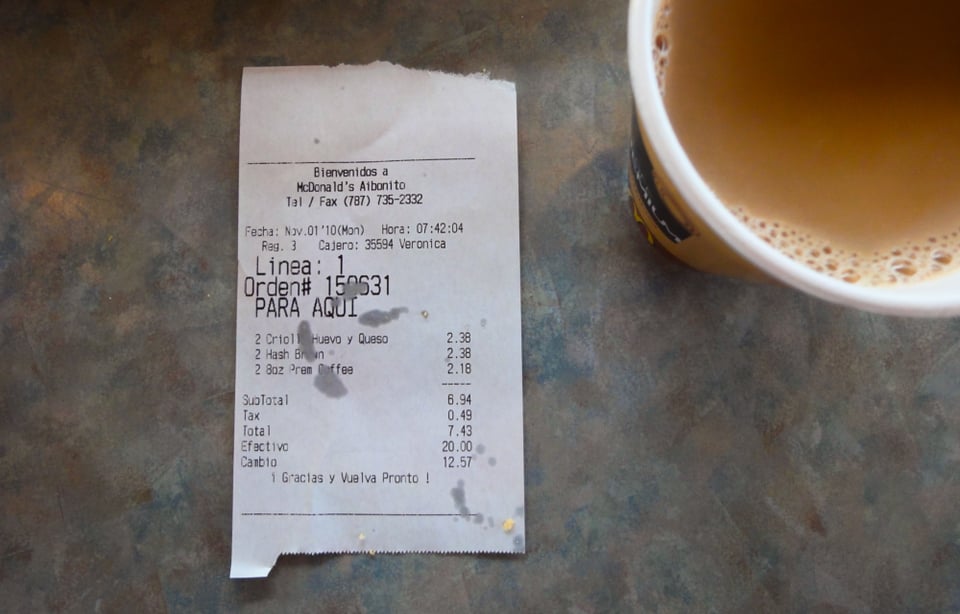
Looking back now more than 15 years later, most of that morning has compressed into a hazy blur. But one specific detail remains etched in my memory: the McCriollo Con Huevo Y Queso, localized response to the Egg McMuffin. Unlike every McDonald’s breakfast I’d had on the mainland, this one was made with an egg that actually looked like one.
This is much better, I thought. In America, you can’t even get a real egg at a McDonald’s.
Still groggy and waiting for the McCafé to kick in, I caught myself: This is America, too.
ii. start with this one
Sally: Have a happy birthday.
Don: Thank you, Sals.
Bobby: How old are you gonna be?
Don: Forty. So, when you’re forty, how old will I be?
Bobby: You’ll be dead.
It’s December 2025. I am five seasons into Mad Men, a prestige drama that premiered almost 20 years ago. It’s a show I had resisted until my good friend Justin finally intervened, Venmo’ing me $35 with the memo “mad men digital box set on Apple Tv store.”
The fifth season opens in mid-1966. The show signals the offscreen passage of time since the end of the previous season through the visual shorthand of hair: There is simply a lot more of it now, the counterculture finally overtaking the formerly dapper, cleanly shaven ad agencies of Madison Avenue. Amidst this shift, Don Draper is still the sharpest man in the room in his signature 1950s armor, in a way that starts to look more like obstinance than confidence.
Don has recently turned 40. He finds himself surrounded by colleagues who are younger and more attuned to something he struggles to hear. In one scene, the creative team is hard at work on a TV ad for a cologne brand riffing on A Hard Day’s Night, the musical comedy starring the Beatles released two years prior. Unable to secure the rights to an actual song by the biggest band in the world, they pitch an alternative that’s gotten the client’s blessing. Don listens for a few seconds before interrupting: “Are you kidding me? Why am I listening to this? You know we can’t get the Beatles.”
The room goes quiet. Ginsberg, the young copywriter whose instincts seem to consistently outpace Don’s, pipes in: “It’s not the Beatles. This song’s, like, 30-years-old. But it’s happy, and it’s fun. And Don thought it was the Beatles.”
Don later arrives home to find Megan, his much younger second wife, bearing a gift to insure him against future embarrassments: “You said you didn’t know what was going on,” she gently explains, “so I bought you the latest Beatles album.” She hands him a copy of Revolver and points to the last song on the album, instructing him to “Start with this one.”
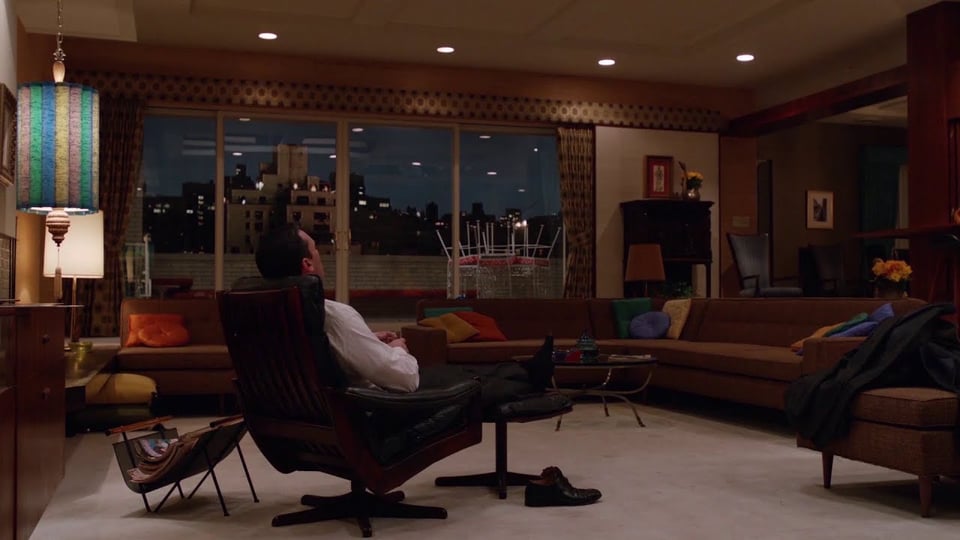
Don drops the needle on the last song of side two. Glass of whiskey in hand, he settles into the opening notes of the most psychedelic song on the record, “Tomorrow Never Knows.”
As 2025 draws to a close, all I know about Bad Bunny is that he is very popular, sings almost entirely in Spanish, and will perform at the upcoming Super Bowl halftime show in February. I don’t know a single Bad Bunny song. Not only do I not know his real name, I haven’t even bothered to wonder if he has one.
We recently purchased a treadmill, the latest addition to a winter survival strategy I’ve been meticulously refining since returning to Buffalo a few years back. The linchpin of this whole operation is my Peloton subscription, and the new equipment is the perfect excuse to finally try out the platform’s library of treadmill classes. Scrolling the list, I settled on a 30-minute workout with a new-to-me instructor named Camila Ramón and hit Start.
Peloton instructors can often be polarizing, but I’ve yet to find anyone who doesn’t like Camila. Born in Argentina and raised in Miami, she was the first person to teach Spanish-only classes on the fitness platform. Even when leading with English, she weaves in Spanish in a way that rescues otherwise bland, inspirational-poster platitudes with a refreshing sprinkle of sazón (“Silence your inner cucaracha!”).
After several minutes of stomping to the syncopated pulse of Camila’s Latin pop playlist—a rhythmic blur of language I mostly don’t understand—a sudden line of English almost literally stops me in my tracks: “un selfie, say ‘cheese’—ey!” Struggling to maintain my footing on the moving belt, I tap the screen for the current track: “Tití Me Preguntó” by Bad Bunny. A white-outlined heart appears below the title. I tap it, and it fills in red.
Camila has just handed me my Revolver. I’m relieved that I’ll know at least one Bad Bunny song by the time the Super Bowl airs.
iii. we no speak americano
America, as a shorthand for the United States, has a way of raising hackles around the globe. The Americas stretch from Canada to South America’s southern cone. Why should one country, accounting for a third of their population and less than a quarter of their land, have a nomenclatural claim on the whole hemisphere? … Yet the United States hasn’t always gone by America. That name rose to its current ubiquity only in the 20th century. It did so in response to the United States becoming an empire.
After fighting a war with Spain in 1898, the United States annexed not only the Spanish colonies of the Philippines, Puerto Rico, and Guam, but also the non-Spanish lands of Hawai‘i and American Samoa. … Where earlier generations might have stopped short of fully embracing America in deference to the other American countries, the new imperium didn’t care … The hemisphere was its to claim.
— Daniel Immerwahr, When Did the US Start Calling Itself “America,” Anyway?
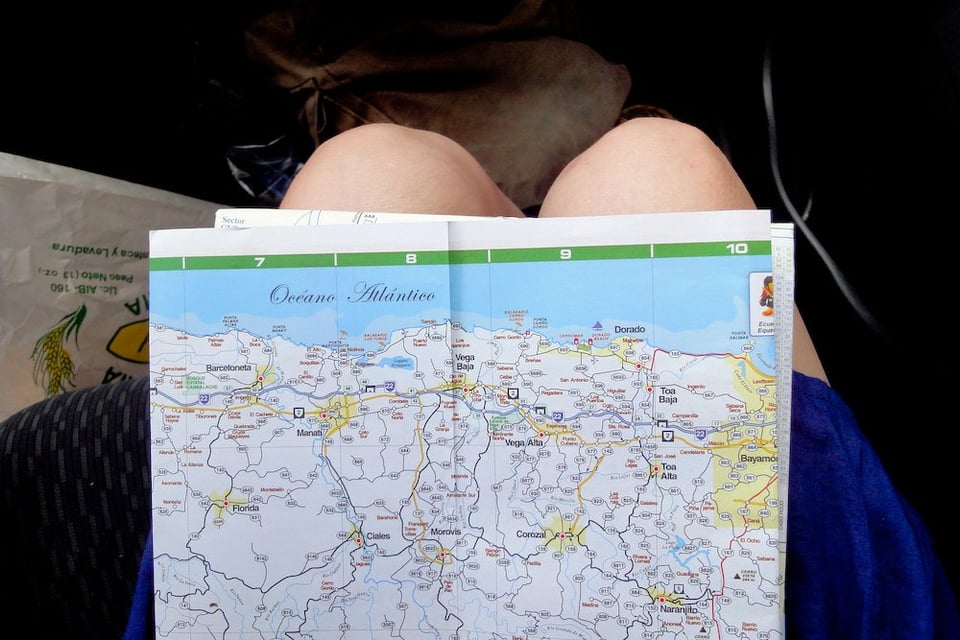
Driving through the mountains, we favored the car radio over the familiarity of my iPod to learn what the locals are listening to. Rising above the continuous pulse of reggaeton, one song is played more than the rest: “We No Speak Americano.”
It’s a bouncy, silly dance track. The song owes its distinctive electroswing sound to a sampled 1950s Neapolitan tune called “Tu Vuò Fà L’Americano” (“You Want to Play the American”). The song mocks a young Italian man who’s absorbed American culture wholesale—Whisky e soda e rock ‘n’ roll—while relying on his parents to fund this new lifestyle.
The song is built around a vocal hook that to my untrained ears sounded like ba bada lee da but upon (many) repeated listens revealed itself as pa-parla americano. In South America, the song was known as “Pa-Panamericano,” a name that stretched to hold more countries in this hemisphere than the sampled song had intended.
Unbeknownst to me, “We No Speak Americano” is a top ten hit in over a dozen countries, one of the biggest songs in the world. All I know is that it’s inescapable here, on this mountain road, on an island that is and isn’t the country I’m from.
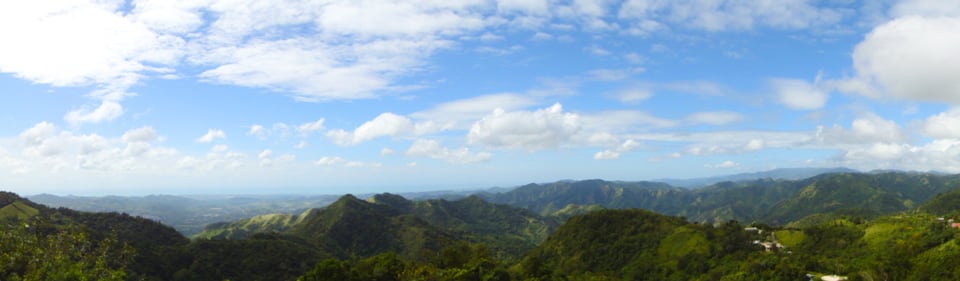
One of our first stops on the scenic road is at an unassuming chinchorro, basically roadside dive bar, drawn in by the cursive hand-painted sign that read Barrita Bella Vista. We took our dos cervezas to the back porch overlooking a panoramic view you’d never know was there from the road.
Later, we see a sign for a national park and pull over to stretch our legs. A small tan-colored mutt is there to greet us as if he’d been expecting us. He hikes the entire out and back trail with us, trotting a few paces ahead like he knows the way. We thank our little guide with scraps from our post-hike sandwiches.
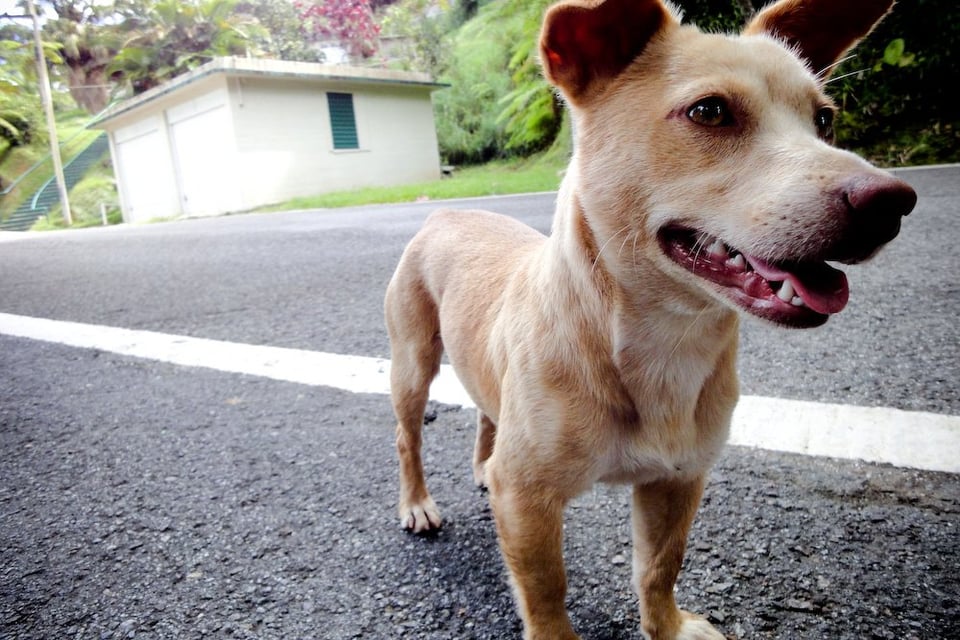
This becomes the template for the rest of the trip: things that seem accidental that turn out to be exactly right.
Our good fortune continues as we pull into Jayuya, a quiet town nestled in the mountains. We discover a guest house that is both open and welcoming, situated on the lush grounds of a former coffee plantation. After the previous night’s makeshift lodging, a warm shower and a bed feel like the peak of luxury. And having arrived in the off-season (technically also hurricane season), we nearly have the place to ourselves.
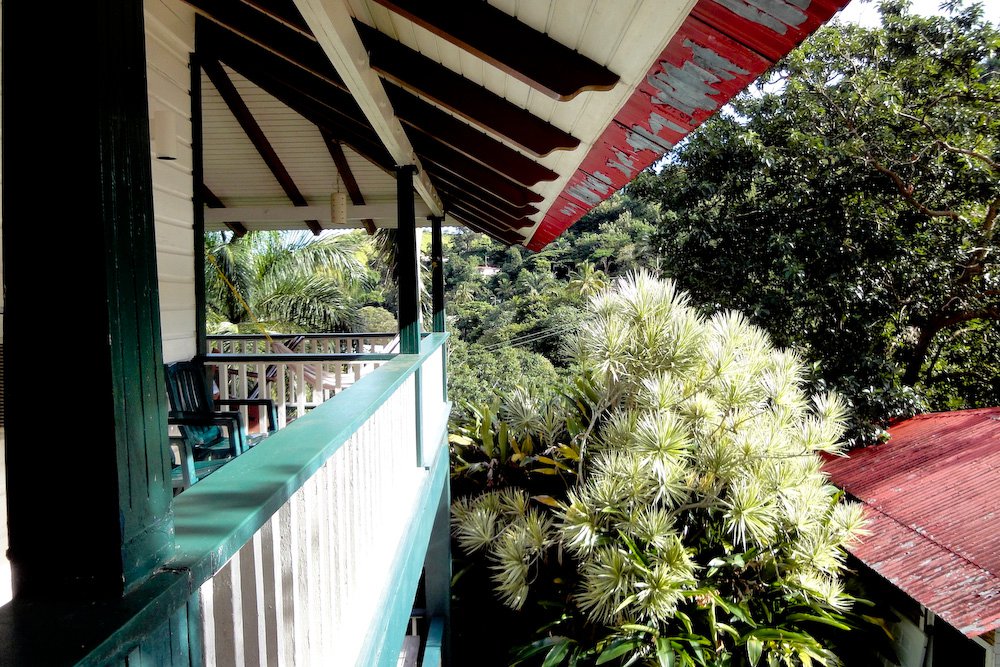
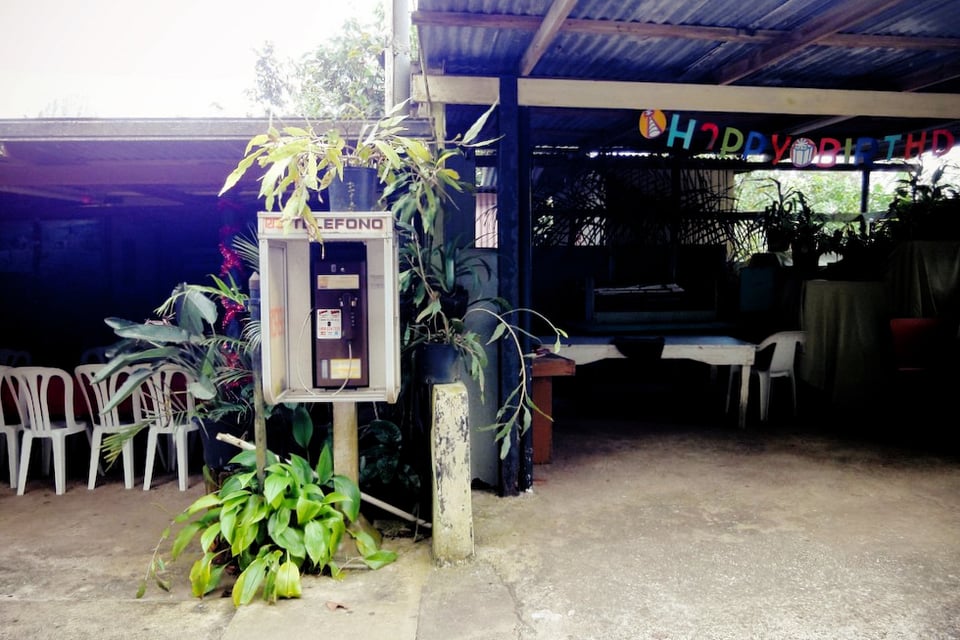
The rest of the trip is a warm, pleasant blur of vague sense memories. Bread in the mornings (still warm, slightly sweet, soft texture somewhere between a dinner roll and a cloud). More beautiful hikes through the island’s lush interior. White plastic chairs everywhere, on porches and outside of food stalls. The unofficial furniture of the island.
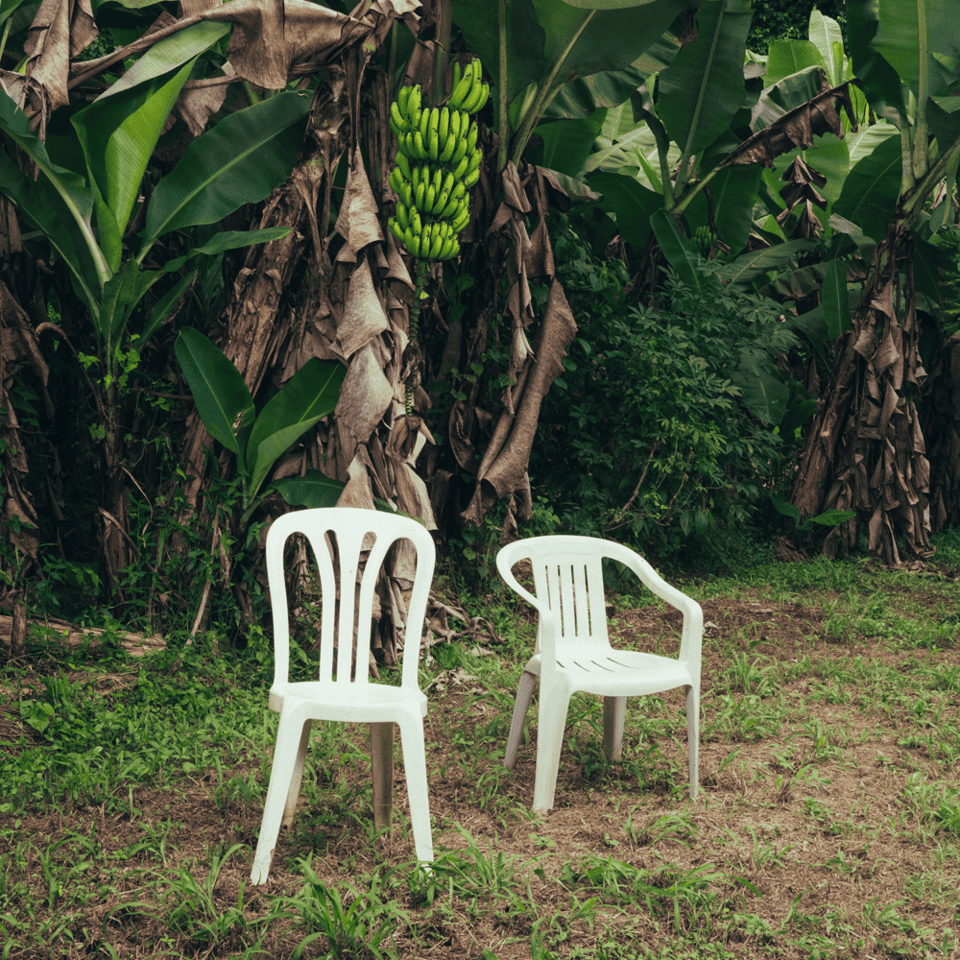
Fifteen years later, Bad Bunny will use a photograph of two empty white plastic chairs as the cover of DeBÍ TiRAR MáS FOToS. It’s an album about nostalgia and what you fail to document because you don’t yet know you’ll miss it. Going back through my photos I found a vaguely similar shot I don’t remember taking, but I’m glad it’s there.
iv. zulma
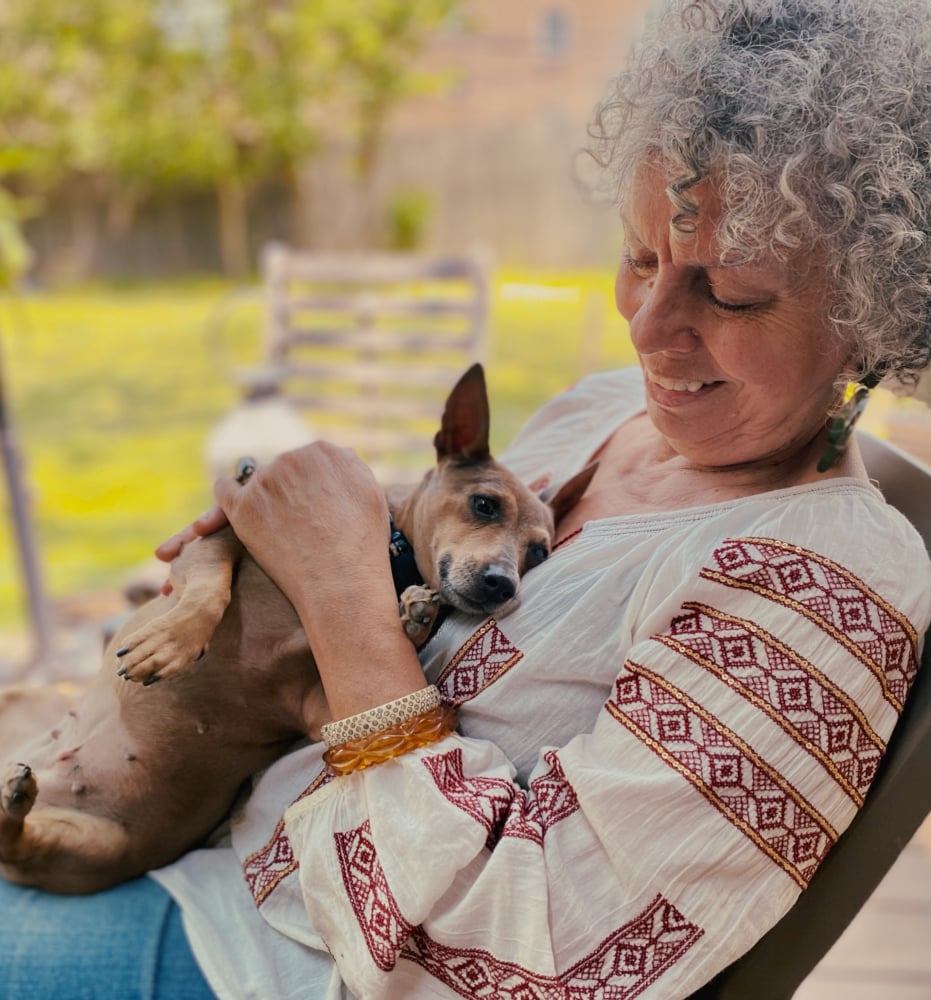
Many years after that trip, I fell in love with the son of a Puerto Rican woman.
Early in our relationship, my boyfriend Alex invited me to a Sunday meal at his parents’ home where I first met Zulma, her husband George, and a lively constellation of immediate family.
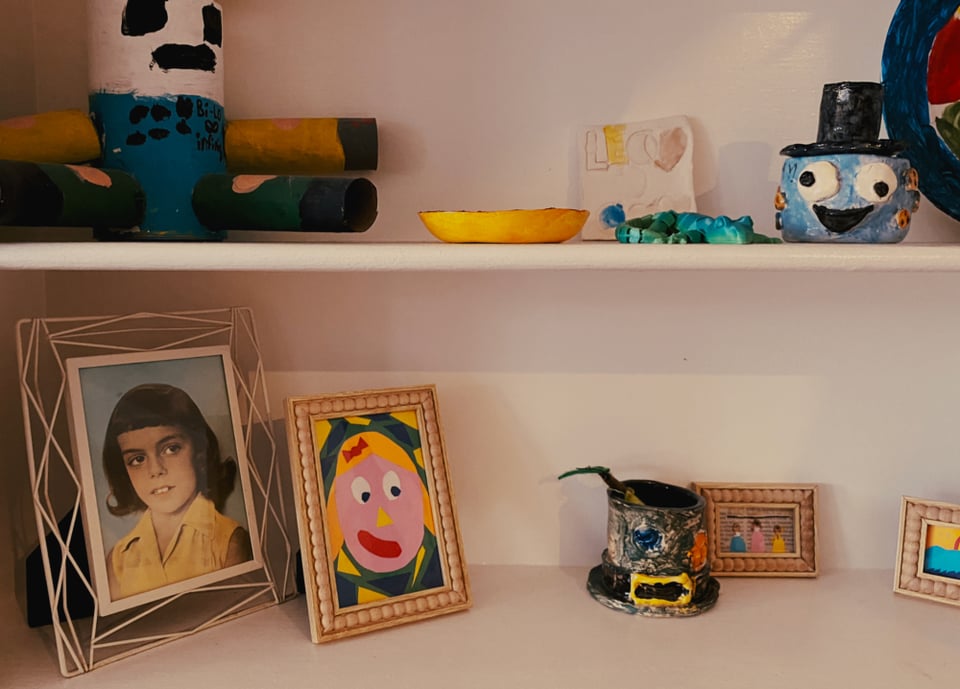
Entering their living room for the first time was like stepping into a gallery. Everywhere, hand-carved wooden saints known as santos de palo peer out from the shelves, surrounded by a collection of vibrant prints and sculptures that line the walls. The space is furnished with gorgeous midcentury pieces like the dining table she recently scored from the local vintage dealer, her longtime estate sale rival turned friend. Tying it all together is the vintage jukebox of Alex’s childhood, still in peak operating condition and ready for requests from the family’s well-worn collection of 45s—though with an uncanny, mysterious tendency to spontaneously drift back to “Margaritaville,” one of his mom’s favorites.
Zulma, who was born and raised in a town outside San Juan, had ordered a feast from a local Puerto Rican spot for the occasion. The eight of us gathered around the massive spread, the dining table straining under aluminum pans of rice and pork that could have easily fed a group twice our size.
This is what it is like to be received into Zulma’s world, the only house on the street where the doormat reads Bienvenidos.
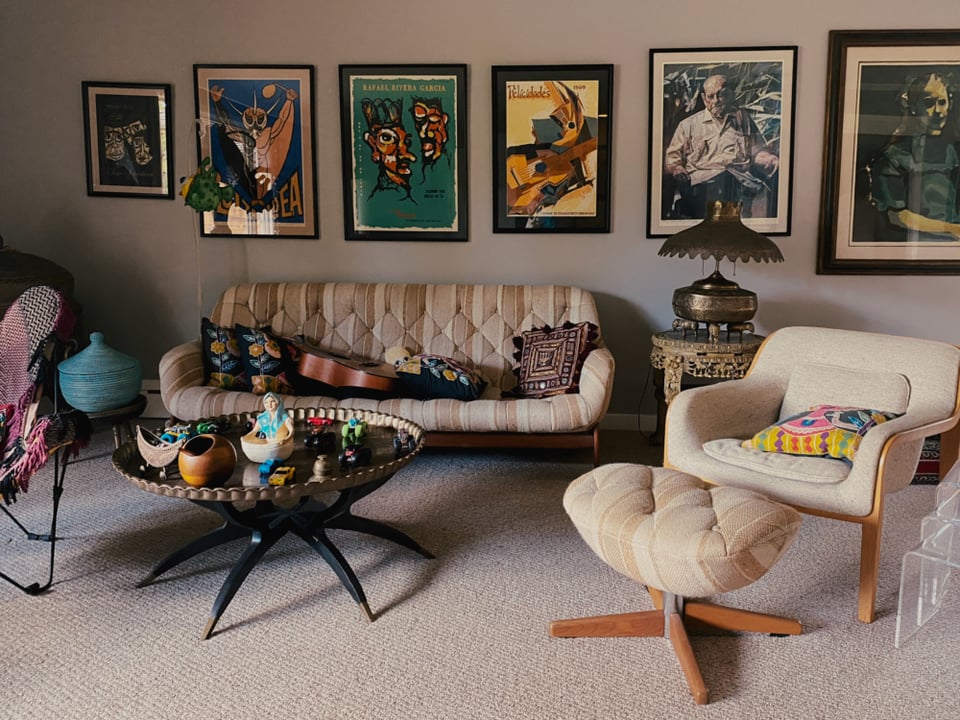
Sundays at her house have become a regular part of my life since then. A natural host, she’s the kind of person who gladly opens her home to family and friends as a matter of course rather than occasion.
Often during these visits, some new wild detail about her colorful life is casually revealed, from Alex and his siblings reminiscing about the many short-lived obsessions she indulged while raising them (a rotating menagerie of exotic birds, niche cactus cultivars, and a dedicated pursuit of McDonald’s Happy Meal toys to name a few) to unbelievable stories of her childhood in Puerto Rico—like the pet spider monkey she ordered through the mail.
As the legend goes, it was a magazine ad for a peculiar mail-order item that caught her eye. Anticipating an empty house during the day, young Zulma directed the shipment to the university where her mother worked—carefully omitting any mention to her of the incoming cargo. After the initial shock of a live primate arriving at her office in the middle of her workday, her mother relented and the tiny arrival was allowed to stay. He was periodically jailbroken by a wild neighborhood monkey for joint excursions. Despite those brief tastes of freedom, he always found his way back home in time for dinner.
v. a shameful, shameful day
Harry: It's enough of this crap already, all these special broadcasts preempting the primetime schedule ... You know they might cancel the Stanley Cup?
Pete: How dare you. This cannot be made good. It's a shameful, shameful day!
— Mad Men S6E5 “The Flood”, in the aftermath of Martin Luther King, Jr.’s assassination
It is January 2026. In Minneapolis, Minnesota, a United States Immigration and Customs Enforcement agent named Jonathan Ross has murdered Renee Good. She was a 37-year-old mother of three, shot in her car shortly after dropping her six-year-old son off at school. Days later, a different ICE agent has murdered Alex Pretti, also a Minneapolis resident, also 37 years old, an intensive care nurse for the Department of Veterans Affairs. He was fatally shot while stepping between a federal officer and a woman the officer had shoved to the ground. This is America, too.
Elsewhere in America, a Super Bowl promo brought me to tears. The thesis for the sparse ad teasing Bad Bunny’s upcoming halftime show is basically: Being Latino looks like a lot of different things, and that heritage is something worth celebrating. Representation on one of the most visible stages in American culture shouldn’t feel like a radical political statement. Right now, it does.
I eventually learn that Bad Bunny does in fact have a real name: Benito Antonio Martínez Ocasio. As the Big Game—colloquially, the Benito Bowl—drew closer, I noticed his name everywhere, including Slack (my remote job equivalent of a water cooler chat):
C: Who am I supposed to support for the Superbowl?
M: Bad Bunny
M: Dude calls out toxic masculinity, gets his nails done, dresses like an icon, refuses to be pigeonholed, and makes fabulous music. So the fact that he got selected to perform at the Super Bowl is subversive and awesome
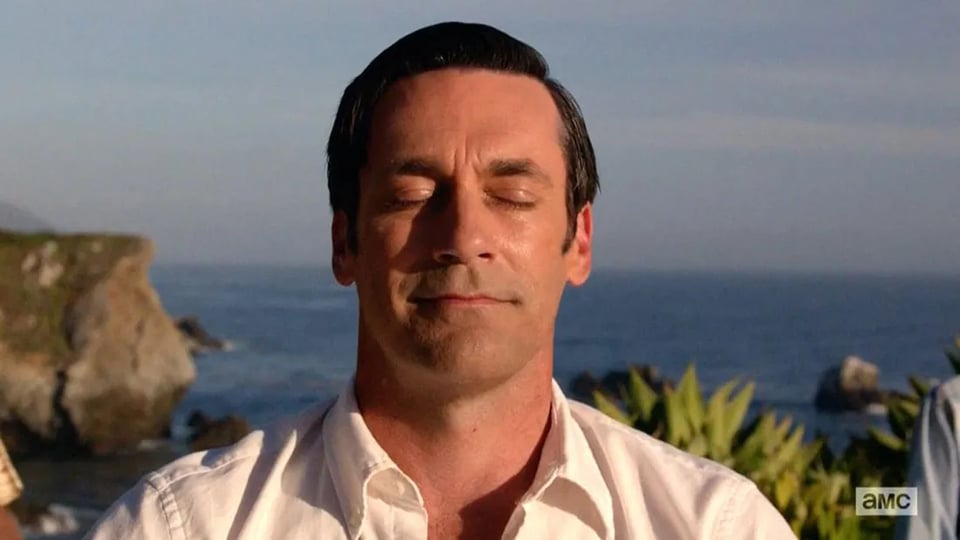
The day before the Super Bowl, even Jon Hamm—Don Draper himself—wrote an essay declaring himself one of Bad Bunny’s biggest fans. He has seen him perform four or five times. He flew to Puerto Rico for the residency. He reports that Benito himself has christened him with the incredible nickname “Juan Jamón.”
His favorite Bad Bunny song is “Tití Me Preguntó.”
vi. the benito bowl
Many Sundays later, back with the family in Zulma’s living room. Naturally, when Bad Bunny was first announced as the halftime entertainment, she declared: “We should have a party!”
By the time Super Bowl Sunday arrived, I was buzzing. I had done my homework, and have always loved the thrill of a live broadcasted monocultural moment. Just a few days earlier at the Grammys, Bad Bunny had departed from his normally Spanish-language delivery to address the mostly white crowd in English: “Before I say thanks to God, I’m gonna say: ICE out!” As we waited for the show that promised to be unforgettable, anything felt possible.
The broadcast opens with Benito threading through a vibrant, living tableau of Puerto Rican life: street vendor carts, a bustling nail salon, and a group of older men hunched over a game of dominoes. I steal a glance at Zulma, who watches with a wide grin of recognition. She offers some light translation during the mostly Spanish set. “He’s saying to always believe in yourself,” she offers at one point. As the performance unfolds and we all sit there looking a bit lost, I ask: “What’s he saying now?” She pauses for a beat, then admits: “I’m honestly not sure!”
It really didn’t matter. The entire show was a stunning, meticulously crafted audiovisual triumph—a universally enjoyable gift to the millions tuning in from around the world. Something stirs in my millennial soul as a forgotten melody from the early-aughts floats up from a dusty corner of my memory: dame más gaso-leeee-na! A dancing crowd outside a casita dropped into the center of the stadium, with a Pedro Pascal cameo. A real wedding ceremony. Lady Gaga is there, because why not, dressed in an elegant gown echoing the colors of the Puerto Rican flag. Later, Zulma excitedly gestures toward the screen to point out a confusingly ageless Ricky Martin (just gonna drop papi’s skincare & wellness routine here as a public service).
While grownups in the room were charmed, the younger generation’s response was more tepid. Alex’s almost 13-year old niece weighed in with a contrarian, slightly noncommittal "Meh?" Her little brother, who had been studying her face for his response, echoed her disappointment with a more nuanced critique: "It was okay... but I wish Bruno Mars was there."
Alex, their lovably cheesy uncle always ready with a quick one-liner, didn’t miss a beat: “I think you’re just disappointed because you noticed the bushes are people. Were you hoping they were going to dance?”
vii. todos somos américa
As the end approached, the music suddenly dropped out. The camera found him again, a solitary figure beside one of the (stoic, non-dancing) people-bushes. Clasping a football firmly in both hands, Benito looked up as he switched to English to utter a familiar benediction:
God bless America.
As the words hung in the air, I felt a shift from joyful enchantment to cynical disappointment. The banal declaration of patriotism snapped me back to the fraught reality of our current moment. I didn’t want the party to end, and I wasn’t ready for a signoff that seemed to be landing less like a defiant gut punch and more like a wet sentimental fart.
I immediately felt foolish about my premature reaction. His statement was much more poignant than I’d given him credit for. It hit me as he continued with my favorite art form, the humble list:
Chile, Argentina, Uruguay, Paraguay, Bolivia, Peru, Ecuador, Brazil, Colombia, Venezuela, Guiana, Panama, Costa Rica, Nicaragua, Honduras, El Salvador, Guatemala, Mexico, Cuba, Dominican Republic, Jamaica, Haiti …
He rattled them off one by one—a roll call of nearly every nation and territory of North, Central, and South America. When he said God bless America he meant all of it, backed by a cheering crowd waving the various flags he had named. Finally, after the United States and even Canada getting a shoutout, he ends with:
And my motherland, mi patria, Puerto Rico, seguimos aquí.
[English: my homeland, Puerto Rico, we are still here.]
As the closing note to the performance, Benito holds up the football to reveal the inscribed message:
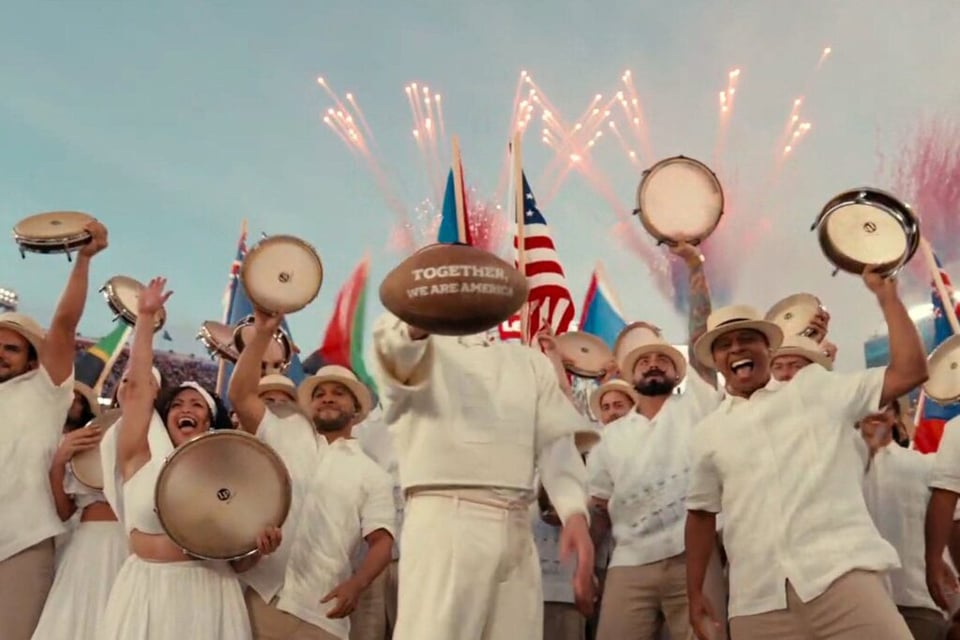
Once again, I’m thankful for the reminder: This is America, too. ✦