Tales from my year
I'm almost done with my JSK Journalism Fellowship. Here's a glimpse of what I've been up to.
This year, a fellowship at Stanford University gave me the great gift of a year with only a tiny bit of structure. Historically, throwing out structure has had mixed results (see above experiment with snowmen and the ignition temperature of books). But this year I did a lot, most of which won’t make it into my wrap-up post. So I’m sharing some outtakes here.
how I thought about this year
I like to think like a journalist. Even when I dipped out to work as a health care research and economics analyst, I still thought like a journalist. That said, I don’t only want to think like a journalist. It boxes our work in. Sometimes, journalists see scarcity where there is opportunity, and conflict where there’s potential for collaboration.
I’ve spent a lot of the last few months situating my own interests in broader modes of thought: from design thinking to data sculptures, to art installations to civic tech. I’ve prioritized interactivity and interdisciplinarity.
Partially, this is about broadening my own viewpoints and toolkits. But more than that, it’s about finding new ways to do journalism better. It’s given me new ideas to understand and engage with audiences, to connect journalism to the vital community information ecosystems that desperately need tools for media literacy and self-advocacy, to understand where and how we can sit in the larger communal and civic fabric.
Sometimes, journalists like to talk like we’re a one-stop shop to changing laws or saving the world. But more often, we’re a midpoint in the conversation — and we neglect to tend to its beginning, or follow it through to its end.

Interacting with data in real life
Embodying Data—Storytelling Under Autocracy sparked a lot of this inquiry, for me. Co-taught by data activist Andrés Snitcofsky and Community Data author and academic Rahul Bhargava, the experience asked journalists to use physical materials like string and balloons to re-tell data-heavy stories in more tactile, immediate terms. It got a roomful of technical journalists thinking about different ways to communicate data. And it told stories in a participatory, group manner.
(Thanks, also, to Prof. Bhargava, who made some time to speak with me for JSK blog post that I ultimately did not end up writing.)
This has gotten me thinking a lot about the geographic power of news organizations, especially local-national hybrid organizations like Civic News, where I currently work. We have the community position to do this sort of unique connective work in one place, but also set it up to travel and scale.
Expanding into new visual forms
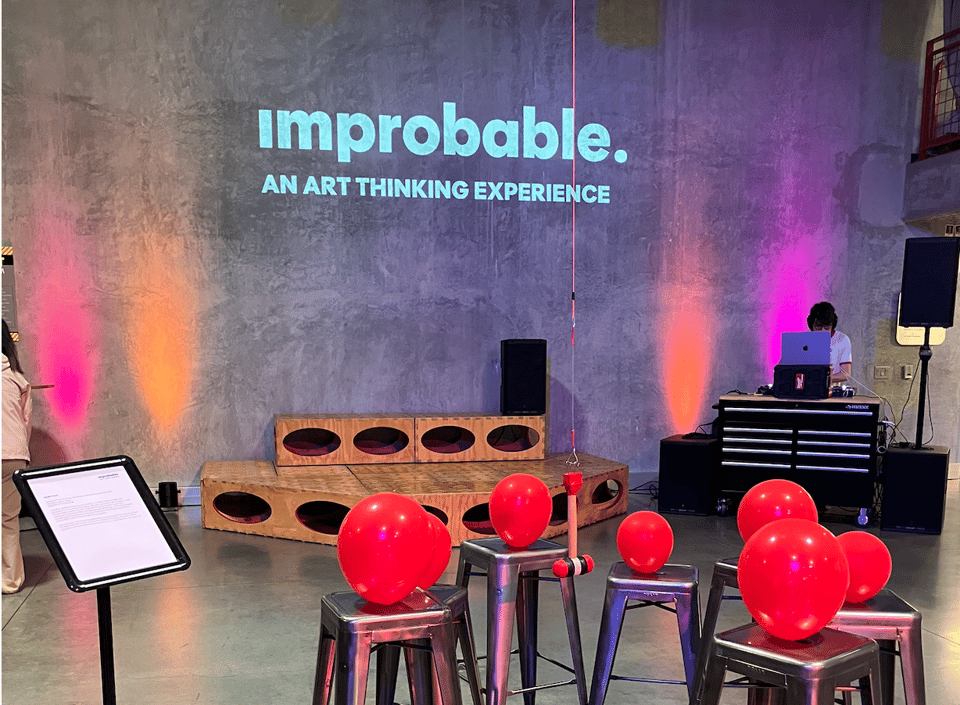
Improbable: An Art Thinking Workshop took these ideas a step further. The French business school ESCP partnered with Stanford’s d.school to essentially propose a three-day crash course in applying design frameworks to creating art. In one sense, it turns artistic process into a sort of formula, which might feel a bit cynical. On the other hand, a class of uncertain undergraduates (and three perplexed journalists) produced a full-sized interactive art installation over the course of a weekend. Some of the art was pretty provocative.
Teaching and learning
I also recorded my first open-source online course, an exploratory and investigative approach to figuring out what’s wrong in spreadsheets, via Open Visualization Academy. This course builds on what I’ve learned designing data workshops for the Education Writers Association, OpenNews, and Investigative Reporters & Editors, as well as internally at my own newsrooms. It expands my past writing on quality assurance and takes a skills-training approach to addressing one of the biggest, most persistent questions I see from journalists and anyone else working with data: How do I know my conclusions are right?
This feels like a bigger and more important question than ever to me, especially as I follow developments in the AI space.
Telling my story, not just sharing a project
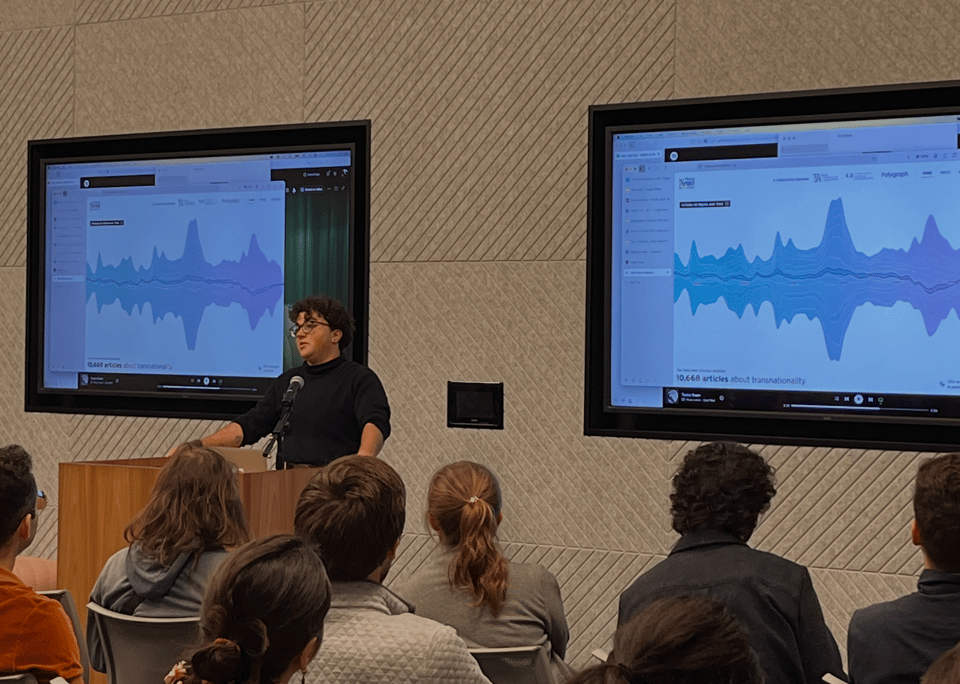
I’m speaking more, and in different ways. In the last few years, I’ve taught workshops, moderated panels, trained newsrooms, popped into classrooms, and demo’d technical tools, amounting to more than five dozen speaking engagements. But it’s often been about tools, not the big picture. In December 2025, as a keynote speaker, I discussed our coverage analysis and editorial framing work with an audience of journalists gathered to discuss data journalism under authoritarianism in Florida, at the Computation + Journalism conference. I did my first television interview to contextualize anti-trans misinformation to the public. I’m currently seeking more ways to reach people (and might have some fun developments in that area soon).
Pursuing collaboration
Data journalism has a lot to learn from computational and academic methods. This has been a longstanding interest of mine. At Civic News Company, where I work as a data journalist, I’ve adapted social science methods to develop local academic work into national journalistic analysis of U.S. Census Bureau data. At the Trans Journalists Association, I have explored media analysis by consulting with academics and researchers; the notable byproduct of that has been a study conducted by Berkeley Media Studies Group and informed by us that audited sourcing in stories about Trump’s anti-gender executive orders. During my JSK fellowship, I took that further. At my first international conference, I listened to Nobel laureate Maria Ressa speak about how necessary it will be to employ “radical collaboration” to combat disinformation. I’ve been speaking with “information warfare” and data experts outside of journalism about how to track disinformation and its incentives. I’ve dug into The Nerve’s study on “narrative warfare” in Trump’s first 100 days and Texty’s work on Russian disinformation in Ukraine. I chatted with some of the people doing interesting work on LGBTQ+ data in academic spaces.
reading more than I meant to
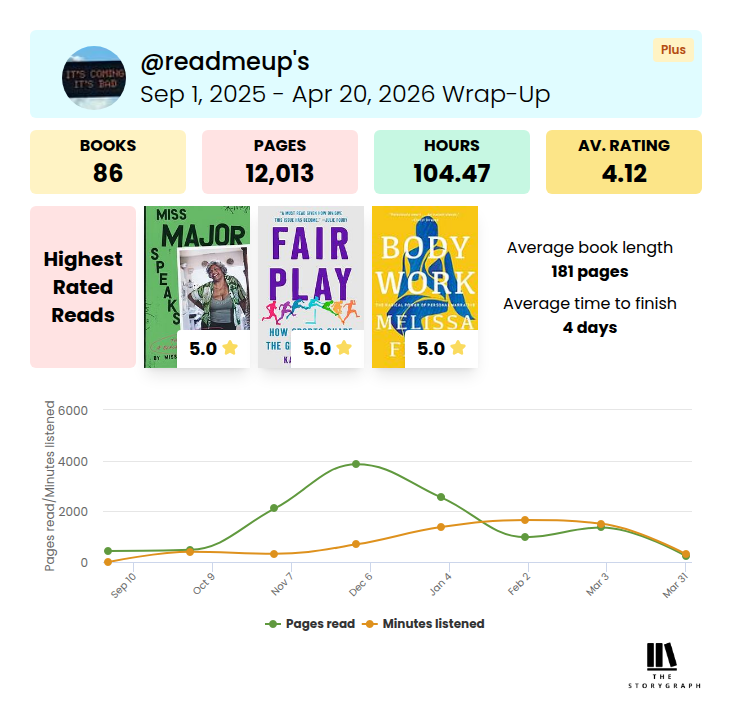
When I started the JSK Journalism Fellowship, one of my goals was that I wouldn’t read to learn. That sortof happened. But also, I’m me, so I created multiple book lists — books recommended to JSK Fellows (by us and by others), books recommended at Stanford broadly, books I’ve read… I’m still not done with my fellowship, so I’ll likely write more about what I read and why later. Can’t work with an incomplete dataset!
going forward
I’ve been thinking about models for data privacy as a human right and educational models for teaching individual data sovereignty in a tech landscape dedicated to extracting value from personal data. I’m exploring ways to perhaps build some tools and/or create some events around that.
I attempted to write a more cogent essay about what all of this means, and what I’d like to do with it. A lot of that focuses on the tensions of scale in journalism. The world has gotten bigger, and newsrooms are trying to keep up — at the same time, we see again and again that local, small-batch, tailored work often means the most. Some of the organizations doing the most exciting work seem to me to balance both. But honestly, those thoughts aren’t fully baked yet. I’m going to give them some more time to rise.
Where will all this take me? I’m not sure yet. But that’s the fun.
Also, I have two months left… so a few more things could definitely happen!