
January 2026: Acceptance, Half full, Architectural therapy
1. Here, Now, Close
Here, Now, Close is my new monthly newsletter series that shares a reflection, an offering or two, and some inspiration in each dispatch. This is the first one. Thanks for being here :)
Here
Last weekend I participated in the online meditation retreat Calming the Fearful Mind, beautifully led by the Lower Hamlet Sisters of Plum Village in southern France. It was a profound experience for me that I am gently holding these days. I joined a lineage of wisdom and received transmission of the Five Mindfulness Trainings, renewing my commitment to engaged, spiritual practice.
I sought this retreat because these times ask me to deepen my evolving relationship to death and grief (to life, to care). Having a child has softened me further: I am transparent to myself, with painful parts exposed in need of compassionate witness in order to transform. Bearing witness to the violence and suffering caused by State oppression, be it the US or Iran, with actions and policies that fuel hatred and fear in people, has necessitated new approaches for being in my body: I do not insist calm, but must restore my body’s capacity to adapt and recover to a new baseline. It’s completely natural to be on high-alert through precarious, prolonged instability (though different, collective and political stress is still personal stress) but we must continue to act – for self, loved ones, and community. These are not realizations made overnight, but I had to – first, and finally – recognize and accept that I needed more support in order to meet this moment recollected.
What terminal diagnosis, political unrest, and any major personal or structural change have in common is that they challenge our worldview and sense of life as we know it. There’s great pain and heartbreak to live with/through uncertainty, and if we’re honest, we usually wish it would be easy or just be over with. But in order to act and transform through these experiences, we first have to accept the reality of what’s happening. Easier to say, harder to do. With acceptance, and the time it takes, we find the courage to feel the grief and rage that comes up from turning towards reality. Taking care of those feelings with love and compassion supports us to come back to ourselves with a clear mind and full heart, and so many more options become available to us about how to act in the face of transformation. Our actions and their effects, the seeds of consciousness that we water, end up being what we have to show for our lives. Avoiding, bypassing, and illusory thinking end up producing lackluster consequences. As Nan Shin writes in The Diary of a Zen Nun, “By not quite accepting things that are so, because they don’t please me, we spend our entire lives making meaningless gestures somewhere next to reality.”
I have turned to the lineage of Thich Nhat Hanh in part for his teachings on impermanence. He says, “it is not impermanence that makes us suffer. What makes us suffer is wanting things to be permanent when they are not.” With this in mind, what about this life and living are you learning to accept at the moment? What kind of meaningful action does it ask for or inspire you to take? Because, “thanks to impermanence, everything is possible.”
Feel free to reply back with your response. I’d love to learn what you’re going through and how you’re approaching it.
Now
A contemplative practice for integrating more death awareness into your life includes the recognition of limitations. When you respect and honor limits of different kinds, you become more familiar with the nature of impermanence, remind yourself of y/our mortality and the conditions available to us, and build trust in the process of life and death cycles.
You can try this in what feels like low-stake situations: you’re mindful of the last bite of your delicious meal; you’ve done enough work for the day and you signal the end of it by tidying your desk; you ask to continue the tough conversation with your partner once you’ve had more rest; or you draw your day to a close with a nourishing nighttime routine.
You might also try regarding your energetic, alive time from this perspective: live without pushing to “full” capacity. Our life is not made of only what we put into it, it’s also made of the space we preserve within it. We cannot pour from an empty cup, nor receive anything given to us if our cup is overflowing. Boundaries become tools for practicing our connection to the energy needed for maintaining what is living and tending to what is dying, with enough space for the possibility of something new to emerge.
For those of you in need of support, I have some new options to share, including Session Bundles! Have a look at my website, and come see me for death and grief-related care.
Close
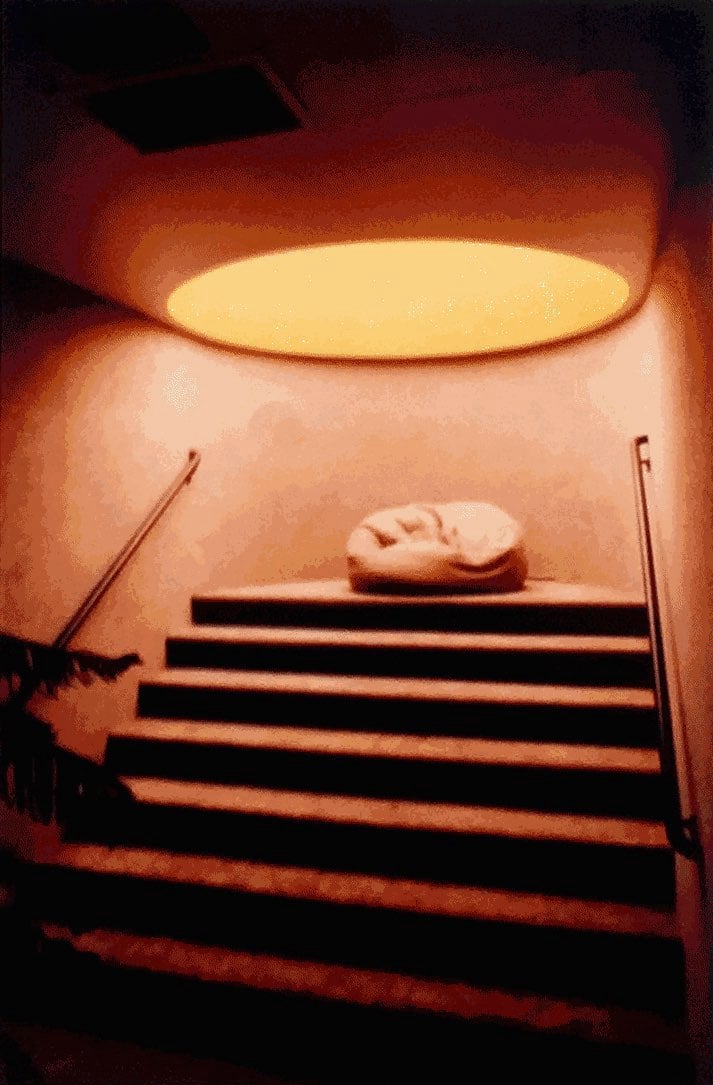
In Staff Needs: The Spaces of Hospice (2022), Clare Fentress spotlights Connecticut Hospice, the first purpose-built hospice in the US, designed in 1974 and opened in 1980 during the Hospice Movement. It closed in 2001, but its initial social design and spatial practice of caring for both the dying and caregivers is a source of tremendous inspiration. The hospice’s remarkable worker-supportive spatial features included a four-bed patient layout, an attached preschool, and a “scream room.” Read more in Fentress’s essay here. (Thanks for sending it my way, Filipa!)
Love,
Staci
PS. You’re welcome to join me in solidarity with Minnesota by donating to Community Aid Network MN.

