S9 Dispatch for July 2025
Welcome! My name is Grant Rayner, and I’m the founder of Spartan9. This is our monthly newsletter for [month], which we use to keep our clients, partners, and friends updated on what we’re up to.
Go directly to: projects | training | publications | bags | applications | reading list.
PROJECT UPDATES
What we’ve been doing, where we’ve been travelling, and what’s next.
Afghanistan
I spent most of this month in Afghanistan. I entered via Kabul, flew north to Mazar-i-Sharif, and then travelled by road to Kunduz, where I met up with Jan Chipchase’s team of misfits. We journeyed together to Fayzabad and Eshkashem, where I was able to piggyback on their permit process to access Badakhshan and the Wakhan Corridor.
From there, we travelled in convoy up the Wakhan Corridor as far as Sarhad. I parted ways with the team in Sarhad and continued solo (with guide), trekking four days on foot to Norshaq base camp from Qazi Deh. The return route took me back through Eshkashem, Fayzabad, Kunduz, and finally through the Salang Pass to Kabul.
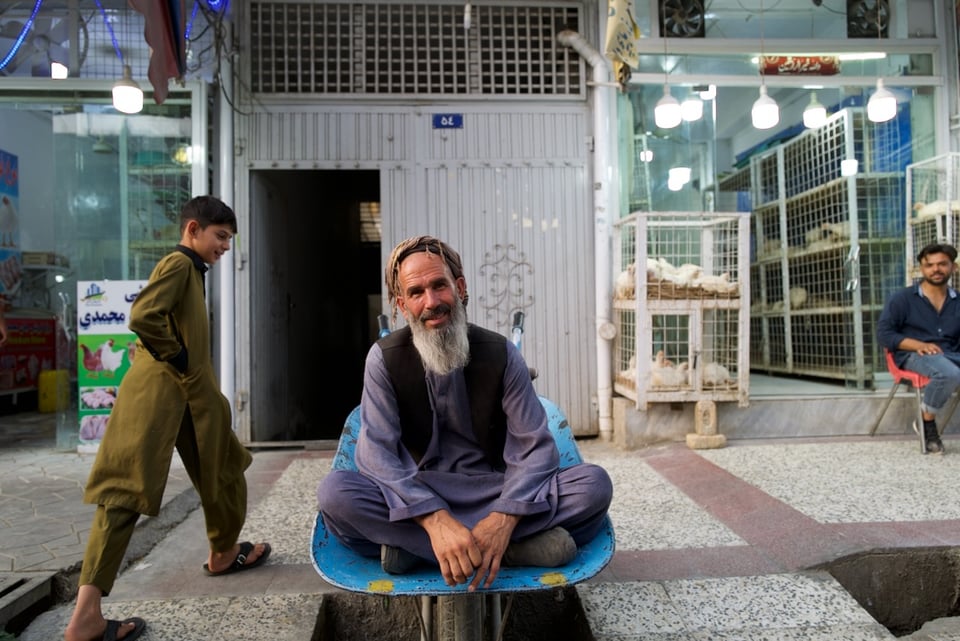
Some observations:
- Overall Safety: As a relatively experienced traveller, I found Afghanistan to feel safe. That said, the presence of AK-47s, AKMs, and M4s slung across shoulders can be unsettling for many. Despite the weaponry, the men carrying them did not come across as threatening.
- Who’s Who: The Taliban wear a mix of uniforms—or none at all. Multiple reliable sources told me that anyone armed is Taliban. The lack of formal insignia makes it feel like you’re in the midst of an insurgency, even if the reality is slightly more structured.
- Kabul’s Fortifications: The city still looks like it’s at war. Massive concrete blast walls and coils of razor wire remain. Perhaps they’re simply too difficult to remove, or perhaps they serve a continuing psychological function.
- Interactions at Checkpoints: Taliban at checkpoints were generally polite and curious. Having a local guide helped smooth interactions. In Kabul, one Taliban member stopped me on the street and asked for my passport. When I said it was in my hotel, he smiled, adjusted my scarf to block the sun, and let me go, saying in English, “You seem like a nice guy.”
- Escorts in Mazar-i-Sharif: Interestingly, Mazar was the only place where an armed escort was required, despite its historically low-risk profile. It felt more like a way for local security to earn tips. I saw Chinese travellers with escorts too. My view: unnecessary, and possibly a liability.
- Other Travellers: Apart from Jan’s group, I encountered only one other foreign traveller (in Kabul). I saw no tourists, NGO workers, or expats wandering around the cities. Guides showed me photos of recent tour groups, so travel is happening—just under tight control. Independent movement appears rare.
- Biggest Risk: The Roads: Vehicle accidents are by far the most significant risk. We were sideswiped by a motorcycle during a turn—resulting in a short roadside altercation. Road conditions, especially in remote regions, can be poor. Breakdowns are a concern, particularly if you’re not travelling in convoy.
- Toyota Corollas: These vehicles are everywhere—and surprisingly capable off-road. Absolute beasts.
- Food and Water: I ate everything offered and stayed healthy—until I ordered a ‘cappuccino’ from a 'café' in Eshkashem. I later noticed the cups were rinsed in a drainpipe out front. Still, after several days hiking at altitude, I was desperate for a coffee.
- Connectivity: Foreign travellers will struggle with communications. SIM cards are difficult to obtain (I didn’t bother). Wi-Fi, where available, was poor.
- Climate: It’s very hot in summer, especially in Mazar-i-Sharif. Unless you need to reach the Wakhan Corridor, I’d recommend travelling in spring when temperatures are milder and the scenery greener.
- Gender Visibility: In some parts of the cities, you can walk several blocks without seeing a single woman. Women do visit markets, often with children, and eat in family sections of restaurants. You won’t see them working in shops. Most women don’t wear burqas, except in more conservative areas. One woman who spoke English approached me to chat briefly—in full view of an armed Taliban fighter, who didn’t intervene. Still, as a male foreigner, you may have little or no direct interaction with women.
- Permits: Each province has its own system. Navigating the permit process without a local guide would be difficult and potentially frustrating.
- Photography: Most men were happy to be photographed. Still, I was careful to avoid capturing women or armed Taliban.
- Clothing: Afghanistan is one of the few countries where wearing local dress makes practical and cultural sense. A Peraahan-Tonbaan and pocketed vest helps you blend in and stay cool. It’s comfortable and draws far less attention.
Overall, it was an interesting trip and I managed to pack a lot of activity into three weeks. If you're interested, I've started posting photos here.
Syria Initiatives
With US and EU sanctions being lifted, foreign companies will be seeking business opportunities in Syria. We have extensive experience in the country and have established a robust local support network. We've developed a workspace designed to assist senior decision makers evaluating risks relating to market entry. You can find our updated suite of products and services here.
Crisis Simulation Exercises
We have world class capabilities in the specialised field of designing and delivering crisis simulation exercises. If your organisation is interested in conducting a crisis simulation exercise in 2025, please reach out. If you'd like to understand how we design and deliver crisis simulation exercises, check out The Crisis Simulation Handbook.
TRAINING
Training workshops and customised training solutions.
Practical Safety and Security for Travellers
Over the past few momths, I’ve been updating our Practical Safety and Security for Travellers module — and I’m pleased to share that it’s now complete.
This training moves beyond the usual motherhood statements like “maintain a low profile” or “exercise a high degree of caution”. Instead, it offers clear, practical guidance that travellers can apply immediately to stay safe while on business trips.
After many years in the field, I’m convinced that well-designed traveller training is the most cost-effective investment any organisation can make as part of a serious travel risk management programme.
If your organisation would be interested in me running Practical Safety and Security for Travellers for your travellers, please get in touch.
View our other training workshops here.
PUBLICATIONS
We’ve published a number of books on crisis management, travel security and security evacuations.
Still proofreading and editing...
View all our publications and download samples here.
Buy copies for your team
Several highly regarded organisations (and one prestigious university) have purchased copies of our books for their teams. If your team would benefit from the knowledge and experience contained in our books, please reach out. We'd be happy to provide a discount for bulk orders.
STATION XV
Updates on our in-house gear, sharing a behind-the-scenes look at our design and manufacturing processes.
Check out the full range of Station XV bags and accessories here.
APPLICATIONS
Updates on our applications.
Whistler
A simple, secure whistleblowing app for organisations to receive and manage confidential reports. First launched 10 years ago, Whistler 2.0 now features stronger encryption and case management tools.
Pricing starts at $19 a month.
Learn more here.
Incident Manager
Incident Manager help teams to effectively manage crisis events. It brings everything into one place—tasks, logs, comms, support cases—so teams can focus on what really matters. After 25 years in this field, I wanted something that actually helps in the moment, not just looks good in a demo. If you’re curious, I’m happy to show you how it works—free demo and trial available.
Now with incredibly useful AI features.
Please reach out if you'd like a demo.
Exercise Manager
A streamlined tool for planning and delivering crisis exercises while tracking team performance. Originally for internal use, now available to clients.
Please reach out if you'd like a demo.
Tenacio
A project management app for individuals handling diverse workloads. It prioritises tasks based on deadlines and personal work preferences, ensuring you stay on track.
If you'd like to try Tenacio, get in touch.
READING LIST
Links to interesting articles worth your time.
White, Legally Armed, and Primed for Political Violence. Ian Rogers was convinced it was up to him to save America. The gun industry’s sales tactics — playing up paranoia and glorifying combat — may be creating a pipeline of extremists willing to open fire (Rolling Stone). Read here
Inside the CIA's Secret Afghan Army. The Zero Units served alongside Americans, helping them fight, then evacuate. Now, they face uncertainty as they begin their new lives in the United States (Rolling Stone). Read here
The U.S. Is Switching Sides. Donald Trump is giving Vladimir Putin every incentive to keep killing Ukrainians (The Atlantic). Read here
Russian sabotage attacks surged across Europe in 2024. This year’s apparent lull may be the calm before another storm (The Economist). Read here
Lights Out? Wargaming a Chinese Blockade of Taiwan. (CSIS). Read here
Understanding Russia’s Black Sea strategy. How to strengthen Europe and NATO’s approach to the region (Chatham House). Read here
How Syria’s Dictatorship Lost the War of Information. Despite claims of ‘digital transformation,’ Assad’s security state clung to outdated methods, becoming a fractured system consumed by internal rivalry and corruption (New Lines Magazine). Read here
When a Dutch Drug Kingpin Needed a New Base, Sierra Leone Welcomed Him With Open Arms. Jos Leijdekkers, one of Europe’s most wanted men, quietly insinuated himself into the lives and businesses of the country’s elite (New Lines Magazine). Read here
That’s it for this month, folks.
Thanks for reading and stay safe out there.
Grant Rayner
Spartan9