S9 Dispatch for December 2025
Welcome! My name is Grant Rayner, and I’m the founder of Spartan9. This is our monthly newsletter for [month], which we use to keep our clients, partners, and friends updated on what we’re up to.
This is the final S9 Dispatch for 2025.
It has been a solid year of work, with its share of both progress and setbacks.
In this newsletter, I outline what I accomplished in 2025 and offer a brief preview of my plans for 2026. I publish this review primarily as a means of accountability—first to myself, and second to those who follow and support my work.
Worldview
Before turning to the specifics of the year’s work, it is worth acknowledging a broader context. For the first time in my life, I find myself genuinely unsettled by the trajectory of global affairs.
This unease is driven by several converging trends.
First, there is a visible resurgence of authoritarianism, accompanied by the deliberate erosion of democratic institutions and norms. This is not occurring accidentally, but through engineered processes that weaken accountability, undermine trust in elections, and normalise illiberal governance.
Second, extraordinary concentrations of wealth are increasingly paired with a lack of corresponding moral or civic responsibility. Some individuals and entities have concluded—rationally, from their own perspective—that autocratic systems serve their interests better than democratic ones, particularly where democracy imposes transparency, regulation, or public accountability.
Related to this is the consolidation of both legacy and digital media platforms in the hands of a small number of billionaires. These platforms are not neutral infrastructure: they are powerful tools for shaping narratives, amplifying preferred viewpoints, and legitimising regimes or policies that would otherwise face scrutiny or resistance.
The rapid deployment of generative AI compounds this problem. While the technology has legitimate and valuable applications, it also dramatically lowers the cost of misinformation, manipulation, and intellectual laziness. In an environment already characterised by shallow media consumption, AI becomes an accelerant rather than a neutral tool.
These dynamics are further enabled by an electorate that is, in aggregate, vulnerable to manipulation—whether through disinformation, emotional framing, or the amplification of outrage. Social media business models, optimised for engagement rather than truth, actively reward polarisation and simplification, particularly when ownership incentives align with continued wealth accumulation rather than social responsibility.
Geopolitically, the failure to decisively constrain Russia—economically or militarily—in Ukraine carries consequences well beyond the immediate conflict. It signals tolerance for territorial revisionism and increases the likelihood of further destabilisation in Europe. Russia’s demonstrated success in exploiting political and informational weaknesses in the United States only reinforces this risk, making future confrontations more dangerous and less predictable.
At the same time, the United States appears increasingly erratic in its use of power. Decisions to conduct military strikes with limited transparency or coherent strategic justification contribute to global instability and erode whatever moral authority remains. What is increasingly visible is not merely poor leadership, but leadership unassuming of ethical constraint—and the downstream effects are significant.
Taken together, these trends are dangerous. They reinforce one another, reduce the space for principled governance, and increase the likelihood of outcomes that are difficult to reverse.
As an individual—and as a business owner—it is not always clear what meaningful leverage I have over these forces. But while democracy is imperfect, slow, and often frustrating, it remains preferable to systems where power is unchecked and dissent is suppressed. History is unambiguous on that point.
Review of 2025
Here's a snapshot of what I achieved in 2025.
Consulting
This year, I had the privilege of working with several leading organisations on a range of complex and meaningful engagements. Highlights included:
- Designing and delivering crisis simulation exercises in Hong Kong
- Conducting a strategic review of incident management capabilities for a global consulting firm
- Assessing hotel security and operational resilience in Jakarta for an international university
- Supporting business continuity planning and training initiatives in Singapore
Alongside client work, I continued to strengthen contingency planning workspaces for Taiwan, Japan, and South Korea. I spent several weeks in Taiwan early in the year to gather additional on-the-ground insights and refine scenario assumptions for the Taiwan contingency plan.
To my consulting clients: thank you for your continued trust and collaboration.
Syria Initiatives
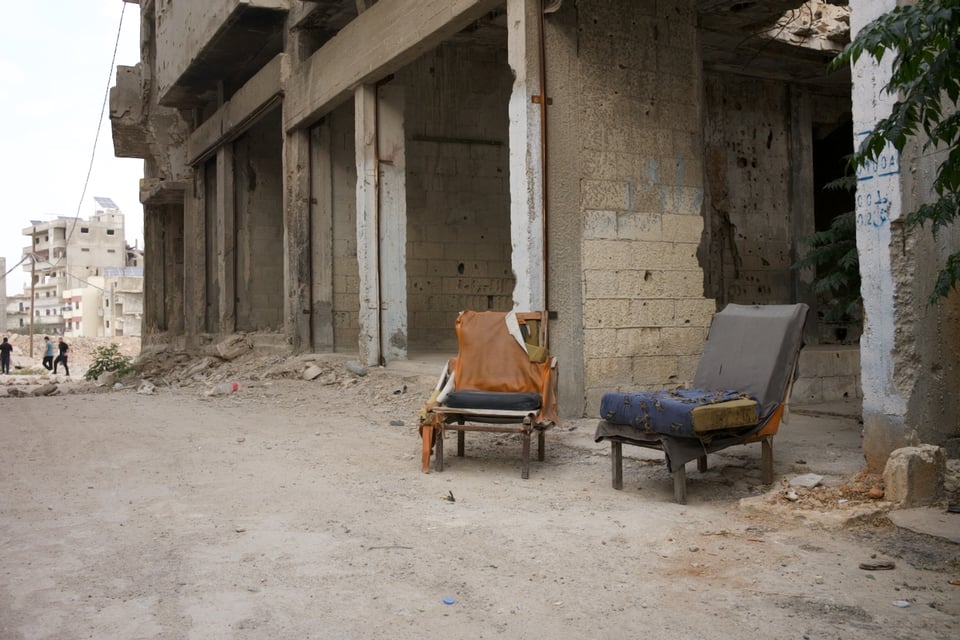
Following the fall of the Assad regime in December 2024, I directed significant attention toward Syria. Over the course of the year, I spent multiple weeks on the ground, with visits in February, April, and November. These trips allowed me to travel extensively across the country, including Damascus, Homs, Hama, Aleppo, Idlib, Palmyra, Daraa, Busra, Sweida, and several lesser-known locations.
During this time, I established a strong local support network and formed partnerships with a number of Syrian companies and professionals.
In April, I developed an online workspace designed to support senior decision-makers assessing risk and opportunity related to market entry. As sanctions have gradually eased, I have been advising several organisations on practical, responsible approaches to re-entering the Syrian market.
An updated overview of Syria-related products and services is available here.
Alongside commercial work, I have also been involved in a range of non-commercial initiatives across Syria. These are outlined in the Impacts section below.
Afghanistan
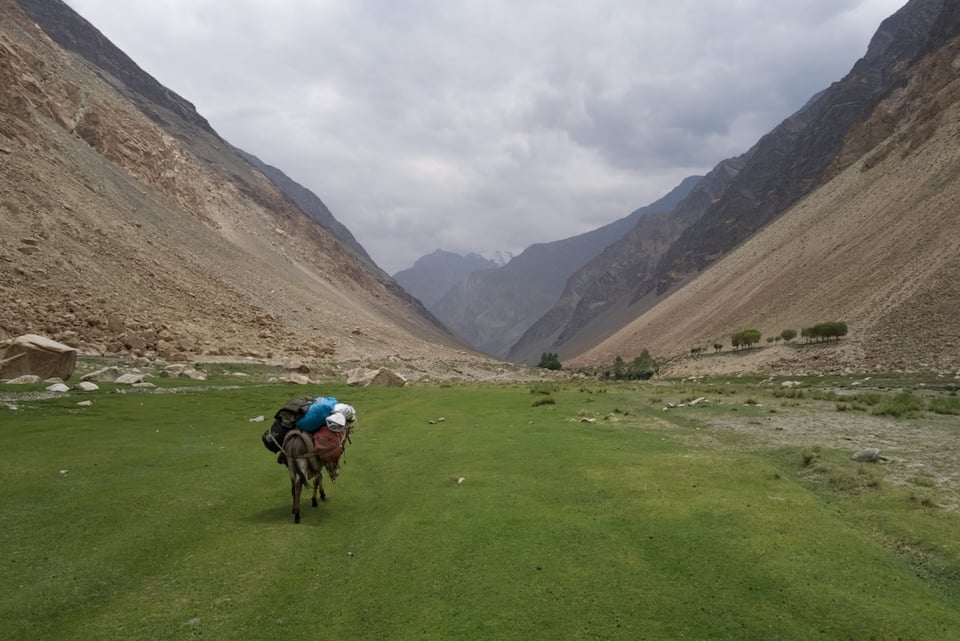
In July, I spent three weeks in Afghanistan, entering via Kabul before travelling north to Mazar-i-Sharif and onward by road to Kunduz. From there, I joined Jan Chipchase’s expedition team and travelled together through Fayzabad and Eshkashem, gaining access to Badakhshan and the Wakhan Corridor.
We continued in convoy as far as Sarhad-e Brogil, overnighting in Sargez. From that point, I travelled independently (with a local guide), returning via Gaz Khun and Qala Panja to Qazi Deh, before undertaking a four-day trek to Norshaq base camp. My exit route took me back through Eshkashem, Fayzabad, Kunduz, and across the Salang Pass to Kabul.
The trip reinforced the scale and complexity of the challenges facing the country. Progress remains constrained, and viable paths forward are limited, but sustained engagement and careful listening remain essential.
Training
New Workshops
In 2025, I introduced two new workshops: - Designing and Delivering Effective Crisis Simulation Exercises - Missing Persons
These additions expand our existing suite of workshops, which focuses on practical, experience-led training in crisis management and travel risk management.
Strategic Futures Programme
The Strategic Futures Programme, launched in 2024, is designed to help executive teams address medium-term strategic risks, including climate instability, the rise of authoritarianism, and the implications of AI and AGI. Grounded in more than two decades of crisis management experience, the programme supports organisations in translating complex, systemic risks into actionable strategic thinking.
Throughout 2025, I continued to refine and strengthen the programme, improving its structure, scenarios, and applicability across corporate, NGO, and public-sector contexts. It has become a valuable resource for organisations seeking to better anticipate disruption and make more resilient long-term decisions.
Learn more here.
Writing
I spent a significant amount of time writing this year, resulting in the release of two new books across very different genres.
Photography in Higher-Risk Environments
Photography in Higher-Risk Environments is a practical guide drawn from more than three decades of work in challenging locations including Syria, Afghanistan, Nepal, and Somalia. The book covers risk assessment, equipment selection, fieldcraft, subject protection, and working effectively with local guides. It is intended for photographers, journalists, humanitarian workers, and others operating in conflict, post-conflict, or unstable environments, offering structured frameworks to help document important stories while managing risk responsibly.
Proceeds from the book support humanitarian projects in Syria and Afghanistan, with a particular focus on mental health and women’s education.
Learn more and purchase here.
Memoirs of an Assassin (a novel)
Memoirs of an Assassin is a fictional memoir that follows an unnamed contract assassin from accidental recruitment through to his evolution into a highly disciplined operator. Written with clinical restraint and emotional distance, the novel explores the mechanics of sanctioned violence and the fragile boundary between civilisation and brutality. Dark and deliberately unsettling, it is intended to provoke reflection rather than comfort.
Learn more and purchase here.
In last year’s end-of-year review, I set the goal of completing three additional books in 2025:
- The Field Operator's Aide Memoire
- Information Security for Travellers
- The Physical Intrusion Testing Handbook
The Field Operator’s Aide Memoire remains a work in progress. It continues to evolve as a practical reference, and I already rely on the draft during active projects, which reinforces its long-term value.
I completed a first draft of Information Security for Travellers, but I am undecided on publication. Striking the right balance between accessibility and technical accuracy has proven more challenging than anticipated.
I did complete The Physical Intrusion Testing Handbook this year. While structurally finished, it requires several additional editing passes before it is ready for publication.
You can view all publications and download sample chapters here.
Applications
This year has been a major year for applications. I'm delighted to announce we have our first major customer for Incident Manager. It's been a long slog, but we're there. In addition, I've built a suite of AI features into Incident Manager, making the application even more useful for incident and crisis management teams.
I've made iterative improvements to our other two applications - Whistler and Tenacio. Whistler is now a very mature application, having past its 10-year anniversary.
Our Shared Stories (new application)
Late in the year, I developed a new application — Our Shared Stories— as a natural extension of my work in Syria focused on hope, resilience, and recovery in post-conflict contexts. The platform was designed in close collaboration with experienced crisis counsellors who have supported individuals and communities affected by conflict.
The application provides a calm, privacy-first writing space for people who have lived through difficult or life-altering experiences. Users can write in any language, control exactly who sees their stories, and—if they choose—discover similar experiences through a secure, AI-assisted matching system. There are no public feeds, engagement-driven algorithms, or social-media dynamics; instead, the emphasis is on reflection, agency, and respectful connection.
You can learn more about the project here.
Station XV
Station XV is our line of bags and accessories, designed for durability, discretion, and everyday utility.
The year began strongly, with encouraging early momentum. However, the introduction of US tariffs had an immediate and material impact on the business. To illustrate the scale of the change: shipping our smallest item—the Flat Organiser Pouch—previously cost S$11.90 via tracked mail. Following the tariffs, that cost increased to S$159. At that level, shipping to US customers is no longer viable, and we were forced to suspend US fulfilment.
Despite this setback, we have continued to see steady support from other markets, including Europe, Australia, and Hong Kong. I have also had the opportunity to meet several customers in person in Singapore and elsewhere, which has been both rewarding and reaffirming.
My sincere thanks to everyone who has supported Station XV this year.
That brings this review to a close. Next, a look ahead to my plans for 2025.
Preview of 2026
Looking ahead, 2026 is likely to continue many of the same themes, with a growing emphasis on high-impact work in post-conflict environments—particularly Syria and Afghanistan.
Consulting
My objective for 2026 remains consistent with 2025: to focus on high-value consulting engagements where experience and depth matter most. In practice, this centres on three core areas:
- Supporting organisations to improve the performance of their crisis management and incident response teams through training and simulation exercises.
- Helping organisations design and strengthen robust travel risk management programmes.
- Assisting organisations in preparing for major regional contingencies in the Asia-Pacific, including Taiwan and South Korea.
Several projects are already confirmed for early 2026, with initial travel planned to India followed by Hong Kong. I will also continue work in Syria, with multiple visits scheduled throughout the year.
Training
Training will remain an important part of my work in 2026. I will continue delivering the current suite of workshops, focused on crisis management, travel risk, and organisational resilience. A small number of new workshops are under development, though nothing is ready to announce at this stage.
Publications
I am aiming to publish The Physical Intrusion Testing Handbook in Q1 2026, with The Field Operator’s Aide Memoire ideally following shortly thereafter.
I am approximately 80% through a draft of The Travel Risk Management Handbook, which is intended to provide organisations with a practical blueprint aligned with ISO 31030 and international best practices. My goal is to publish this before the end of the year.
I also plan to continue writing on crisis management more broadly, though it is not yet clear whether this will take the form of a new book or an update to The Crisis Response Handbook.
On the fiction side, I have begun work on the sequel to Memoirs of an Assassin, centred on an operation in Russia that does not unfold as planned. In parallel, I am developing a series of short stories focused on specific operations undertaken by the same character, which will be published on the Memoirs website (the first story will be available on 1 January 2026).
You can view all publications here.
Applications
I do not plan to build any new applications in 2026. Instead, the focus will be on incremental improvements to existing platforms to ensure they remain secure, reliable, and performant. I will also continue to explore selective, responsible uses of AI, with an emphasis on practical value rather than novelty.
Station XV
Due to the ongoing impact of US tariffs, I do not plan to manufacture any new bags under the Station XV brand in 2026. However, I will continue testing prototypes and refining designs, with a view to resuming production if conditions change.
Impact
In 2026, I will dedicate increased time and resources to initiatives in post-conflict environments, working closely with local partners in Syria and Afghanistan.
In Afghanistan, this includes supporting the development of women’s centres in remote communities. These centres are designed with and for local women and girls, providing safe spaces for learning, skill development, mutual support, and income-generating activities—shaped entirely by local priorities and aspirations.
In Syria, I am collaborating on the establishment of community centres that serve as inclusive cultural and intellectual spaces. These initiatives are grounded in the belief that recovery from collective trauma is fundamentally social, and that healing is strengthened through shared reflection, learning, and human connection across differences.
If you are in a position to support this work—financially or otherwise—I would welcome a conversation.
Thank You
Thank you to my clients and customers, past and present. I am deeply grateful for your trust and continued support.
Thank you as well to everyone who has offered encouragement throughout the year.
Wishing you a healthy, meaningful, and successful 2026.
Onwards and upwards.
Grant Rayner
Spartan9