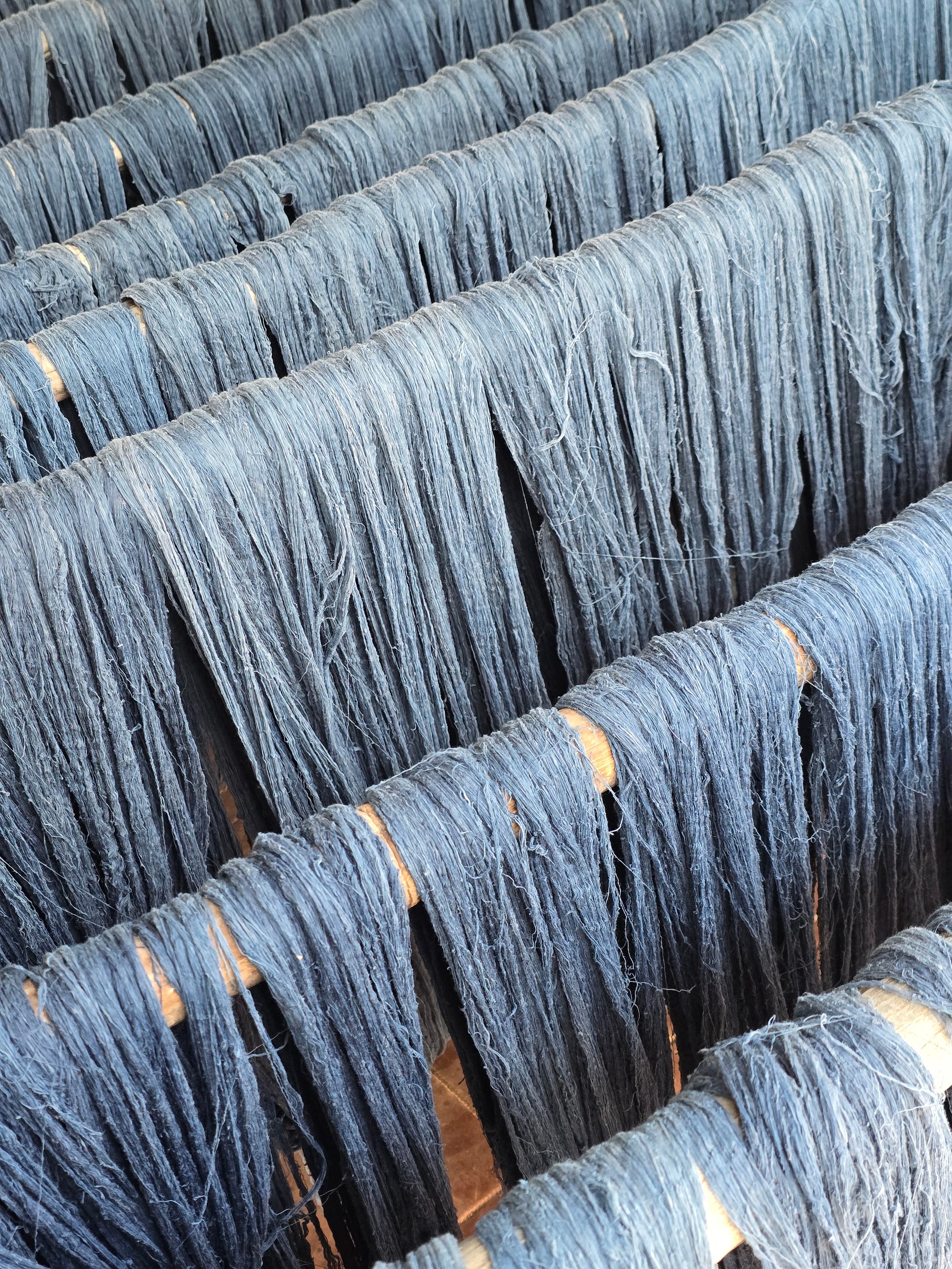
In Perfection - Shuttles Through Warp (18)
Dear all,
A visual letter this week as every time I try and explain this, words fail me.
I was once in the blockprinting workshop of Dr Ismail Khatri in Akjraphur when I saw a printer from Uttar Pradesh at work. Ajrakhpur’s block-printing traditions are often focussed on geometric shapes, as Islamic traditions eschew figurative images. This can give Ajrakh patterns the kind of quality one sees in fractals.
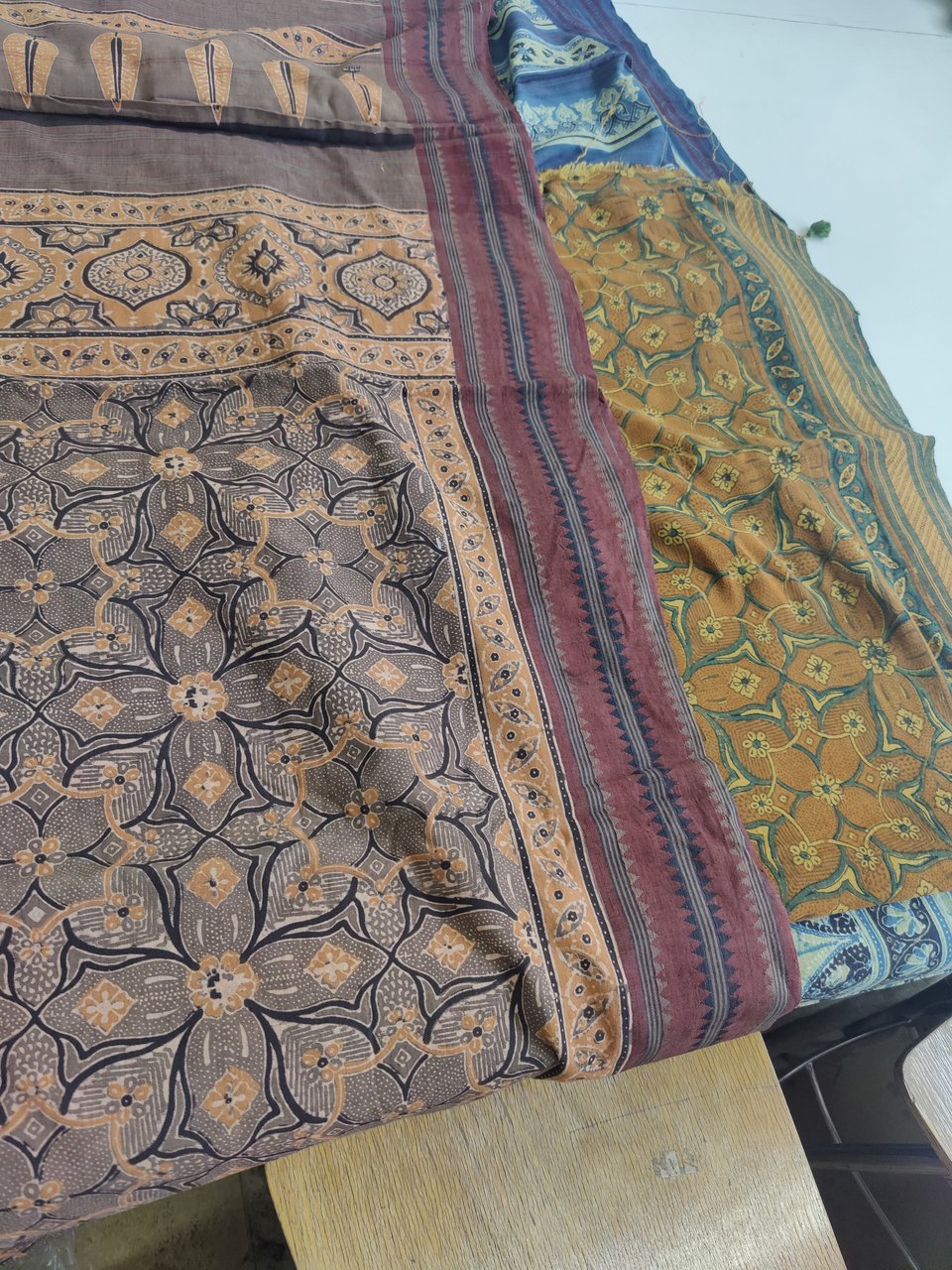
While watching them work, one printer pointed an error in the printing out to another. They bantered for a little while about it, one of them saying he’d seen it and the other one saying he hadn’t. In the image above, making sure that colours don’t overlap requires aligning one block with the imprint left by another perfectly.
I couldn’t see the error, though I was peering at the cloth. Then one of them said to me - in printing, an error is the thinness of the leg of a mosquito. I couldn’t see it because it was too small for my untrained eyes to see.
There’s quite a good - if utterly strange - videogame I’ve been watching some Twitch streamers play called Meccha Chameleon. Meccha Chameleon is a hide-and-seek game in which people position themselves as part of the scenery and paint themselves.
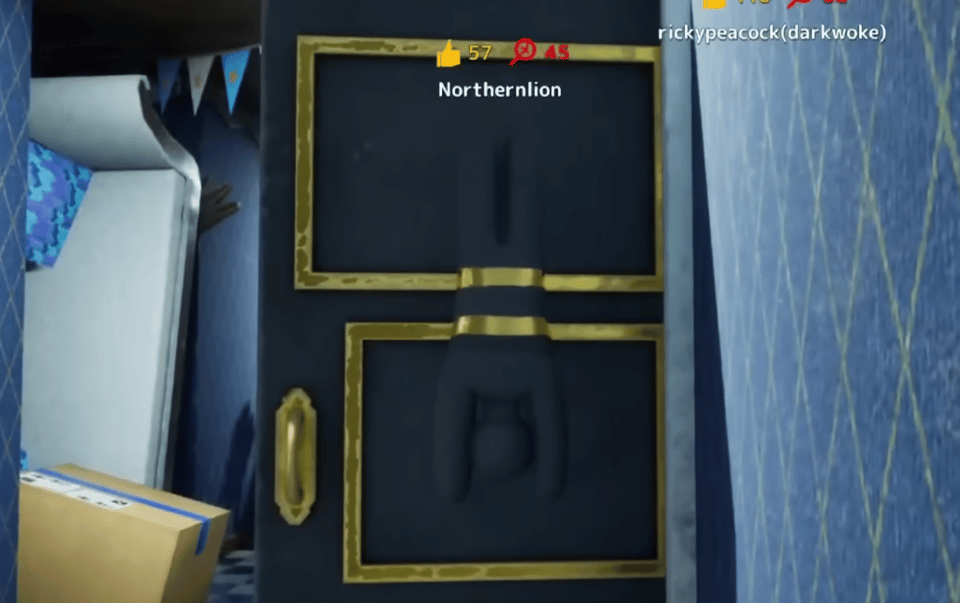
The usefulness of a digital interface is that when you paint something it copies the colour exactly. In fact, the problem in Meccha Chameleon is that it appears too exact. The colour doesn’t change based on the light in the game. The human eye, even on a screen, can tell when something doesn’t quite fit.
The thing about human-made things is that we aspire for it to look like there is no error. The lack of error is what proves our skill. It shows how much care and discipline has gone into making the pure, unblemished product. But we are more used to digital perfection now than ever before that we expect that perfection comes from the same ease.
But unlike Meccha Chameleon, the real world requires colour to be applied on each part of the cloth. It isn’t just that every centimeter of blue has to be dyed perfectly and without ‘banding’ - where one part of the yarn is lighter than the rest. It’s also that every hank of yarn has to be the same shade as every other hank of yarn being used in the same warp. For a particularly deep colour, this means that one error shows up immediately to anyone who knows what to look for. A single mosquito’s leg ruins the rest of the work.
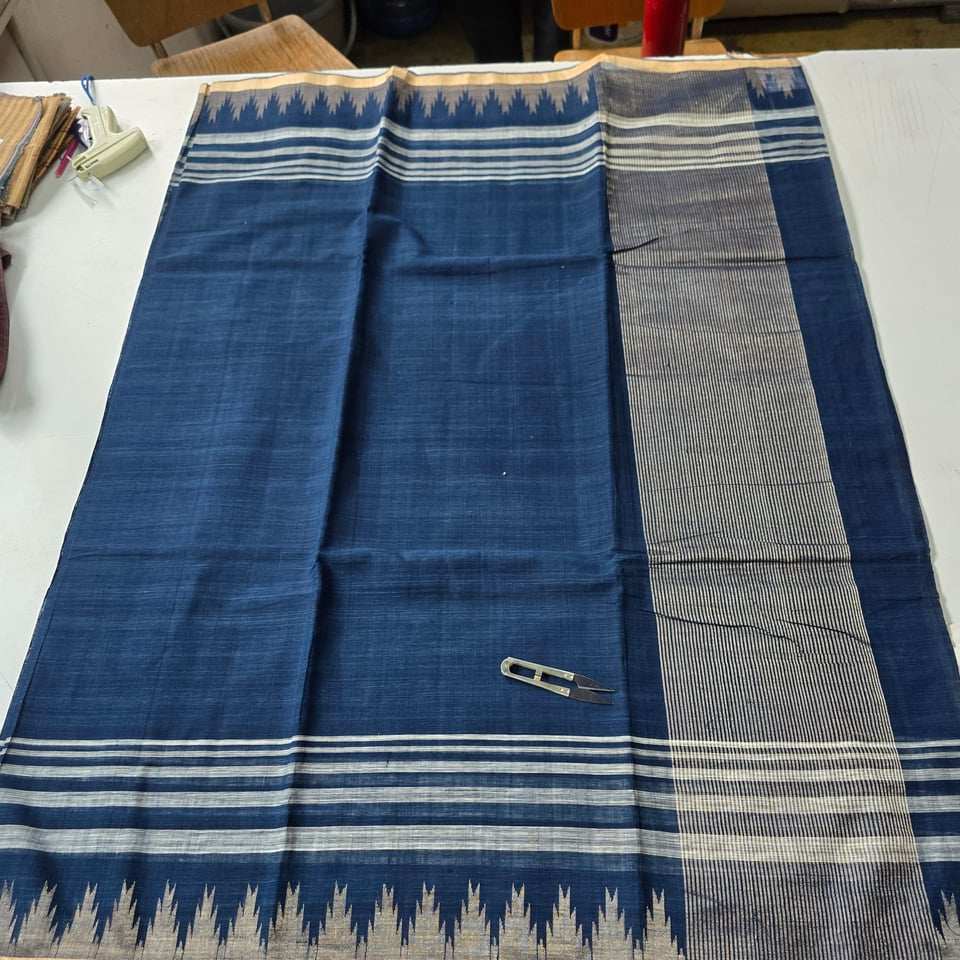
I’ve seen weavers look at seemingly unremarkable cloth and call it beautiful. Cloth that would, when I was still learning, seem like something you would make a cheap t-shirt out of. But I wasn’t seeing what they were seeing, because they weren’t looking at what is there. They were looking at what isn’t. They recognised beauty in perfection because they were seeing the work that perfection requires, while all I was seeing was the fill tool in MS Paint.
When any practitioner of craft looks at something someone else has made in that craft, they see the work. They see how difficult to must be to make the thing they are seeing. So they’re not appreciating the final product, or at least not just that. They’re appreciating the way that the person who made it arrived at the final product, and the way that that person paid attention to ensure no mistakes occur.
Sometimes the colour we make - the yarn we dye - in the dyeing unit comes out less than perfect. Usually this yarn is used to make more complicated designs: stripes, checks, or borders. This is because it’s much harder to see differences in hue when there’s a stark contrast between one colour and another next to it. Stripes and checks are also harder to weave, which means they cost more. Which means that it’s the less-perfect yarn which is used for the more complicated work.
So now, I look at plain fabric differently. I try to see how every single part of the fabric is remarkable because there is no part of it that stands out. I try to see the perfection that has disappeared into itself.
Next week, a love letter to Ann Leckie because sometimes it’s just nice to talk about what you love.
Cheers,
mvs
