An Invitation to Blue - Shuttles Through Warp (7)
Dear all,
In the Qawwal Bacchon Gharana, founded by Amir Khusro, there is a story about colour. The singer Hamza Akram of this tradition recounts it in Urdu in this video, though I append a brief translation below.
One day, some visitors came to the court of Hazrat Nizamuddin Auliya. They said to him, despondent: We have become impure, for there were Hindus playing Holi outside and some of their colour has fallen on us.
Nizamuddin laughed and replied: How can you be impure? There are no colours but God’s colours. Then he turned to Amir Khusro, his disciple, and said: How would you say this in your own words?
The video I linked above is only one rendition of Khusro’s legendary composition, Aaj Rang Hai. As the BBC would have me say - other renditions are available.
Does a letter about colour need to start with a story about a Sufi saint? If you are me, yes. There are few things in this world we who are able to see feel more strongly and immediately than colour. It inspires such emotion in us. Today I opened my fridge and the golden hue of the mango waiting for me was as delicious as the taste of it on my tongue.
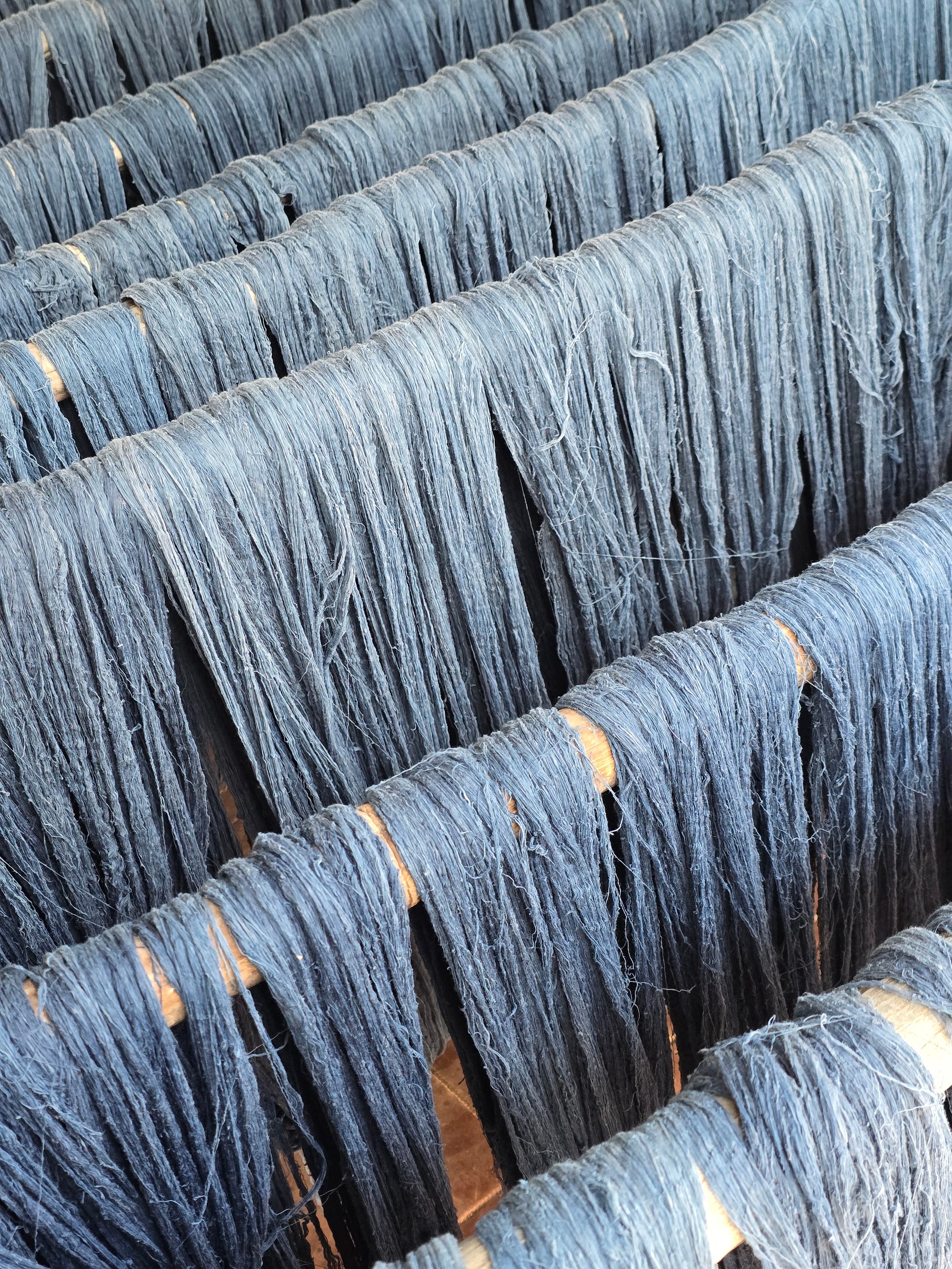
It is the impulse to share this emotion that most often moves me to take a picture on my phone. When I see indigo blue on cotton yarn, I feel like there is something still in this world that is good, and that I am in my small way contributing to it. (Indigo is not even really my favourite colour, but alizarine red’s history is not nearly as catchy.)
Yet somehow every photograph disappoints. It is not a problem of megapixel or light-emitting diode. The problem is of medium itself. I don’t want to show you blue. I want to show you six-dip indigo blue cotton yarn, which was spun without being baled. Each part of the preceding sentence forms part of the colour I want to convey, because the colour is a result of process and material, neither of which involves a phone screen.
It is tempting to imagine colour reduced to a hexcode - as if divorced from its material we have isolated it in its purest form. But even if I told you indigo’s hexcode and you looked it up - what are you seeing? It isn’t what I want to show you.
Instead of attaching a picture to this letter, I ask you to look around yourself. Pick anything you see and think of its colour as the result of the way it was made. What other things around you are the same shade? How differently must those materials have been crafted in order to achieve this similarity?
We live in a world of chemical dye and instant paint, which permits us the illusion that all materials can be all colours. On Canva and Photoshop we can add digital colour to pretty much any image. But colour is more than sight.
Indigo begins with smell, because the vat in which indigo dye is prepared ferments as time passes. It continues with touch, as the yarn is submerged in the vat and turned to ensure even colour. When fibre is dyed in indigo, it comes out of the vat green, and turns blue in the sunlight. I have seen this many times and yet it surprises me. Blue - dark blue - is the product of all the senses. The indigo dyers I know often smell blue cloth before they inspect it closely with their eyes. Indigo’s scent is harder to fake than its shade.
The Hindi word Lal (which is borrowed from Persian) means both red and beloved. In Season 3 of Star Trek: The Next Generation, the android Data names his daughter Lal after this word. For most of this episode, she wears a purple dress over a red blouse. The episode is about love, and the shade of red Lal wears in it is emblazoned in my mind.
Next week, some thoughts about the author Olga Tokarczuk, the band clipping., and the use of large language models in the creation of art.
Cheers,
mvs
