#18: Traditions, litfic, and a fly hellbent on revenge - December in review
My family didn’t have many traditions growing up. We had Diwali, with its requisite assortment of sweets and a trip to the temple and sparklers lit clandestinely in the backyard. And on the 4th of July, we would go watch the fireworks at the Tulsa Riverwalk, then get ice cream afterwards at the Marble Slab Creamery out of nostalgia for the Marble Slab down the road from our home in Wichita. But we never had a movie that we rewatched each year, or a specific way of celebrating birthdays.
I’ve always wanted to have traditions, though. Not because there’s a specific tradition that appeals to me, but because I yearn for what traditions represent: a tangible embodiment of established history, a kind of permanence that extends beyond a single person or moment. I like the thought of traditions being born from a simple action or sentiment, but taking on additional meaning until they’re woven inextricably into your life.
I’ve made many a valiant effort over the years to start traditions of my own, with limited success. In my early 20s, I would get drunk and play Wizard101 on the 3rd of July so I could sleep off the hangover on the 4th; this tradition died a rapid and necessary death when I decided to give my liver a fair shot at a long life. In recent years, I’ve visited the Bryant Park Winter Village each December to window shop and get a macaron from Woops, a vendor with no permanent storefront that I can only visit when their holiday stall is open. But with Woops now requiring a minimum purchase of a dozen macarons, and with the boutique booths in the Village being replaced by overpriced, mass-produced slop, I fear this tradition is nearing its demise as well.
I think part of my difficulty with establishing traditions is that, between my general forgetfulness and whatever executive dysfunction I’ve got, habits inevitably end up feeling like chores to me. Even things I enjoy doing transform into tedious obligations once I try to make them habitual. As a result, any tradition I attempt feels doomed to eventually stop being worth the upkeep—at least so long as I’m required to do that upkeep.
Because despite the many traditions I’ve tried and failed to nurture into existence, there are a couple that have stuck (a biannual rewatch of Over the Garden Wall, celebrating birthdays by playing Jackbox games), and they have a clear commonality: they’re all traditions created with my friends. Traditions where the upkeep is shared with other people.
On Christmas Eve, a couple of friends on my trivia team invited me to join them for their traditional annual rewatch of the 2008 recording of Rent. We drank loads of wine, they sang all the songs, I cried many tears, and at the end they told me they’re expecting me to sing harmony next year. It’s early days yet, but I’ve got a good feeling about this one.


Eega
Directed by SS Rajamouli, the same guy who did RRR, Eega is about a guy who gets reincarnated as a fly and teams up with his former lover to seek violent, bloody revenge on his murderer.
I feel like I don’t have the right words to capture what an unbelievable experience this movie is. It strikes an incredible balance between having a gimmicky premise and committing to that gimmick entirely. Nani-the-fly is treated with the same gravitas and cinematographic flair as any human action star—he dodges bullets, hijacks a car, blows up buildings, and all without ever once being treated as the butt of the joke. You’re cheering for Nani-the-fly within moments of its introduction, and the climax and culmination of his arc feel entirely earned.
The aspect of the film that really stuck out to me is its camerawork. The camera spends long moments at fly level, carrying the viewer through the sets and plot from a fly’s POV. These sequences are remarkably immersive, perfectly framed and shot to convey the immense scale of the world Nani-the-fly is being forced to navigate, almost veering into cosmic horror at times. And although Nani-the-fly has no internal monologue or VO, his emotions and motives are always crystal clear, whether conveyed through rubbing his little paws together or through the camera clearly portraying his thought process.
This is one of those films where you have to lean into the absurdity a bit to get the full experience, but once you’re bought in, you’re in for the ride of your life.

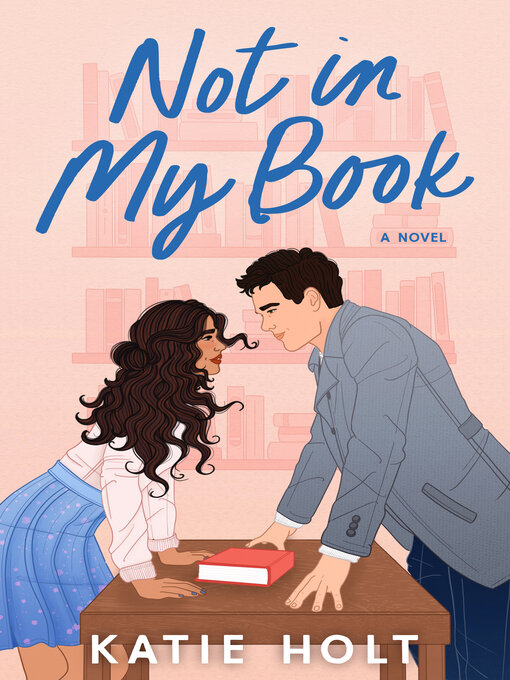
Not in My Book
by Katie Holt
⭐⭐⭐ (2.5 rounded up)
The last thing I needed to cross off my Captain America NYC bucket list was riding the subway from the top of the Bronx to Coney Island while reading a book from the Strand. I already had a blind-date-with-a-book lying around from the last time I visited the Strand, so this past weekend, with snow blanketing the city, I finally decided to get this over with.
It takes just over 2 hours to traverse the city from the top to bottom, including the transfer you have to make from the 2 to the Q at Atlantic Ave. It takes half that time to realize Not in My Book is Not a Winner in My Book.
I could criticize this book for a lot of things, like how it desperately needed another editorial read, or how it put its story on hold halfway through for a sex montage that was as boring as it was unnecessary, or the excruciatingly manufactured third-act breakup, or the Matt Rife name drop.
My main complaint, though, is that despite its author appearing to be completely ignorant about how to write litfic, this book insists on providing excerpts from an in-universe writing project that purports to be a romance-litfic fusion but is, in fact, nothing more than the protagonists’ self-insert ERP.
Katie Holt, you did not have to tell on yourself like that! You could have just told us this project was happening and I would have just believed you! It feels like a genuine insult to your readers to pass off this dreck as litfic and expect them to either not know the difference or to disdain the genre enough to blithely forgive you your sins.
This book brought me the closest I’ve ever come to swearing off blind-date-with-a-books entirely. Unfortunately, I love to gamble in a safe and responsible manner :/

I love a song with an asymmetrical time signature, or that otherwise messes around with tempo and meter. Irregular tempos and meters sit right at the center of the music/math venn diagram, which appeals to my dual music and math nerdiness tremendously.
The moment when I begin to suspect a song might not be in standard triple or quadruple time always fills me with unadulterated glee. This immediately morphs into putting the song on repeat for the next hour so I can dissect exactly what it’s doing on a technical and mathematical level, usually accompanied by frantic tapping against my thigh or sternum and counting under my breath, usually in a public setting. It’s great fun.
I haven’t been listening to a ton of new music lately, so instead I thought I’d spotlight some songs I enjoy that have irregular time signatures!
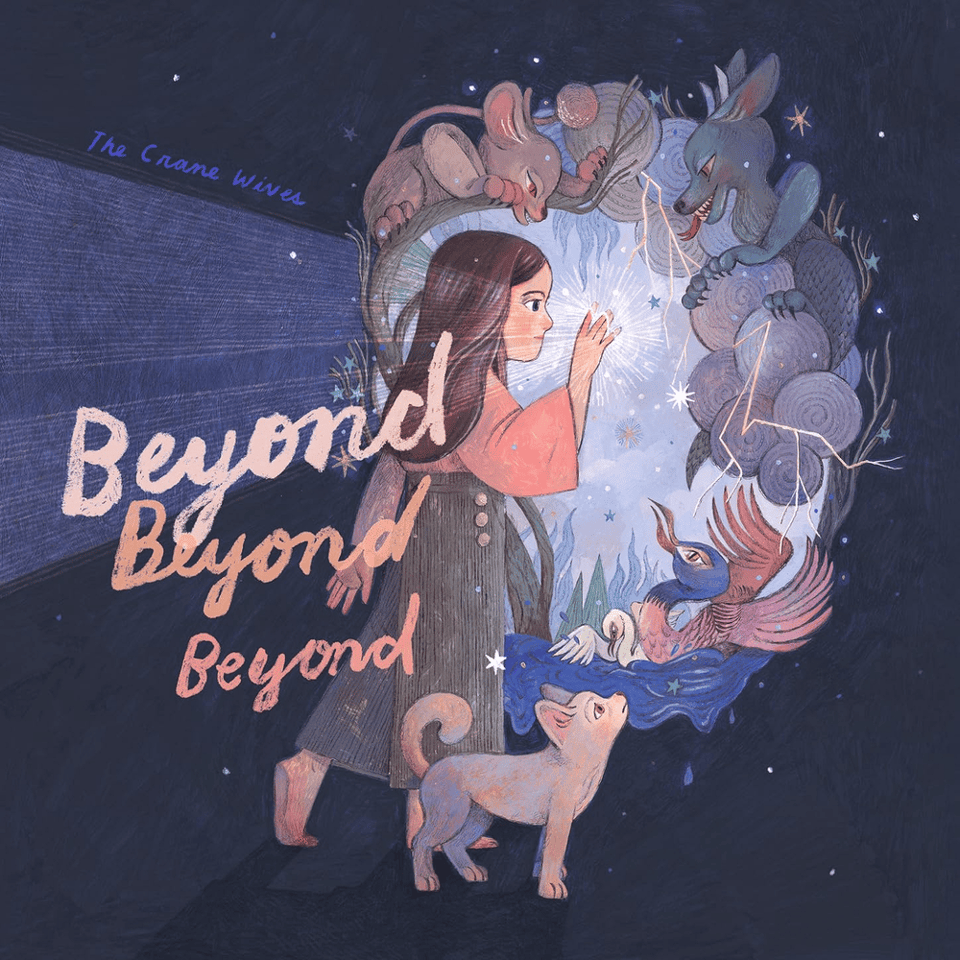
Predator (The Crane Wives)
Predator is in 7/4 time, and it does some pretty cool things with how it subdivides those 7 beats.
There are two main ways to subdivide 7 beats: 3+4 (or 4+3), and 2+2+3 (in any combination). Predator’s instrumentation spends most of its time in a 3+2+2 subdivision. In other words, the electric and bass guitars tend to play directly on beats 1, 4, 6 and 7 of each group of 7, and they syncopate between those beats, so you get a 1-2-3-4-5-6-7 pattern.
The vocals, on the other hand, are largely subdivided in a 4+3 pattern. You can hear it in the first line: “What’s the worst thing that could happen?” where what’s is on beat 1 and that is on beat 5. And on top of that, the vocals often skip beat 1 and start on beat 2, and sometimes continue phrases so that they trip past the measure they started in and finish on beat 1 of the next measure instead.
This all adds up to create a subtle tension between the instrumentation and vocals because they’re emphasizing different beats, in a pattern that doesn’t match up with itself. This also really effectively hides the missing 8th beat you’re expecting and makes it easy not to notice the song is in an asymmetric time signature unless you’re really paying attention to the bass guitar.
Wind (Akeboshi)
Wind is in 5/4 time, with a pretty standard 3+2 subdivision, except for one single measure of 6/4 right at the end of the bridge, why is there one single measure of 6/4 right at the end of the bridge—
Wind was used as the first ending song for Naruto, which means I first heard the song when I was maybe 12 years old and hadn’t discovered music theory yet. The irregular time signature struck me even then, though, and ensured the song stuck in my memory long enough to gain the vocabulary to understand why I liked it so much.
Anyway, 2 weeks ago, Akeboshi performed this for The First Take on YouTube, and it’s a fabulous performance. Give it a listen.

Rage of the Myrmidons (Darren Korb)
The Hades OST is chock full of weird and funky time signatures. Darren Korb, the OST’s composer, is particularly fond of alternating measures in time signatures that are just 1 beat different (eg, 7/8 and 6/8).
Rage of Myrmidons presents a spin on this quirk, while also dialing it up to 11. The track starts in alternating 13/8 and 11/8, swaps to alternating 7/4 and 6/4, smooths out to just 6/4 for a bit, then returns to 13/8 and 11/8 (with a tiny detour into 8/4 for a pleasant interlude.)
The 13/8-11/8 alternation is particularly interesting to me because when you combine a measure of each, you get a 2-measure unit of 24 total beats, which is a clean, even number. But because of where the emphasis is falling, and because of how the groups of 13 and 11 subdivide into smaller groups, you don’t feel a unit of 24. You feel 2 units of not-quite-12. It drove me crazy the first time I heard the track and it took me at least 30 minutes to figure out what was going. Apropos of nothing, I’m extremely in love with Darren Korb.
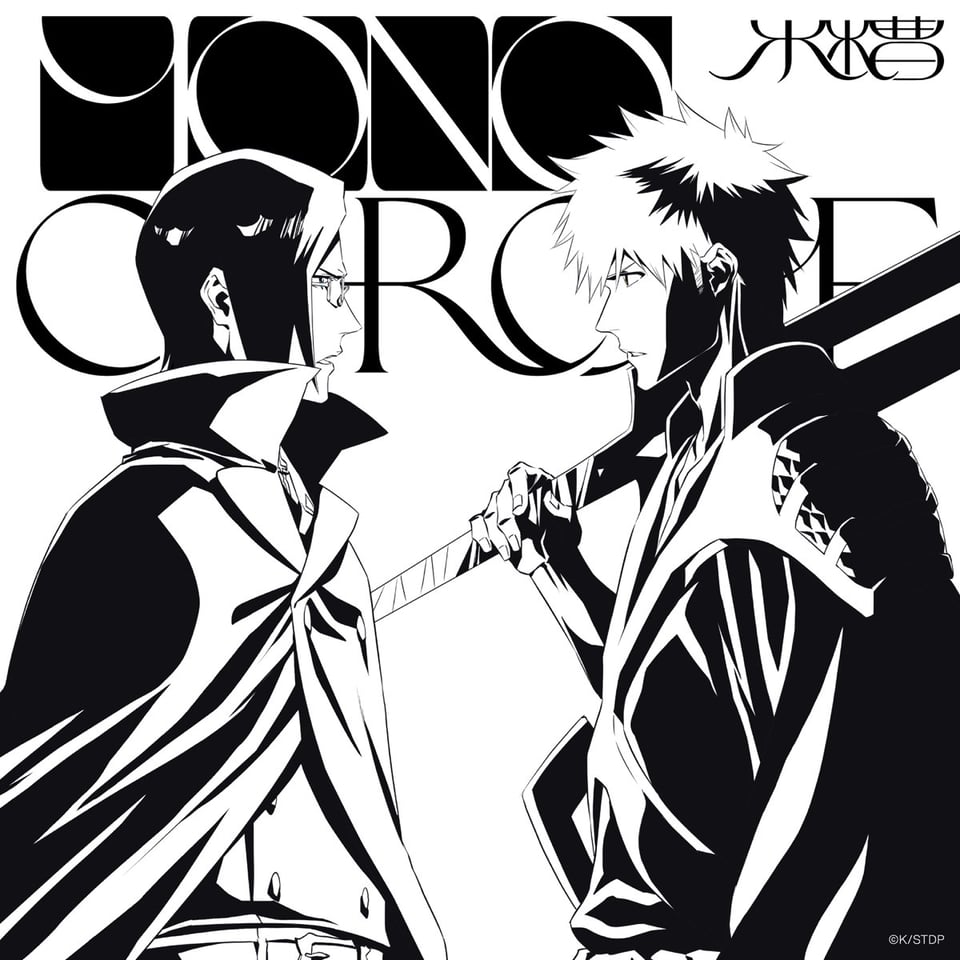
Monochrome (Suisoh)
Monochrome is another fun song that messes with meter. It swaps from quadruple to triple meter in its verses, paralleling a switch from a lyrical vocal style to choppy rap. It’s not a clean 4/4 —> 3/4 switch, though! Instead, the song goes from 4/4 to a single measure of 4/8 before finishing the rest of the rap verse in 3/8. The switch from 4/4 to 3/8 means the beats are shorter overall, which means the overarching pace of the song changes along with the time signature.
That single measure of 4/8 does a lot of heavy lifting, knocking the song off-kilter by adding an extra beat that you’re not expecting. You’re forced to entirely recalibrate your internal metronome because of that one extra beat, but it goes by so fast that you almost don’t even notice the recalibration. It’s extraordinary in its simplicity.


This animation absolutely blew my mind the first time I saw it, so I wanted to share it with anyone who isn’t active on Tumblr! This fluidity with which each Miku turns into the next is hypnotic enough as it is, but following individual elements of the animation added a whole new layer to my appreciation.