AI as Default Path
Real AI adoption happens when it's integrated into a workflow, not just shoehorned in as a 'special' event.
One strategic signal 🔭
One (human) prompt 🧠
One subtraction opportunity ➖
Created by Sam Rogers · Powered by Snap Synapse
Freely available on Substack, LinkedIn, and our mailing list.
New issue every Monday.
🔭 Signal: Workflow Owners Build Real AI Adoption
AI adoption looks boring when it works, because it shows up as default behavior, not special events.
It looks like a slightly smarter intake form.
A ticket queue that stops wasting human attention.
An SOP that quietly prevents the same mistake from happening yet again.
AI adoption efforts fail when they depend on special anythings: special workshops, pilot pizzazz, "The Ultimate Prompt For…" docs, etc.
Managers decide whether AI feels safe (Issue 027).
L&D decides whether AI becomes practice (Issue 028).
Workflow and Ops owners decide whether AI becomes the job. That's this week's issue.
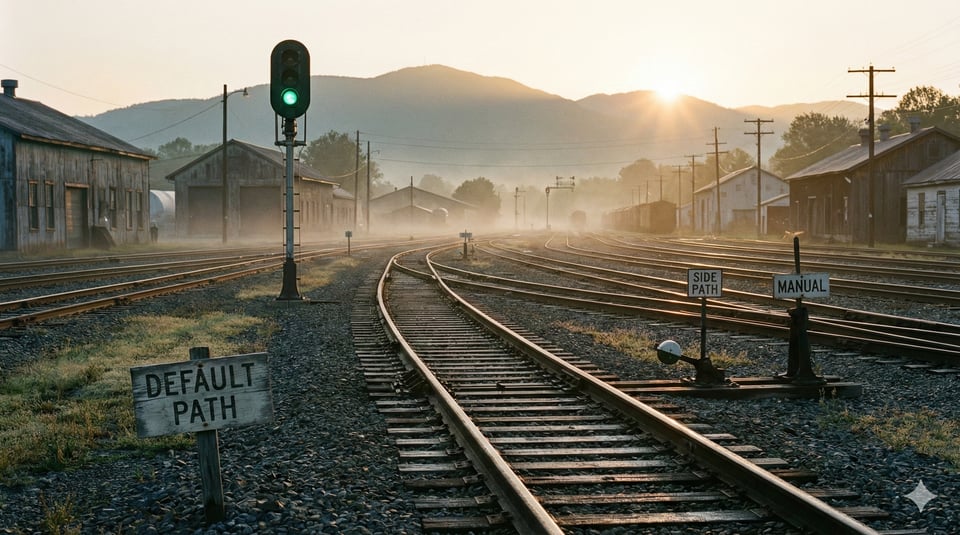
Why Ops? Because they control the default path. They own where actual work happens. Not work activity, but work traction.
The Default Path Test: if a normal person can complete the workflow without seeing the AI step, you did not embed AI. You hosted a demo.
The titles vary. The functions don’t. Workflow owners decide:
where AI shows up inside real tools
when it’s automatic vs opt-in
whether it takes 2 clicks or 12
If AI is in the default path, people adopt it by doing their normal job.
If AI lives in side tabs, adoption is basically a personality trait.
Personality is fine, but it does not scale.
It also does not measure well, until something breaks.
🧠 Strategic (Human) Prompt: What Breaks If AI Disappears Tomorrow
Which core workflow would be broken if AI disappeared tomorrow?
Not “less efficient.” Broken.
Now point to where AI lives in that workflow:
the form field
the template
the macro
the queue rule
the SOP step
the QA checklist
the routing logic
If you can’t point to the artifact, AI isn’t in the workflow.
It may be a nice visit, but doesn't want to live there.
Prevent "broken" with Fallback mode
Now add one more sentence that answers the question: if AI is down, what does the workflow do instead?
Examples:
AI fails → template still loads, but starts off blank
AI fails → summary field stays empty, human writes it instead
AI fails → QA check becomes a manual checklist instead of an automatic pass/fail
AI fails → routing reverts to a default queue with a human triage step
If you can’t answer, you built a single point of failure. Those age like milk.
AI dependency isn't the mistake, the mistake is building without any fallback.
Remember, the goal is not “AI everywhere.”
The goal is business execution. That means “AI where it matters, with a graceful exit.”
This prompt separates real operational dependence from optional experimentation from marketing noise.
And it forces three decisions:
AI by default
AI as input only
AI nowhere near the decision
➖ Strategic Subtraction: Sidecar Pilots
Try on a new rule for 2026: no AI work ships unless it changes an artifact on the main path (form, template, SOP step, queue rule).
So if it lives in:
a Slack channel
a one-time demo
a personal prompt library
a “try this sometime” workshop
a browser tab someone hides when Leadership walks by
That's not adoption. That's theater.
Sidecar AI like that produces the same outcomes every time:
heroics
lack of measurement
governance shows up late (and angry)
Contrast these sidecar pilots with main path workflow retrofits.
Pick one real workflow that moves either money or risk. Those are the high-stakes, most bang for your buck leverage points that will make the most difference where you work.
Write four decisions:
AI by default
AI with approval
AI forbidden
who gets paged when it fails
Then retrofit the workflow artifact itself.
Not the slide deck.
Not the training.
The artifact.
That’s where adoption becomes real.
That’s also where it becomes measurable.
Because the artifact is where we instrument usage, edits, overrides, and failure rates.
🎭 Analogy of the Week: What's My Cue?
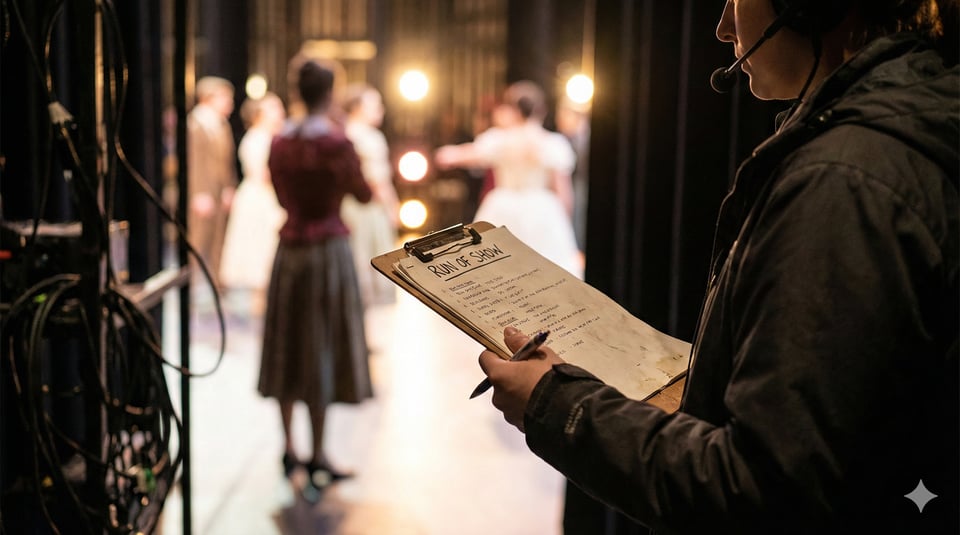
The audience remembers the lead performer.
Whoever is in the spotlight gets the credit. But they don't run the show.
The show runs on cues.
If you’ve ever watched a live show fall apart because the cues were wrong or unrehearsed, you already understand AI adoption.
Workflow and Ops owners are like stage managers for organizational reality.
They decide what appears on stage (the tools people actually use).
They decide what’s automatic vs optional.
They decide whether work moves forward without improvising a new show every night.
AI adoption is not a spotlight problem.
It’s a cue sheet problem.
If you want AI to become normal, embed it in the existing cues.
Make a cue sheet: cue (workflow step) → AI assist → degraded mode → owner.
Closing Notes
If managers don’t make AI feel safe, people hide it.
If L&D doesn’t turn exposure into practice, people forget it.
If Ops doesn’t bake it into workflows, people never adopt it at scale.
Organizational AI readiness is a relay:
psychological safety → working agreements → workflow defaults
If you own workflows, this is your baton moment. Get ready to run with it.
Your team doesn’t need more AI enthusiasm.
They need fewer clicks, fewer decisions, fewer places to improvise, and more reliable defaults.
Sam Rogers
AI Stage Manager
Snap Synapse – from AI promise to AI practice
✅ Next Step
If you want help identifying the few workflows where AI should live by default, and measuring whether it actually changed behavior:
→ Explore the PAICE Pilot Program
Get actionable insights from within your own org to guide responsible AI adoption next month. No guesswork. No integrations. No personal data. No delays. Just evidence.
