
Human Interface Fatigue
The more “human-friendly” our tools become, the more mental overhead they create
One strategic signal 🔭
One (human) prompt 🧠
One subtraction opportunity ➖
Created by Sam Rogers · Powered by Snap Synapse
Freely available on Substack, LinkedIn, and our mailing list.
New issue every Monday.
🔭 Signal: Performative Empathy
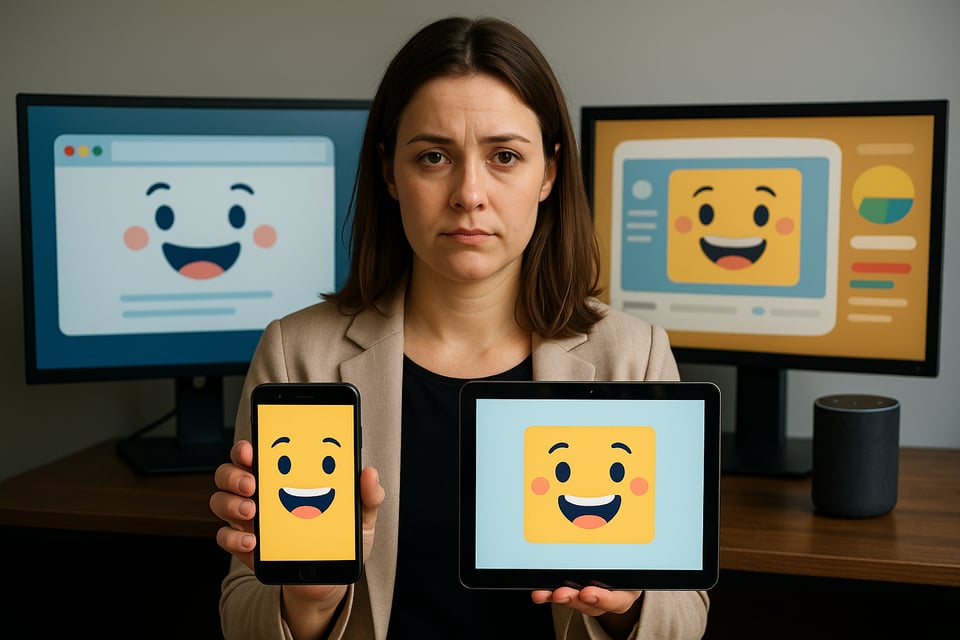
Everywhere you look, the next “AI-powered” interface is trying to charm you.
The dashboards smile. The copilots chat. The assistants apologize for delays they don’t feel.
Every vendor at the big conference promises something “human-centered.”
But what they really mean is attention-hungry.
We’ve been conditioned to measure usability by friendliness.
Now our tools are beginning to perform empathy.
And it’s exhausting.
When interfaces talk too much, users think less.
The system’s constant need to reassure and narrate creates a fog of performative humanity that lulls us into mistakes and blocks real flow.
I’ll be at the largest learning-tech event in the U.S. this week, and here’s what I expect to see everywhere:
Tools that narrate instead of assist
Dashboards that sympathize instead of simplify
Experiences that leave you nodding politely at pixels
This is the quiet tax of progress: mental noise disguised as user experience.
🧠 Strategic (Human) Prompt
What are your primary tools asking you to think, do, or decide?
How are those choices made crystal clear, and how are they obscured?
➖ Strategic Subtraction
Stop designing AI as friends for users.
Design for user flow instead.
A friendly interface demands attention; a fluent one frees it.
The best design doesn’t flatter users, it empowers them.
We don’t need interfaces that act like people. We already have 8-billion humans for that.
What we need are systems that make those people more capable.
Friendly isn’t the goal.
Frictionless is.
🎧 Analogy of the Week: Good Headphones
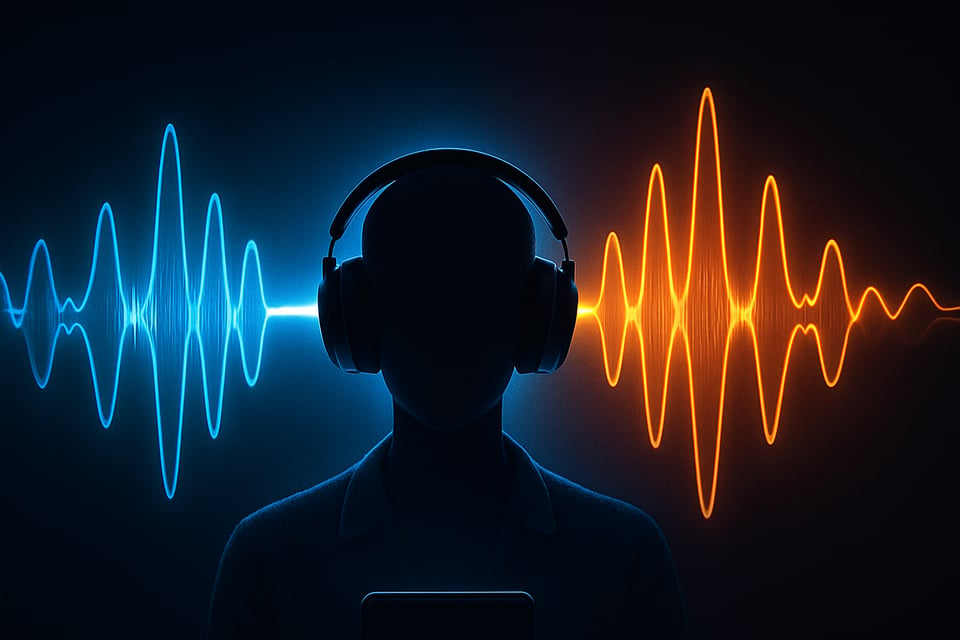
Noise-cancelling headphones don’t block the world; they actually listen carefully to it.
They sense the ambient sounds and generate their mirror image, out of phase.
Perfectly opposed and precisely targeted, so that the interference cancels itself out.
The result isn’t silence. It’s clarity.
That’s what real intelligence does.
It removes what doesn’t belong.
It turns noise into signal,
and signal into space to think.
🎵 Closing Notes
If you’re tired of tools that perform humanity instead of empowering it,
measure something that matters.
Get your PAICE score.
https://PAICE.work
PAICE is built as silent intelligence.
No mascot, no chatty overlay, no dopamine loop.
Because intelligence isn’t what we say, it’s how we see.
The PAICE Score Gauge makes collaboration between people and AI plainly visible, without fanfare and fancy sparkles.
Our Tiers and Dimensions quietly structure business conversations about capability.
And the 20+ sub-scoring parameters reveal patterns no one has time to narrate.
We’re not making noise.
We’re tuning the signal.
And we’re doing it quietly by testing, challenging, and validating what “intelligence” actually looks like in practice from now on.
This week I return to DevLearn in Las Vegas. I’ve delivered hundreds of sessions, workshops, and keynotes at this event and others like it over the years. When we announce the PAICE.work whitepaper there on Wednesday, there will be no confetti cannons or throw-away merch. Just clarity that cuts through the expo hall noise and an invitation to build intelligence better.
Until next time,
Sam Rogers
Noise Canceller in Chief
Snap Synapse
📅 Book a meeting
