
Personalization at Scale
Two people, two domains, same AI collaboration instinct we can learn from in this Special Edition of our weekly newsletter
📐 For the last 18 issues, Signals & Subtractions has kept to a tight format that works well. This week we’re switching things up with personal stories from real people using AI natively. It’s longer than usual, but also easier to see. Let me know what you think of this format.
🔭 Signal: Personal Stories of Personalization

Heather Mason is a former high school teacher and tutor. Now she's a Learning Architect, helping organizations level up their training curricula and learning infrastructure. When it comes to personalization of learning via AI, she took to it immediately because she once had to personalize every lesson for every student, every day.
Here she is in her own words:
I taught high school English, History, Civics, etc., in small classrooms. Lots of teachers would love to have just 12 students instead of 30+! But each of my students had an Individualized Education Program (IEP), meaning materials had to be adapted for each student because they required special education services due to a diagnosed disability.
That meant that for a single class, I had to create a dozen targeted variations of a lesson plan. So most days looked like this:
- 6hrs at the school (with just 1hr to prep)
- 2hrs private tutoring to make ends meet (yet more individualized lesson plans)
- 1–2hrs playing in traffic (Seattle commute)
- 6hrs prep for the next day (unpaid, but absolutely necessary)
Can you say “burnout,” boys and girls?
These days as I integrate AI into program design for adult eLearning clients, I think back on those days and my inability to scale. That grueling process of manual personalization gave me a firsthand understanding of the problems that AI now solves so quickly. Today, AI can reach every learner at their level, guiding them through upskilling exercises in ways that fit their pace and needs. Even better, when directed to do so AI provides specific challenges required for growth so quicker students aren’t left waiting for the rest of the group to catch up. AI raises the floor and the ceiling at the same time.
Soon we'll see AI acting as a copilot in classrooms, because of course we will. My students’ needs were only being met by my unpaid work before. Unlike you and me, AI doesn’t burn out from doing that for years on end. These tools give us our time back so that we can reinvest it in what matters even more to us humans: connecting. Truly personalized learning is finally becoming scalable, and it’s thrilling to watch it happen!
Why this matters:
Heather’s “IEP for everyone” mindset is what AI finally makes practical at scale.
Now here’s a very different story with a surprisingly similar approach:

Jonathan Edwards (aka Limited Edition Jonathan) runs a video production business in Scranton, PA where he’s totally hyperactive with AI. Whenever he tries something new, he tends to go all in.
He wanted to learn n8n workflow orchestration for his podcast’s RSS feed. In no time, this happened:
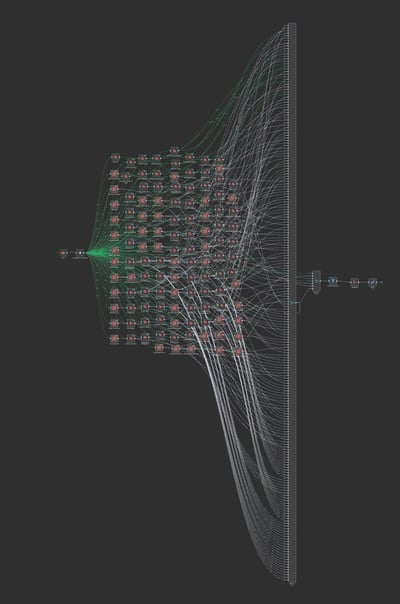
Jonathan didn’t know “Instructional Design” was a job until I told him. Which is perfect, because he also didn’t know he wasn’t supposed to be able to build customized eLearning on complex content from a single prompt.
As he shared last Friday:
I just spent the last hour watching Claude Desktop build me a complete learning app for database fundamentals, and honestly? I’m still a little stunned at how well this worked.
He also didn’t know that Instructional Designers usually just ask multiple-choice questions, so he naturally told his AI to:
3. INCLUDE KNOWLEDGE TESTS
   - Create a test at the end of EVERY section
   - Mix of multiple-choice (40–60%) and short-answer questions (40–60%)
   - 5 questions per section test
   - Questions should test understanding, not just memorization
   - Include rubrics for short-answer questions

4. MASTER FINAL EXAM
   - 10–15 comprehensive questions covering all sections
   - Tests synthesis and application across topics
   - Provides personalized study recommendations based on performance
   - Identifies weak areas and suggests which sections to review

5. EMBEDDED CLAUDE ASSISTANT
   - Built-in AI helper using Claude API (no API key needed in artifact)
   - Context-aware: knows which section/lesson the user is currently on
   - Helps when user gets stuck
   - Encourages learning rather than just giving answers
   - Chat interface accessible from any screen
What Jonathan casually created with a one-shot prompt is a better evaluation than 99% of the eLearning that's out there today. Because he wanted something personalized to him, and why not?
Check out Jonathan's Substack article, including the full prompt he used.
Key Takeaways
Both Heather and Jonathan are fairly new to AI. Neither has training in Machine Learning or even Computer Science, but they think in ways that work beautifully with it. Because they know how to collaborate with people and systems, they aren’t afraid to learn their way forward. They’re already using AI to extend their own expertise, creating solutions that exceed what was possible before.
These are regular people I hadn’t heard of until a couple weeks ago. Heather reads this newsletter and reached out (thanks Heather!). I read Jonathan’s newsletter and reached out to him. AI-adaptive folks like this are quietly multiplying everywhere. Many are newer to AI than you are now, but you’d never know it by what they produce.
Different domains, same collaboration instinct.
People who already personalize systems for people tend to adapt faster to co-creating with AI.
🧠 Prompt: Working Agreement
- What “unpaid personalization” are you still doing by hand with every prompt?
- What would your one-page “AI IEP” for yourself include this month?
AI isn’t like working with a person or a computer. It’s something else altogether.
A working agreement helps you define that collaboration and use it consistently.
For instance, now that Claude can work with spreadsheets better than any human I’ve ever met (new capability as of last week!), I gave it a mid-complexity sample, refined it together, and asked it to summarize our shared process as a working agreement. It became a living artifact I can use for both reference and portability layer for future models likely to gain similar capabilities soon.
Sample Working Agreement (Excerpts)
- Direct, technical communication: 8/10 spice on project work, 3/10 for external deliverables
- User supplies direction, context, constraints. AI supplies execution, structure, options
- LibreOffice-first. Deliver in .xlsx for formulas, .csv for data. Avoid tool-specific functions when possible
- Separate decisions from fixes. Document for handoff. Test in the target environment
- Challenge bad ideas immediately; surface tradeoffs early; no one fakes certainty
Full agreement: Markdown document here
➖ Subtraction: Non-Critical Structure
Consider removing pausing the use of a template or structure that’s been working well. It may be obscuring the view of what else is possible.
Another way of seeing is always emerging, and often from unexpected directions.
If we’re too deep in our own story, we miss others who are succeeding in theirs.
There is signal all around.
At this start of a new quarter, it's a great time to change things up so you can hear the faint signals of success above the usual din.
Until next time,
Sam Rogers
Trust Architect for AI Transformation
Snap Synapse – from AI promise to AI practice
