
Everything is a Spec
Embrace the shift from aligning AI to prompts to aligning it to the specification.
One signal 🔭
One prompt 🧠
One subtraction opportunity ➖
Created by Sam Rogers · Powered by Snap Synapse
🔭 Signal: Align to the Spec, Not to the Prompt
A quiet but meaningful shift is underway: developers, product teams, and AI leaders are realizing that alignment to the spec is what matters. And that starts with crafting the spec with care.
It’s more than simply having domain context. It’s about anchoring to the larger mission, deeper meaning, and core purpose.
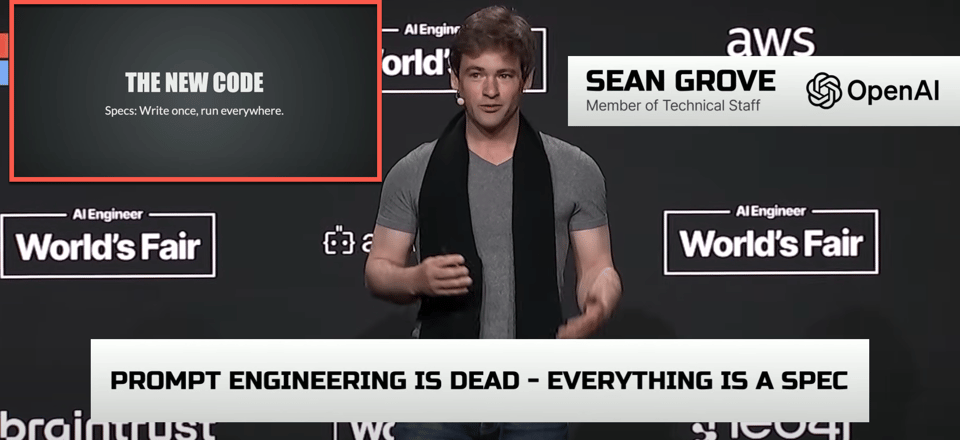
courtesy AI Engineer on YouTube
Sean Grove of OpenAI made this point clearly last week in his DevDay talk, which sparked a wave of conversation. He explained that the most successful AI integrations don't treat the prompt as the source of truth. Instead, they define the expected behaviors outside the prompt. Where? In the spec. Then they align the system to that.
It’s the difference between nudging the output and anchoring the model. And some have argued that specs could replace code as the primary artifact of development.
For those of us who’ve always built toward clear behavioral expectations, this shift feels like home. It’s not about control. It’s about creating testable clarity, a source of intent (not just a source of truth), and the safety net of versioned rollbacks.
🧠 Strategic Prompt
“What are we asking our systems to align to: the prompt, or the spec?”
Or
“Is this prompt trying to do all our context engineering for us?”
➖ Suggested Subtraction
Stop pretending the prompt is the spec. They're different things.
Strip away workflows that reward tweaking over testing.
If your spec isn't versioned, it's probably not real. Git'r done!
🎸 Analogy of the Week: Tuning a guitar by shouting at it
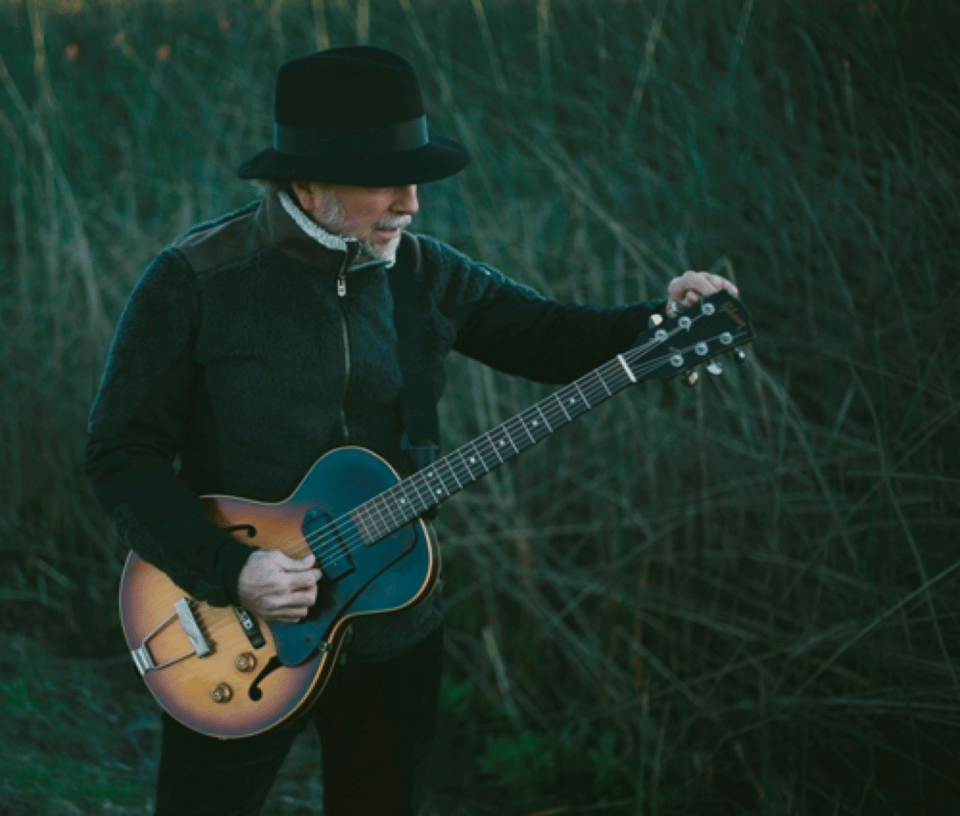
Picture a guitarist on stage yelling at their instrument between every song: “Be in tune!” “Stop buzzing on the third fret!"
The guitar, predictably, does what guitars do when they’re out of tune.
Meanwhile, a seasoned musician spent two quiet minutes backstage with a tuner adjusting each string to the right tension and frequency. Now the guitar wants to make music.
Every chord rings true, every note finds its place, and the musician can focus on the performance instead of fighting their instrument.
Your AI prompt is like yelling at the guitar, hoping louder instructions will fix fundamental misalignment.
Your spec? That’s the tuning process. It’s how you calibrate core frequencies so the system naturally resonates with your outcomes. This lets the outputs sing clearly!
♬ Closing Notes
This idea of aligning to the spec instead of the prompt is gaining momentum among AI practitioners. But it’s not new. It’s how the best systems have always worked.
Sean’s talk (from here onward) shows how alignment-first thinking can simplify what often feels chaotic in other domains too.
If you’ve been operating this way for years, congrats! You’re ahead of the curve. If not, you’re not late…yet. But the shift is happening now.
We’re moving beyond prompting and domain context toward engineering and specifying intent. Whether or not code is your thing.
Want to see real-world examples of how this works? Quick reply to let us know.
Until next time,
Sam Rogers
Systems Tuner, Snap Synapse
