|
The situation in Venezuela should be understood not as an isolated intervention, but as part of a wider re-ordering of power as the world moves decisively toward multipolarity. The United States is acting, belatedly, to reassert control over its near abroad while competitors consolidate theirs elsewhere.
Venezuela’s strategic value is not that the United States needs its oil. It does not. Rather, control over Venezuelan oil shapes global supply, influencing prices and constraining the revenue streams of oil-dependent states such as Iran and Russia. In this sense, Venezuela functions as a lever in a broader economic war rather than a resource seizure in the Iraq mould.
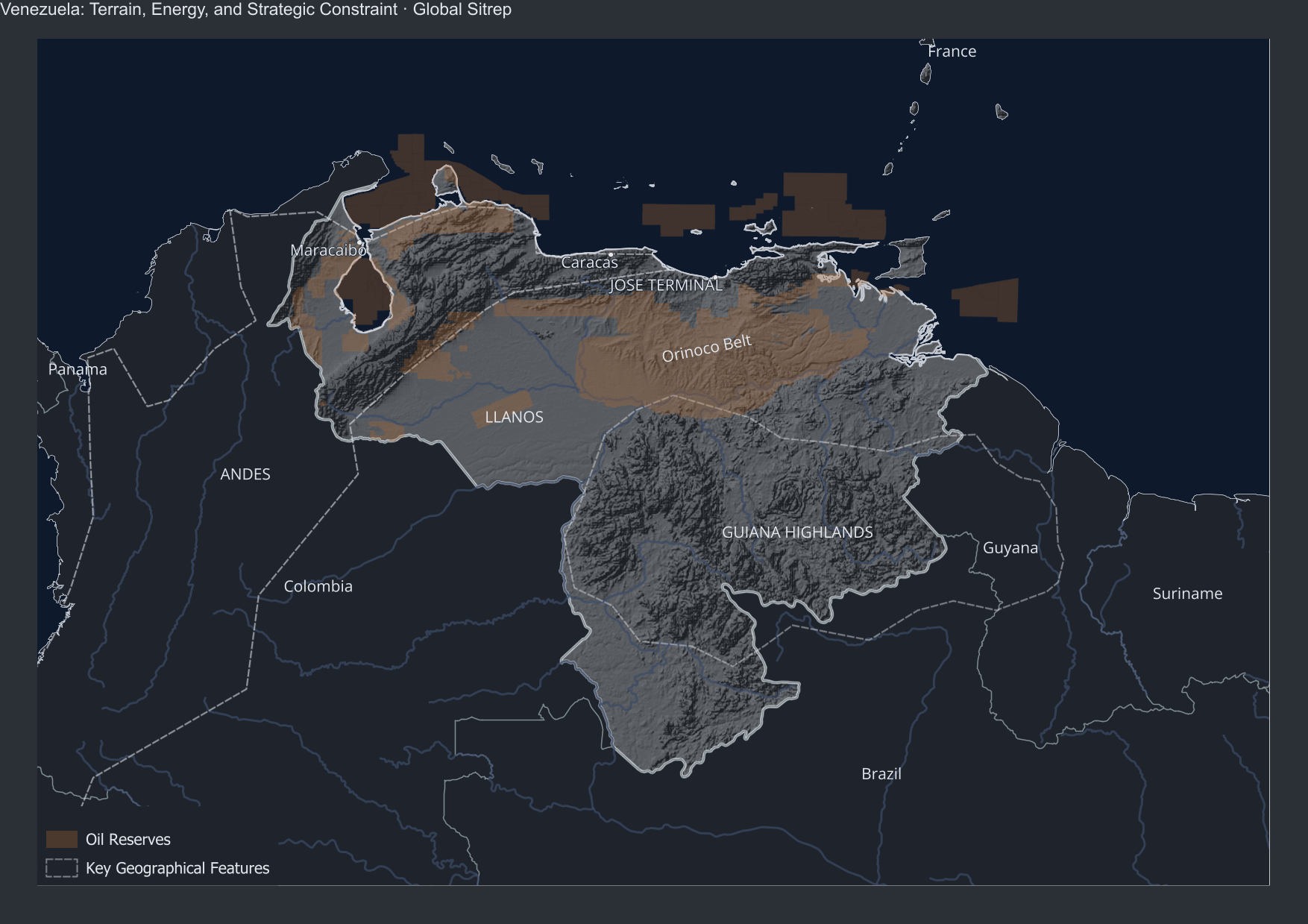
Geography complicates this logic. Venezuela’s oil wealth is concentrated in the Orinoco Belt and around Lake Maracaibo, far from political legitimacy and embedded within terrain well suited to insurgency. Mountain chains in the north and west, dense jungle in the interior, and weak internal connectivity all favour irregular warfare over durable centralised control.
Rebuilding oil infrastructure under these conditions will require sustained security, technical expertise, and time measured in decades rather than months.
The core question is not whether the operation succeeds tactically, but whether it endures strategically. Geography guarantees that Venezuela will punish half-measures.
|