|
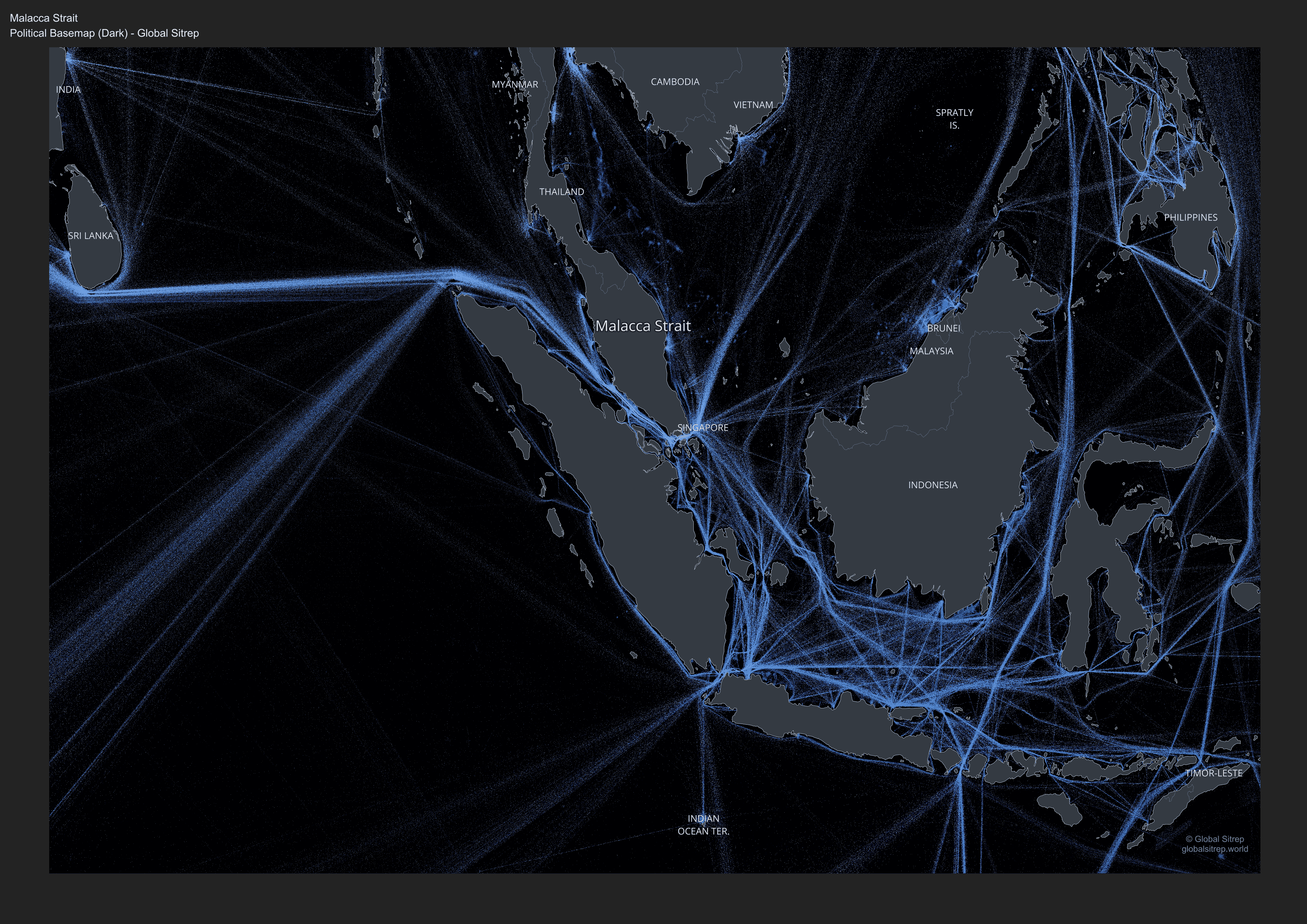
The Malacca Strait remains one of the most critical maritime chokepoints in the global system. Running between the Malay Peninsula and Sumatra, it links the Indian Ocean with the South China Sea and the wider Pacific. At its narrowest point it is approximately 65 kilometres wide, yet it carries an outsized share of global trade.
An estimated 25–30 percent of global seaborne trade transits the strait annually, including roughly one quarter of all maritime oil shipments. It is particularly vital for energy and manufactured goods moving between the Middle East, Africa, Europe, and East Asia.
Disruption would force vessels onto significantly longer routes via the Lombok or Sunda Straits, sharply increasing transit times, fuel costs, and insurance premiums. These costs would propagate quickly through global supply chains.
Dependence on the strait is especially acute for China, whose energy security is closely tied to uninterrupted Malacca traffic; Japan and South Korea, both heavily reliant on imported oil, LNG, and raw materials; regional hubs such as Singapore, Malaysia, and Indonesia; and India, for trade flows linking the Indian Ocean to East Asia.
|