
The Fact of the Matter
Fact-checkers, legal, reviews, and the truth in nonfiction.
I never planned on writing a memoir. For a while because I believed I had nothing worthwhile to say, and after that because it seemed too scary. Now that I’ve done the writing part, releasing it into the world still kind of does feel too scary, but, here we are!
I’ve always done a lot of research and included personal, autobiographical elements in my fiction, but working in a different genre revealed whole new levels of both vulnerability and responsibility. Even beyond the embarassing personal parts, now that the book bears the official “nonfiction” label, people might rely on its contents not only for what I bring to the page emotionally or for entertainment, but also as fact, and on topics like deaf history and education that are so often already rife with misinformation.
…But what does the official nonfiction cateogory actually mean? Like most people, I thought it meant that a book was true, or at least that a reasonable effort to verify the information it contains had been made. Turns out, the label may not have as much to do with facts as we would like to believe.
I read A Million Little Pieces in high school when it was first released, and though I became semi-aware of the author’s feud with Oprah that followed, as a teenager, I wasn’t sure that it changed my experience much if Frey had exaggerated things like how long he’d been in jail, and I had neither the skills nor the attention span to interrogate the finer moral and ethical implications of publishing and marketing that made the book what it was. Looking back, holding Frey to account then might have prevented future permutations of publishing disingenuity like his fiction sweatshop, or latest forays into AI novel-writing. (On brand as ever, Frey waffled, initially admitting he used AI in the writing process, then later doubling-back to say he only used it for research.)
Fast-forward more than a decade, and I had written a book of my own—a fictional one, but for which I felt the historical accuracy was very important. Part of the impetus for writing Girl at War had been anger that so few people I encountered knew anything about the break-up of Yugoslavia, so in addition to wanting to write a good story, I felt a responsibility to make them understand the truth. I researched the book as rigorously as I knew how to, forced friends and family to read it again and again, to retell their own versions of what had happened. In the process, I learned about the slipperiness of memory, the impact of trauma upon it, and the way genocides are specifically engineered to make facts disappear.
Still, I did the best I could, and beyond copyediting, it didn’t come up much in the publishing process. It was fiction, after all. A few more years later I was fully shocked to learn from my friend, the writer Emma Copley Eisenberg, that she had hired her own fact-checker for her first book, The Third Rainbow Girl because most nonfiction, even those books put out by large publishers, is simply never fact-checked at all.
At the time I had no plans to venture into the world of book-length nonfiction, but it was still a startling revelation. Could it be that all the biographies, memoirs, true crime explorations, and even science books were simply printed up on good faith and vibes?
What’s more, I am used to being fact-checked—“out the wazoo” I think is the technical term—in my short-form work, particularly when I attempt to assert the humanity and of deaf people and deafness, which angers the health and science sections of newspapers and magazines to which I’m usually relegated. I’ve even been fact-checked in my extremely limited toe-dip into the world of poetry. In what was part of a series of truly batshit requests, the magazine asked whether I would put them in touch with my child’s preschool to help confirm Veracity of Poem (um, no, f*ck off).
Now that I’m a few months out from the publication of my memoir, I’m grateful that I’ve learned from other smart writers about this void in the publishing process. Savvier folks than I have parsed out these failings. I recommend reading Maris Kreizman on the lack of fact-checking in publishing. Masha Gessen’s book on the ways the media’s distortion of “neutrality” and inability to keep up with fact-checking a deluge of lies has facilitated our current authoritarian predicament is also a valuable read. (I’ve summarized some of Gessen’s points in a previous letter here).
I commissioned a fact-checker to traverse the rabbit holes in my own book (a humbling experience). And now, I’ve also learned that though publishers do not generally fact-check beyond a copyeditor corroborating the existence of sources provided, the industry does have a “legal review.”
In the US, the legal review process can be summed up as a lawyer reading the book and producing a report to flag all the potential ways said book could invite a lawsuit. The fascinating thing is, the review is not really about what is true at all, but about who you might piss off by saying it—perhaps this is especially true when speaking the truth. In what will come as a surprise to no one, this mostly means catering to large corporations and other entities with lobbying power.
I am very fortunate to also have a UK edition of this book, a process which with other books I’ve always found light and exciting—different cover art and copy to appeal to the sensibilities of different markets is both fun to watch and requires relatively little from me.
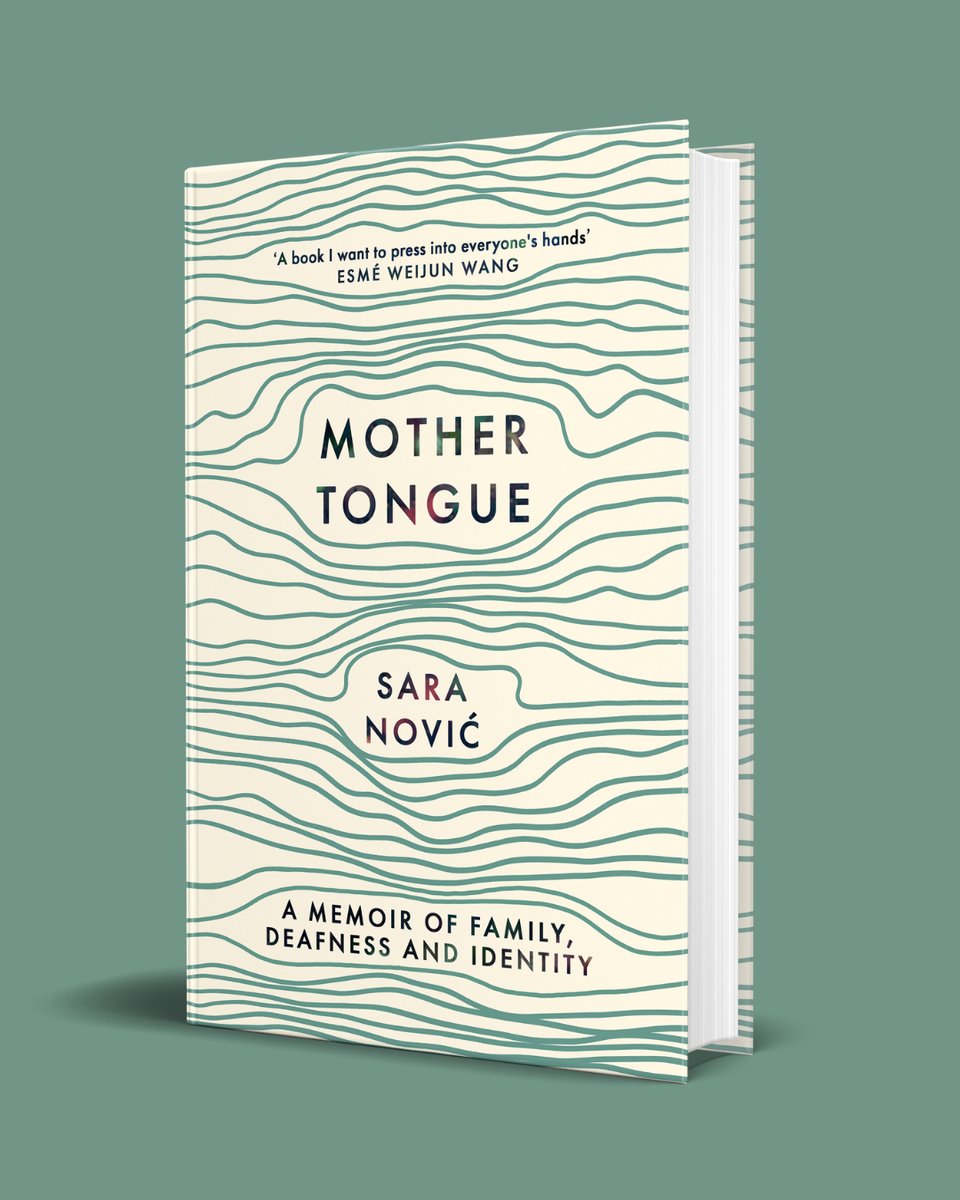
But Mother Tongue of course triggered a legal review in the UK, whose laws about “truth” are perhaps even more constraining than ours. In the UK, the threshold for viable libel and defamation claims are much lower than here, so the focus, I found, was on catering to individuals’ feelings. Saying that a certain author of boy wizard books did pretty much anything she’s very demonstrably done is not allowed, because she said she didn’t. Writing about a police brutality case in which an officer shot and killed a Latino deaf man, Magdiel Sanchez, on his own front porch because he failed to hear commands to drop a pipe he’d been holding, was flagged as “defamation.” It did not, the lawyer said, “tell the whole story.”
I’ve never been a person who is good at absolutes. I was the kid who flunked the standardized test because I looked at the choices and thought, “well, not never,” while normal people just filled in the bubble and moved on with their lives. Which is to say, these kinds of edits have had me spiraling for weeks now. What is the whole story? Was the cop on a power trip to compensate for a shitty childhood? Do the neighbors, who reported shouting to the officer that Sanchez was deaf, still think of him sometimes? What were Sanchez’s last words, encoded in the “hand movements” those eyewitnesses saw him making? What was he thinking right before he closed his eyes?
According to the British lawyer, none of these are the “full story” either. The full story, legally speaking, is that I have to write a sentence assuring readers that the District Attorney said the use of force in tasing and then shooting an innocent man at his own house, was justified.
When I started writing this letter, I thought the point I wanted to make about this review process was kind of funny (ok, darkly funny)—like, oh, haha in America we fear our corporate overlords and in the UK they’re afraid to hurt each other’s feelings. We are a late-stage capitalist hellscape, and the Empire is a big baby. Now I’m not so sure. Or at least, I’m not sure the distinction matters much in where it lands us.
Pretty much anyone sentient right now can see the chasm between what is true and what is legal. With the waters muddied by legacy media’s soft touch and AI peddlers’ hard sells, it can be hard to parse out the difference between what is true, and what feels true, on top of what people might like to be true, what a plagiarism robot says is true, what the regime says is true, and on and on. Any time we cater to anything or one outside what we know to be factual, our shared reality, and the ties that bind us to it and to one another, are diminished.
So what’s a writer/human to do? It’s easier said (and more thankless), but I think we just have to keep telling the truth, and maybe even more essentially than ever—writing it down.
For Mother Tongue, this has meant making the book’s endnotes accessible on my website so people can access the researched material I used in the book through clickable links. For the rest of it—writers, readers and everybody else resisting the relentless crush of all that is Bad—may we keep the strength and clarity of mind that allows us to continue prioritizing the facts in our work, in our parenting, and hell, on social media. May we hang on to reality, and through it, community. Even when its inconvenient or makes people mad. Especially then.
Book Biz
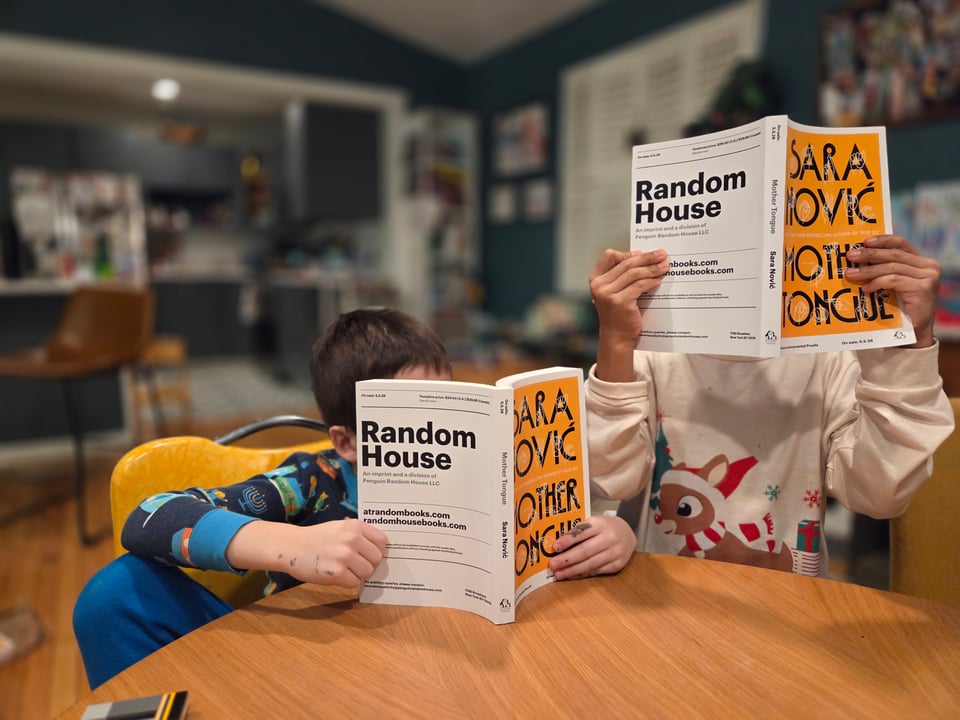
Mother Tongue is out May 5 in the US and 11 June in the UK, but is available for preorder in both places now. You can also support the book for free by requesting it from your local library, adding it to your Goodreads or StoryGraph shelf, reviewing if you’ve gotten an early look, or telling your friends about it.
Happy to report that Mother Tongue has received its first starred review, from Publisher’s Weekly. Thanks, PW!
Save the Date! If you’re in Philly, mark your calendars for the Mother Tongue book launch, Thursday, 7 May, 7PM at Old Pine Community Center. More details to come.
Signs + Wonders is free for all readers; please share with your friends. If at any time you read a letter you particularly enjoy, or generally want to support my work, you can find me at Buy Me A Coffee for a one-time or membership payment of your choice.🤟

