I found myself awake at 3am this week, jotting this down into my notes app. If you’re interested in what’s on my mind in the middle of the night (though to be honest, I’m probably always thinking about these things in some form or another), here is my note, unedited. If this makes you think of any texts, projects, or other references that you think I should check out, please send them my way. 💌
what would it mean to create the conditions for the glitches, imperfections, and quirks to exist?
thinking about filters that let you exist as a version of you in perfect hair and makeup without you having to show up that way yourself
about Taiwanese websites being frustrating but also… full of character? but at what cost if it doesn’t get the job done? maybe this is actually the right approach — don’t handhold your “users” through an experience, don’t dumb things down for them — make them go down the wrong path and retrace their steps, overstimulate their neurons with incongruous colors and typography and sizes.
about screens and how they are a frame that turns everything into a performance. about screens as a frame that delineates what counts as “real” (what’s outside of the frame? does it even need to be seen?) screen as frame, screen as mirror, screen as pool.
about increasing accuracy of models, larger sizes, faster speeds, one company always releasing more and topping the other. what is gained in being frustrated (if anything), in having to rearticulate yourself to the machine? an interface that understands you in fuzzy terms. we understand animals and even each other in fuzzy terms. what can’t be expressed — or exists between what can and can’t be expressed?
mid-sentence i thought of something else related to this previous thought but now i can’t remember what it was.
i’m interested in failure as an aspirational state. the people who have been thinking about failure and what it opens up — jack halberstam, sianne ngai, lucy suchman, etc. look into intersection of this and technological failure and fail states. failure vs error. shanzhai - mistranslations and misinterpretations.
why is this important to me?
i’m concerned about what we’re designing for and about the things we make. it’s not just an app or an artifact—it shapes our behavior and expectations of each other. is it training us to be less permissive of the glitches and ambiguity that exist in the physical and social world? there is a worldview being expressed in the tools and tech being developed and i don’t believe in it.
re: fuzziness: maybe this is why i gravitated towards the observe.day project: when i articulated it as “experiencing weather as feeling rather than as data.” or in afterimages: translating between text and image and color; between experience and record, photograph and code interpretation. even site studies: misinterprets, out of sync, etc.
models and prediction as probabilistic, but we contain and perfect and train until we remove the mistakes.
^ this helped me remember the forgotten thought:
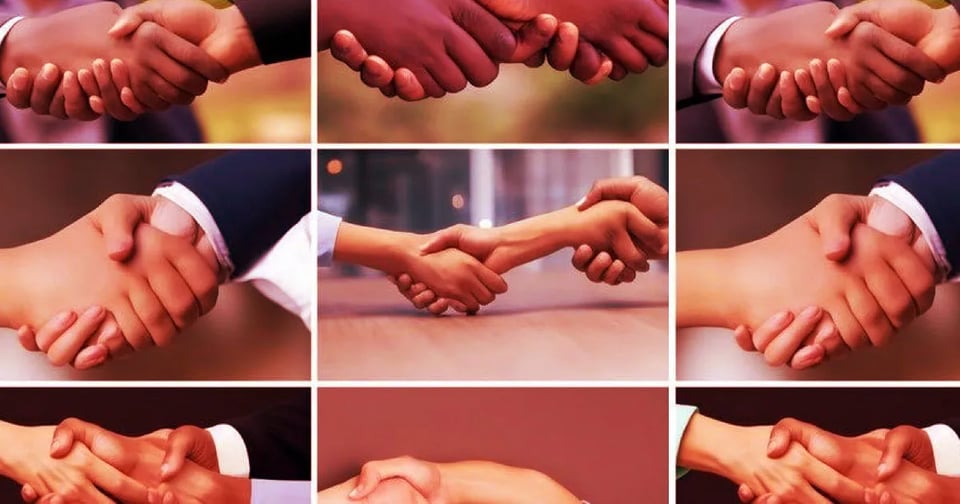
i miss those early gen AI hands. the six fingers, the blended/conjoined fingers, the palms with fingers that pointed in both directions instead of wrists. not the deepdream dogs though, i don’t miss those. it was such a short moment (it feels) where the uncanny hands really exposed the seams… of what? of trying and trying and still failing. of a sad/funny/even beautiful glitch in the technologies we make to try to resemble us. very sad these went away.
why is it funny when robots fall over?
i think this is why i collect captchas.
the story about finding a literal bug in grace hopper’s machine.
You just read issue #2 of Studio Dispatches from SHIFT CMD. You can also browse the full archives of this newsletter.


