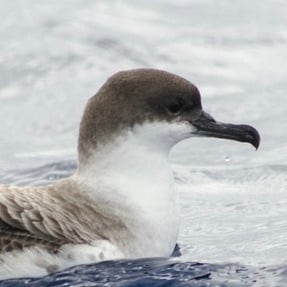
Welcome to Shearwater Stories
Hello!
Thanks so much for signing up to receive this story, which I’m noodling about with during the Great Ao3 Outage. I really hope you enjoy it. I’m going to try to send these chapters out quite quickly so - I mean this sincerely - apologies in advance for any roughness and crapness that will certainly ensue.
The story has no title yet (I’ll let you know when it does) so I’m just calling it Ghost Story for now. If you know anyone else who might get a kick out of a chapter of fic turning up in their inbox then please feel free to pass it on.
Right, that’s all the admin I think. Let’s begin.
Perhaps you might imagine that you’ve just picked up a shabby old notebook. It has a brown kraft paper cover and the little label where the title should be is blank, but you open it up anyway. You turn to the first page and it says…
Chapter One
About three months before your release date they transfer you to a prison closer to home. Or, closer to the address you’ve given them. That’s a crucial difference. Ed loosened his tie and looked out of the train window. He was not going to the address he had given them.
Outside the world looked back ant him indifferently, too busy flashing by in bursts of autumn bronze and orange to have any concerns about Ed’s living arrangements. Distant trees loomed all swaddled in frozen white mist. The fields were grey with frost, the sky was grey, Ed’s face was grey in the glassy flickers he caught against farm buildings and wooded depths. His eyes looked like two piss holes in snow, as his grandmother would’ve said.
Not a guy to hang around, he’d boarded the earliest train to Penzance, spending half his pay in the process because the travel warrant they’d given him was only supposed to cover the journey to his house in south London which, to be fair to the prison service, was where he’d said he wanted to go. But there was no way, he wouldn’t last the night there. They’d be waiting for him in the kitchen, or coming in the morning, or watching him silently from a car round the corner, with balaclavas in their pockets and a sawn-off on the backseat. No.
He wondered if he’d ever see his old house again, or his old street, and was surprised at the dimensions of the nothing he felt about it.
Despite the early hour the train had left Paddington packed with commuters, their breath and rainy coats turning the carriage warm and clammy, smelling of diesel and damp upholstery. Ed huddled into the corner of his window seat and tried not to draw attention to himself. He was wearing his court suit, so apart from his odd lack of coat he didn’t look too out of place. He did wish he had one though, a coat. Someone could’ve brought him one if there’d been someone to bring him one. But you pays your money and takes your choice, as they says.
Ed risked a sidelong at the guy in the seat beside him. He tried to imagine having a reusable coffee cup and an important meeting in Exeter. Maybe it was brilliant, actually. Maybe it only looked boring.
Minutes passed and passed. Passed some more. They assembled themselves into hours and those passed too. Ed wondered why he wasn’t bored, he’d usually be bored. As the train sped west the buildings outside its windows winnowed away, sparser, sparser, and the stretches between cities got longer and the cities themselves got smaller, older. Ed was pretty content just looking out of the window, watching all the stuff fly by. Hedgerows and pigsties and a brown horse with white on its nose.
Maybe he felt his carapace begin to fracture, maybe a few pieces of rock tumbled off him, rolling across the tracks and away, away, coming to rest in the frozen fields beyond. All the vital scraps for surviving on the Inside: habits, alliances, enemies, hiding places, all the things, the petty grievances, the little victories that’d steered him through the last few years with his head down and clean. All useless now. He didn’t look back to see the trail of standing stones abandoned behind him. They could stay where they were.
He thought about Fang, though. He thought about Izzy. One day they might forgive him for fucking it all up, maybe. Maybe they never would. That was okay.
He thought about Ivan.
As the tracks curved closer to the coast the fog thinned and the wind picked up. It blew in bold gusts, slapped dead leaves to the train windows and buffeted the carriage, making it rock like a cradle. The trolley came by and Ed bought himself a cup of tea and a KitKat as a reward for living to see another day. Now that he’d successfully left his past strewn across the fields of the south he could focus on his destination, couldn’t he? And all the things that needed to be done when he got there. But not thinking about the future had become a bit of a habit and it might take longer than a train ride to break it now, maybe. So, he’d be a live-in-the-moment guy. Why not? One day at a time. No, wait: a day’s too long. One hour, maybe. Yeah. One hour at a time.
His new mode of being now settled, he snapped the KitKat’s spine, swirled one stick in the tea and sucked the chocolate off it like he was starving.
*****
The wind rushed along the roof of the train and overtook it, flying. Through stonecrop and dead man’s bells it rustled and out, away, off the train tracks and off the cliff’s edge. It swirled the Atlantic coast, picked up salt and ice and made the fishermen turn up their collars and shiver and swear. It found a harbour shaped like a crescent moon, rolled about its crests and flew inland. It wove through cobbled alleyways and under the eaves of cottages whitewashed and stonescrubbed. It flapped the coattails of villagers and drove their hands deeper into their pockets.
Hungry for more mischief it flew into the woods, all dark and crackling with frost. Bracken and saplings bent to its will; it split itself around trunks of hawthorn and hazel. It found an ancient human path to follow through the trees until it met the crumbling stone wall of a hidden and tumbledown house.
The wind rattled the house’s windows and ruffled the house’s ivy. It lifted up one of the house’s roof tiles and dashed it to pieces on the frozen ground. But it couldn’t knock the whole house down and so, in a sulk, it rebounded and went to bother the ancient oak that’d grown beside the house for more centuries than the wind could remember.
It spiralled up the oak’s massive trunk and rummaged along branches until it dislodged a single perfect leaf, baked by summer and now November dry. It whipped the leaf up and up, dancing in spirals over the roof of the old house, along the ridge tiles and up and up again until the wind paused to catch its breath and the single perfect leaf dropped, arcing gently, down into the maw of one of the cracked chimney pots.
The leaf drifted, gathering soot as it fell, down the narrow channel of the chimney. It passed through the spidery attic crammed with boxes, through the first floor with its furniture slowly disintegrating under dusty white sheets. Down it fell, and down till it reached the ground floor drawing room where the carved oak panelling was warping with damp, and the flagstone floor hadn’t felt a broom for a decade. The leaf emerged into a feeble shaft of sunlight that snuck between closed shutters, and fell right into the middle of the cold, empty fireplace. A fragment of ash dislodged with its landing and crumbled sadly through the grate.
Stede, from his corner, watched it come to rest.
First interesting thing that’d happened in ages.
End of Chapter One
