
Mindfulness at 24 frames a second
Turns out I have a lot of thoughts about the benefits of being bored by movies. So many that this has become at least a two-part edition. Perhaps three!
About five years ago I had a realization: Meditation was changing the way I watched movies.
That insight came to me in the family room while I was watching Nina Menkes’s movie Queen of Diamonds a few hours before it left the Criterion Channel. (It has not been back.)
For context: Queen of Diamonds is an arthouse movie, stylistic and low on plot, heavy on mood. And that mood is arid.
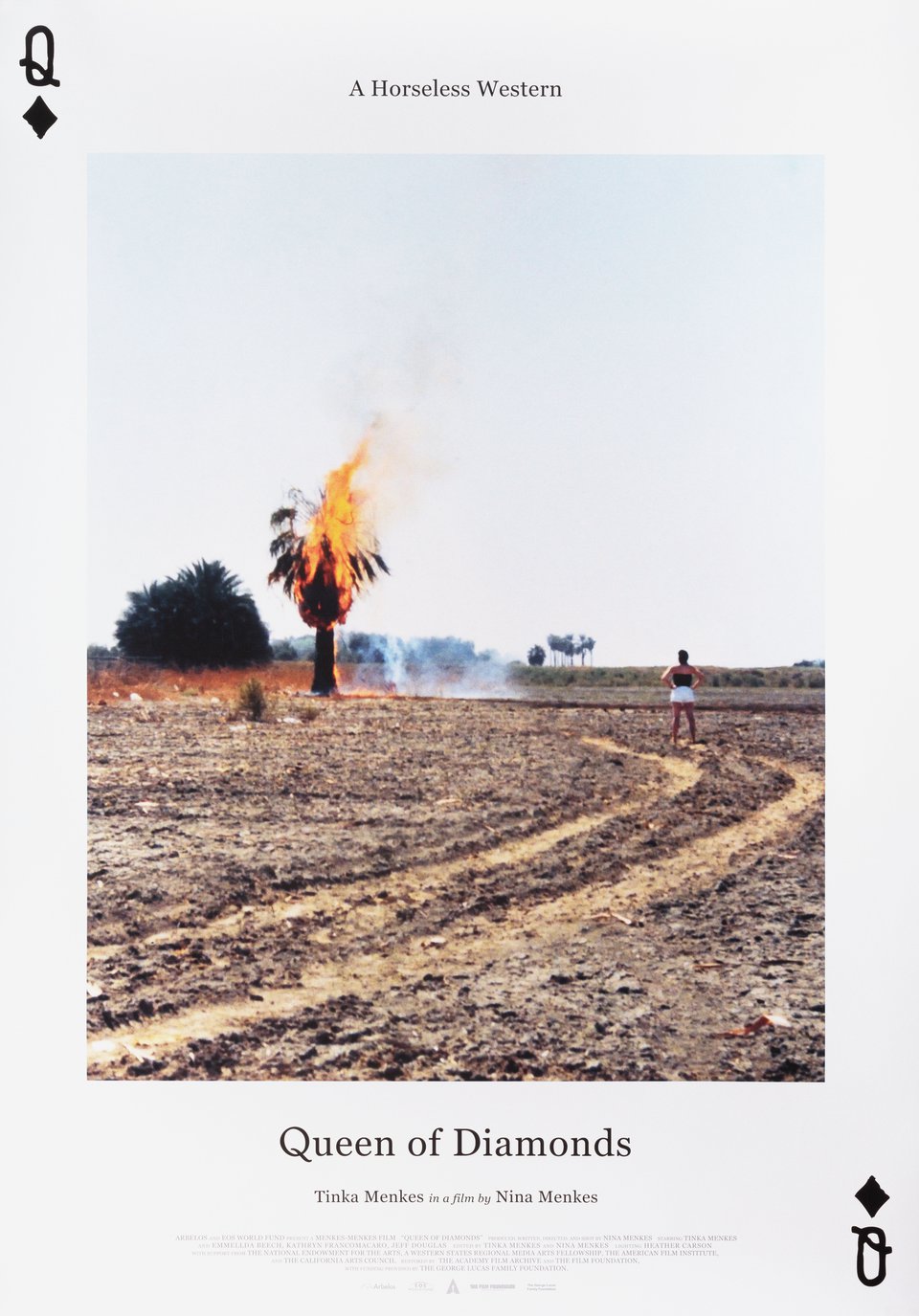
(If you are extremely averse to spoilers — for a movie that has very little plot and is mostly vibe, but I know you’re out there — skip the next 5 paragraphs. Maybe 4.)
There’s a sequence halfway through the movie where Firdaus, the protagonist, works a shift dealing blackjack. And as she deals and shuffles and redeals those cards, Menkes does something magic with them: A scene that is “only” 17 minutes long ends up feeling like a full shift at the casino.
No one talks. Nothing dramatic happens. It's interesting then boring then interesting then boring then really boring then interesting again, and for a while I wasn't sure if some shots were repeating themselves. But in the end it felt just a little like I'd worked a shift along with Firdaus, where the action is nonstop but nothing in particular happens.
A couple of minutes after the sequence started, I made a conscious decision to avoid glancing at the clock. I didn’t know it was coming, and it didn’t take long to realize it was going to be a long sit, but I just wanted to feel the moments as they arrived instead of checking how long it had been so far.
I also thought to myself, huh, I’d have bailed a couple of minutes into that sequence back before I started meditating.
(Welcome back, spoilerinos.)
As I said above, meditation has changed the way I relate to movies. That’s a pretty big deal given that I’ve been besotted with movies since I was 13. Maybe 10. Maybe 7. Most of my life.
Two days ago marked six years of me meditating every day.
I started meditating because my therapist recommended it. And because I was able to use my job’s wellness budget to pay for an annual subscription to Ten Percent Happier.
Covid was happening. Things were stressful. Meditation couldn’t hurt.
I didn’t think I’d stick with it, but I figured why not try. That first year, in particular, was sporadic. I managed a meditation session every day, but a couple of those sessions were one minute long, a couple of them after 11:45pm.
Sometime around the one-year mark I committed to 15 minutes a day. Now I regularly do 20. Sometimes I go longer, though those are usually walks, not just sitting.
(Side note: In a recent session with that same therapist I mentioned that it had been six years, and apparently I’m the one person she’s recommended it to who has stuck with it. Winning!)
I used the app for guided meditations. Focused attention to start (focusing on my breath, usually), open awareness sessions after a few months (focusing on whatever was notable at any given time),
I don’t use the app anymore, but I still meditate formally enough to track it in Apple Health.
The day I watched Queen of Diamonds came after about 15 months of daily meditating. I’d already used some mindfulness practices while watching movies.
I’m no meditation expert. To start with, for a long time, I deliberately noted when there was a cut. (What that looked like: I said “cut” to myself when it happened.) I don’t know that I ever kept that up longer than 10 minutes into a movie, but it was a way to keep myself anchored to the watching as an experience, and not just getting caught up in what was on screen.
Here I am, in a room. Light is hitting my eyes. I am seeing something that other people created, something they wanted to be watched.
Movies became, for at least part of the time I was watching them, objects of mindfulness. (I’m not an expert, but I don’t think that’s technically meditation and would not claim it's the same thing.)
After that? Well, some people call the movie theater their church. I've never been a man of faith. But the cinema has become, in a small, secular way, my zendo.
It’s a space where I can practice mindfulness. I can just be — while watching Grace Kelly smooch Cary Grant, or Robert Mitchum speechify about his knuckle tats.
I’ve thought about Queen of Diamonds at least once a month for the last 5 years. One thing in particular I think about: It’s the first movie I can remember where I realized, consciously, that boredom was part of the point.
Next issue: More about why you should embrace being bored at the movies.
Hey, if you've been enjoying this newsletter, consider spreading the word? The subscription form is here.
Good movie writing
No artist in movies has ever made me feel better about being an American than Preston Sturges, and since the shame of being American is the specific ache lengthening my nights these days, I’ve found myself applying his movies medicinally, and with new gratitude.
Preston Sturges: Hail the Monkeying Hero by Will Hattman on the great movie writing site Bright Wall/Dark Room.
Sturges is one of my all-time favorites, and the only other director who might rival him in the feel "better about being American" category for me is Jonathan Demme in the 1980s.
Also fond of Will Sloan's Against Rigour: Jean-Luc Godard's Film Criticism. Heads up: It's on Substack if you avoid that platform.
And then he goes even further, saying: “Through them, and with them, Alfred Hitchcock succeeded where Alexander, Julius Caesar, Hitler, Napoleon failed: he took control of the universe.” You can decide where on this elevator of hyperbole you choose to get off, but I’m going all the way to the penthouse.
Almost everyone loves Project Hail Mary. I ... did not. As is often the case, though, Mike D'Angelo articulated what I didn't love about it better than I did.
