I can't stand the quiet!
On Peter Hujar's Day, mindfulness, and the art of paying attention. How learning to meditate taught me to let movies be boring — and why that's a gift.
Greetings, Kinogängsters.
Peter: OK, so is it boring, or … ?
Linda: It’s not boring for me!
Dare to be bored.
As I said last time, taking up meditation changed the way I watch movies. I’ve gotten better at treating them as objects worthy of attention, while also dealing with the inevitable moments of distraction, when my attention ambles off elsewhere.
The change I noticed first: I can let movies be boring. I can even appreciate boredom as one tool in a filmmaker’s arsenal. Savor it a little.
A recent example: A couple of months ago I watched Peter Hujar’s Day on the Criterion Channel.
I had hoped to make it to the theater when it was in Portland; a theater makes it easier to pay attention. (A theater is designed to focus your attention. My family room is ... not.)
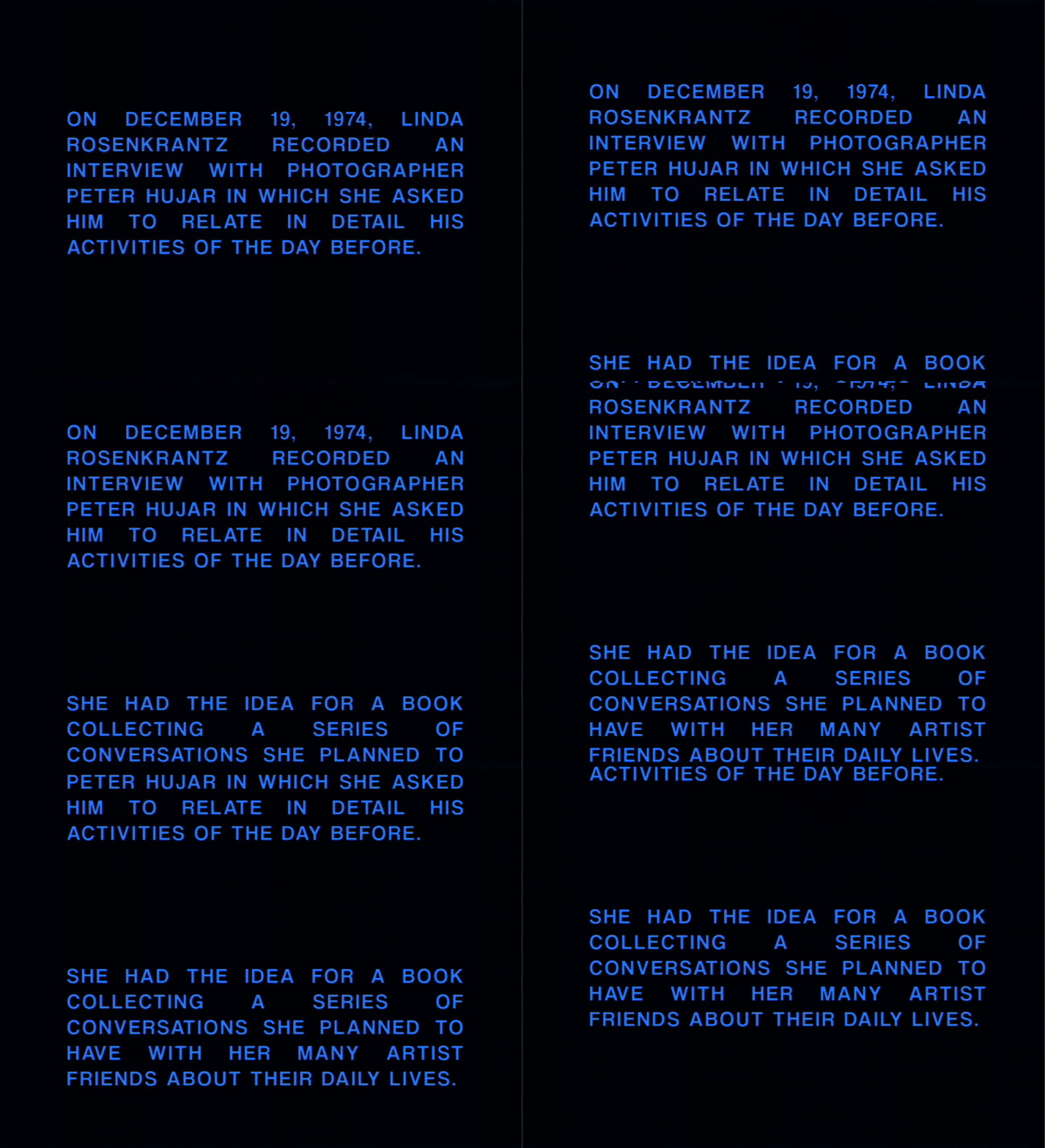
The movie is almost all set in an apartment in New York in 1974. It’s mostly a monologue, broken up by some dialogue. The only people in the movie are Ben Whishaw as Peter Hujar, and Rebecca Hall as Linda Rosenkrantz. She’s interviewing him about what he did yesterday, asking him for as much detail as he can recall.
And that’s it. It’s a conversation, like Before Sunrise or My Dinner with Andre, but with even less incident than those movies. It’s all an act of recollection; what drama there is happened the day before.
It’s great.
It’s also kinda dull. I never wanted to stop the movie, but I did have the urge, a few minutes in, to pick up my phone and look up Hujar on Wikipedia to see if I was “missing any important background.”
So I took a moment, clocked the impulse, thanked it for showing up, made a mental note to pull up Wikipedia later, and nudged my attention back to the movie.
That’s pretty much the process I use for meditation. There’s just no screen, only my brain and closed eyelids. That redirection is something different guided sessions did in different ways, but it all boiled down to recognizing the distraction, not freaking out about it, and beginning to pay attention again.
With movies, I regularly turn to two ideas I picked up from Ten Percent Happier sessions:
“If you’re bored you’re not paying close enough attention.” This is a Fritz Perl quote cited by Joseph Goldstein.
“What is obvious right now?” This is a nudge that Alexis Santos would say in sessions he led.
So when I’m watching a movie and realize I’m bored, I remind myself to pay closer attention. And what I pay attention to is whatever is obvious right then.
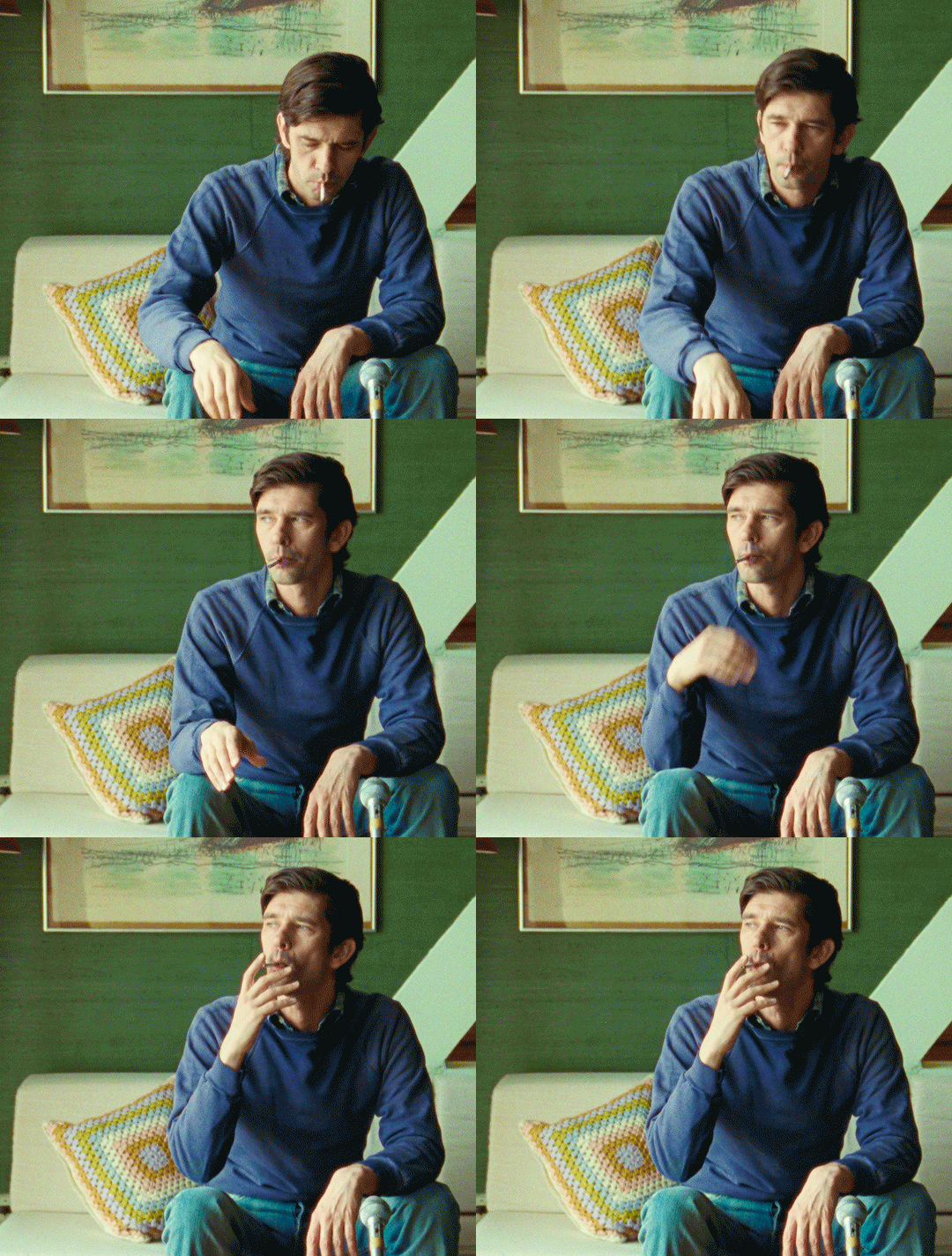
Typically that’s something going on in the movie. Maybe it’s the way a shot is lit. Maybe Whishaw’s face. The shape of his nose. His stubble. His cigarette. The vintage wallpaper. The pattern on Hall’s leggings. (Definitely something that snagged my attention.)
And with that — whatever “that” is at the time — I’m back in the movie.
Because of that cycle of boredom and noting it and paying attention, I got more out of the movie. That first time I noticed I was bored was not the only time I noticed I was bored. I went through several cycles of fascinated → distracted → bored → oh hey pay attention again.
Doing that, though, got me to notice things in the movie like costume changes; both Whishaw and Hall change outfits several times, never as part of the action. A movie that takes an hour and a quarter, a conversation that might have taken a couple of hours in real time, feels like an hours-long epic. It's full of elisions that are never spelled out and may even be illusory. But they make the film feel richer, the conversation deeper, the recollection more compelling.
In short, the kind of boredom that seems like nothing is happening can nudge you to look at what might be happening under the surface, or on the surface, or the way someone is peeling potatoes and what that says about them. (Shoutout to Jeanne Dielman, a movie that cultivates and wields boredom and that mindfulness skills helped me appreciate and even enjoy.)
Sometimes I’ve even noted the edge of the frame, or the reflection of light off the faces of the audience. After all, at that moment of boredom, watching a movie, the movie is just one thing going on. I’m also a body in a seat in a room, maybe with other people, and what is obvious right now might be someone eating a jujube.
And then I nudge my attention back to the screen, back to the movie, back to appreciation of something that someone made and thought was worth paying attention to, even if it’s not conventionally entertaining.
Risk being bored. By a movie, by art, by life. And when you notice that you're bored, use that as a sign to pay closer attention.
Coda
Fun thing I learned from Wikipedia after the movie: Linda Rosenkrantz went on to write 1988’s Beyond Jennifer and Jason, the influential guide to naming babies that was still popular a decade and change later when we were having our first kid.
Mr. 3000 returns
For those following along: My lifetime film number 3000 ended up being Jacques Tourneur’s Berlin Express. Good noir.
Introduced me to the word Trümmerfilm, German for “rubble film,” a movie set in bombed-out post-WWII German cities among the ruins. I’ve noticed in the past few months an affection for movies made late in the war or in the few years after, when people were figuring out what to do with Nazis and the destruction of Germany.
Movie writing I’ve been reading
On the topic of Peter Hujar’s Day, check out Spencer Williams’s piece in Bright Wall/Dark Room, Peter Hujar’s Day and the Art of Yapping.
I remember when I envied people who could visit Alamo Drafthouse locations. I've only been twice, to the Mission District location. (Great spot to see Parasite the first time.) It's a pity how far they've fallen.
Look, I'm not a monster, I don't spoil things for people, but Jason Bailey uses The Drama to talk about what we lose when we fixate on spoilers.
Nancy Friedman digs into What happened to movie taglines
Freaky Tales was fun but inessential, but I love that Aaron Bady commited to writing the most words ever about the movie
Killers of the Flower Moon is flawed yet maybe my favorite Scorsese of the 21st century. I enjoyed this interview with Chief Geoffrey Standing Bear about what the movie means to the Osage. Can't wait to crack open my Criterion 4k, sometime when I have 3.5 hours of attention to give again.
