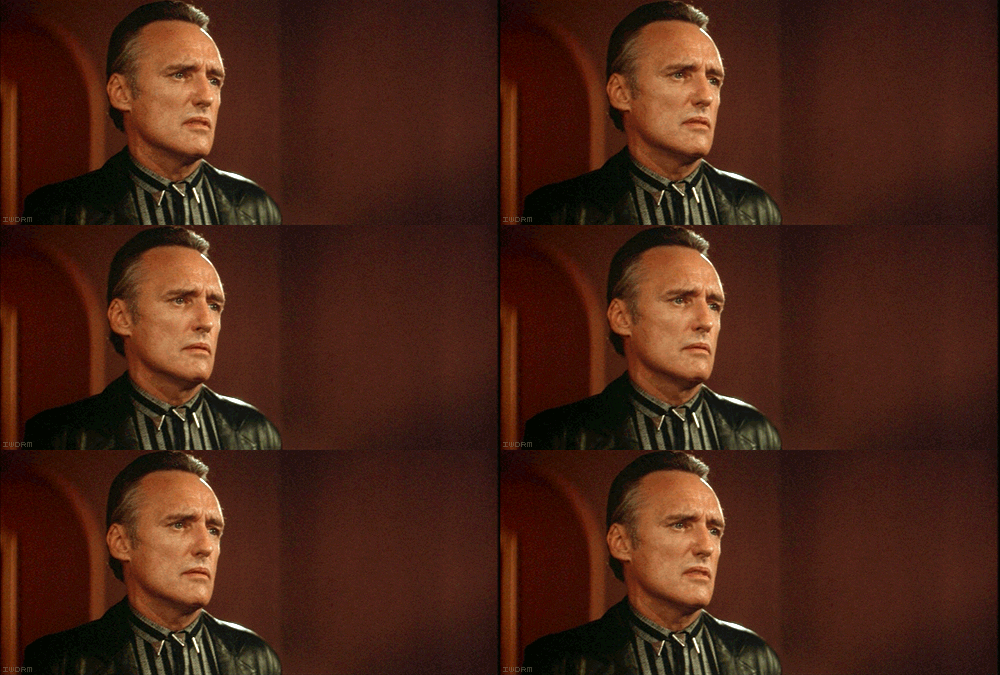
Absolute cinema!
“Is it any good? Let's find out together!”
I couldn’t resist that line at the end of an email from the Hollywood Theatre.
So a couple of weeks ago my wife and I went to see Catch Me If You Can! Note the exclamation point — this is not the Spielberg/DiCaprio collaboration. It’s a 1959 movie that never got released.
The theater had a copy because an employee at the dump called to say someone was tossing 35mm film canisters. The theater ran it that night as a last-minute substitution for a previously scheduled event that had to be canceled.
350 people turned up to see a movie none of us had heard of before, that the programmer had never seen, that no one on Letterboxd had logged before that day, that even the actors had never actually seen after filming it.
Catch Me If You Can! was . . . fine. I figured there was a small chance it was a lost gem, a slightly larger chance that it was forgotten for good reason, and most likely a solid if unexceptional movie.
The email described it as a noir, but it turns out that’s a stretch. It’s more a caper film, with a romantic spirit closer to To Catch a Thief than Rififi. The reason it probably never came out: It was set on location in Havana, and wrapped filming as the Cuban Revolution deposed Batista and installed Castro.
The moviegoing experience, though, was better than the movie itself. Dan, the head programmer, said that he’d expected maybe 20 people to show up, but they wound up almost sold out. People embraced the unveiling, and not too many people approached it like the MST3K guys.
I go to a lot of movies by myself, but that was one of the best kinds of crowd.
It was a reminder that moviegoing is an experience. Like travel or visiting a museum or quiz night. It’s not just an ingestion of content, it’s an activity. There’s even a small amount of skill to it. It can, on occasion, even be transformative, a sharp shock to your experience of the world the way any artwork can be.
I’ve got a Letterboxd account, which means I collect movie viewings. I’ve also got a list of some of my favorite moviegoing experiences.
Two stand out as particularly influential: The first time I saw Rear Window, and the first time I saw Blue Velvet.
Rear Window
A brief history of Rear Window: it came out in 1954, and because of ownership rights was hard to see for about 20 years. After Alfred Hitchcock’s estate was settled, Rear Window was rereleased in 1983, the first of five “lost Hitchcocks” returned to theaters. People hadn’t seen them in decades.
I was thirteen years old at the time, a fan of Siskel and Ebert, familiar with Hitchcock from a few mystery books, and up for seeing this masterpiece they were talking about on TV. I was cultured. I liked old movies. So some weekend afternoon I went to the Downer Theater in Milwaukee’s East Side to check it out.
It changed my life.
(Side note: Rear Window was 29 years old in 1983, which I just calculated is like a 13-year-old going to a retro screening of Air Force One today. Rear Window was the fifth-highest-grossing movie of 1954, Air Force One of 1997. I am old, I shall wear the bottoms of my trousers rolled, etc.)
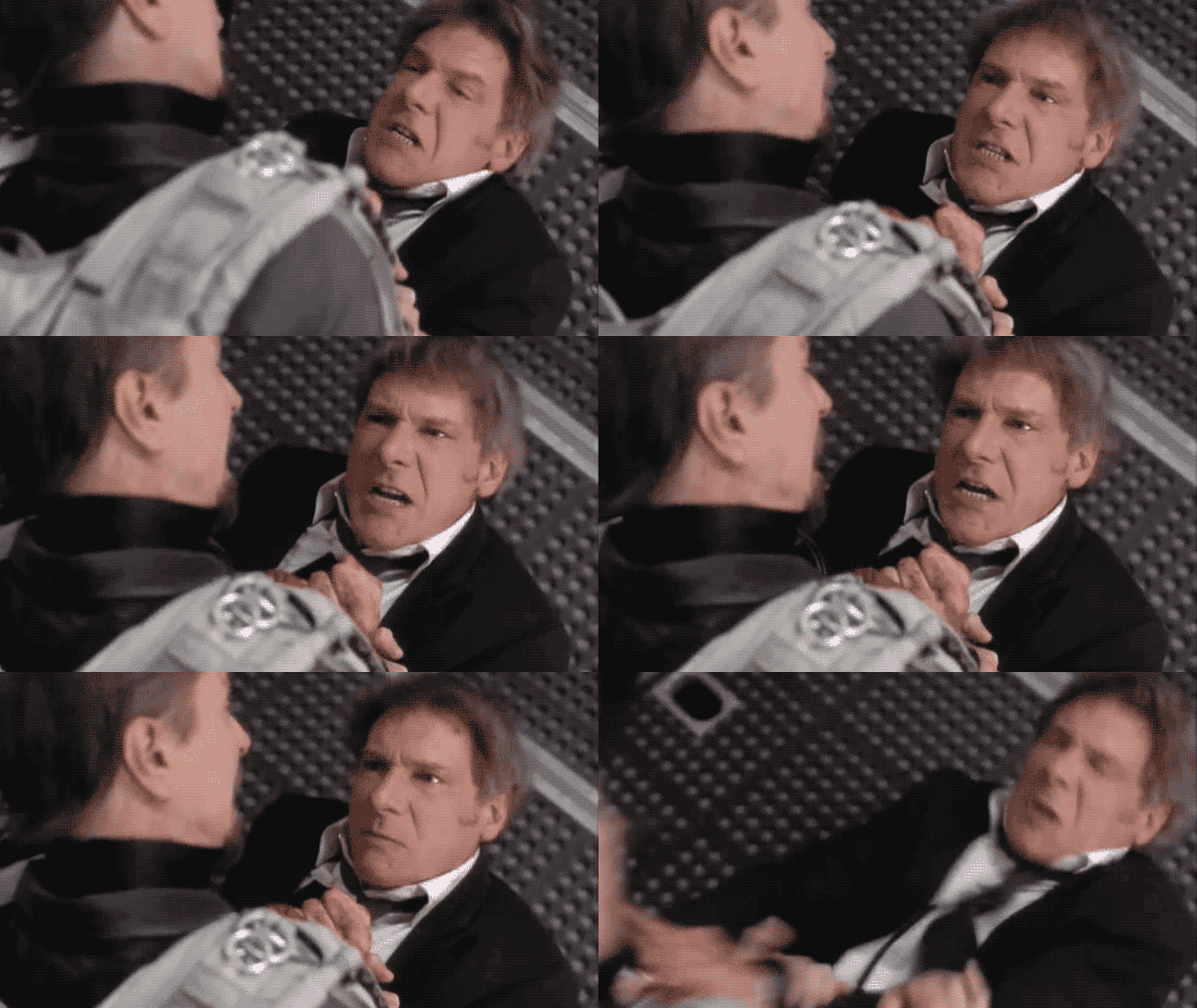
I had seen other movies before. I’d seen classic movies. I had already loved movies with all my heart — I’m one of those kids who saw Star Wars when it first opened, but I was an even bigger fan of Raiders of the Lost Ark. (And not as big a fan, but still an enthusiast, for The Black Hole and, ahem, Unidentified Flying Oddball.)
Raiders: still great. But my first experience of it, rousing as it was, was not transportive the way Hitchcock’s movie was.
Much as I love the movie as a whole, though, there’s a sequence about one minute long that’s the actual moment that changed the way I experienced movies:
Grace Kelly’s entrance.
If I could only watch one fragment of cinema for the rest of my life, her entrance would be the moment. It’s the greatest in cinema history. It’s everything I really want out of the movies, a high I’ve kept chasing for forty-odd years since.
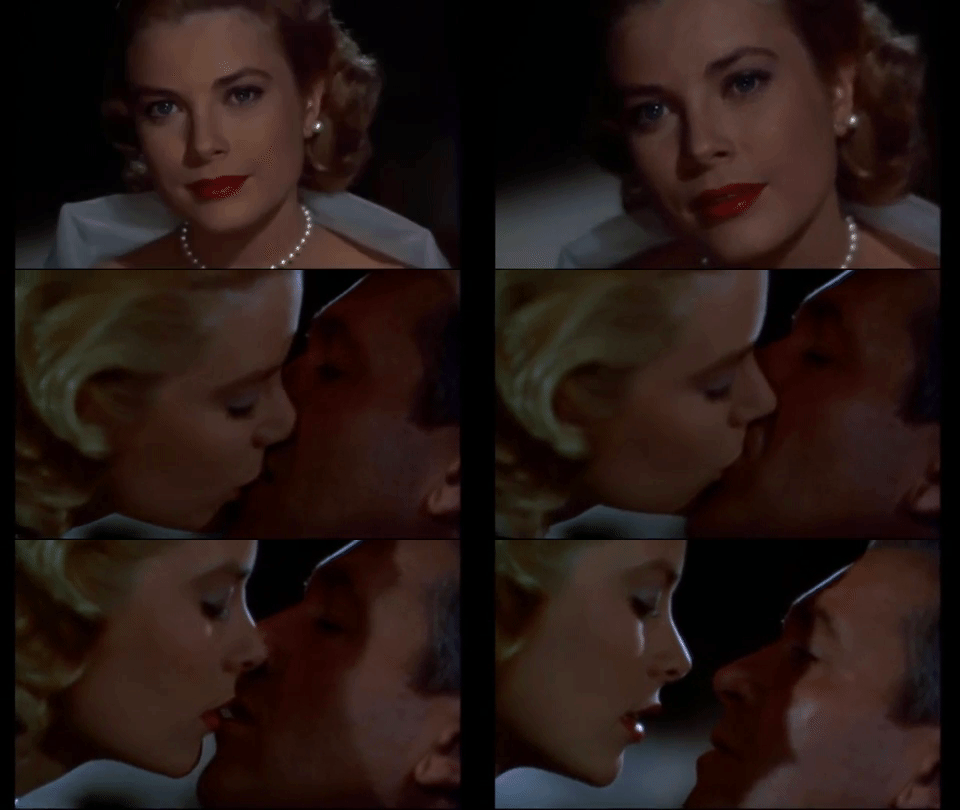
I was besotted at the time, transported, high on beauty and craft and costuming and Hitchcock’s magic at turning his personal obsessions into a moment that combined and transcended all of its component parts.
Her face filled the screen, my brain, my nerves. Ending with a kiss that would be worth breaking a leg for.
That was the first moment when I consciously realized what kind of power movies could have. Not just entertainment — though Rear Window is incredibly entertaining — but the first moment when movies snapped into place as an artform for me.
In Rear Window, Alfred Hitchcock and Grace Kelly (and James Stewart, and Thelma Ritter, and Raymond Burr, and Edith Head, and even Wendell frickin’ Corey) rewrote my brain.
In the years since, one thing I have figured is that Hitchcock himself is my favorite director, a morbid and witty fat man with self-esteem issues, just enough self-awareness to transform all of that, and more than enough talent to make at least a dozen great movies and at least ten more pretty good ones. (He also did too much damage to people like Tippi Hedren along the way, unfortunately.)
Next time: Blue Velvet.
Sir Alfred
I've seen 41 Hitchcock movies. And ranked them all, because that's what you do.
My five favorites:
- Rear Window
- Notorious
- North by Northwest
- Psycho
- Vertigo
Reading about movies
- "I see hope in the future. Hope in the dingy and cheap. In the wild and free. I see hope in the micro cinema."
- Fifty people showed up to watch short films in a coffee shop.
- Plato's Cave at the Drive-In Theater
- Saw Crumb recently and found this Laura Kipnis piece a good followup
- More good shit about Killers of the Flower Moon
See you soon. In the meantime, go to the movies.