
Dumbarton Oaks

I’ve been listening to Igor Stravinsky’s Concerto in E-flat, sometimes known as “Dumbarton Oaks,” after the place it premiered in 1937: a manorial estate in Washington, DC that today houses a Harvard research institute dedicated to the humanities, but which, at the time, was the residence of Robert and Mildred Bliss. The piece was commissioned by the couple to celebrate their 30th wedding anniversary and would become an important influence for the American composer Aaron Copland. I once heard it performed in concert by the Chicago Symphony, and in the pre-concert lecture it was mentioned that Copland’s stylized American folk compositions - most famously the “Hoedown” from the ballet Rodeo (pronounced “roe-DAY-oh”), which uses fiddler Bill Stepp’s version of “Bonaparte’s Retreat” as its melodic theme - were inspired by Stravinsky’s “Dumbarton Oaks,” which was itself heavily influenced by Russian folk songs. Stravinsky incorporated melodic material from the traditions of his home country throughout his career, perhaps most famously in the infamous 1913 ballet “The Rite of Spring.” But its funny to think that the composer most associated with popular culture in the mid-20th century, the height of the cold war, was imitating Russian music - but then music is full of surprising connections like that.

Classical music is high culture - that is, its existence depends upon the support of wealthy people - and old-time music is not, but they exist in relationship with one another. The University of Chicago Folk Fest, which I attended a couple of weeks ago, is an example of what I’m talking about - the Hyde Park Herald has a nice photograph of the old-time jam on the landing between the first and second floors of Ida Noyes Hall, which is about as nice a place to hang out as you could ask for - the music is wonderful, but curated, like its on display in a museum. On the other hand, its because of elite institutions that we have accessible records of centuries of popular culture - Frances James Child collected folk ballads as a Harvard professor in the late 18th century, and his work remains a touchstone among folklorists. Many of the most useful collections of old-time tunes come from university professors like Samuel Bayard at Penn State or Howard Marshall at the University of Missouri - of course, the gothic architecture on the campus University of Chicago makes it feel kind of extra elite. I suppose there are worse places to jam, though.
A week earlier I was able to make it to the Lake Erie Folk Fest in Cleveland, Ohio (my hometown), held on the campus of Case Western Reserve University (also an elite research institution), which didn’t have quite the same verve as Chicago, but was nevertheless a joy to attend. The highlight of my visit was learning “Sourwood Mountain,” a tune similar to “Whiskey Before Breakfast,” from fiddler Paul Kirk. He recently published a book on the work of Marion Theade, who assembled the material for The Fiddle Book, a popular book of tunes first published in the 1960’s. Nearly all of the collection’s tunes are included , with careful revisions by Kirk, alongside a wealth of annotations and notes. Perhaps more interesting is his biographical research on Theade, who collected tunes in rural 1930’s Oklahoma. A trained classical musician, Theade believed that the old-time fiddlers were dying out, and set out to transcribe their tunes. It took her nearly a decade, and the personal intervention of Pete Seeger, to get the collection into print. Kirk was able to spend time in the archives of the University of Oklahoma, where Theade’s papers are kept, immersed in her original transcriptions, letters, and notes - an archivist’s archive - and the book really gives a sense of the history there. He’s also an excellent fiddler and lovely person besides - hopefully I’ll get to jam with him sometime.
The Fiddle Workshop at Chicago was a smorgasbord of tunes this year - although quite different from last year. The fiddlers were Luke Huval (Cajun), Lucas Pasley of the band Gap Civil (Old-time), Corrina Rose Logston Stephens of High Fidelity (Bluegrass), and Lissa Schnenkenburger (New England/Celtic). There was no moderator, and Schneckenburger decided to kick things off with “Fisher’s Hornpipe,” which I think she assumed was a common enough tune that they’d all be able to play it. Huval sat it out, saying afterwards he didn’t know the tune - surprising to me, as I know Jean Carignan played a ripping version (in F, no less), and why wouldn’t the Cajuns all know and love his playing? Afterwards, the four of them pretty much took turns playing tunes and talking about them - Huval sometimes sang in French while playing, Pasley told wonderful stories, and both Logston Stephens and Schneckenburger played more than they spoke (and were maybe the stronger side of the panel, playing-wise). During the evening performances, Logston Stephens was perhaps the most dynamic performer of the four of them - maybe the intensity of bluegrass is just inherently more impressive, but she’s got the best rhythm chop I’ve seen. Schneckenburger’s playing had the greatest precision - clean, ringing tone, incredibly smooth bowing, every ornament in it’s right place - but somehow felt a touch academic. And then, at some point, Pasley - who seemed to take the greatest satisfaction in listening to the others - announced that he needed to run downstairs to play the square dance, and the session pretty much broke up after that. I wandered down to the jam, but my esteemed partner was at the dance and reported that Gap Civil could really make those squares move. Sometime later, Luke Huval’s band played a dance, and it turned out they could bring the heat as well (but then, if a Cajun band can’t get you dancing, is it even a Cajun band?).
As I walked down the stairs, I could hear folks jamming on “Tipping Back the Corn,” and as it happened, I ran into the tune’s composer, the delightful Jordan Wankof, just then. He smiled at me, saying “it’s inescapable…" and I chuckled. We jammed last year at Battleground and he’s good fiddler, remarkably humble about his wildly popular tune. The approach to the creation and dissemination of tunes in old-time is one of the more fascinating aspects of the culture, because of the absence of entrepreneurial zeal that is ubiquitous elsewhere in American music. I’ve spent a lot of time thinking about that in the last few months, and have been steadily working on a longish piece in which I differentiate old-time from punk - my basic thesis is that while punk subverts commercial culture by using it as a platform for authentic expression, old-time is rooted in culture that precedes modern commercialism, which is to say, its non-commercial music by definition. What I think is kind of fun about this idea is that I locate difference in musical traditions in non-musical aspects of those traditions. Old-time emerges from the process of modernization itself - and here I’m thinking about stuff I read in Hannah Arendt’s The Human Condition and also Jane Addams’ The Spirit of Youth and the City Streets, which will take a little more work to explain - whereas Punk is one of three musical movements, the other two being Hip-Hop and House, that came in response to the arrival of the discotheque in the 1970’s. All of it is tied together by the practice of popular dance, and change is cast in terms of technological innovation. But also I’ve got this whole story about Stevie Wonder in New York on Memorial Day weekend in 1971 that I’m kind of excited about.
In the meantime it seems I’ve got a million other things going on: I managed to put together a dance in Ottawa that went pretty well, thanks to help from a whole bunch of people from various parts of my life. It’s funny how so much of putting on events is just a matter of coordination. Like, yes, the dance caller was good, and the band was, too, and the venue was supportive and a friend of mine made cool fliers - but the trick is getting those people to converge on a purpose. Compared to organizing dances, fiddling seems pretty easy.
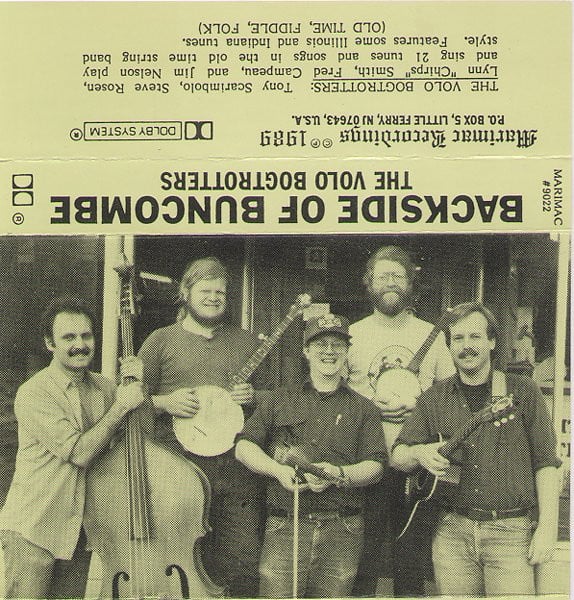
Speaking of fiddling, I’ve been low-key obsessed with b-flat tunes of late, and have put together about a dozen that I’m trying to learn ahead of summer. The goal is to to create a little album (for to put on Soundcloud) that I’ll call “A grip of b-flat hornpipes,” after the Blues Brothers’ classic album “Briefcase Full of Blues” (a “grip” is an old-fashioned word for briefcase, if you didn’t know). The tunes I’ve been working on include (you can put “hornpipe” behind each of these): St. Joseph’s, Rosebud, Champion, Smith’s, Vinton’s, Lightning, Thunderbolt, President Grant’s, and a few others besides. I actually did record Chirps Smith’s b-flat tune “Backside of Buncombe,” along with three other tunes, with my buddy Aaron backing me on guitar.
And that brings me to another recent development: I bought a guitar. A more-or-less dreadnought model, made by Recording King. I have not owned a dreadnought up till now - I have two archtops, one an old Harmony and the other a Chinese-made (but very nice) Selmer-Maccaferri type - but it was suggested that I learn to play old-time backup, and it seemed like I ought to have a guitar for that, which means getting a dreadnought (you need it to get proper tone on the bass line), and it happened that a dear friend had a line on a very affordable one. According to UPS, it will be arriving Friday. My spouse is thrilled, as you might imagine.
There’s more, of course - I have another dance coming up, and it looks like I’m going to the Twin Town Festival, and there will be more festivals and dances and jamming this summer. I hope to write about all of it.
Add a comment: