
Gatekeeper
About thirty seconds before I published this email, I learned that HWA has decided to remove Sèphera Girón from her position on the Board of Trustees.
On August 4, 2026, the Horror Writers Association published a newsletter including an op-ed by Sèphera Girón titled ‘Gatekeepers.’ A lot has already been said online and in other newsletters about this op-ed, but here’s the TLDR:
The rambling 2,000-word essay encourages writers to embrace, or at least accept, authors and artists who use AI tooling to write books, make covers, write synopses, etc.
Girón references her own experience using typewriters, holding out before getting a smartphone, and being an early adopter of YouTube to establish her credibility as an observer of trends across technology and creative work.
Girón goes on in several paragraphs about groups of authors online stirring up movements to block other people online because the authors have decided that “the rest of the world must follow their own moral code that they’ve developed from their own personal life experiences and interpretation of social and political events around them.” She describes these actions as the current iteration of recurring “witch hunts” which are levied against horror authors by other, meaner horror authors.
Girón calls out the “irony” of authors critiquing each other for using AI on platforms like Facebook, which use AI.
Girón also stresses that AI is in every major industry, citing TV, movies, online retail. She uses this to emphasize the normalization of AI tooling in many industries (she’s not wrong there!) and stress that AI tooling is simply a next step forward in the evolution of creative tools and publishing.
Girón uses forms of the word “gatekeeping” 14 times.
Two salient pieces of information have also been circulating with commentary about this op-ed:
Girón is a member of HWA’s board of trustees.
Girón uses a service called studio.com that advertises itself as “a marketplace of AI-powered apps built by the world’s most trusted experts” to host and promote an AI-based “writing coach” app. Girón’s app claims to provide writing coaching to help you finish your manuscript. It costs $57 per quarter or $179 per year.
I read this whole essay last night over dinner and came away with several thoughts.
The takes, they get so hotThe essay swaggers. It’s written with the kind of blunt confidence I enjoy in nonfiction. That said, the self-assuredness makes me certain no amount of public critique or feedback from trusted peers is going to change Girón’s opinion, much less elicit an apology or retraction.
It also sneers. The essay is smug, superior, and generally speaks down to the reader. Girón offers a patronizing “Sure, sure.” response to an invisible complainant several times, and one very memorable “Puhleeze.”
And who is the reader? Every HWA member who subscribes to the newsletter (or doesn’t unsubscribe—I think you get added to it automatically when you pay for a membership). The people exempt from Girón’s judgment are, implicitly, the people who can imagine themselves on the drafting side of the screen, the people who agree with her. In an essay about breaking down walls and preventing gatekeepers, Girón sets up an adversarial premise—that people who don’t believe AI tooling should be used to create art are the ruthless, witch-hunting gatekeepers persecuting teeny tiny smol bean writers who just typed one widdle prompt into ChatGPT.
For the record, I don’t think the emotions underpinning this premise are wrong. Many of us are strongly opposed to AI use in art, myself included, and we have strong things to say about it. But it’s a bit disingenuous to paint one side of the table as unilaterally cruel and violent and the other as cowed and oppressed. I don’t believe that a bunch of people being mean to someone on the internet because they made a book cover with AI outweighs the wealth, political influence, and power the AI industry is centralizing under their umbrella.
And also, she stresses, anti-AI artists are all hypocrites: because we use cell phones and fossil fuels and the internet, all of which use AI or contribute to AI development, we have no leg to stand on when we critique AI.
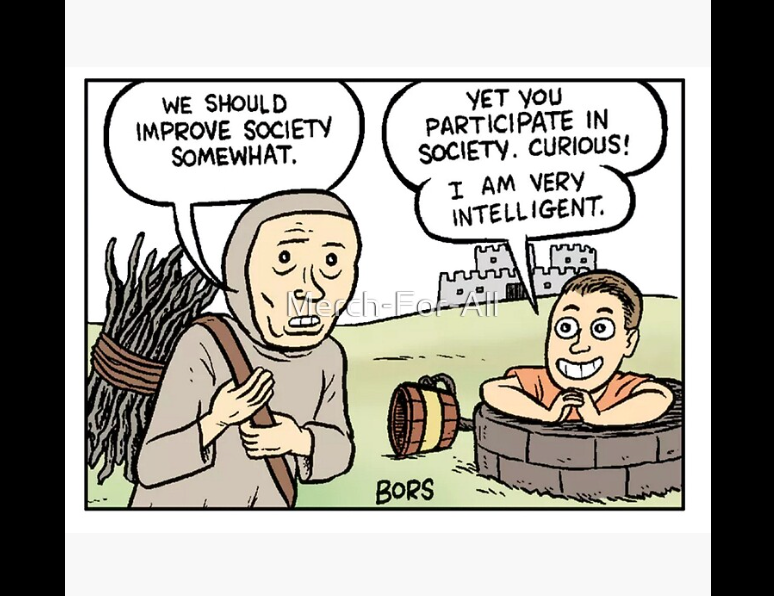
She cites the systemic disenfranchisement and oppression of Indigenous people in North America as evidence that some groups have been resisting destructive technologies for much longer than AI has been around. Those of us who object to AI’s environmental impact, she says, only care about it because we think it might affect us.
“Suddenly, AI is the enemy, not everything else we’ve been doing all along.
Suddenly YOUR water might not be so clean, so now it’s a Big Deal.”
Indigenous writers have already had plenty to say about this, including Mi’kmaw writer Tiffany Morris, so you can go find those posts and get their takes from the source, rather than from some white lady who does not know any of those writers personally. I’ll just add: not a great look here.
There are also kind of boring, sloppy contradictions throughout the essay that I don’t need to dig into except to say… so we don’t have any kind of editorial input on these op-eds at all, do we, HWA? (Witch hunts never catch all the really bad actors, because witch hunters are fundamentally opportunists who don’t pursue certain bad apples because of the benefits of working with them, so really witch hunts are bad but not bad enough!)(Using YouTube in the early days qualifies someone to have firm opinions about technology trends but also AI is a near-magical technology no one truly understands, so no one should have firm opinions about it yet!)
Girón writes with a lot of heart for someone whose primary injury, according to the essay, is that some people disagreed with her and blocked her on social media, or got mad at her when they told her to block a person she was following and she courageously refused.
And let’s zoom out a bit here:
The HWA has a public policy about AI use. Girón is a member of the Board of Trustees and conspicuously despises a portion of the HWA’s dues-paying membership. And given that all the discourse I’ve been seeing about this yesterday/today has been firmly in opposition to the op-ed, it seems like that portion of the dues-paying membership might be pretty large.
If you’re curious, the annual HWA membership dues are between $75-100 for individuals, depending on your membership type. That’s less than an annual membership to the writing coach app costs, and I don’t know what, if any, compensation trustees receive for their work with the HWA. If this reads like I’m speculating that Girón may have a financial motivation to endorse AI use by authors specifically and shill her app on the HWA platform, because the success of her app will make her more money, well.
Shit’s concerning.
So last night I drafted a response email, and this morning I deleted half of it and rewrote it to be both more actionable and less mean, and I fired it off. It includes the following questions:
Do the HWA's guidelines against using AI for HWA-related work not apply to the board of trustees?
Should your readership assume that the author's opinion about AI is shared among the board?
Should we assume the board also shares the author's open disdain for those of use who choose not to use AI tooling in our art?
These questions sum up my biggest concern: that I’m paying my hard-earned money to an organization led by people who don’t just disagree with my beliefs, they despise them and find them worthy of contempt. I don’t want to participate in an organization where I am despised, much less give that organization money every year for the privilege of being yelled at in an op-ed by someone from the Board.
The newsletter has a boilerplate disclaimer about how the opinions in an op-ed aren’t that of the organization, but when the person authoring the op-ed is a member of the Board of Trustees, that disclaimer carries so little weight that it’s functionally ignorable. As I said on Bluesky, if you are a leader in an organization, you cannot publish your writing on a platform your organization owns and controls and expect for it to be treated as anything other than a representation of the organization’s views.
Zooming out from the actual content of the essay, the decision to publish this op-ed in the HWA newsletter is the strangest, least understandable one here (at least if I leave out bad-faith interpretations like ‘negative attention is still attention.’) If you’re in a leadership position and you need to share your personal opinions so badly, do it on your blog. Use it to launch a marketing campaign for your super-powerful AI writing coach. Do a Facebook post about it. Set it to a little dance on TikTok. Posting on the internet is fucking free.
And then I took a deep breath and asked myself, Foxes, what are we even doing here exactly?
I remember how thrilled I was to apply for full membership in the HWA and SFWA. Qualifying for partial/associate or full member status in a professional writers’ organization is such a proud moment for people who care about that stuff. It’s one of those ‘look, I’m doing it!’ moments people remember about their early careers.
…but I declined to renew my SFWA membership last year after their “you can use AI a little bit as long as you tell us and you gotta tell us the truth, you haveta-haveta, scout’s honor!!!!!” SNAFU because well, I don’t need to spend $100/year on an organization that is still figuring out its values about this topic. I’ll check again in a year or three and see if they’re more reliable.
And I’m currently a full HWA member, but now I find myself wondering if that yearly fee is worth it either.
This is all just very disappointing. I don’t like Girón’s opinions, but I like that the HWA allowed her the platform to share them even less. Is this an organization that’s worth my membership dues anymore?
We’ll see if they respond to my email, or the emails I know other people are sending, and I guess we’ll go from there.
All of this being said, I’m sure that if the organization and the board don’t take a principled, public stand about this issue, this member’s dues will lapse next year. And who knows? Maybe this op-ed triggers a mass depopulation of the HWA’s membership roster. If that happens, I think the organization will be just fine. I hear those writing coach apps are pretty easy to make.


Add a comment: