The Fold: Micro & Macro
In which we explore small or hidden things rendered in fiber.
Fold friends! In this issue I'm featuring the work of artists who use thread, fabric, and paper to explore things that are very, very small, or things that are usually hidden.
I have a content advisory for you: I'm including art below that depicts structures on the insides of our bodies, and microorganisms. If either of these is a no-go topic for you, feel free to skip this issue of The Fold. May I suggest watching this video about puppies?
First, the Micro
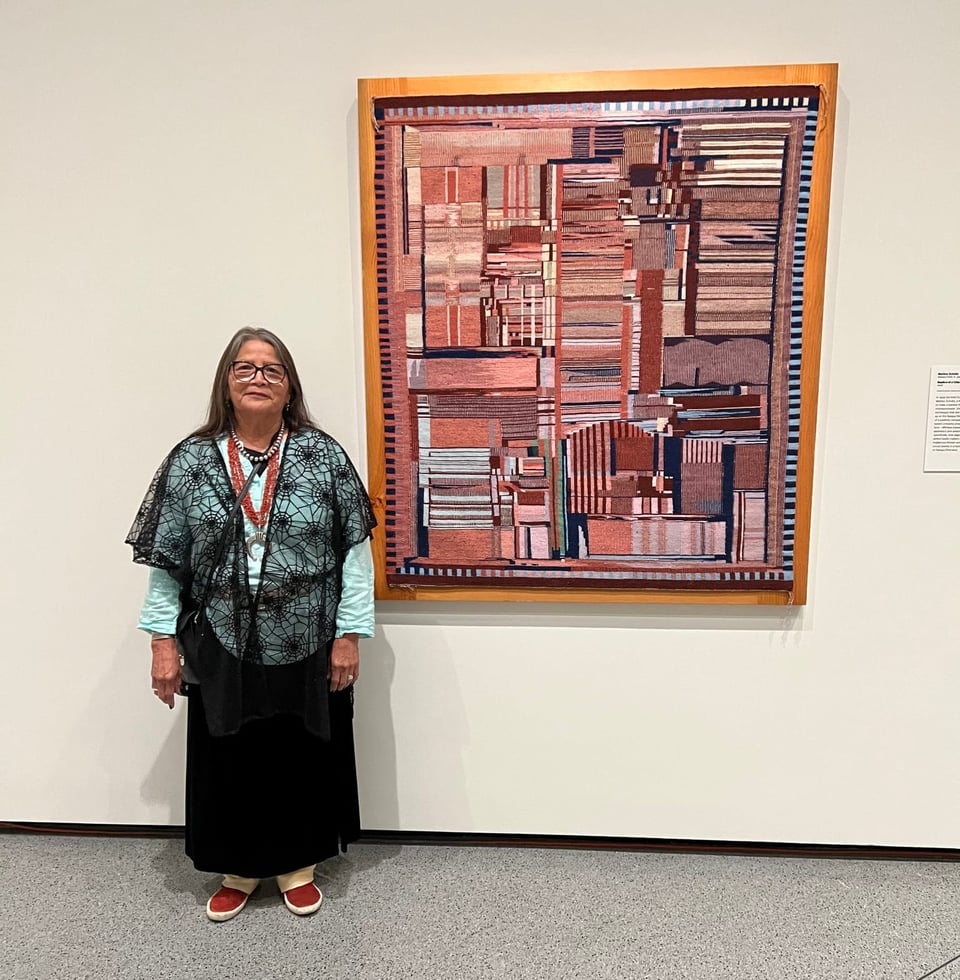
Marilou Schultz: The Dine Weaver Who Turns Microchips Into Art
From the artist:
What I always emphasize about my weavings is that they maintain the same fundamental techniques our ancestors have used since time immemorial. The basic weave remains unchanged, relying on the warp and the front and back weaving techniques. What has evolved over time is the material — though only to some extent, depending on what each weaver chooses to use.
The loom itself remains essentially the same — an upright vertical loom. The tools are also unchanged; we still use the batten and weaving comb just as our ancestors did. While the technical aspects of weaving have remained consistent, the artistic expression within the craft has evolved. The question becomes: What can we do with the designs?
Read more about Marilou Schultz on Wikipedia.
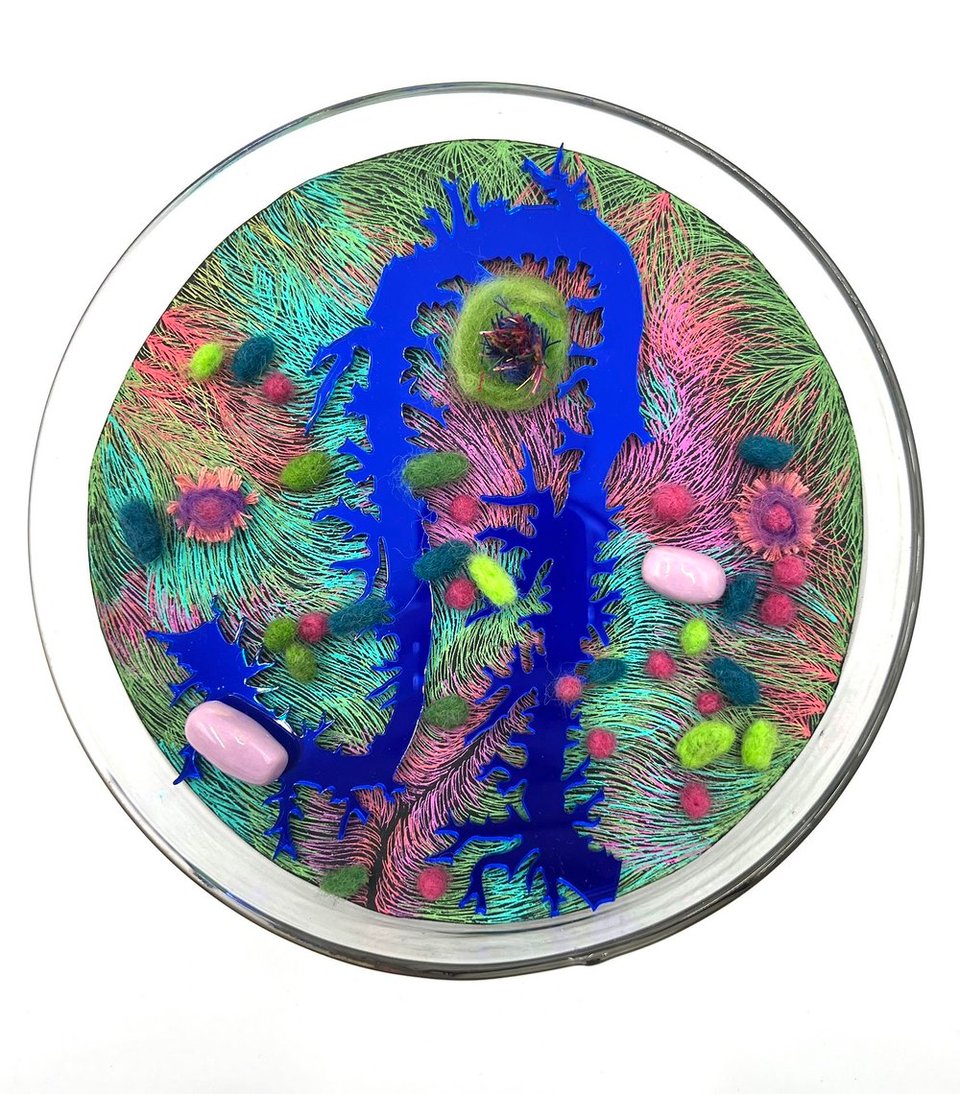
Click image to view a detailed description on Hearn’s website.
Sarah Hearn: Micro Worlds
Sarah Hearn’s website, Instagram
From the artist:
Everywhere is the study of the invisible microbial worlds including: bacteria, viruses, micro-algae, yeast, molds and archaea. Projects so far include Microtopia, collages of microbes and viruses in circular and oval, domed glass displays and Isolated Cultures - felted microbial communities sitting atop color photograms inside glass petri dishes, and a series of watercolor studies depicting individual species featured in Isolated Cultures.
Click image to view source.
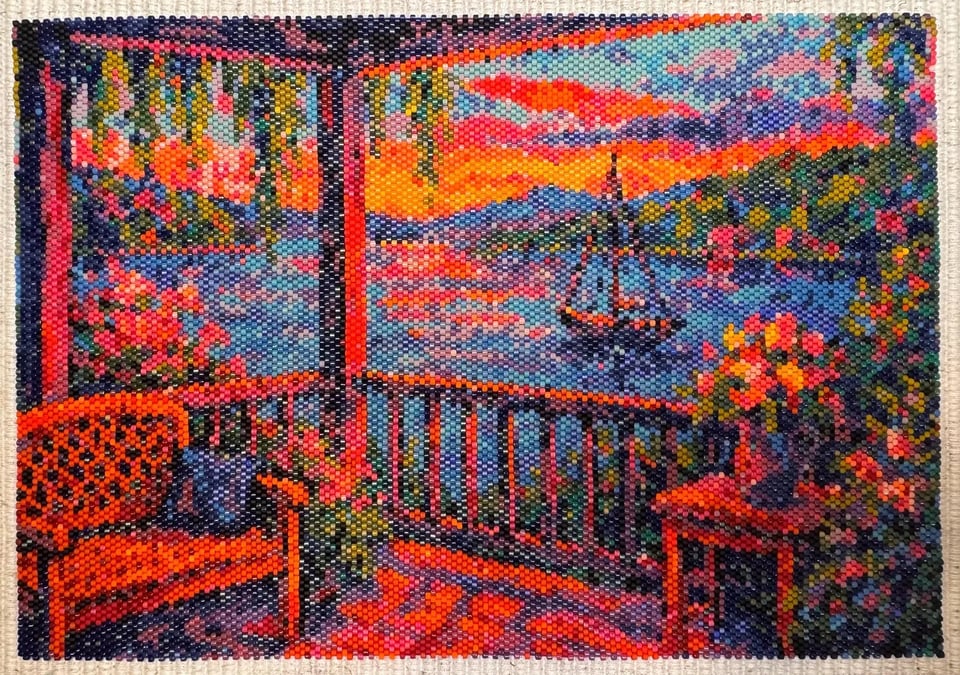
Bay State Beadcraft: Beading and Science
Why isn't there a universal cure for cancer?
Now, the Macro
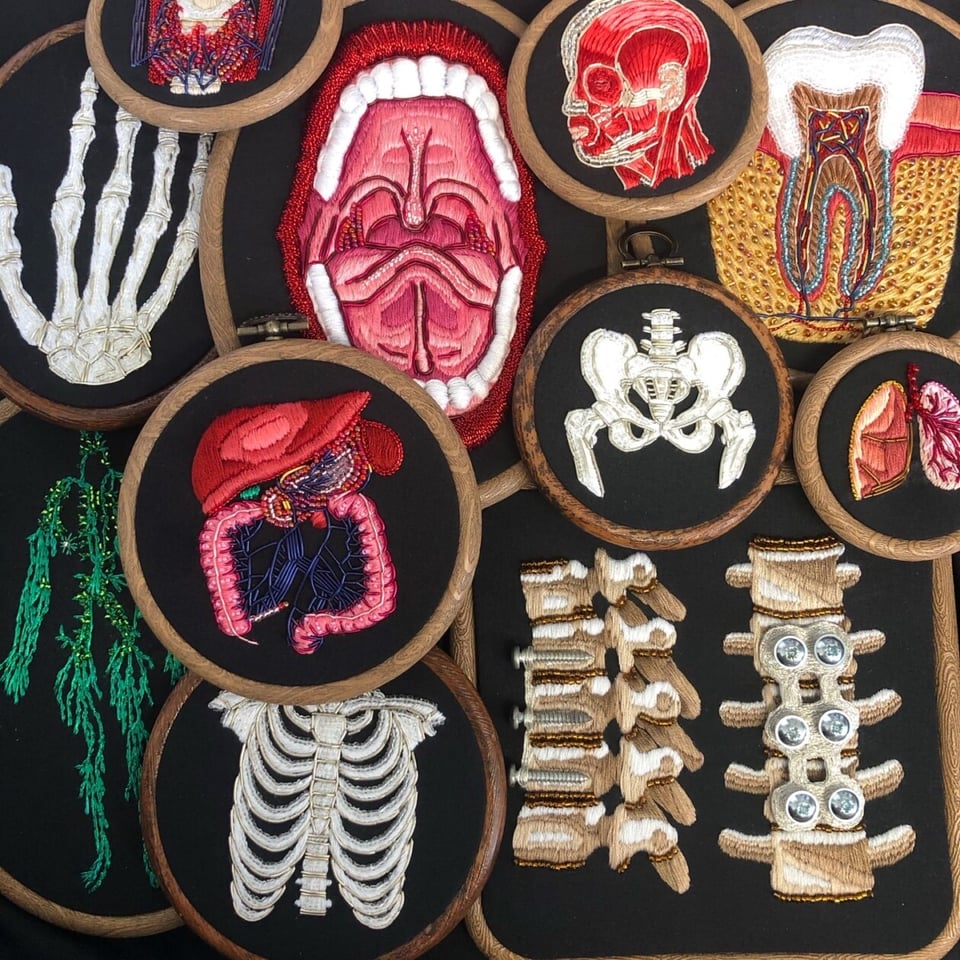
Amber Griffiths: Stitching the body
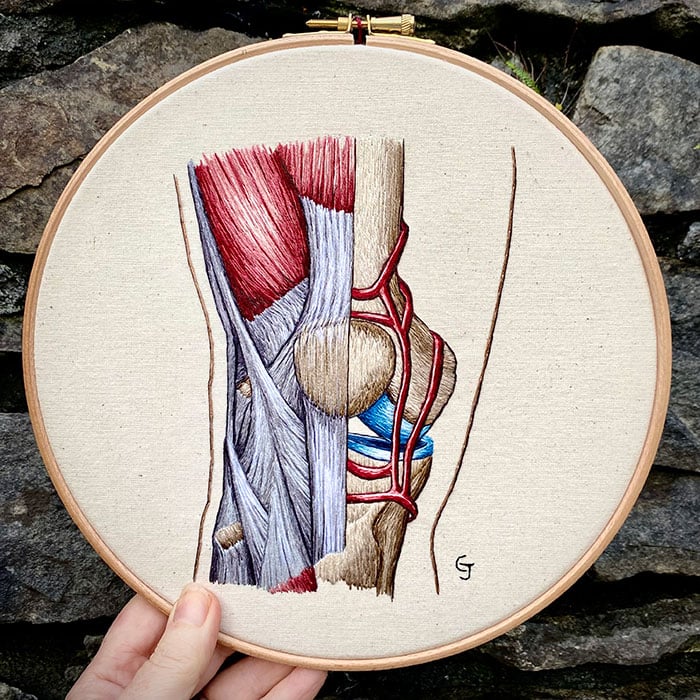
Cath James: Anatomical Embroidery
From the artist:
It was such a treat to combine the skills of stitching muscles, bone, cartilage and blood vessels. I was especially pleased with capturing the patella tendon over the bone, all worked in single strands, as well as the uplifting pop of blue cartilage. I grab every chance I can to take the traditional false colour of medical illustration and give it a contemporary edge.
Click image to view source.
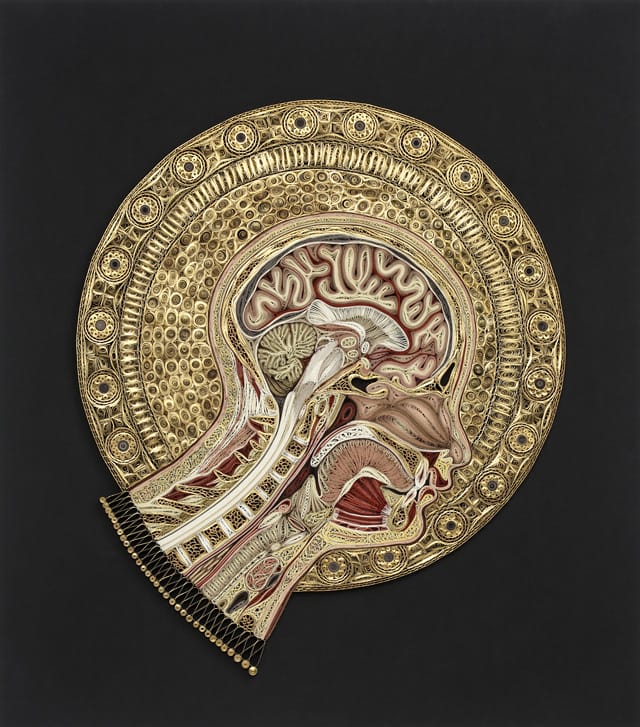
Lisa Nilsson: Quilled Anatomy
*Quilling is the art of creating compositions from rolled strips of paper.
From the artist:
This piece represents a midsagittal section (the one that passes through the center of the body dividing it into a left half and a right half) of the head of an angel. It is "life-size". The work was inspired Fra Angelico's Annunciatory Angel.
Read more about Nilsson’s Tissue Series here.
A Bit of Both
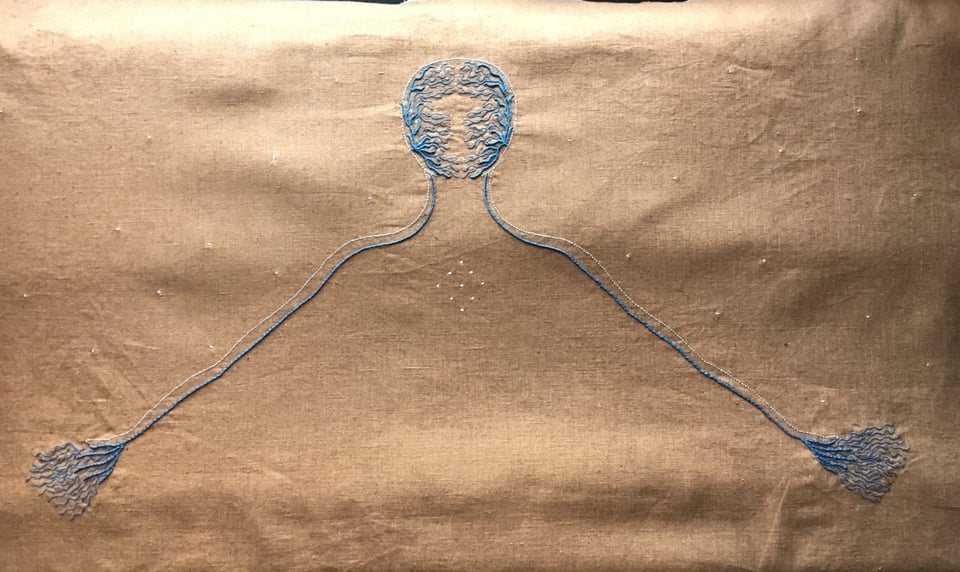
Click image to view source.
Lia Pas: The Poetry in our Cells
From the artist, on the Embroideries series:
These pieces make the invisible neurological symptoms of myalgic encephalomyelitis/chronic fatigue syndrome (ME/CFS) visible including paresthesias (tingling sensations), post-exertional malaise (PEM), and neuropathies (nerve pain). All are hand embroidered cotton and sometimes silk on linen cloth.
A GIF For Those Who Read This Far
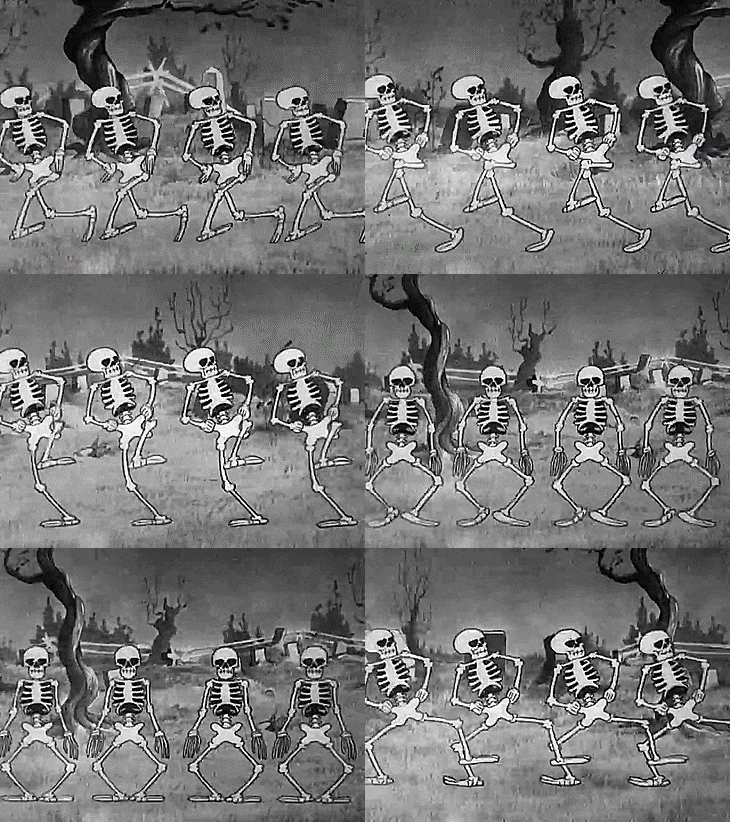
Keep groovin', y'all.
xoxo Sarah