UAMM Daily — May 27, 2026
Freelancers using AI are delivering better work faster. The ones not using AI are competing on price and losing. The replacement narrative misses what's actually happening: AI raises the floor, not the ceiling.
UAMM Daily
AI tools aren't replacing freelancers — they're replacing mediocre work
Freelancers using AI are delivering better work faster. The ones not using AI are competing on price and losing. The replacement narrative misses what's actually happening: AI raises the floor, not the ceiling.
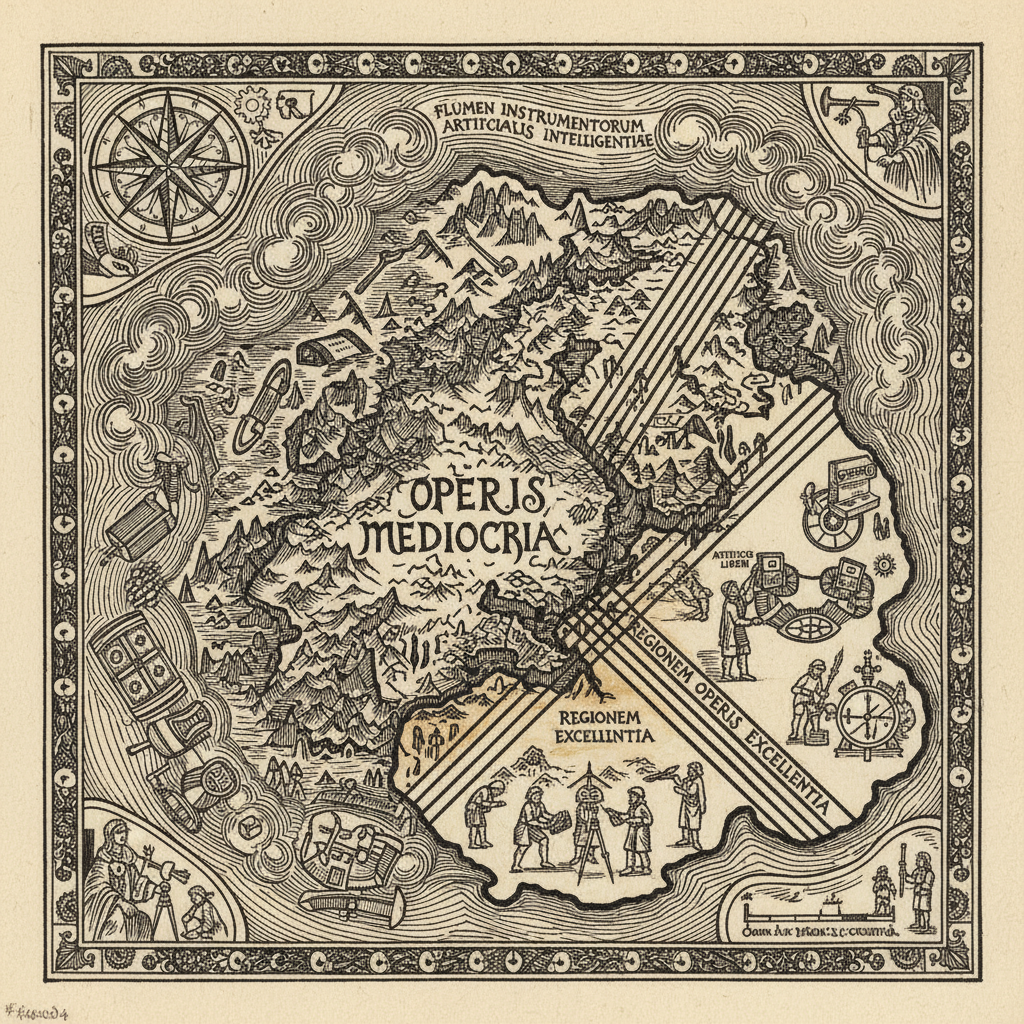
What's actually happening
The conversation around AI and freelance work has settled into two camps: replacement fear and productivity optimism. The reality is more specific. AI tools aren't replacing skilled freelancers — they're replacing the low-end work that used to pay okay money for mediocre output.
Copywriters who wrote generic SEO articles are finding those rates compressed. Illustrators who produced stock-style work are competing with AI-generated alternatives. Developers who built simple boilerplate sites are watching clients do it themselves with AI tools. But the freelancers doing specialized, high-skill work report the opposite: AI accelerates their workflow without cannibalizing their value.
The pattern: AI compresses the market for undifferentiated work. It doesn't eliminate the market for expertise. A freelance consultant who understands regulatory compliance, has industry relationships, and delivers strategic advice can't be replaced by a chatbot. The same consultant can use AI to draft initial analyses faster, but the value was never in the draft — it was in the judgment.
Recent survey data from freelance platforms shows mixed signals. Some categories (basic writing, simple design, data entry) show rate pressure. Others (specialized consulting, complex development, strategic work) show increased demand as clients seek help implementing AI in their own operations. The freelancers winning are the ones positioning themselves as implementers, not producers of commodity output.
The key insight: AI is a tool that amplifies existing capability. A freelancer with deep expertise gets more value from AI than a generalist producing generic work. The gap between skilled and unskilled freelancers is widening, not closing.
The work underneath
The mechanics of AI-assisted freelance work reveal where value actually accumulates.
Tasks AI accelerates: - Initial research and synthesis - Draft creation and iteration - Code generation for standard patterns - Document formatting and cleanup - Client communication drafts
Tasks AI doesn't touch: - Understanding client context and constraints - Navigating stakeholder politics - Making judgment calls under uncertainty - Building and maintaining relationships - Delivering difficult news with nuance
The freelancers getting squeezed are the ones whose value proposition was "I'll produce X output for Y dollars" where X is something AI can now approximate. The ones thriving are selling judgment, relationships, and implementation expertise — things that don't compress easily.
Consider the difference between a freelance writer and a freelance content strategist. The writer produces articles. The strategist determines what articles to produce, for whom, and why. AI helps the writer produce faster, but it helps the strategist deliver a complete content plan in half the time. The strategist's value wasn't in writing articles — it was in knowing which articles mattered.
The same pattern repeats across freelance categories. Developers who build custom solutions for complex problems use AI to prototype faster, but the value remains in understanding the problem space. Designers who create brand systems use AI for explorations, but the value remains in strategic direction. The tool changes the workflow, not the value proposition.
Why this matters now
Freelancers are making career decisions based on replacement anxiety. Some are exiting fields where AI is active. Others are avoiding learning AI tools because they fear legitimizing the replacement narrative. Both reactions are counterproductive and likely to accelerate the very outcome they're trying to avoid.
The freelancers who should be concerned are those whose work product is undifferentiated. If your deliverable could be described as "standard X output for Y price," you're competing with AI. The way out isn't avoiding AI — it's moving up the value chain. That means specializing, building expertise, and selling judgment rather than output.
The market is also shifting in ways that create new opportunities. Clients who used to hire freelancers for basic work are now doing it themselves with AI. But they're also discovering limits. The first draft is easy. The final product that works in context requires more. Those clients are now hiring freelancers to review, refine, and implement — often at higher rates than the original work would have commanded.
This matters for income planning. Freelancers relying on commodity work for steady revenue need to diversify upward. Not because AI will eliminate the work entirely, but because rates will continue to compress until the work is barely worth doing. The operators who see this early and pivot have time to build new positioning. The ones who wait discover the problem when their rates have already eroded significantly.
The play
For freelancers concerned about AI displacement, the strategy is straightforward: move from output to outcome. Stop selling "I will produce X" and start selling "I will help you achieve Y." The first is a commodity that AI attacks. The second is expertise that AI amplifies.
Three immediate steps: 1. Audit your service offerings — Identify which deliverables are commodity outputs vs. strategic outcomes 2. Price for value, not time — Shift from hourly rates to project or value-based pricing that captures expertise 3. Use AI visibly — Show clients you're using AI to deliver faster and better, making you more valuable, not less valuable
These steps take work but pay off in higher rates and more stable client relationships.
The freelancers who survive and thrive are the ones who treat AI as a tool for acceleration, not a threat to their livelihood. They use the tool to deliver more value in less time, then capture some of that value in their pricing. The ones who resist are competing on price against an opponent that doesn't need to eat.
Editor's view: AI replaces tasks, not expertise. The freelancers who understand this are raising their rates. The ones who don't are watching their income compress.
Try this today
Open Claude or ChatGPT. Paste your last client deliverable. Ask: "What would make this 2x better?" Spend 15 minutes implementing one suggestion. Then compare the before and after. If AI improved your work, you've found an edge. If it didn't, you've confirmed your expertise is real.
Reply with your own AI + freelance experiences — curious how others are navigating this shift.
Sources: Reddit — "AI is not replacing freelancers, it's replacing mediocre work" · r/freelance community discussion, Upwork Freelancer Report 2026