Lightning in a bottle, summer in a bound classic
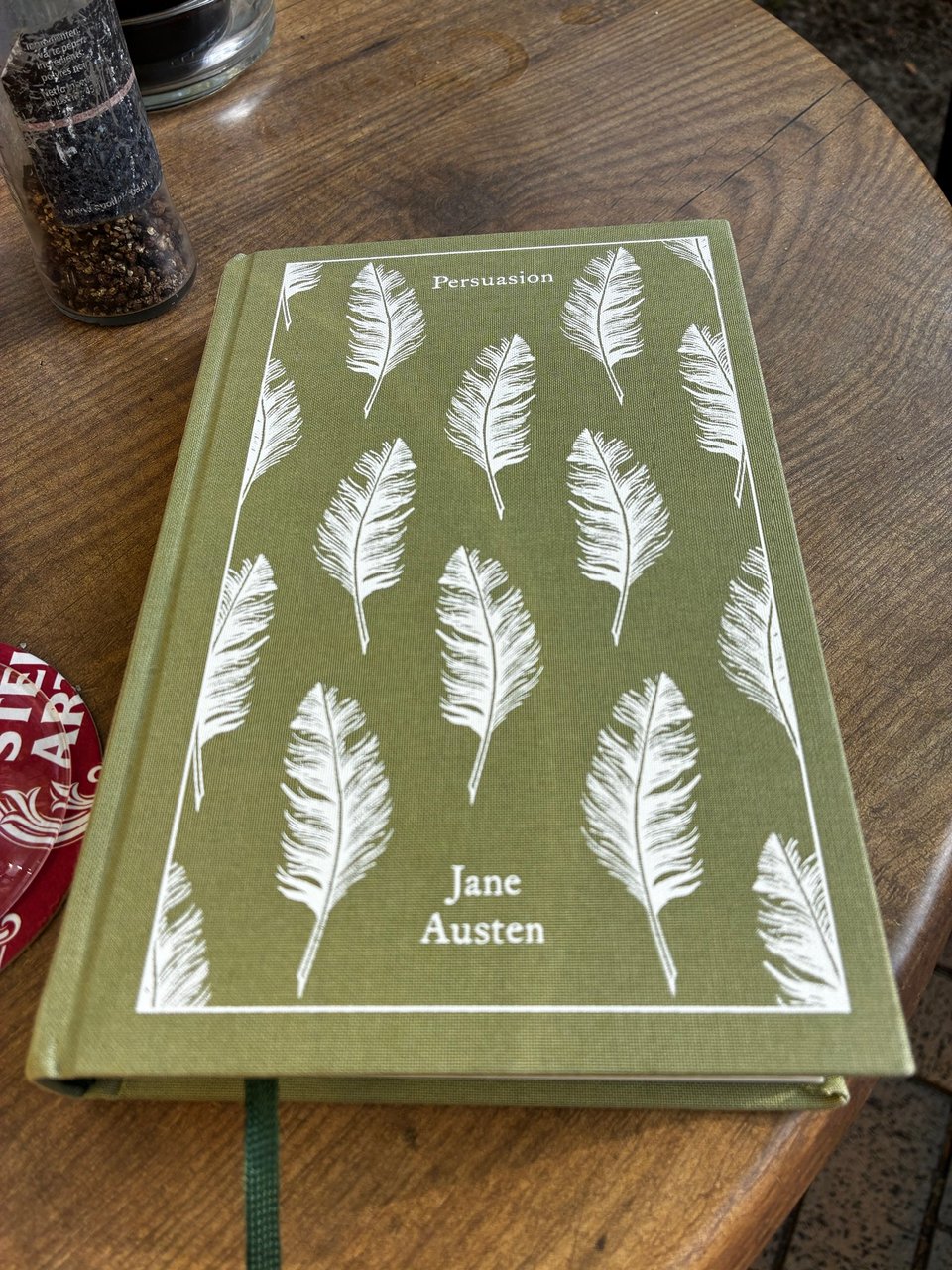
I spent the better part of this week reading Persuasion. For what it’s worth, I assumed I had read it already years ago, but I have no memory of it (or of Northanger Abbey, for that matter). There have been a lot of signs I should read Persuasion lately: I recently read Dolly Alderton’s [excellent] Ghosts, which reminded me of her upcoming Pride and Prejudice adaptation, and there’s a couple of mentions of Persuasion in Laura Wood’s Let’s Make a Scene, including: "Men reading Austen is always hot, but Persuasion? That’s the hottest one.”
But what was interesting -- to me, at least -- was how the physical memory memory of reading Jane Austen for the first time came back the minute I started reading Persuasion. I [if memory serves me right, which is pretty dubious these days] first read Pride and Prejudice as an abridged book; which is how I was introduced to a lot of writers and novels -- from reading abridged versions for school or the novels in Reader’s Digest Condensed Classics -- before I would then go on to read the original.
I can picture my bedroom from that time, the drapes, the bed, the absolute magic of the dialogue. I can still recite reams of it - I reread Pride and Prejudice at least once a year, if not more.
So here I am, back in bed, it is a hot summer day, and the plot grows more intricate and it feels nearly feverish -- the desire on the page, the complications of trying to discern someone’s feelings, the recognition of things gone awry in the past, the reconciliation of the past and the present. Perhaps that is the feeling that is so hard to capture again. Lightning in a bottle, summer in a bound classic, an all-encompassing sentence like this: “This little circumstance seemed the completion of all that had gone before.”
I absolutely loved Persuasion, but I also loved how it made me feel to be back with Jane Austen for the first time again, not a reread, not the way in which I know precisely what’s about to happen, but to think of nothing else but the next page. There’s so few books I can say that about now, and so few writers; no one makes me want to cancel plans, to long for another summer afternoon spent in a haze of sadness and sleep deprivation-caused fatigue with a book I simply cannot stop desiring. I am riveted, sitting up in bed, going -- does Anne end up with Wentworth? What happened to Mr. Elliot’s wife? Oh, come on Mary — and for the first time in years, the melancholy has been [temporarily] lifted by the joy of a Jane Austen novel. Perhaps in another twenty-odd years, a summer day will remind me of this feeling. Perhaps I should pencil in reading Northanger Abbey for then.


Add a comment: