
Big Fat Ambitions: Sun Bear Biofuture's Vision for Fats and Oils
Diving deep into Sun Bear Biofuture's ambition to revolutionize food oil production through fermentation.
Welcome to the newsletter putting the “Tech” in “FoodTech”!
Every month, you’ll get The Startup Spotlight, a deep dive into ONE FoodTech startup’s amazing story.
Hello! I'm Billy, I live in the food technology epicentre — Paris. I love discovering the stories of renegade engineers, past and present. But who are the renegades of our generation? My bet is Food Engineers!
That is what the RoseWorks newsletter is all about — the stories behind today's food innovators!
So sign up and never miss a beat!
The Startup Spotlight: Sun Bear Biofuture
A story of fat ambitions
Ben Williams, certified whizz, was set to make his mark in AI before it was cool.

But Ben refused to follow the crowd. In January 2022, he leapt into food engineering — specifically, precision fermentation1.
A back-of-the-envelope origin story
In 2021, Ben and his future co-founder (also Ben) bonded over a simple idea — no one is innovating in the $100 B tropical oils2 industry, which includes palm oil. Fermentation at scale, they realized, slashes the unit cost of fat by deleting the farm plantations.
If they deliver on cost cuts, they have a guaranteed market. They only have to crack a three-step process:
Cultivate fat-producing yeast.
Separate the yeast from the fat.
Scale up steps 1 and 2 to millions of tonnes of fat production — to offset a whopping 100 M tonnes of CO2e of emissions.
Simple logic, massive ambition3.
But what is the underlying engineering?
Their process mirrors brewing beer. But instead of alcohol, the prize is oil. They cultivate their yeast strain in a nutrient-rich mixture in a tank. Yeast rapidly multiplies and eats the dissolved sugars, eventually hitting a population peak.
When brewing beer, the yeast goes dormant and sinks once its job is done.
For Sun Bear Biofuture, the yeast itself is the product. How they extract the oil is, perhaps, the most important and secretive knowledge — only a handful of engineers in Oxford are privy.
But one thing is certain. Sun Bear Biofuture has rejected the controversial industry practice of hexane oil extraction4.
What are their upcoming engineering challenges?
Sun Bear Biofuture (and their competitors5) need to scale up. For FoodTech companies, the game is to drive unit costs to rock bottom. In short, how quickly can Sun Bear Biofuture prove to investors that it can undercut tropical oils like palm and cocoa butter?
Sun Bear Biofuture, just 3 years old, is moving from countertop to progressively larger pilot bioreactors. In the process, they gain larger yeast samples — essential for iterating their oil recovery methods.
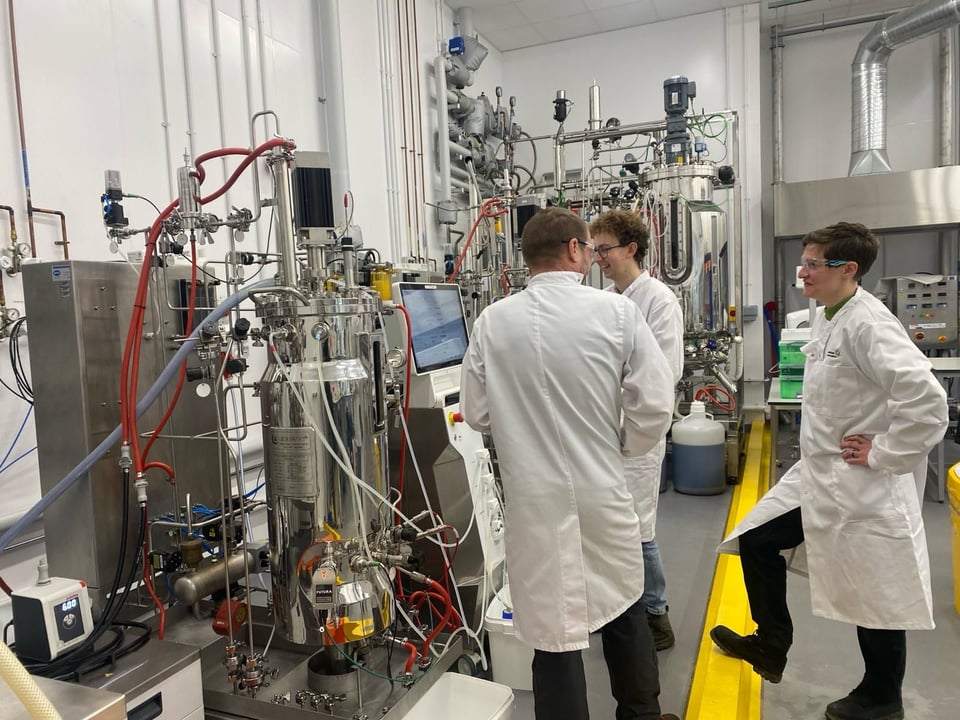
They can scale fermentation. The challenge now is scaling oil extraction in parallel. This is why the sample size bottleneck (and how they break through it) will define their speed.
The art of sequencing oil markets
Sun Bear Biofuture is engineering a market strategy as deliberate as its science.
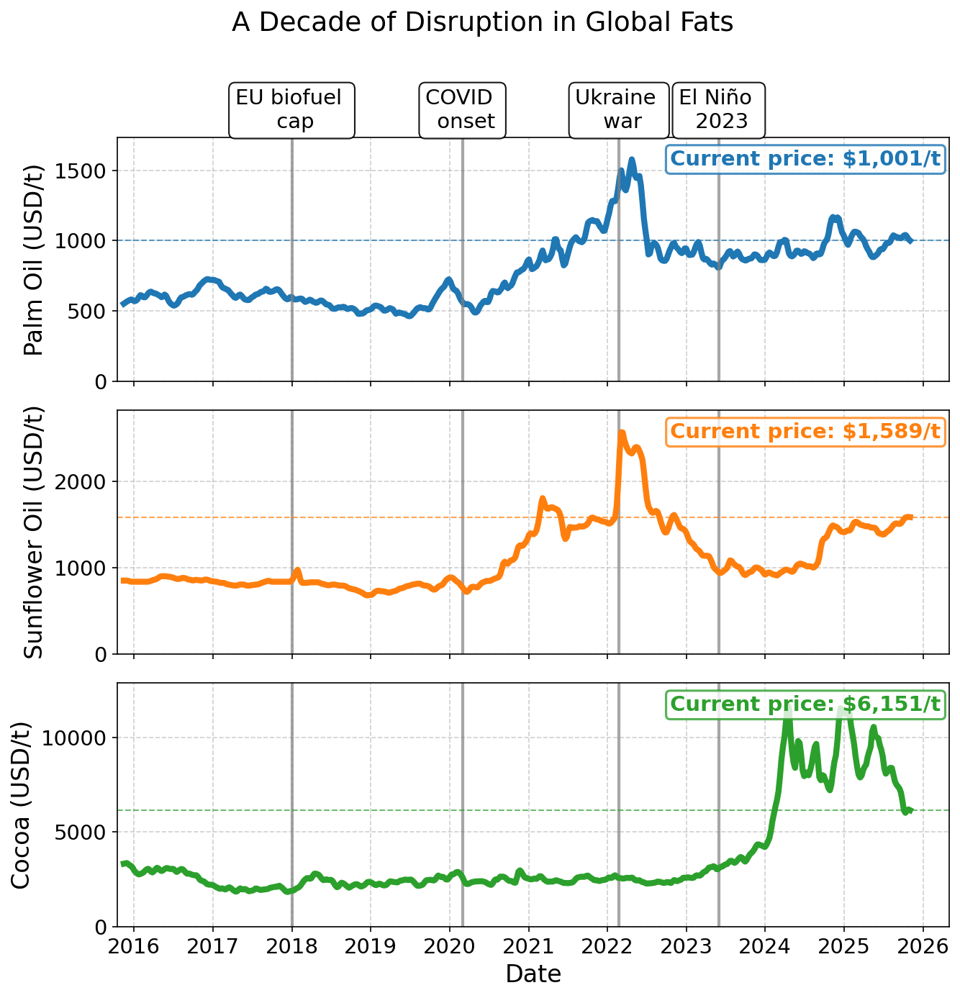
Even if they do everything right, costs of energy and feedstocks put a floor in their unit economics. Academic work has calculated production cost of microbial oils at $3,400/tonne, which would be a ground-breaking achievement for a startup6! Yet it still would not undercut the $1,001/tonne price tag for palm oil.
Today, their sole focus is on unlocking a cocoa butter replacement to propel them toward profitability. Cocoa butter comes in at a hefty $6,151/tonne on the open market, and it hits the environment just as hard. Business success here would give them a beachhead to attack adjacent markets — various specialty fats and oils.
Environmentalists, but not only!
Environmental missionaries at their core, their raison d’être is to protect the sun bear. Their motives coincide with environmental regulation too. The EU Deforestation Regulation is hitting the continent, forcing companies to prove their imported food oils are sustainably sourced7.
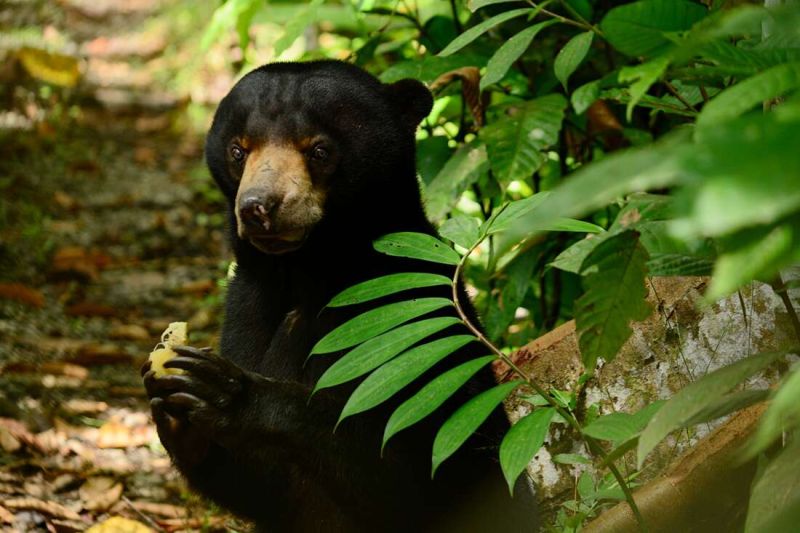
But fauna and flora are not all that is at stake. It’s about food sovereignty. A Sun Bear Biofuture plant in the UK stabilizes food prices and even becomes a security asset against disrupted supply chains. The past five years saw price disruptions from war, weather, and the global pandemic.
A promise of a new age for fats
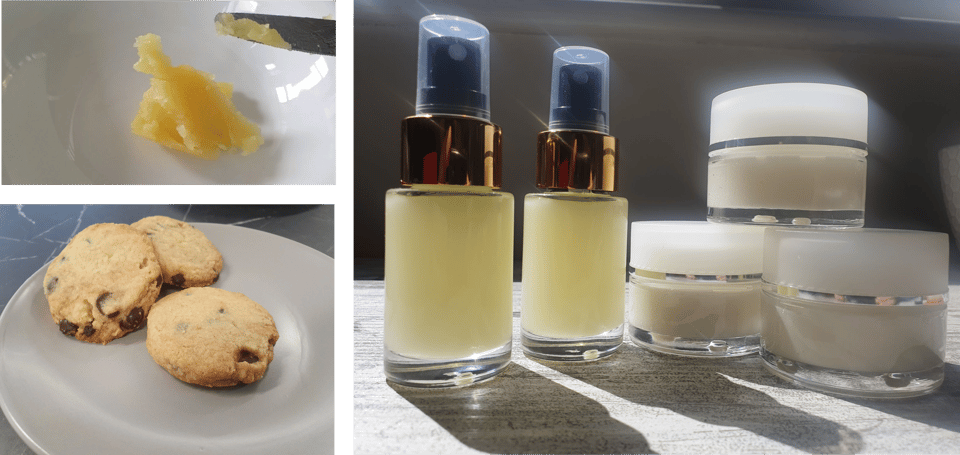
Sun Bear Biofuture is gunning for a revolution. If fermentation can outscale traditional crops, they can displace an established market with a cheaper alternative. And, it would use less land and can close the loop on food waste by turning it into oil.
This newsletter doesn’t advertise — it travels by conversation.
If you know someone who’d enjoy these deep dives into FoodTech, send them the archive link:
buttondown.com/roseworks/archive
Got something for a future newsletter?
Send it to me at [email protected]
Images used with permission. All images are copyrighted by Sun Bear Biofuture.
There is no affiliation between the author/RoseWorks and Sun Bear Biofuture. The ideas and opinions shared are those of the author alone.
Fermentation describes how good microbes make helpful transformations to food. For Sun Bear Biofuture, this is transforming sugars into fats. Other concrete examples of transformations include:
Milk → Cheese, yoghurt
Grains → Beer, leavened bread ↩
Tropical oils cover about half of all global food oil production. Palm oil, the largest in this category, is also the largest source of food oil in the world. ↩
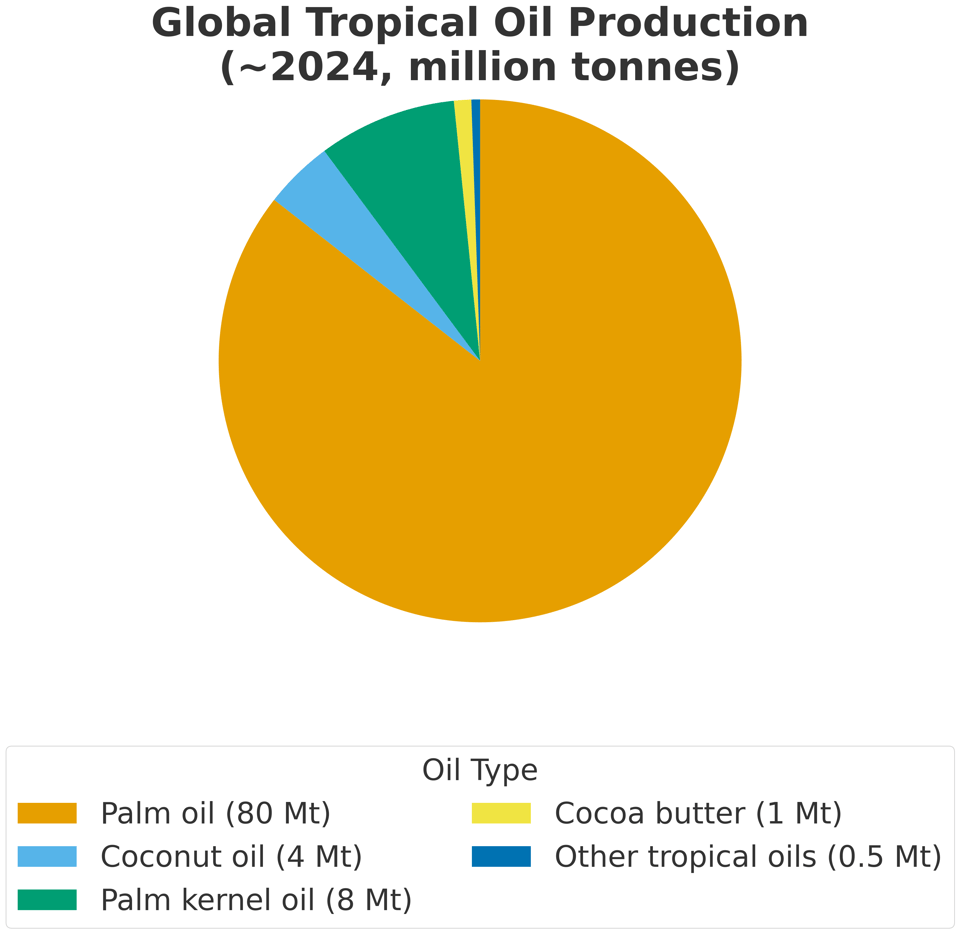
Palm oil is the largest source of food oil in the world A million-tonne oil production scale is approaching the Guinness Brewery operation (8 M tonnes/year, beer). ↩
Hexane extraction refers to using hexane, a petrochemical, as a solvent to extract more oil from oil-rich foods. Common sources of food oils include sunflower seeds and olives. ↩
Also working in this space are NoPalm Ingredients (🇪🇺) and Terra Oleo (🇸🇬). ↩
TL;DR of Koutinas’ paper: Bioreactors need a substantial supply of energy and sugars. Oil palm trees make their own food using energy from the sun.
A. Koutinas et al., Design and techno-economic evaluation of microbial oil production as a renewable resource for biodiesel and oleochemical production, Fuel, https://doi.org/10.1016/j.fuel.2013.08.045 ↩
EU Deforestation Regulation: companies will need to prove that certain commodities used in their products are deforestation-free and legally produced. This includes palm oil, soy, beef, coffee, cocoa, rubber, and wood. ↩