
Room for Discussion interviews in March
Dear Room for Discussion Community,
As the days get longer and the first flowers begin to surface, Room for Discussion is ready for a new month of interviews. We had an incredibly busy February, packed with economists, public servants and a successful recruitment period.
You don’t have to wait very long for your next dose of Room for Discussion: next week on Wednesday 4th of March we welcome the president of the Stockholm School of Economics Lars Strannegård. Keep an eye on our website and social media, for a continually updated overview of our full line-up and details. As always at, audience members will have the opportunity to ask their questions directly during the conversation.
We can’t wait to see you in the E-hall this month to soak up some sun and some new perspectives!
Past interviews - What Happened in February?
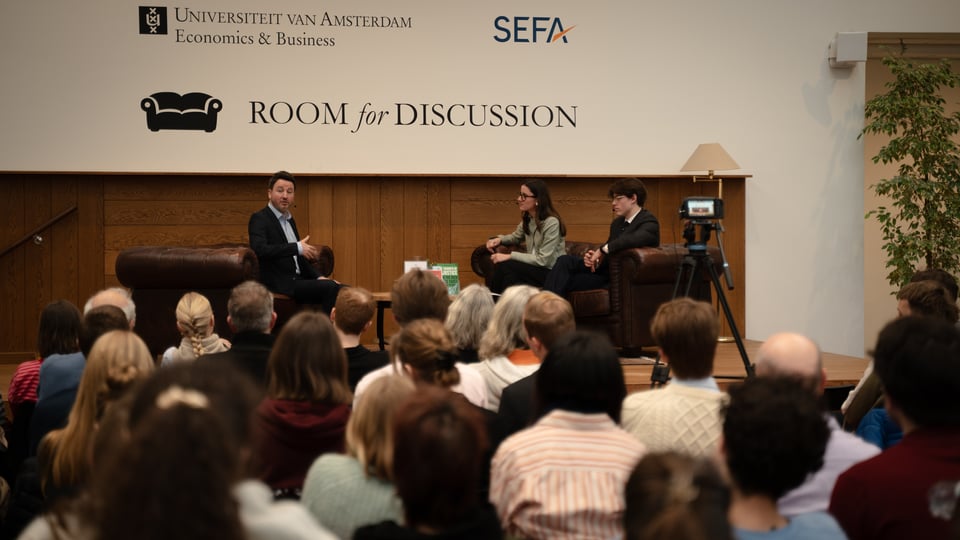
Gabriel Zucman - inequality economist, author and professor at PSE

On February 2nd we welcomed Professor Garbriel Zucman to find out what can be done to address the growing inequalities.
The “rockstar economist” outlined his political strategy for gaining the public traction necessary to implement his ambitious annual wealth tax on the ultra-rich. Professor Zucman argued that coordinated international action and transparent data on wealth concentration are key to making progressive tax reform both feasible and politically sustainable.
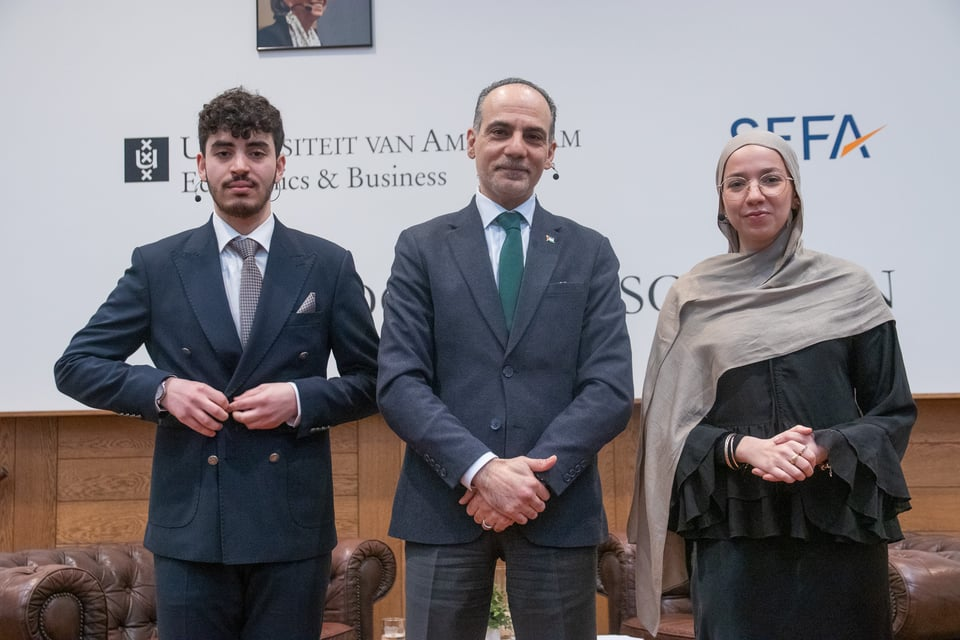
His Excellency Ammar Hijazi, Head of the Palestinian Mission to the Netherlands (ASAA Collab)

A day later on February 3rd we collaborated with ASAA to host H.E. Ammar Hijazi, Head of the Palestinian Mission to the Netherlands.
Palestinian diplomacy operates under conditions unlike almost any other. How can diplomats negotiate for their people without formal recognition and in the middle of what the UN describes as genocide?
His Excellency addressed questions on the Netherlands’ stance following the ICJ ruling, the limits and possibilities of international legal action, and how Palestinian diplomacy adapts its strategies in the face of non-recognition and a shifting political landscape in The Hague.

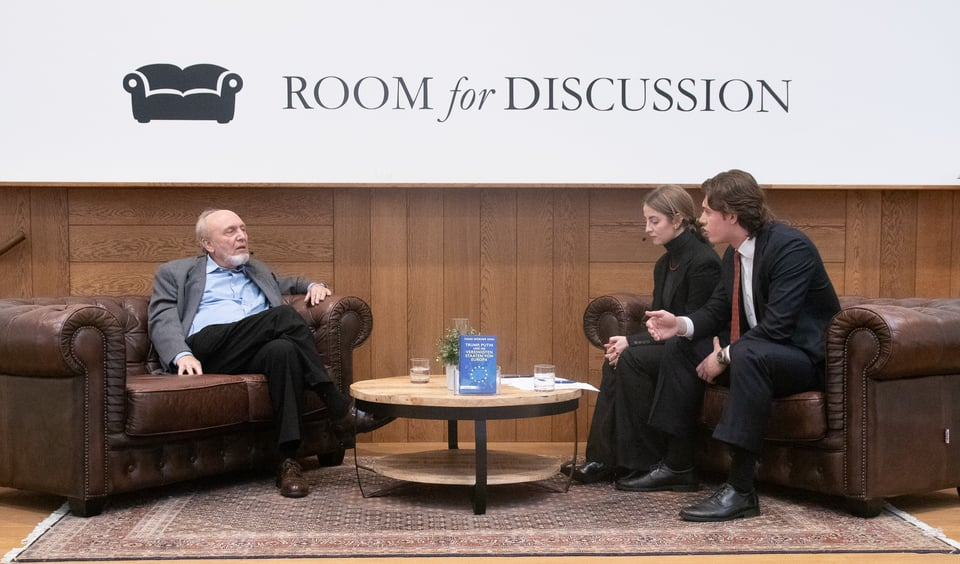
Hans-Werner Sinn, former President of the Ifo Institute

Fifteen years on from the Eurozone crisis, with surging public debt, increasing climate risks and rising geopolitical tensions, the need for change in Europe has never been more obvious.
The former President of the Ifo Institute Dr. Hans-Werner Sinn; a long-standing critic of the Eurozone and the ECB– joined us on February 10th to weigh in. He spoke about the need for stricter fiscal rules and market-based discipline to ensure economic long-term stability in Europe, and expanded on his new idea that the continent needs a new “Europäischer Bund”, outside of the EU, to organise its defense.

Vicky Bowman, former UK ambassador to Myanmar

Former UK Ambassador to Myanmar and Director of the now-closed Myanmar Centre for Responsible Business Vicky Bowman joined us on February 16th for a conversation about responsibilities. What can foreign governments and businesses realistically do in the face of repressive regimes?
Drawing on her experience as a diplomat, business adviser, and former political prisoner of the junta, Bowman offered a rare, firsthand insight into the real cost of defending human rights under authoritarian rule.

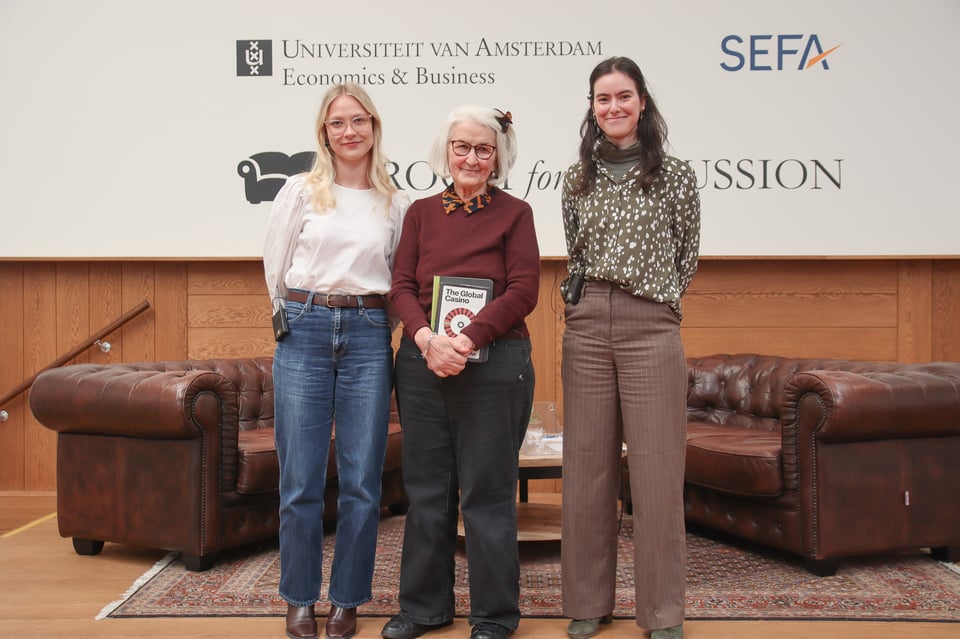
Ann Pettifor, economist and director of PRIME

We are living through a collision of overlapping crises: an increasing cost-of-living, climate change and a deepening state of political disillusionment.
In our final interview of February, we were joined by Ann Pettifor, international political economist and director of PRIME to understand the interconnectedness of these crises. With insight into the international financial markets, she outlined how the current financial system shapes the health of our planet and the survival of our democratic values.
Upcoming interviews - What Do We Have in Store for March?
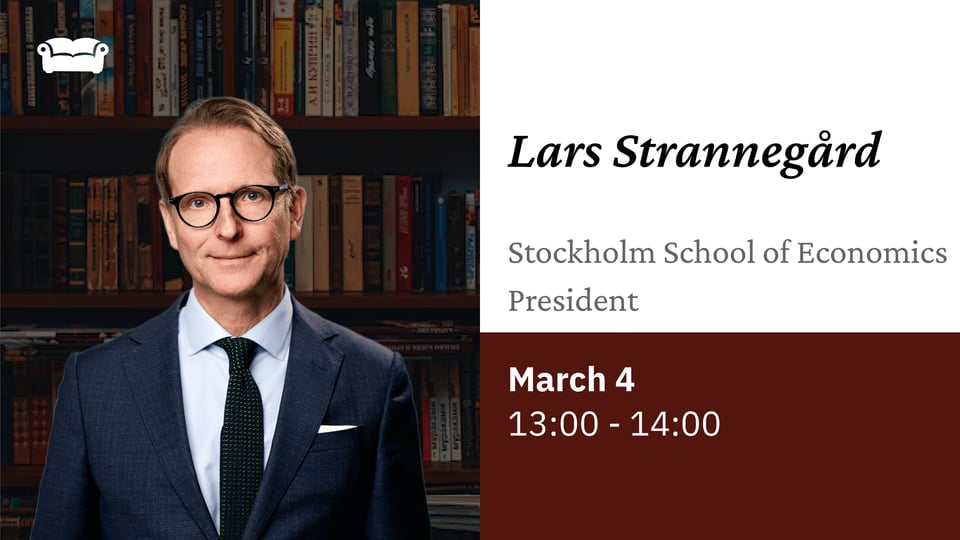
Sticking Up for the Human(ities): SSE President Lars Strannegård on Rethinking Education

Wednesday 14th of March, 13:00-14:00, E-hall Roeterseiland Campus
While the way we live has changed a lot in the last few years, the way we learn has remained largely the same. Our education systems have stagnated, relying on inflexible grading systems and standardised tests, as they need to conform to the demands of the job market. Is now the time for academia to adapt and implement a more holistic approach to learning?
Professor Lars Strannegård, President of the Stockholm School of Economics and author of Senses of Knowing: A Celebration of the Pursuit of Knowledge, argues that it is. He has long advocated for a change in the way we are educated. Instead of receiving a highly specialised ‘training’, he argues that education should be understood as ‘cultivation’, striving to shape well-rounded and responsible citizens equipped to face an increasingly complex world.
Join us and Professor Strannegård to explore how incorporating the arts & humanities into other disciplines can help our educational systems prepare our students for the age of AI.

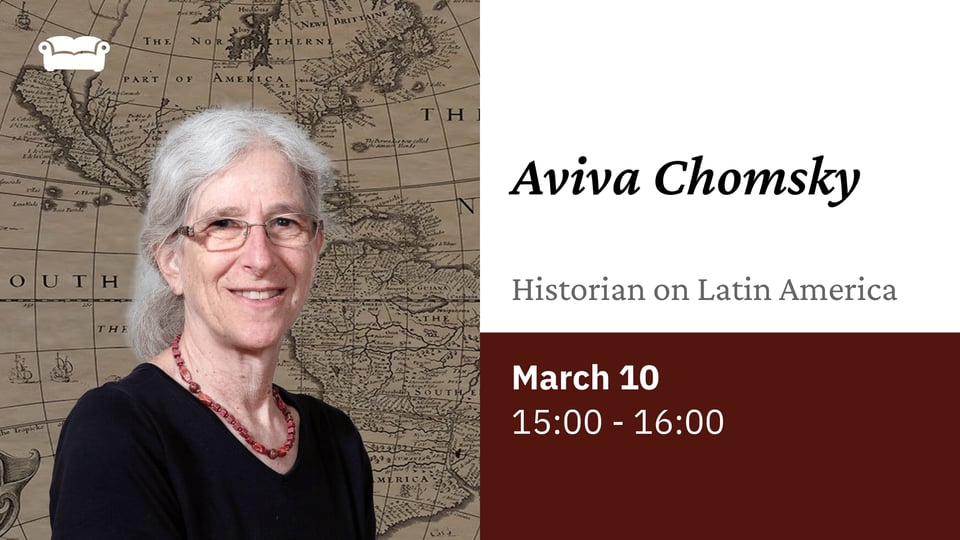
A Tale of Two Americas (at War): Aviva Chomsky on Latin American History

10th of March, 15:00-16:00, E-hall Roeterseiland Campus
What does it mean when the United States bombs a neighboring country, seizes its president, and flies him to New York to face criminal charges? Days into 2026, US forces launched a dramatic operation in Venezuela, bombing targets in Caracas and capturing President Nicolás Maduro. Such flagrant violations of sovereignty and international law beget the questions: why does the US act this way in the Americas? And what is the history of intervention that makes this seem possible?
From Venezuela to Cuba and beyond, we’ll be discussing the Americas’ interdependence with Aviva Chomsky, professor of history and Latin American Studies. Having been active in the Latin American solidarity and immigrants’ rights movements for decades, she’ll be unpacking the myths of open markets and closed borders, and how interventions continue to shape national histories in the region.
Join us for a conversation about the asymmetric interdependence between the US and Latin America!

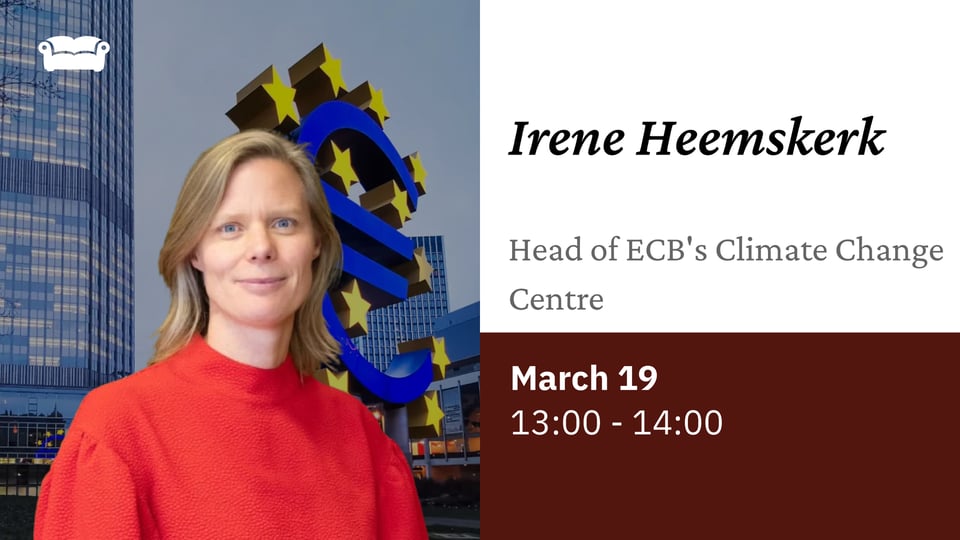
Banking on a Hotter Planet: Steering Climate Policy at the European Central Bank with Irene Heemskerk

19th of March, 13:00-14:00, E-hall Roeterseiland Campus
A mandate is changeable - the climate crisis isn’t. From the euro crisis to the pandemic, the European Central Bank has repeatedly expanded its toolkit in response to moments of stress. Yet mounting climate and nature degradation introduce far more systemic shocks. The environment in which central banks pursue their mandates is only getting hotter, and more volatile. Per the words of Naomi Klein: “The new normal is serial disasters: economic and ecological.”
What does this mean for the institutions tasked with safeguarding economic stability? In this discussion, Irene Heemskerk, Director of the ECB’s Climate Change Centre, examines how the ECB models these risks, how they interact with the price stability mandate, and whether existing policy instruments are fit for purpose.

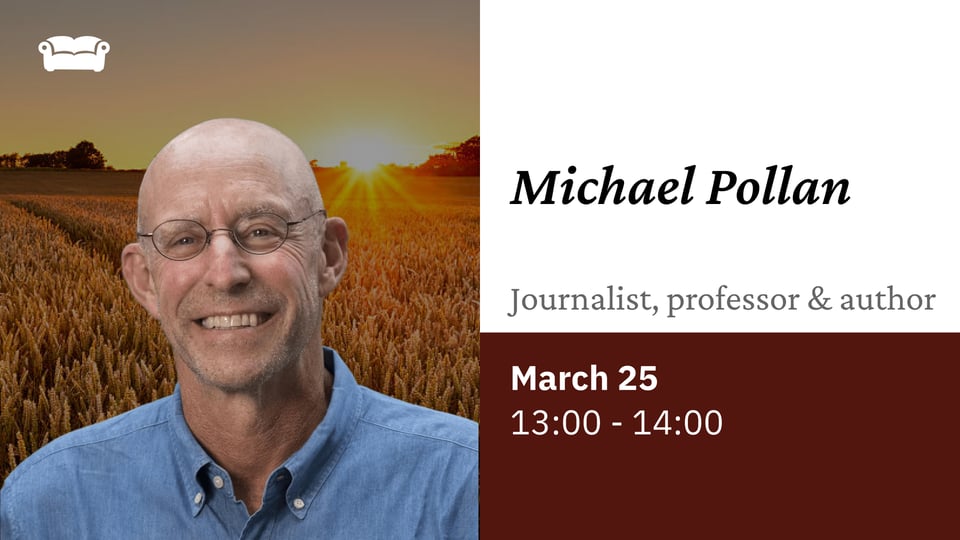
Michael Pollan - journalist, professor and author on the socio-cultural impacts of food and psychedelics

25th of March, 13:00-14:00, E-hall Roeterseiland Campus
What does consciousness mean, and why are humans so hellbent on experimenting with the various forms it can take? In this interview we are taking a deep dive into the rapidly developing world of research on psychedelic drugs and what they can teach us about all states of mind—ranging from mental illnesses to our everyday awareness.
Michael Pollan is a New York Times best-selling author and long-time columnist of the same newspaper. With books such as The Omnivore's Dilemma on the sociocultural impacts of food and How to Change Your Mind on the cutting edge of psychedelic research he has made it his life’s mission to study how our minds and bodies interact with the natural world. Through his Netflix series of the same name, he has introduced the awe inspiring world of psychedelics to the mainstream.
Join us on the 25th of March for an eye-opening (and consciousness-expanding) conversation about the frontier of science in ordinary and extraordinary states of mind. This is an interview you certainly don’t want to miss!
All our interviews are recorded and published on our youtube page so make sure to check them out if you couldn’t join us in the E-hall.
We are looking forward to seeing you at our events this March. Until then, stay engaged and stay interested!
Sincerely,
The Room for Discussion Team
Creators of this month’s newsletter:
Writer: Sol Zeev Ben Mordehai
Marketing Officer: Yi Hunter Hong


