
Renovation Permitting: What Home Buyers and Sellers Need to Know
Buying a home carries a significant financial, physical, and mental load. The search itself can feel like a full-time job. And once you find the right property, you’re forced to rely on the seller’s candor and the assiduity of your inspections.
There’s a lot to be concerned about: roof condition, age of systems, water intrusion, mold, radon, you name it. It’s always nice, though, when those anxieties are offset by fabulous renovations (think gorgeous new state-of-the-art kitchen, chic powder room, stylish lighting). But those renos that “sell” the house may require more scrutiny.
Why Permits Matter
Updated kitchens, remodeled bathrooms, and finished basements are powerful selling points and often justify higher asking prices. But one question can carry serious legal and financial consequences: were the renovations properly permitted?
Understanding permitting requirements—and the disclosure obligations tied to them—is essential for both buyers and sellers. Permits exist to ensure that renovation work meets local building codes and safety standards. When work is completed without the required permits, it may not comply with structural, electrical, plumbing, or mechanical codes. This can impact safety, first and foremost (think electrical fires or compromised structural integrity). Unpermitted renovations can also jeopardize property values and the buyer’s ability to obtain financing and insurance. In some cases, a homeowner may even forfeit the benefits of existing insurance coverage due to issues arising from unpermitted work.
Work That Typically Does Not Require a Permit
Cosmetic updates are usually exempt, including:
Painting and wallpapering
Installing flooring
Replacing cabinets or countertops
That said, exemptions vary by jurisdiction. Always confirm with your local building department before starting any project.
Renovations That Typically Require Permits
Guidelines may differ by jurisdiction, but a good rule of thumb is that permits are usually required for work that affects a home’s structure or major systems. Examples include:
Structural
Adding or removing load-bearing walls
Building additions, decks, garages, or pools
Enclosing carports
Major roof or foundation repairs
Electrical
Adding or relocating circuits, outlets, or switches
Any work beyond fixture replacement
Plumbing
Modifying supply or drain lines
Installing new sinks, toilets, tubs, or showers
Converting fuel types (e.g., electric to gas water heaters)
HVAC
Installing or replacing furnaces, AC units, or ductwork
Modifying existing HVAC systems
When in doubt, check with your city or county building inspections office.
Disclosure Laws: What Sellers Must Share
In nearly all states, sellers must disclose known material facts affecting a property. These include issues related to structure, systems, environmental hazards, boundaries, and known unpermitted work. Disclosure laws vary somewhat from state to state, but the underlying principle is consistent: sellers may not knowingly misrepresent or conceal material facts.
Even in states with fewer mandated disclosures (Alabama, Florida, Massachusetts, and Georgia, for example), active concealment or fraud can still result in liability. Selecting “No Representation” on a disclosure form may be legally permissible for sellers, but it can expose them to lawsuits, particularly if they performed or oversaw the renovations themselves. In cases where a seller does go this route, licensed real estate listing agents still have a legal duty to disclose (another great reason to use an agent in all real estate transactions).
What Buyers Should Do
Review disclosure statements carefully
Ask direct questions about renovations and permits
Verify permit history with the local building department
Understand that while home inspectors may flag unpermitted work, this doesn’t replace permit verification
Options for Sellers and Buyers
Unpermitted work needn’t automatically kill a deal. Sellers may pursue retroactive permits, document renovations where possible, and adjust pricing to offset buyer risk. Buyers, in turn, can negotiate repairs, credits, or permit resolution before closing.
Final Thought
Permits may not be glamorous, but they protect everyone involved in a real estate transaction. Understanding permitting requirements—and taking disclosure obligations seriously—can prevent costly surprises, legal disputes, and financing headaches.
When in doubt, check locally and ask early. A five-minute call today can save months of stress later.
As always, don’t hesitate to shoot me a line about anything you’d like me to discuss in future issues. No question is too small and no topic is too big. Thanks for your support.
Best,
Robin

January Cupcake: 2026 Mortgage Rate Outlook
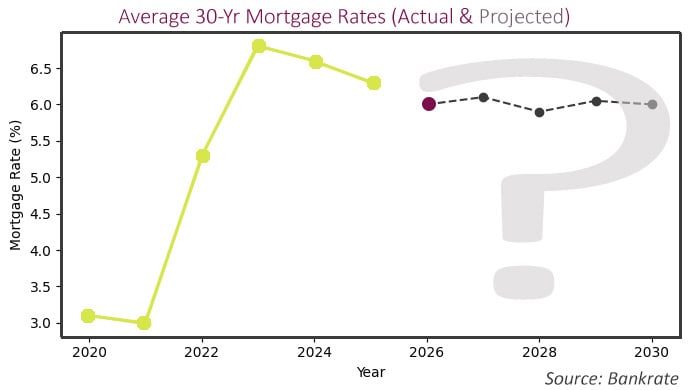
The rate environment is moderate, persistent, and unlikely to swing dramatically in either direction.
The housing market has largely come to terms with a reality: ultra-low mortgage rates were a historical outlier.
Rather than waiting for rates to fall, more buyers are focusing on affordability through strategy with rate buydowns, seller-paid credits, and more careful loan structuring. Sellers, in turn, are learning that price alone is no longer their only lever. Concessions that lower monthly payments often matter more to buyers than small price reductions.
Decision timelines have also changed. Move-up buyers, in particular, are more deliberate, weighing the cost of leaving a low-rate mortgage against the benefits of a new home. This dynamic has slowed some segments of the market while highlighting the importance of preparation, pricing accuracy, and flexibility.
Importantly, higher rates have refined demand. Buyers in 2026 are more likely to be financially qualified, informed, and focused on long-term value than on short-term market timing. For sellers, this means well-maintained, realistically priced homes are moving, while aspirational pricing faces resistance.
In short, mortgage rates aren’t the headline, they’re part of the context. Success this year will depend less on predicting rate changes and more on structuring deals that work within a familiar, post-boom normal.
(Sources: Freddie Mac, National Association of REALTORS®, Redfin, Realtor.com, Mortgage News Daily, Federal Reserve Bank of St. Louis (FRED), Investopedia.)

Bonus Cupcake! Energy Efficiency as a Resale Factor

In 2026, energy efficiency is evolving from “nice to have” to “expected.”
Buyers are increasingly evaluating homes not just on purchase price, but on what it will cost to live in them month to month. Rising utility costs and insurance considerations mean efficiency features are seen as management tools rather than lifestyle upgrades.
Modern HVAC systems, upgraded insulation, energy-efficient windows, and smart thermostats consistently show up as pluses in buyer feedback. These features signal predictability and lower monthly costs—qualities that matter more in a cautious, budget-aware market. While efficiency upgrades don't always produce a dollar-for-dollar return at resale, they often help homes sell faster and with fewer objections.
The key distinction in 2026 is between functional efficiency and cosmetic “green” features. Buyers tend to prioritize improvements they understand and can quantify: heating and cooling, sealing, ventilation, and durability. Advanced systems can still add value, but only when they're well-documented and easy to transfer.
For sellers, the takeaway is clarity. Homes that communicate efficiency—through maintenance records, utility histories, or recent upgrades—stand out in listing comparisons. For buyers, efficiency is less about virtue and more about control: fewer surprises, steadier costs, and confidence in long-term ownership.
Energy efficiency may not always raise the ceiling on price, but in 2026 it often raises the floor on buyer confidence, and that can make all the difference.