All the greatest hits on one disc!
As a music nerd who came of age at the end of the reign of Columbia House Records and the rise of Napster/Limewire/Kazaa, I have a weird perspective on the eternal now of music streaming.
On the one hand, I still remember how hard it was to find new things. I would read about an interesting band in a Rolling Stone Encyclopedia or an Uncut I bought at Borders, and if it wasn’t stocked at Border or Best Buy or Sam Goody’s, then I’d have to wait until I could drive to Chapel Hill where the cool indie music stores were.
Luckily, my dad loved to sign up for Columbia House or BMG to get their 10 CDs for a dime promotions, buy the two or three mandatory CDs afterwards, and then quit. He would then rejoin under my mom’s name, my sister’s name or my name. I didn’t mind because he would usually let me and my sister pick out a few CDs each time.
When I was young, I gravitated towards classical or Broadway soundtracks or movie soundtracks. But as I got more into pop and rock, I started looking for different stuff.
Now, Columbia House and BMG were music labels, but the record clubs were a way to move their back catalog. So there would be some stuff that would be popular, if maybe a year or two past the sell-by date: Hootie and the Blowfish, the Spin Doctors, Matchbox 20. And then there’d be the perennial back catalog: Greatest Hits of Motown, Elton John, Beach Boys.
Of course, they’d never carry the Beatles or the Stones. And if you liked your music a little left of the dial (as Paul Westerberg might say), your options would be more limited.
So, you could probably get Nirvana’s major label albums, or Soundgarden. But obviously indie labels wouldn’t be on there. And even stuff that had major releases would be… eclectic.
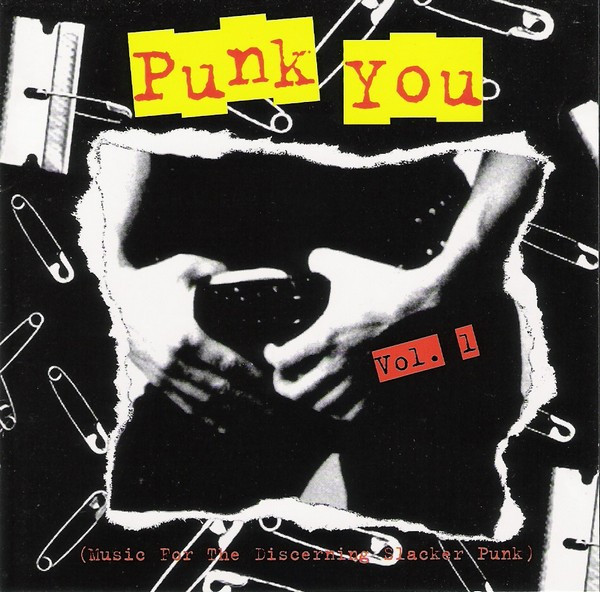
Stuff like PUNK YOU! MUSIC FOR THE DISCERNING SLACKER PUNK, which mixed Generation X and the Damned with… Tom Robinson Band? Bow Wow Wow?
You could get Sex Pistols, but for some reason, only THE GREAT ROCK & ROLL SWINDLE. One time I found they had Gang of Four, but only SONGS OF THE FREE (an underrated album, but also a bizarre entry point).
Imagine looking up bands either in the catalog or the kludgy internet site the clubs had to desperately see if they had the band you wanted and ordering whatever it was, assuming it might be what you want! Imagine getting a Mighty Mighty Bosstones album and then finding out it’s an EP filled out with live cover songs!
Because this brings me to the point of the eternal now of music streaming: they have killed the greatest hits album.
Why do you need a Greatest Hits album when you can already view the algorithmically selected most popular songs of the artist and then dig deeper if you like? To be fair to the algorithm, you don’t have to worry about:
a. The artist having more hits afterwards that don’t end up on the album; or
b. The artist padding out a greatest hits album with a couple of new not-so-great songs that wouldn’t have made it on an album if they weren’t trying to move a few extra copies to completists.
For every CHANGESONEBOWIE, there’s a CHANGESBOWIE.
And worse, the normal Greatest Hits album had a dark twin, a doppelganger..
The “Super Hits” compilation.
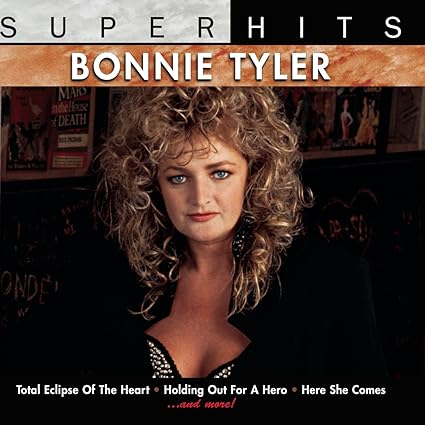
These budget compilations sat on racks at gas stations, Walmarts, Best Buys and anywhere CDs were sold. And they were the musical equivalent of a cheap wireless phone charger you buy at CVS. Barely getting the job done.
See, these type of budget compilations would be the cheapest cash-in hit CDs imaginable. It would have a generic photo of the artist, no credits or liner notes beyond the track listing, and worst of all, the laziest approach to curation you can imagine.
You’d get maybe nine to ten songs. If they were an act like the Who, with a huge back catalog, you would get a haphazard selection (and always goddamn “Squeeze Box”, even if they had to use a radio edit of “Baba O’Reilly” to fit it in).
If it was an artist with two or three hits, you’d get those and then a haphazard selection of whatever was left over. Maybe a soundtrack cut with another artist on it? Was there a duet the artist did with another famous person?
And if the artist recorded for more than one label, you can bet that their songs for other labels would either be missing or presented as live tracks.
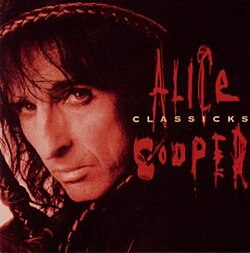
Alice Cooper’s CLASSICKS wasn’t quite a budget comp (there are sixteen tracks) but it gives you a good idea of what could happen in the age of Greatest Hits cash-ins. You look at the track listing and it leans heavily on his Eighties… comeback (“Poison” is decent and I’ll even admit “Love’s a Loaded Gun” is corny fun, but nine tracks from that era!!!). But hey, kid, it also has six songs from his ‘60s-70s golden age!
… taken from a 1989 live album.
But at this point, you’ve already opened up the plastic, removed the stupid sticker, and you can’t return it. “Hey Stoopid”, indeed.
As the second millennium slouched towards Bethlehem, waiting to be born, a slightly more upscale companion to “Super Hits” and other budget compilations emerged. Unlike the cheap “graphic design is my passion” cover photos and trade dress of “Super Hits”, they boasted a classier unified look. They even had a fancier name: The 20th Century Masters: The Millennium Collection.
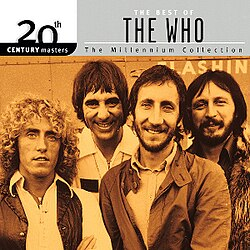
20th Century Masters: The Millennium Collection? Something like that must be the Criterion Collection of music! Move over Time-Life, this is the true archive of popular music!
… Except it was just Universal Music, doing their own “Super Hits”.
Once again, each CD had ten to eleven tracks. This meant that for a band like Sublime you actually got less music than if you just got the one album that everyone actually listened to, and most of it was from that album anyhow!
Sublime had also just had a 10 track Greatest Hits album that was 80% the same track listing anyhow three years prior. How many Greatest Hits albums did they need?
But to be fair to Sublime, at least one album will probably give you all the Sublime you need (more than you need, in fact). For artists with more sustained careers or more depth, it was the same problem all over again.
Louis Armstrong is a guy who would be really well-served by a Greatest Hits album. He recorded a lot of his best work prior to the introduction of Long Players, and even towards the end, he was not recording songs with an eye towards album flow. Louis Armstrong, Duke Ellington, Charlie Parker… all great American musicians and composers who primarily recorded short subjects.
So maybe Universal finally put together a great compilation for Louis?
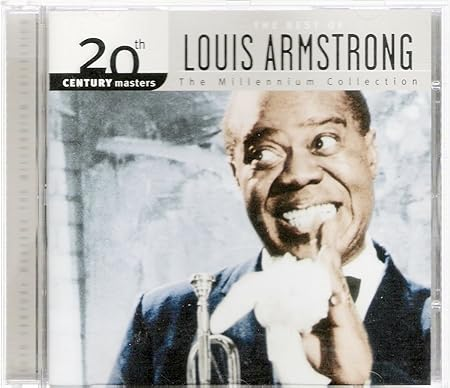
Hahahaha nope it’s “Hello, Dolly” and “What a Wonderful World” and a lot of less remembered 50s and 60s stuff. I’m not saying those songs are bad, but nothing from the Hot 5s and 7s? No “Mack the Knife”? No “Black and Blue”?
The irony is that there had just been a good Louis Armstrong compilation, the Ken Burns one from 2000, tied to the JAZZ documentary, that actually went all the way from King Oliver’s Creole Jazz Band to “What a Wonderful World”!
Except in 2001, you’ve convinced your parents to let you borrow the car, you’ve got twenty minutes at Borders and you’ve got 15 bucks in your pocket. If you see an album from an artist you’ve always wanted to try, you’re not going to have time to check if it’s the definitive one and you have no way to check even if you did! It might not even be there next week!
Anyway, streaming has a lot of problems, things that can’t stream get excluded from the canon, and artists don’t make enough money from it. I don’t need to go over the various downsides of streaming!
But at least you can finally figure out your own personal best songs list for an artist, with the preferred version! We don’t have to deal with this again!
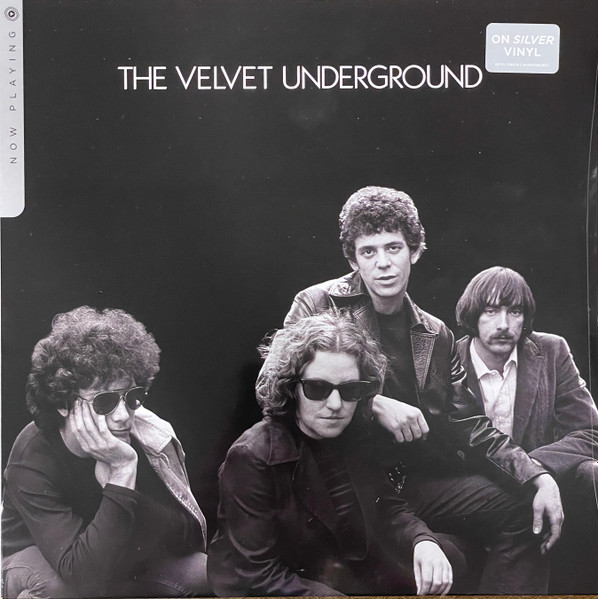
Oh goddamnit…

Add a comment: