Bringing Out the Dead
Thoughts on the unholy resurrection of my favorite Batman

Defiling a corpse used to be frowned upon in polite society. But as you may have noticed recently, our society is going to hell.
Case in point: on Wednesday, Variety reported that Val Kilmer would soon be “starring” in an indie film titled As Deep as the Grave1. Quite miraculous, considering he died last year. But they’re not exhuming his body—it’s even worse! He’s being deepfaked using the dark sorcery of generative AI, and by a team of real whackos.

Just because you’re dead, that doesn’t mean the wheels of capitalism won’t keep a’grindin. If you’re a writer, they’ll publish your unfinished manuscripts (despite telling your family to rip them up and never publish them). If you’re a musician, your vaults of unreleased songs will be opened (despite your infamously stark stance on artistic ownership and creative control). And if you’re an actor, they’ll cast a chiropractor as your body double for the last few crucial scenes you weren’t able to shoot.
At least, that used to be what filmmakers had to do when an actor died mid-production. But now we’ve entered a new era: the era of digital necromancy.2
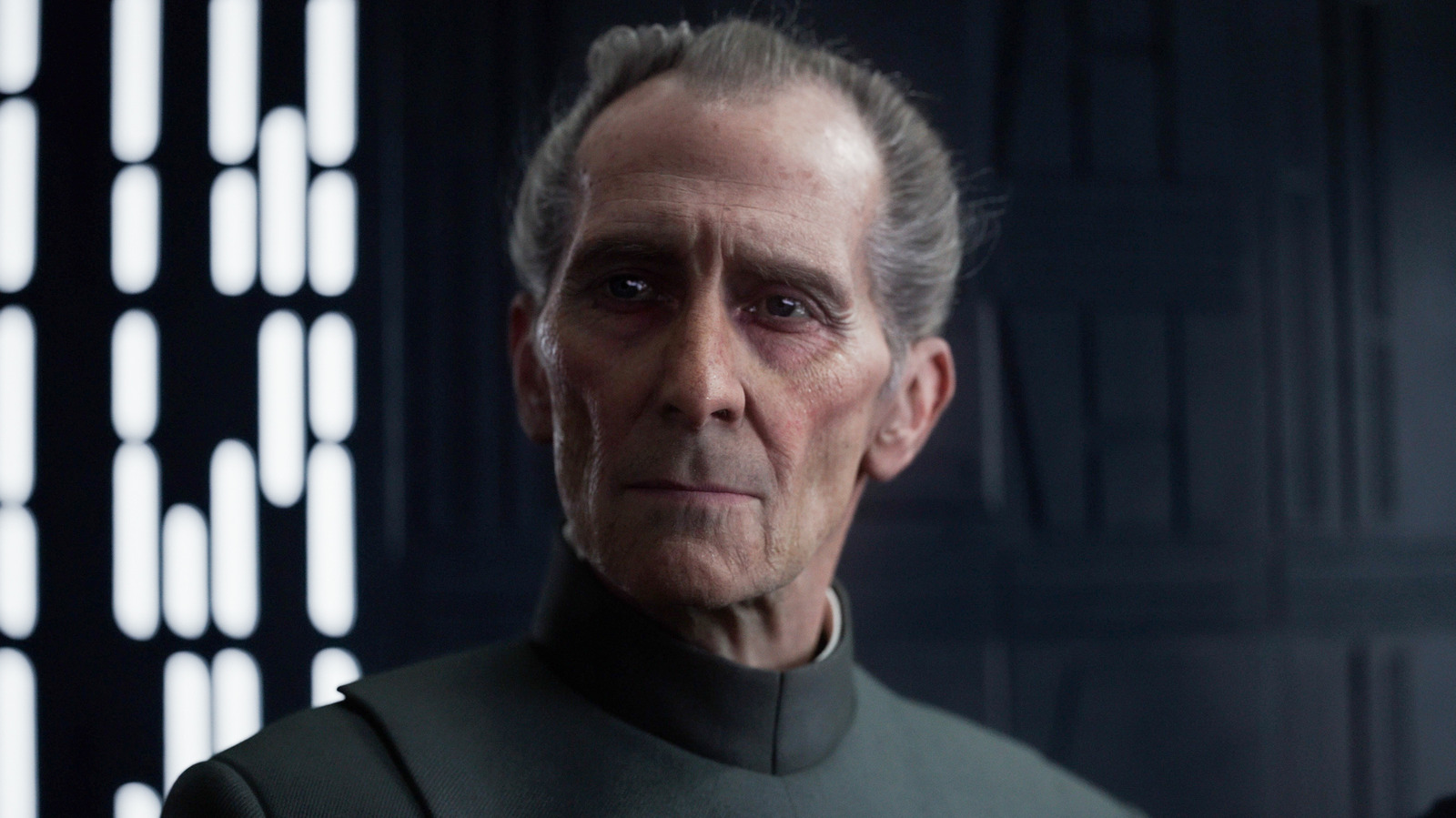
I actually have two major problems with Variety’s article. The first is obvious: the entire concept of using generative AI to “resurrect” a human being is grotesque, and needs to be loudly denounced at every possible opportunity. I remember seeing Alien: Romulus in the theater, mostly enjoying myself through the first hour or so, until zombie Ian Holm inexplicably appeared on screen. It made me sick to my stomach, like I was being forced to watch a crime. Much like when they did it with Peter Cushing in Rogue One or Christopher Reeve in The Flash, it was an unholy desecration, exploitation that reached beyond the grave so that the shareholders at Weyland-Yutan… sorry, 20th Century Studios, could make the line go up in Q3.
(Also, just to be clear: I don’t care that, in most of these cases, you can say, “the family said it was OK.” Doesn’t matter at all. Dead people have no autonomy. They’re dead. They deserve to rest in peace.)
Upgrade nowMy other problem with the article is its credulous tone, which isn’t by accident. Here’s an example:
Even though he didn’t shoot a single scene, Voorhees has been able to realize his vision of having Kilmer in the ensemble by using state-of-the-art generative AI.
Doesn’t sound so bad, right? The great tragedy in this paragraph is that the poor director wasn’t able to “realize his vision.” And now Kilmer can be “in” the ensemble! Not just by using any old generative AI, this generative AI is “state-of-the-art”! This isn’t grave robbing! Aren’t you dazzled?
But what if you framed it just slightly differently?
Although Kilmer was originally cast in the film, he died before principal photography ever began. Undeterred by the inconvenience of throat cancer slowly—and painfully—killing a man, the aptly-named Voorhees dug up Kilmer’s grave so that he could puppeteer his soulless visage on screen and satisfy his cruel ego. After all, much like a woman on the internet who has deepfake nudes made from her vacation photos using this very same technology, a dead body can’t say “no”!
Let’s annotate another paragraph, where the barely-disguised PR spin can be summed up as “you should feel sorry for these guys, they had no choice but to be craven monsters”:
“As Deep as the Grave” is an indie production [they’re an underdog], one that had to endure shutdowns from the COVID pandemic that stretched production to six years. [COVID had nothing to do with the fact that Kilmer was too sick to participate; also, let’s be real, it probably also had nothing to do with production stretching six years]. At one point, the filmmakers had cut scenes involving Father Fintan [Kilmer’s character was so essential to the story that they had… removed him entirely?] for budget reasons and time constraints [they would have had to hire a union crew and actors], but when they looked at the footage [and it was very bad], they realized they needed to put them back in to round out the narrative [make their money back].
When the authors of the article aren’t passively manufacturing consent for the gen AI industry, they quote the filmmakers at length, who are either A) completely self-deluded or B) the most cynical people alive:
“Normally we would just recast an actor. I’m all about working with our actors, and we have brilliant performances all throughout this movie. But we can’t roll camera again. We don’t have the budget. We’re not a big studio film. So we had to think of innovative ways to do it. And we realized the technology is there for us.
Excuses. Avoiding any responsibility. Endless rationalizations. Refusing to acknowledge that none of this is actually necessary. Your movie—no movie, no work of art in the history of civilization—is worth more than the dignity of a human soul, my guy. Fuck off with your “innovation” and for trying to create a permission structure for this gross abomination.
Even Kilmer’s family find themselves at the all-you-can-eat LinkedIn word salad bar while trying to justify their decision:
“(Kilmer) always looked at emerging technologies with optimism as a tool to expand the possibilities of storytelling,” Mercedes Kilmer said. “This spirit is something that we are all honoring within this specific film, of which he was an integral part.”
With all due respect, truly, this is nonsense, and they know it. This isn’t grief speaking, it’s greed.

The article ends by trying to equate As Deep as the Grave’s deepfaking with the “AI-powered” technology that reconstructed Kilmer’s voice in Top Gun: Maverick, establishing that there is precedent for this kind of movie-making “magic.” There is a key difference between the two examples though that keen-eyed observers may have noticed. In the latter context, Val Kilmer was still alive to give his consent.3
Instead of using euphemisms and weak justifications, let us speak with clarity. This entire endeavor is:
A shameless cash grab.
A shameless marketing ploy.
And a shameless attempt to normalize exploiting the dead.
So allow me, if you will, to speak on behalf for all moviegoers who still care about human dignity, and are not here for slopifying the dearly departed. To every filmmaker and tech bro who believes this is “the future”:
It isn’t. It’s gross, and evil. Please stop.
An incredibly ironic title, as it turns out! ↩
This isn’t patching together an otherwise incomplete performance with CGI. This is essentially animating a digital simulacrum which, as it is devoid of consciousness, cannot make choices, have artistic intent, or feel emotions—all things a “performance” requires. ↩
There is a meaningful distinction to be made between machine learning tools that use a curated, legally-obtained data set you have permissions for, and generative AI; purposefully conflating the two has been a huge win for the marketing departments at places like OpenAI, Meta, Anthropic, et al. ↩

Add a comment: