A Rational Fantasist

Ever since it was announced, my anticipation for Christopher Nolan’s The Odyssey has been cautious. I’ve held a lifelong interest in Greek mythology; I am a fan of Christopher Nolan movies; as an audience member, I want more practical filmmaking: movies made in real places with real people. So you’d think I am the target audience. But I was worried.

Nolan is not exactly known for his whimsy. He is a hyperrational dude. His worlds are made of granite. His black holes are based on scientifically accurate equations. Even his dreams are icy and monochromatic. But the gods are not rational. They are not cold and colorless. Magic is not measurable fact. How would these two opposing forces reconcile themselves?
It wasn’t until about halfway through seeing The Odyssey at my local IMAX theater last weekend that I remembered this actually wasn’t the first time I’d bumped against Nolan adapting a beloved mythological property with his clinical, formally brutalist style.
For all of its strengths, The Dark Knight, for me, has always had one big, unavoidable problem:
It’s not a Batman movie.
Sure, Christian Bale dresses in a Batman costume. But the tone is that of a Michael Mann crime thriller. It is serious, adult. If you replaced Batman with a cop, you wouldn’t have to change hardly any of the major plot points.1
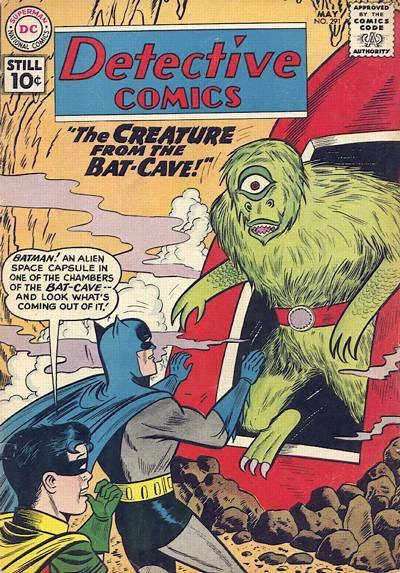
Personally, I want a Batman movie to feel like a Batman movie. Which is to say: it should probably feel a little silly. Batman is an inherently goofy and ridiculous premise. The innovation of Batman Begins was applying the Nolan Logic to everything: nothing just “happens,” even the bat-signal has a rational explanation. And at the time, that was novel! Begins also balances things out with some hammy mustache-twirling from Neeson’s Ra's al Ghul, and a scene straight out of Frank Miller’s Batman: Year One where a flock of bats are improbably summoned to assist an escape.
Subscribe nowEmboldened with his success, when it came time to make The Dark Knight Nolan dispensed with the remaining comic book “silliness.” And the result, to my personal taste, was kind of boring2. It’s his interpretation. That’s fine. I want adaptations to be personal visions. But Nolan’s Dark Knight is just not my preferred flavor of fantasy/comic book storytelling. For all the shit I’ve talked about Joel Schumacher over the years, at least he was having fun.
The Odyssey, like The Dark Knight, is Nolan again taking a fantasy story and grounding it in the quote-unquote “real world.” The opening title card informs us the movie takes place during a time of “apparent” magic. Every instance of the mythological is obscured by shadows, or only briefly glimpsed, as if you might have only imagined what you thought you saw. If you wanted to be uncharitable, you could attribute this stylistic choice to the assumption that the director is embarrassed by the source material. “Fantasy is for children, science and rationality are for grown ups!” This is what I was afraid of.
Except in most instances, I think this approach was actually hugely successful. The trip to Hades is stunning. The transformations that occur by Circe’s hands are properly grotesque and unsettling. The Sirens sequence eerily echoes the post-Trinity bombing “celebration” in Oppenheimer. Even the seemingly banal, earthly treatment of Athena ultimately has a sneakily profound purpose. Making the gods ambient, elemental forces adds to their mystery and unknowability. The movie doesn’t deny they’re there. Actually, it goes out of its way to tell you that they’re everywhere.
But this is also a “reality” where no blood is shed on battlefields. Sex doesn’t exist. We are told the Greek soldiers hiding in the Trojan horse have been marinating in their own piss and shit for weeks, but its never made visceral; you don’t believe it. For all of the endless marketing about how practical and tactile the experience of making the movie was, its weird that everything takes place in a PG-13 limbo world where getting slashed with a bronze age sword just makes you grunt and lay down. Not every historical epic needs to have the same blood splatter and viscera as Saving Private Ryan, but this is a kind of sanitization. Tenet and other Nolan action films do the same thing with gun violence: bullets don’t maim, they just make you sleepy.
The softening of these elements makes the story more palatable to a general audience. But is that a good thing? The translator Emily Wilson called the movie’s handling of war and violence “incoherent,” and I have to agree. Odysseus tells us valorizing (narrativizing) conquest elides the true horrors of war. But then you also have a scene that is intentionally constructed (narrativized) so that the audience will cheer when a guy gets an arrow shot into his throat. The cleverest inversion in the script is turning Odysseus’ Trojan War triumph into a tragedy; but the movie ends with John Wick-style revenge. Which is it?
Like with his Batman movies, I appreciate that this version of The Odyssey is truly Christopher Nolan’s Version™. The movie has my respect in a lot of different ways. It’s incredible he’s introducing this mythology to a whole new generation on a global scale. If you engage with the movie as what it is (a grounded Odyssey), and with what it’s trying to accomplish (an IMAX epic for a general audience), it’s pretty unimpeachable. I guess I just don’t totally vibe with what it is.3 Because what’s more irrational? An old guy throwing lightning bolts out of a cloud, or bloodless death?
You especially wouldn’t have to change the part where Batman abuses an elaborate “security” network to spy on Gotham’s citizens: http://usatoday.com/story/news/state/georgia/atlanta/2026/07/21/veteran-atlanta-deputy-adds-to-growing-list-of-ga-cops-misusing-flock/90992565007/ ↩
It also has major plot issues. And the last hour sucks. ↩
As far as modern adaptations of Greek mythology go, my favorite is the Hades video game series. The character designs—done by Supergiant Games’ art designer Jen Zee—are rad as hell: opulent, colorful, unapologetically pop. ↩

Add a comment: