Bird of Passage: December 2025
Do you believe in omens?
Do you believe in omens? I’m not sure that I do, but I can’t deny that sometimes the natural world has seemed to intersect with my life in particularly meaningful ways at times of transition. I’m probably just more open to observing interesting things around me when I’m starting something new, but these moments stick with me for years.
There was the short-eared owl that silently circled low over my head at dawn one morning in Grasslands National Park in Saskatchewan, coming within inches of my head before winging away, in summer 2009 when I had just finished my undergraduate degree and was trying to figure out where life would take me next. (I was conducting bird surveys, and had probably inadvertently approached its nest, but it was astonishing.) There was the enormous polyphemus moth I found in the parking lot of a Motel 6 in West Virginia two years later, on the long drive to Wisconsin to start a graduate program in environmental education.
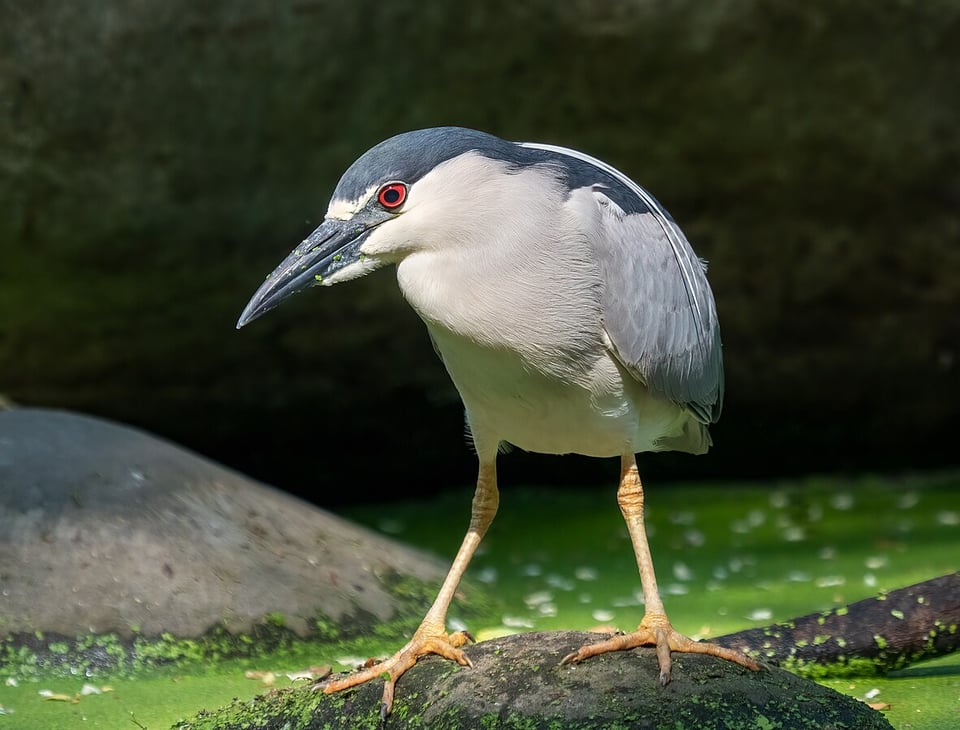
And then, last summer, there was the Black-crowned Night Heron in the creek adjacent to the school garden I now manage, the very first time I set foot in it. I had just accepted a part-time job with the local nonprofit that oversees the elementary school gardens in our town, and the previous manager of the garden I was taking over was showing me around. Inevitably, I got distracted by a bird.
I had only seen night herons in town a handful of times since moving here over a decade ago, but then again, I’d never birded this particular stretch of creek. Maybe, I thought, this is where they hang out. Maybe now I’ll see them all the time!
Not so. I’ve been to that site every week since June, and although I’ve seen plenty of Canada Geese, Mallards, Great Blue Herons, and once (memorably) a swan, the night heron has not returned. Its visit my first day there had been a fluke—or a good omen, telling me I’d made the right choice in returning (albeit part-time) to the field of environmental education after so long away.
I hope 2026 begins with birdy good omens for all of us. Whatever and however you celebrate, may you have a cozy, festive time in these final weeks of the year.
Words About Birds
I’ve long been fascinated by the fact that although we can tell for certain that birds can sense the Earth’s magnetic field (they even get thrown off course by geomagnetic storms!), no one has ever been able to prove exactly how they do this. For a while the leading theory has involved a special protein in their eyeballs and some quantum physics (yes, really), but now a new study has dropped showing that cells in pigeons’ inner ears react to magnetic fields as well. The mystery continues!
I’m including this story in part because of the delightful headline: “Yes, shouting at seagulls actually works, scientists confirm.” Researchers studying human-wildlife conflict in the UK found that gulls living alongside humans learn to recognize and react to angry tones in human voices, becoming wary and leaving the area if they hear people shouting. Herring Gulls are declining in the UK, and the researchers hope more people will turn to nonviolent options like yelling to drive off gulls trying to steal their fries, instead of physically harassing them.
Meanwhile in the Netherlands, scientists taught a bunch of parrots and starlings to copy the beeps and boops of R2-D2 to study how accurately different birds can mimic sounds. Starlings beat parrots at the challenge because, unlike parrots, they can produce two different tones simultaneously by independently controlling the two sides of their syrinx (the bird equivalent of a larynx). There’s audio at the link!
Finally, ornithologist Dr. Scott Taylor is launching a podcast tomorrow, titled Okay, But… Birds. I’ve met Scott several times and wrote about his research on hybridization in chickadees for Scientific American last year, and I can confirm that he is a talented science communicator and a hilarious human being as well as an ornithologist. Definitely check it out!
Book Recommendation of the Month
The Glitter in the Green: In Search of Hummingbirds by Jon Dunn. Published back in 2022, this is a fun, whirlwind overview of the world of hummingbirds, written by a well-known British naturalist (I feel like European birders become particularly obsessed with hummingbirds, since they don’t have them at home!). Dunn narrates his travels from Alaska to the southern tip of South America in search of interesting hummingbird species, interspersing lots of stories about the ecology of these birds and the history of their relationship with humans.
I’m going to take some time off over the holidays, so this newsletter will resume in February. As always, please consider forwarding this email to someone else who you think might enjoy it; thank you and have a great end of your year!


Add a comment: