
Blow Me
News from the Front 11.10.25
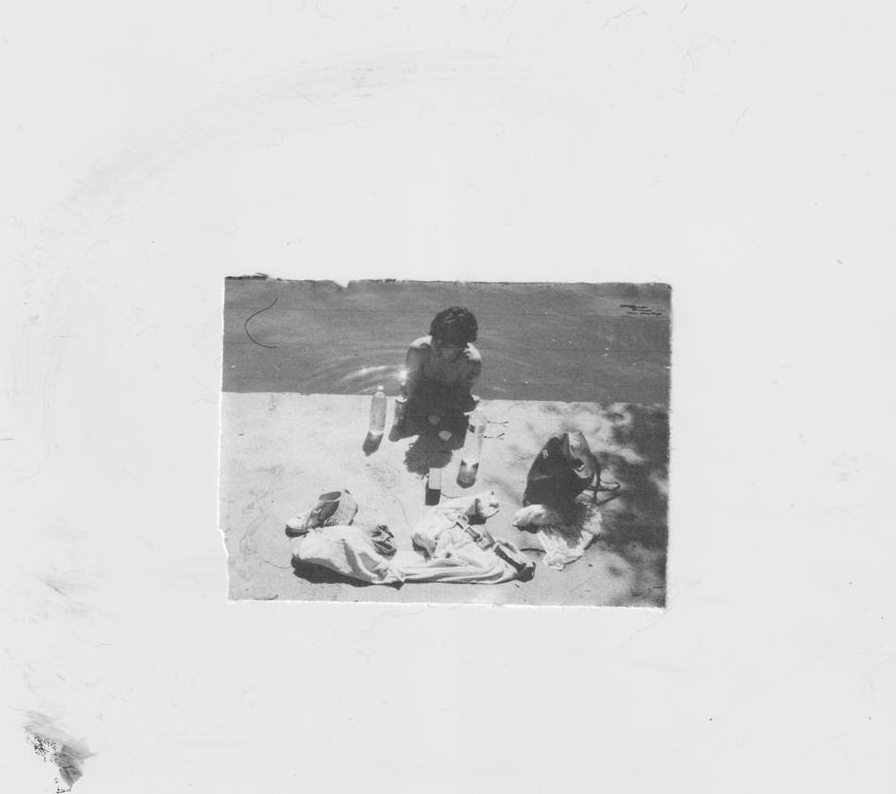
Let’s compare addictions, soft to hard (and then soft again).
Addictus: to give over, to be bound as a slave to your creditor
The watchword of this entry is the script, either pharmacological or social, or altogether expired. It was written after I spent a month hitchhiking in spanish-occitania just to come crawling back to Paris and, as a sort of cosmic joke at my expense, see a friend of mine reading a french translation of Kerouac. Can you imagine? A mereological come-down is the realising all at once and with a total force that you are fractured, split up, and composed of ugly wrinkles separating your meaning and your being. Or, that the person you are and the person you try your best to avoid come out even in the wash. Same différance. Add to list of stupid questions: are there still Americans living like Kerouac?
In post-platform living, to do something publicly is to also pretend to do it. The word “hitchhike” not only signifies the action of hitchhiking, but clumsily indexes a cobbled together set of corollary references surrounding the aesthetics of the hitch - buttressed by a thin patina of romantic beatnik nostalgia. Trouble is when this corollary aesthetic script starts to play fast and loose with the original material and the fumes alone get you high.
If the codes of a certain reality can be severed from the material existence of that reality, they can be monetized, sold separately, and integrated through online platforms to global consumer algorithms. Baudrillard’s simulation is when the sign replaces the signified as the basis of our lives. This entry is also a pinning of the “performative male” latent specimen to the board. We’re getting paranoid: we suspect others of stowing aesthetic codes with inauthentic allegiances and cruel intent. We peek around corners, try not to read in public, timidly reduce our time spent on social media platforms (the money-lender knows a gambler when he sees one).
The “ivory tower terrorist” (ArtForum) Avita Ronell, probing Rheinberger, stirs up différance as a sort of messy “future-building machine”, in that it‘s a strategy to understanding meaning/being without finality. In Crack Wars (1992), she compares meaning/being to the existential infusion of drug use. Wether or not you’re like me in believing that the up-and-down Rebel without a Cause half-life of getting high is a comparable diet for meaning-making, I’m sure just about anyone can relate to pointing your life towards things that don’t or no longer exist and constantly trying to close the distance. Ronell is enough of a freewheeling academic rock-star type to get away with the comparison; to get away with deconstruction in general. And get away with a lot more.
The best we can muster in reply to the script is a sort of bumming into the things that evade codification.
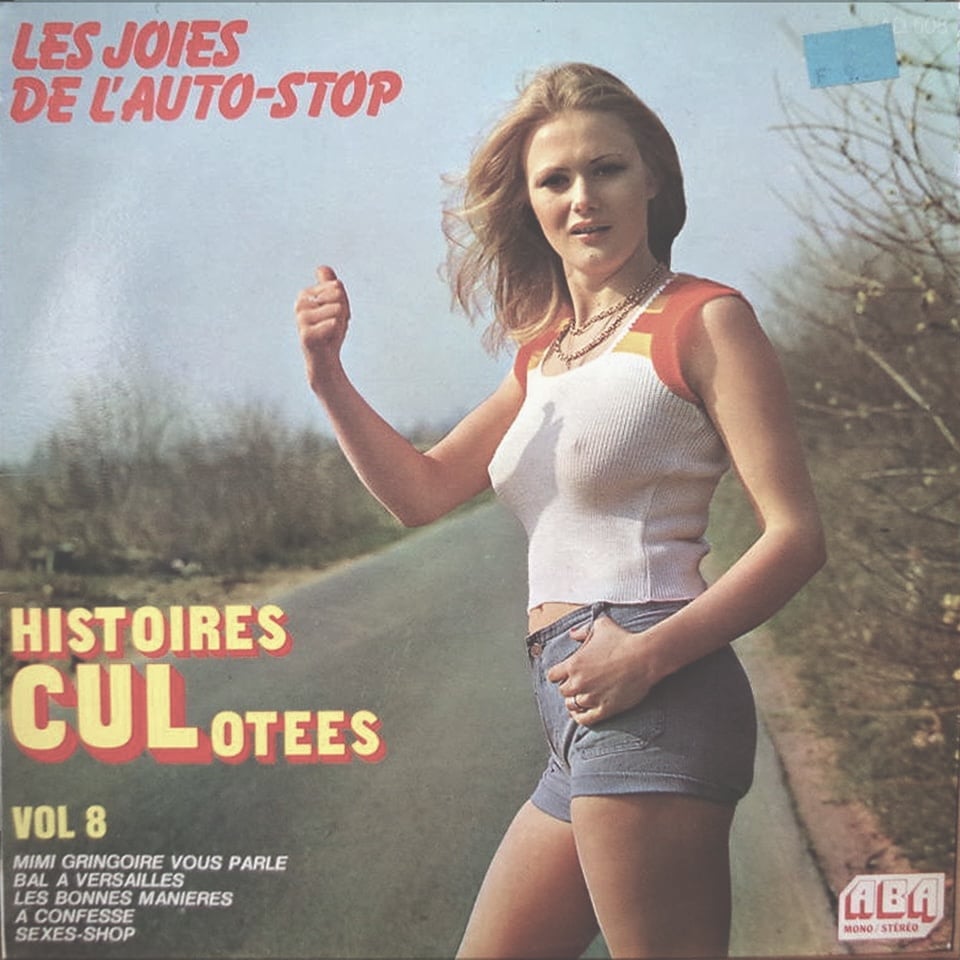
Writing, drugs, and sex circle reality, in addition to each other. They are non-places: things that can only be talked about through rhetorical highways and metaphorical cul-de-sacs. Deconstruction is the instrument to finger the in-expressible, though the deconstruction of code and meaning does not abide to cultural semiotics insomuch as it termites through it.
The main problem with being written up as performative, or as too clumsy an actor, is that you get off on it. The primary anxiety with “performative males” is about sex - the worst thing you can say about them is that they don’t pull. The lever against “performative males” is that they’re faking their codes (often copied from young women) in order to have sex.
The omnipresence of sexuality, its capacity to engulf all social discourses into its cartographies, is deferred through the “performative male” character. The lurking male sexuality is just out of sight, caching under visual signs that are presumed to be camouflage. The “performative male” as a social warning is that You are in the room with danger.
The stench doesn’t encode itself into aesthetic scripts like it does with people. An underreported part of Ronell’s breed of substance-fuelled writing style (seems to be alcohol for her) is that, like Kerouac, she name-drops relentlessly. Wether this be in her books, where her rugged charm plays offence, or throughout her MeToo affair (Ronell was the one accused), retroactively haunting her work like the Nazi party had for Nietzsche. Or, like Kerouac, reality comes back with a vengeance when the absolute freedom of writing coincides with a very real appetite for things that hurt you. Kerouac’s ballooning later years, his public embarrassments, the failure of the Beat generation to weigh up against the commodity - none of these things sift into the vintage beatnick-lifestyle. Scripts as pieces of social capital smooth out the rough edges, like so much anti-capitalist rhetoric digested and spit out profitably by the machinery of trade.
For Derrida the “name-drop” was a tuning key. “the name of Nietzsche could serve as an ‘index’ to a series of questions that have become all the more pressing since the end of the Cold War.” Nietzsche, then, as a floating sign attached to injustice and un-democracies. This particular travel-diary is not about Nietzsche. It is still a travel diary, like Baudrillard failing to wrap his head around America, or so many beats that went south looking for telepathy just to come home knowing even less about their world than before.
TRAVEL DIARY: COME DOWN
The first couple of days you’ll slog through with animal reactions, monopolized by non-presence ; by week three you’ll begin to organise your time by triage and think God what have I done to myself I couldn’t have possibly been born this melancholically self-contained; and you’ll reach your pain tolerance, whatever it may be. Week four will be worse. It won’t be so bad after that. You’ll rediscover your cruelty, learn to eat red meat again.
People don’t call each other performative for the same reason countries don’t go nuclear.
Let me give you some hack semiotics for a bargain price, as obvious as they are overblown. Feel free to use them to try and get laid:
Just like how everything about the workings of a camera are downstream from those of a rifle (aim, trigger, shot), everything about smoking cigarettes comes lightly behind sex. The tender but animal motorics of raising it to your mouth, the shape of the thing, the rosy cherry when you take the hit. The ritual - the symbolic exchange of its duration and the intimacy between its complicit participants.
In France the discursive form of the cigarette carries itself a little differently, though this is one of France’s main cultural exports. Derrida mentions the cartesian french male writer “who everyday at dawn organized his trances of writing and lucidity in a secular temple dedicated to the cult of coffee and cigarettes.”
Masculinity as socially defined is more or less a collection of societal virtues people sell themselves to justify the existence of the patriarchy. When masculinity goes awry (e.g. incels, mass shooters, performative males) we need to create rhetorical distance by redefining bounds of good or bad masculinity. This is always a game of catch-up.
Off-beat masculinity and smoking cigarettes travel in subculture as heuristics, like desire does, serpentining its way through youth cultures as visual signs carrying micro-revolutionary stances against the way things are set up. The cigarette-break, if you’ve ever worked in restauration, takes on a pseudo-resistant significance, an escape from clientele, time stolen away from the clock. The Kerouac-type was an uneasy alliance for revolutionary causes, as he believed, essentially, in freedom. But Pollock was a Trotskyist too, and the CIA backed him all the same. Assets are assets are assets.
The pharmakon "writing" does not serve the good, authentic memory. It is rather the mnemotechnical auxiliary of a bad memory. It has more to do with forgetting, the simulacrum, and bad repetition than it does with anamnesis and truth. This pharmakon dulls the spirit and rather than aiding, it wastes the memory. Thus in the name of authentic, living memory and in the name of truth, power accuses this bad drug, writing, of being a drug that leads not only to forgetting, but also to irresponsibility. Writing is irresponsibility itself, the orphanage of a wandering and playing sign.
Jacques Derrida, p. 4.
Wandering is an appetite, not a fuel.
Is the sex-act itself ever particularly attractive? As in, beyond the idea of sex, the underlying materiality of sex. Without culture, as fact. Enacted by bodies that are only organs. Fetish and preference occurs mimetically, rendering sexuality a phantasm without visual traits. Fetish is always a placeholder for something else, and the core meaning of the attraction is again deferred. Fetish as a detour.
In the 19th century, aristocratic french boys would commit to the Grand Tour (Italy, Greece, Spain) and then, for good measure, commission portraits of themselves posing on the road. The fetishistic credential of being well-travelled is in this case an un-subtle placeholder for domination and erudition. Somewhat less concrete is the later travel-journal, which trades virtues for the much dirtier and sexier authentic. We find both of these iterations across contemporary social media.
Sex, drugs, writing. These things are all wrapped around each other. Their signs are parasitical, freewheeling. Un-affiliated.
COMING FROM PLACES
My father was struck by a taxi on the day Hitler was born. Yea its funny alright, for reasons that are not at all mysterious. It gets a laugh from people. It’s sometimes a story I tell to strangers; to truckers and kinds of people like that. People tell you all kinds of things while they’re driving. Driving down a highway gives the mind a chance to be elsewhere.
A penny arcade peep show false memory:
She puts a grocery bag on the counter. She’s such a pessimist. Pessimists are the petite-bourgeois of the social tempers. They survive on the surplus labour of all us optimists.
You don’t realize when you’re young, but it happens not so often. You need to worry less, you’ll only lose it if you keep your eye on it like that. As if to nail it down, I mean. I’ve got an Ellis island name, you know. My great-grandfather was a Communist, that type of thing used to mean something to people.
Why am I trying so hard to show you who I am? All selves are made equal. What do I mean to you? What do you want me to mean? I mean, come on and buy, the market’s bullish. Suit me without reservation.
Sometimes I find myself helping myself out in small ways like that.
TAKE THE MONEY AND RUN
Elie Wiesel said words are cheapest in war-time, each as good as the last. He died before the fixed-value of the english language crashed entirely, like it has now online, like the closing of the Gold Window, and yet his MeToo accusation a year later integrated him into the economic flux of it all the same. He will re-emerge resplendent, forever touching that girl’s ass at an ‘89 holocaust fundraiser (singular meeting of two nouns, the Holocaust was a crime of economics). You can read about it within seconds of opening a new tab. The form of the story is its function, the point of the story is that it is a story. It has a speculative value: never sell, the market always comes back. Someone is bound to talk about it again. All language has a limitless speculative value. Are you tired of it? Tired of what you can’t nail down? Want to make something with your hands again? Read Hemingway, his words are counted like rations. They mean more. Like bullets put up for his elephant gun, which is a kind of cruelty that seems almost cute nowadays, but then you’ll give in to nostalgia. And you’ll do it for yourself.
I’m not the first person (not even the first person in Paris this fiscal quarter) to compare the speculative value of words to that of currency. What we are experiencing nowadays, with our social platform-realities as motor, is the bubble of this meaning like some great financial panic elsewhere. The anxiety is the same: fear that words don’t mean what they’re supposed to. False claims of bisexuality, people who aren’t really into the music they say they’re into, tenderness stubbornly hiding a more gruesome way of being with people underneath it. And, of course, the Bohemian-Bourgeois.
The male-masochist is one of the few remaining postures available to men. The result is a lack of available scripts like the cornering of a wild animal. The problem is that there’s always a way out - unable to attain an acceptable script, (too niche, too ugly, too alternative) you can find a new wave of fresh options in the online growth of fascist cells and chatroom rationalists. Someone who may have subsisted off of Hunter S. Thompson passages thirty years ago may find no decent route forward for his beliefs (Hunter S. Thompson wasn’t all reactionary) save for some less than sane new systems.
There’s a corollary implication embedded in the SNAFU that vaguely defined masculine traits are those of non-women. In a roundabout way it precludes men from accessing scripts that are caring, nurturing, coded feminine.
A couple rules of engagement: every relationship to ourselves under capital is uneasy, every filament strained, and every vein rises at the point of injection like a highway. There are no clean getaways.
FULL NELSON
Here is Maggie Nelson’s in-exhaustive canon of male drug writers:
Antonin Artaud, Charles Baudelaire, Walter Benjamin, John Berryman, Charles Bukowsky, William Burroughs, Jim Carroll, Carlos Castenada, Samuel Taylor Coleridge, Aleister Crowley, Thomas de Quincey, F. Scott Fitzgerald, Sigmund Freud, Allen Ginsberg, Aldous Huxley, Denis Johnson, Jack Kerouac, Ken Kesey, Malcolm Lowry, Henri Michaux, Arthur Rimbaud, Jean-Paul Sartre, Hunter S. Thompson, Alexander Trocchi, and Irvine Welsh.
In On Freedom, Nelson struggles for the passive voice in writing - identifying it as a site where the male-drug-writer fails at truly subjectifying himself concretely, only aesthetically.
Kerouac typing at 100 miles an hour on cocktail napkins about hobo culture retains an essential view from somewhere else. From some kind of outside/inside authority.
For a man to actively step into subjectification is probably to not become a subject at all. He retains his essence; the thing that means that a woman couldn’t get away with the things he does. Nelson does represent an attempt in repeating Derrida’s writing on Artaud’s trip south for psychedelics:
There was the project of uncovering a system of norms and prohibitions which themselves constitute European culture and especially European religion. He hoped that Mexican drugs would allow the emancipation of the subject; provide an end to that subjection which from birth had somehow expropriated the subject; and most of all, provide an end to the concept of the subject.
Maggie Nelson, p. 134.
Henri Michaux’s description of drugs as subjectifying
I had come prepared to admire. I was confident. But that day my cells were brayed, buffeted, sabotaged, sent into convulsions. I felt them being caressed, being subjected to constant wrenchings. Mescaline wanted by full consent. To enjoy a drug one must enjoy being a subject.
There’s dignity in the recreation through writing - a numbing effect, or an anesthesia.
What about T. E. Lawrence’s descriptions while being held as a political prisoner?
The Turks...did it to me, by force: and since then I have gone about whimpering to myself Unclean, unclean. …I couldn’t ever do it, I believe: the impulse strong enough to make me touch another creature has not yet been born in me: …it will be hard to speak of these things without dragging our conduct and bodies into the argument: and that’s too late in my case.
Letter to E. M. Forster 21.12.27
There’s bad drugs and then there’s bad drugs.
There’s a cottage industry devoted to branding T. E. Lawrence a homosexual, or to denying his claims of being raped altogether. As if not just the feminizing status of rape-victim but a failure to recuperate his dignity after the fact is the smoking gun in respect to his manhood. In any respect, he was almost certainly a masochist.
Courtney Love is the martyr. A complete refusal to be subjugated, or subjectified. The woman outlaw posture still today is encumbered by the whore characterizations that never trail far behind. The female drug-user is more often than not overpowered by the drug experience culturally - prohibited from attaining the sort of drug-induced lucidity we grant male writers.
In terms of aestheticizing the drug-cycle itself, Maggie Nelson also works the trap.
Every road passes through New York.
I read these words around 1994, no doubt sitting on my fire escape with a fifth of Jim Beam and a Camel cigarette, looking out over my desolate druggy corner of the Lower East Side.
Maggie Nelson, p. 128.
Immediately after writing these words, she attaches her Patti Smith-esque reverie to something material. The drug war, the persecution of black people in America, the stuff of proper historical materialists.
Maggie Nelson more-or-less gets away with the script by tucking it onto something real. This is despite expressly not being a drug user and instead opting for Deleuze’s “sober rich and richer life”. There’s a frenchman out there for everyone.
“I AM HOT”
Maggie Nelson digresses from the drug-sex-writing cauldron just shy of where it starts to burn. It could be argued (I am arguing) that absolute freedom in writing if at the service of a pentimento dignity is no freedom at all. The dulling/wasting of the memory (Derrida) on the irresponsible recreation transfigures the event into script by nature of its care to be well-written, pretty.
More worrying to me than the “performative male” epidemic is the re-injection of beauty standards into our discursive ways of being. Hotness as empowering, as way of self-creation. The new hotness learns all its lessons from the old hotness, diffusing its vanity through irony, or transforming itself into a rally of social expression. Hotness is a loose visual signifier that can be played with, but its non-meaning-meaning always carries something more worrying. The semiotic democratisation of beauty standards emancipates people from beauty standards about as much as printing more money does for the homeless. Or, embalm a rich/successful/unconventionally looking upper echelon type with the modifier and try for a “hotness” trickle-down Reaganomics effect.
Or, if we really want to be hardcore, see if the incredibly attractive can ugly-themselves as a sort of wrap-around hotness fashion script. Julia Fox’s style-alteration posturing herself as anti-male-gaze, for example.
There's nothing nobler than to put up with a few inconveniences like snakes and dust for the sake of absolute freedom./ I myself was a hobo but only of sorts, as you see, because i knew someday my literary efforts would be rewarded by social protection.
Kerouac, The Vanishing American Hobo
We take it for granted that Kerouac was also a frenchman.
The alternative to working the trap in respect to social codes is a strategy of complete abandon. The deferred meaning of sex, drugs, and writing can be played with for a social function; outlining taboos and rubbing up against them. Sticking your fingers into the holes of language. A revolt of Ugliness. The front-of-mouth style of writing that runs through Kerouac if we dig him, but surpassed the limitations of his character entirely.
I became excessively attentive to my inner life. For the first time I noticed I lived entirely alone.
I'm total music. Sex. Energy. Vitality. I'm ecstatic. Ecstatic. I perceive the root of my senses. My cunt swells. I'm All-Strong. I became jealous of nature. I should control every event, my desires and my breath should control every event.
Kathy Acker, Stooge #13.
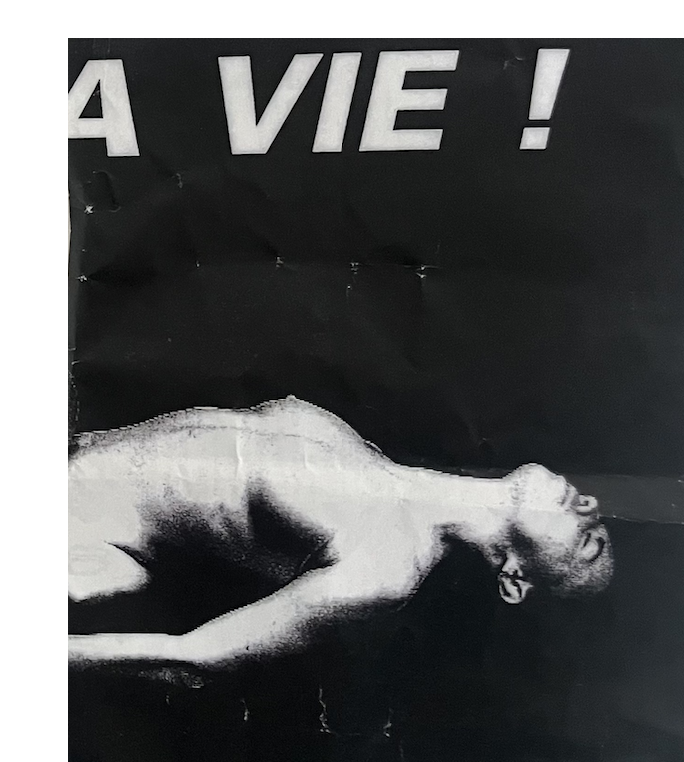
A quick ugly canon; Kathy Acker, Dennis Cooper, William S. Burroughs, Louis Ferdinand Céline, Virginie Despentes.
The bodily materiality of writing, its transcendental limbic system always pointing elsewhere, is cut-up, raped, abused. The instruments of this new fetish are apathy, poverty, mutant bodies. This is Derrida’s irresponsible writing as end in itself - if only to escape boredom.
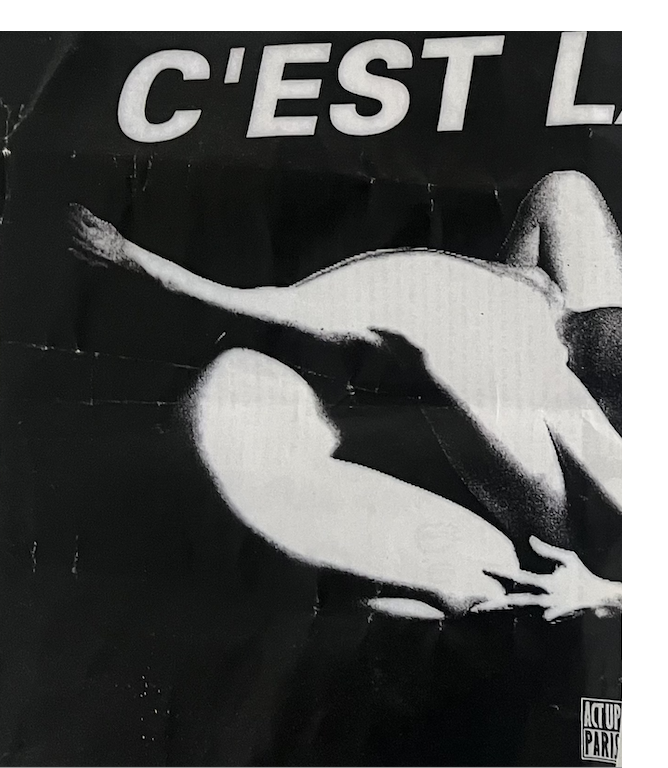
THE NEW SEX
The non-place of sexuality rubs up weirdly against sex as site of traversal. The body-count, notches incrusted in us that mean about as much as stamps on a passport, has a strange discursive hold on people, a number that gets muddled in the extremely numerical value hierarchies of social media in general. Something about the body-count feels objective, like a receipt with God keeping the tally. If you’re queer, you might have further questions about the body-count, by way of what counts. Penetration? And what about rape?
Aella is a porn-star and public online intellectual (a member of the Rationalist community) who, as well as believing in pseudo-sciences like IQ score and also subsequent racial differences in IQ score, submits her sex-life to the aggregate.
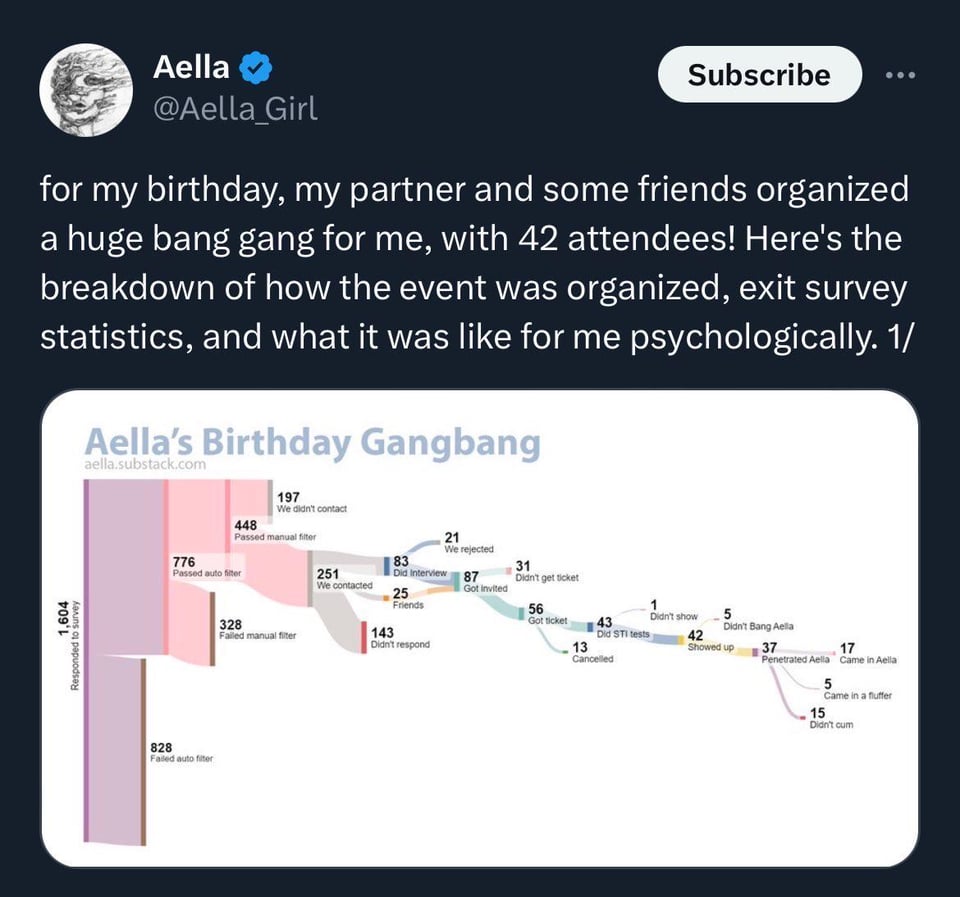
Sex as a meaningful non-place doesn’t mix well with the very real material flux of sex (transmission of fluids, diseases, DNA, humanity). Penetration pushes you forward in the flow-chat. As does finishing inside of Aella. She also gave out shirts to orgy-attendees as a souvenir.
Much of sex is its failure to absorb into metrics - like the drug experience. Though, just like the drug experience, there was a material action, a thing that happened. It’s the meaning that’s up for grabs.
In Crimes of the Future, Cronenberg’s film about a humanity of new organs, vestigial limbs, and surgery as art-form, sexuality exists passed the point of sexual taboo, though it adapts to find new ways hitching elsewhere.
The New Sex of Crimes of the Future is the removal of organs, the single-minded exploration of the human body as medium. It grasps at whatever it can to mean more, at a time when sex doesn’t seem to mean much. Its real world equivalents are raw fetishes like sounding, knife-play, blood, and scat. Ways of conjuring intimacy for people who are tired or numb to the usual avenues.
Aella’s data-sex-regime contains in it the unforced errors of the IQ test - the failure of quantification in general. The submitting of intelligence, sex, and other non-places as fixed-value: a confusion between medium and meaning. It dies on the vine through its belief in the stability of sign-signified.
When The Invisible Committee decries interpersonal autism, this is what they mean. When Baudrillard talks about the autistic performance while scanning New York advertising, this is what he means as well. Though I wouldn’t describe it that way.
The only question in this journey is: how far can we go in the extermination of meaning, how far can we go in the non-referential desert form without cracking up and, of course, still keep alive the esoteric charm of disappearance? A theoretical question here materialized in the objective conditions of a journey which is no longer a journey and therefore carries with it a fundamental rule: aim for the point of no return.
The desert is a sublime form that banishes all sociality, all sentimentality, all sexuality. Words, even when they speak of the desert, are always unwelcome.
Baudrillard, p. 70.
All of the time I threaten people without actually threatening.
BADLANDS FOREVER
American train-hoppers pass around their guides to one another like rosaries. To get a train-hopping guide, you have to integrate yourself. The guides contain train-times, entry-points to yards where hopping is possible, transit advice, ways to avoid dying in train-hopping related catastrophes (it’s rare to meet a train-hopper over 30), and other kinds of advice like that. These files can’t be transmitted online, and they textually prohibit their own use in trading/selling (other than the price of scanning or printing). Train-hopping information is kept on a tight regiment, and mostly rationed out instead of being delivered in large geo-spatial chunks. The codes of train-hopping are tight as a result, and revisals in the vocabulary happen often. Incorrect information is distilled out, new systems of train-models and track-lines folded in. Nowhere in these documents is there a reason to train-hope, the foregone conclusion is that if you have your hands on the document then you already know the reasons. Train-hopping is also porous with drug-use and addiction.

Compared to this culture, hitchhiking rides off the fumes of something older. Something vaguely Californian. The hobo linguistics of the great American before is basically defunct, insofar as it’s known.
Neither train-hopping nor hitchhiking are escapes in so many words. Train-hoppers who have been on the road for 10+ years still post on Facebook, or carry video game controllers on them to play at train yards. For authentic train-hoppers, there is no nostalgia. As in: if you don’t need to do it, if you’re slumming, there’s an available script for something tasteful, some kind of vagabondness, but the view that makes it comes from somewhere else. Like all of these kinds of scripts, women enter them differently.
They abhor signs of woman’s narcissism. One smokes for oneself, even against the other.
Avita Ronell, Crack Wars
Where the rubber meets the road is when something happens - and if you do either of these things long enough something will happen. Like all happenings, you eventually get your chance to reconfigure, to paint over. In any case, eventually you’ll have to pin something of yourself down.
What name is the index for this kind of thing? Nixon? Or to Kennedy dying - I think it was Kennedy dying. Everything is Kennedy dying. And Kennedy is always dying because of it. Just don’t read Kerouac around me again.
There’s always cigarette filters in my raincoat. When I pass security at the library I have to take everything out. The alarm rings on cigarettes. All out and all in again, just like that, twice a day.
‘-si je ne savais pas qu’il avait les poches remplies de prospectus politique je l’aurai presque crû’
Elliot Mann is a writer and dirty derridian living in Paris. Reach him at elliot.l.mann@proton.me

Write, pitch, submit HERE
READING LIST
▪ Crack Wars - Ronell
▪ On Freedom - Nelson
▪ America - Baudrillard
▪ The Rhetoric of Drugs - Derrida
▪ The Vanishing American Hobo - Kerouac
▪ I’m Very Into You - Acker and Wark