
split screen vol. 2 part I: faith and fragmented fathers
split screen vol. 2 part I: faith and fragmented fathers
peace, beloved reader. i pray this email finds you ensconced in bliss or something resembling it. i’ve been finding myself enchanted by the erratic skitter of fallen acorns rolling across my roof, whether untethered by the lilt of passing breezes or from the dexterous hands of squirrels foraging in the oak branches above. if spring comes in like a lion and goes out like a lamb, i’d say this autumn so far has approached like an outdoor cat sleepily roused from a shifting patch of sunlight. (no telling quite what the winter will hold, but some recent persimmon seed predictions displayed spoon-shaped cotyledon, suggesting heavy snows. a season of extremes, becoming more common as the years go by.)
much of this year was laden with heaviness for me, so i crossed the bridge between summer and fall by getting back to the blissful parts of existing in my body, delighting in the senses, allotting myself more time to dream and imagine. this has primarily included rapid-cycling through more fiction, poetry, and film in two-ish months than i had during the first half of the year. i guess i was making up for “lost” time. it’s been exhilarating to weave through these small universes, yet without space to metabolize, i felt saturated with each of their atmospheres, so i’ve come here to wring out my cinematic reflections by reprising my split screen series!
deep in the R2TS archives, you’ll find volume 1 part I and part II that i wrote about Battledream Chronicle (Bidard) and Compensation (Davis) respectively. for this iteration, i’ll be discussing at least three thematically-related films per issue, and this one finds itself under the helm of faith and fragmented fathers.
If I Go Will They Miss Me, Your Mother Your Mother Your Mother, and Is God Is are linked by elements of belief in a higher power, including absent parents (specifically fathers) who have been deified by their children. this had me thinking a lot about how the holy is often marked by its inaccessibility, how it’s easier for some to worship what remains unseen. furthermore, cisheteropatriarchy positions fathers to abandon (or willfully endanger) the emotional well-being of their children with impunity, and this dynamic shows up with varying levels of intensity and complexity within the three films i chose for this issue. for the fictional fathers who have been elevated onto pedestals, the films endeavor to depose them, make them more human — and therefore undeniably fallible — in the eyes of their children.
*no significant spoilers for the first two movies, spoiler alert for the third
If I Go, Will They Miss Me (Walter Thompson-Hernandez, 2026)
keywords & themes: flight, (Black) boyhood and fatherhood, mythology/ies, inheritance, imagination, dreams (deferred), shame, redemption
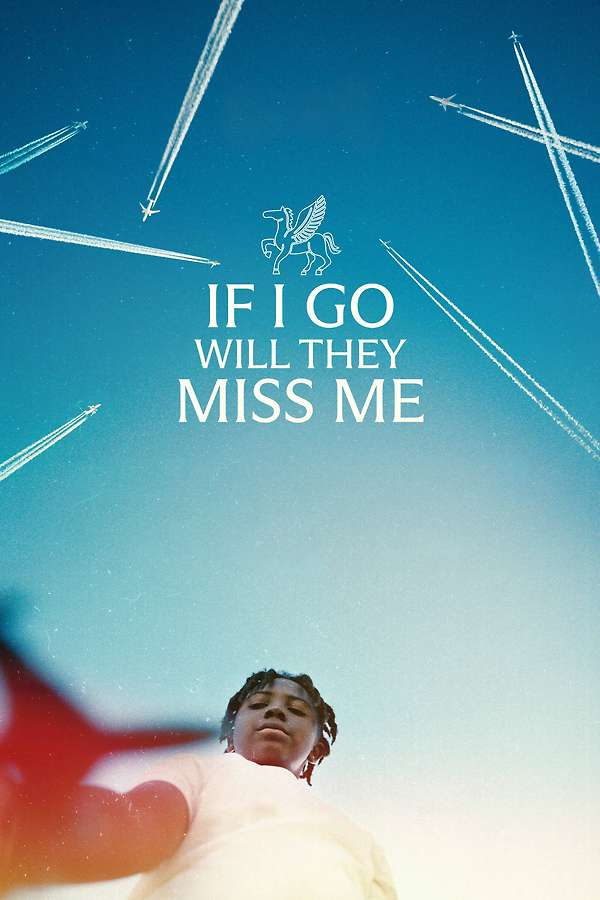
a love letter to its setting, If I Go Will They Miss Me is a poetic portrayal of fatherhood, masculinity, hauntings, and freedom under the LAX flight path. Walter Thompson-Hernandez braids the folklore of flying Africans with Greek mythology in his tender-like-a-bruise narrative about Big Ant’s (J. Alphonse Nicholson) struggles to reconnect with his namesake Lil Ant (Bodhi Dell) after completing a prison sentence and returning to Watts. Nicholson is well-matched with Danielle Brooks, who delivers a powerful performance as Lozita, mother, mortar, and moral fiber of the household. her fatigued, urgent wish for her family to feel whole chafes against Big Ant’s infidelity and pent-up turmoil at the demand of his paternal responsibilities, leaving Lil Ant to lean on his imagination in the gaps created by familial misalignment.
he pictures himself as Pegasus: the chimeric child of Poseidon (a god) and Medusa (a cursed beauty). flight is his inheritance, as exemplified by the winged horse he creates for his school project and his spectral visions of white-clad Black children with arms extended, ready for take off. however, he soon learns that gods demand sacrifice and answer only to themselves, leading him to truly contend with — and be a mirror for — his father’s fickleness. i was stricken by the care and attention Big Ant extended the horses on the ranch while depriving the Pegasus in his life of the very same treatment. he seems dead set on either pulling away from or punishing Lil Ant for his desire for closeness, which eventually comes crashing down with a stunning blow.
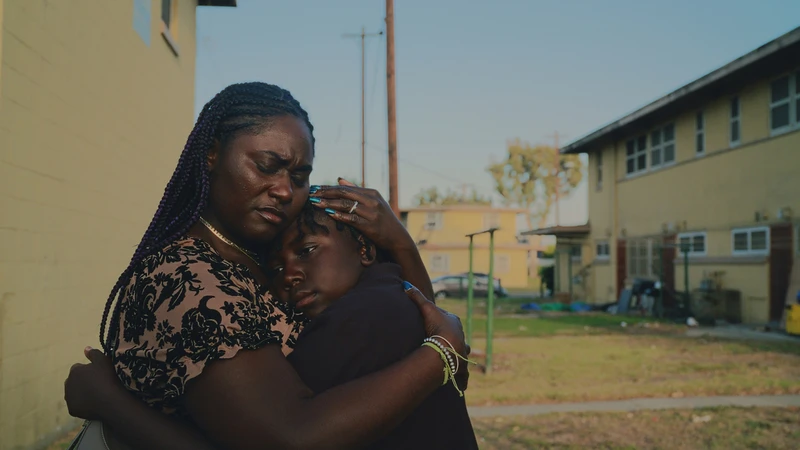
the film is carried by exquisite shots — reminding me of Moonlight’s and All Dirt Roads Taste of Salt’s stylistic choices — especially maintaining its dreamlike quality with extended frames of sea and sky. finding itself on the wrong side of the adage “show, don’t tell,” however, the story occasionally drifts too far into the ether instead of grounding itself with dialogue, which sometimes made the sparsely spoken words land clunkily against the rich visual landscape.
a tale of complicated reconciliation that concerns itself less with whether that reconciliation is earned and more with the infinite possibilities of father and son finally seeing eye to eye, Thompson-Hernández’s creation is a worthy harvest of seeds sown by Charles Burnett’s cinematic progenitor Killer of Sheep (another Watts-based tale about a Black working class father’s domestic shortcomings). If I Go Will They Miss Me aches with the gravity of a long-outstretched hand awaiting the heft of an intended other, arm muscles taut with yearning. the answer to the question posed by the film’s title is an unequivocal, emphatic yes.

Your Mother, Your Mother, Your Mother (Bassam Tariq, 2026)
keywords & themes: grief, (Black Muslim) fatherhood, absence, faith and prayer, the sacred and the profane, hunger, submission
with Your Mother Your Mother Your Mother, Bassam Tariq has created his very own marvel from the text of an Islamic hadith:
A man came to the Prophet and asked, “Who is most beloved to us after you?”
The Prophet said, “Your mother.”
“Then who?”
The Prophet said, “Your mother” again.
“Then who?”
The Prophet said, “Your mother.”
The man asked again, “Who is next?”
The Prophet replied, “And then your father.”
this teaching finds itself tragically relevant in the lives of Latif, a traveling blade-wielding hitman, called back home to care for his three children after the sudden death of his wife. his attempts to leave the violence behind so he can keep his family fed and shielded from bloodshed are increasingly thwarted, first by state-sanctioned bureaucracy, then by the ambitions of a slugged-out (à la Johnny Dang), gun-toting, right-wing Christian fundamentalist cult leader named Hwan Yoon. soon, Latif finds himself and his family squarely in the center of Yoon’s crosshairs, and he must do whatever it takes to ensure their safety.

Oscar-winning actor Mahershala Ali is as graceful as he is brutal in his role of aggrieved patriarch/contract killer, clearly having alchemized the training he underwent for a since-shelved project as he floats through high-octane fight choreography. his performance is magnified tenfold by his onscreen eldest daughter Fatiha (Adia) and middle son Qadir (Jahleel Kamara), quietly excelling as symbols of enduring faith and the miracles that prayers make manifest, while Yoon (John Cho) — cartoonish as he is — serves as a Latif’s foil, purifying sites of perceived sinful activity under God’s orders (much like Latif’s divinely-ordained assignment as Allah’s sword). the character Hatty confounded me the most with his smarmy hijabi porn peddling, a plot point that threw me for the biggest loop (though not in a way that detracted from my viewing experience, to be clear).
unexpected laughs and offbeat moments organically break up the carnage-laced desperation propelling the plot, often in the realm of eroticism and how it interplays with religion, commerce, and coming of age. there’s also a steady thread of the care/life-giving possibilities of Black women and girls, from Fatiha’s immediate parentification in the wake of her mother’s death to Fugazi (one of Hatty’s former models) feeding Latif’s newborn as a last resort. a unique and captivating entry into the action genre canon, Your Mother Your Mother Your Mother aims precisely with its foray into loss, fatherhood, and redemption through faith.

Is God Is (Aleshea Harris, 2026)
keywords & themes: patriarchal violence and its lasting effects, disablement and chronic pain, revenge, (Black) sisterhood/twinhood, Black motherhood, travel/mobility, fire, rebirth
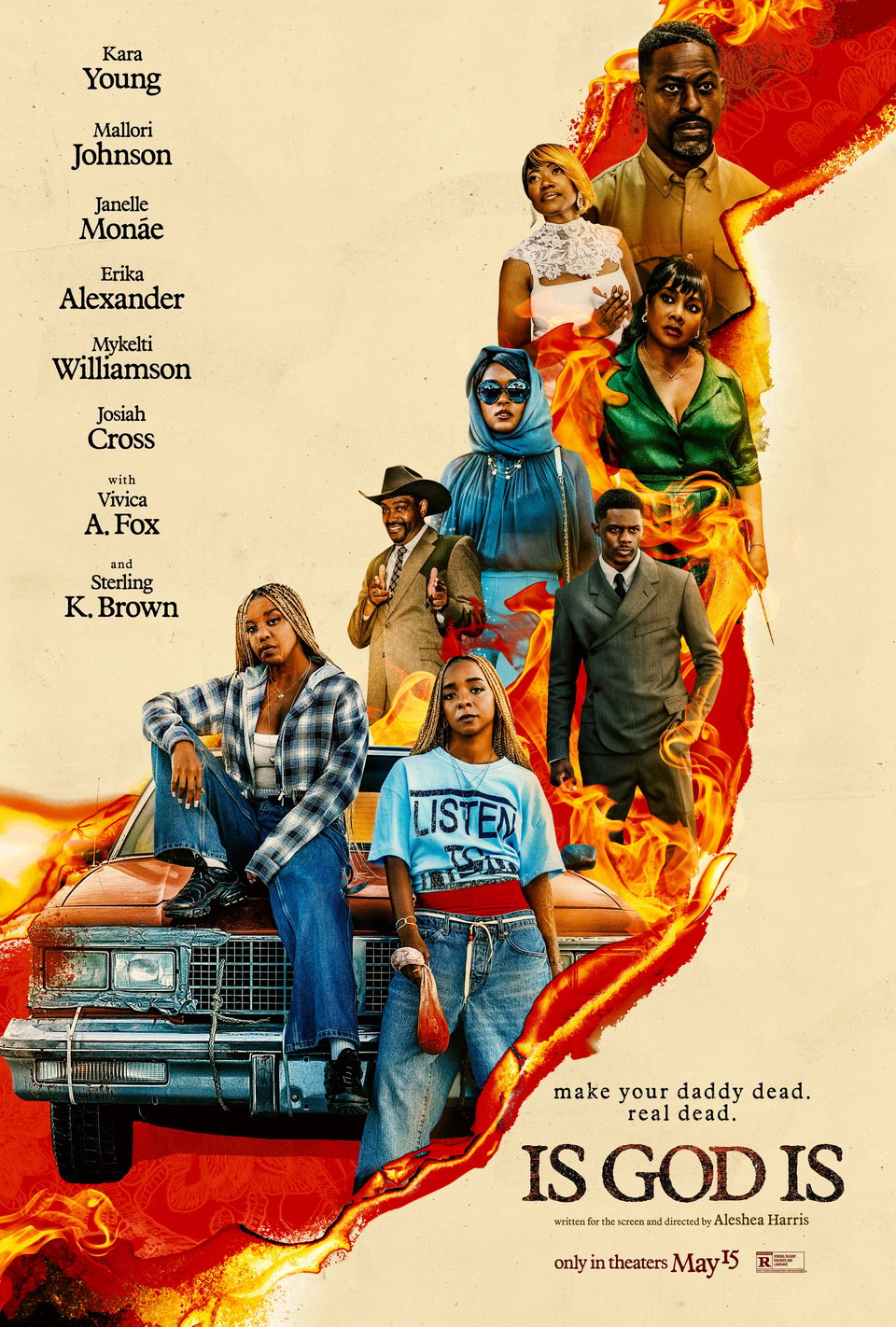
Aleshea Harris‘ film adaptation of her own stage play is a defiantly dark twist on the road trip flick, each stop punctuated by more chaos and corpses than the last. Is God Is centers twin sisters Racine and Anaia - scrounging a living together and navigating the inevitable tensions and undying tenderness shared by twins, down to the telepathic communication shown onscreen between the two.
our dual protagonists are sensitive in different directions, explicitly mediated through their relationships to desirability. scarred in hidden places from a childhood fire, Racine has more social capacity to outwardly express ugly emotions like rage or displeasure, while Anaia, made visibly Ugly by her facial scars, is more reserved and doubtful, her reticence regularly perceived as weakness.
thinking their mother died in the fire that scarred them, Racine and Anaia are orphans by all accounts until their mother Ruby — God by Racine’s logic — resurrects herself, beckoning them to her bedside to explain that the flames were set by their absent father’s hand. too disabled from the incident to enact her own vengeance, God gives her children their crusade: “Make your daddy dead — real dead.”
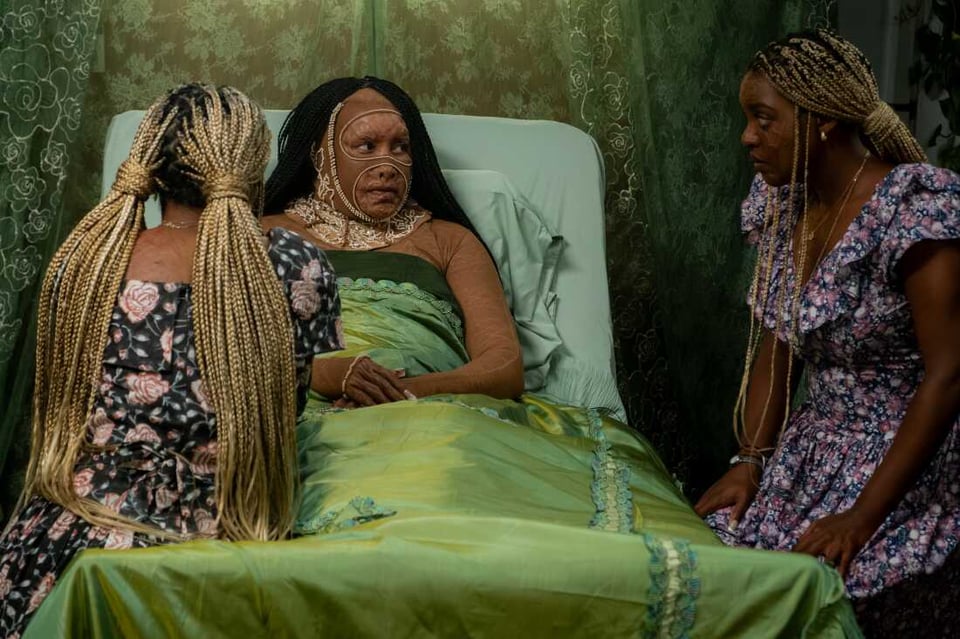
suddenly, our heroines find themselves at a crossroads now that they understand that they exist in the inherited, embodied aftermath of their father’s abuse. however, instead of making a deal with the devil at this crossroads, they commit themselves to eliminating him once and for all.
Racine embarks on this journey with fierce commitment (understandable considering her name is French for “root”), while Anaia tags along as the fearful accomplice, both of them scorching earth across the nation and meeting the poor unfortunate souls who have since been wrapped up in their father’s web: from the delusional and long-abandoned storefront preacher Divine (brilliantly and all-too-briefly played by Erika Alexander) to the beleaguered, snobby housewife (Janelle Monae) who still urgently needs an escape route from her unsafe household.
Sterling K. Brown haunts and menaces as the target of the sisters’ ire, making chilling use of his limited screentime during their explosive, pulse-racing confrontation. but in art as it is in life, our sisters do not find complete vindication getting it back in blood. indeed, they ex(or)cise the evil, but all at a very high cost. incendiary and visceral, Is God Is depicts the far reaches of cruel men and the varied textures and silhouettes of survivorship. Harris provides us with no easy or straightforward resolution, yet her film affirms that it’s possible for those who burn everything down as righteous retribution for violence to still birth something beautiful from the ashes.
that’s all for now! i’ll be back soon with part II, but in the meantime, feel free to follow me on Letterboxd! i finally created an account, and i’ll probably add these reviews over there too. of course, if U want to support R2TS, U can do so by sharing my newsletter with others and encouraging them to subscribe. U are also encouraged to send me coin through Cashapp ($dvadown)!
take care, dear reader <3
Dkéama
