Tyrannoroter, the Plant-Munching Lump
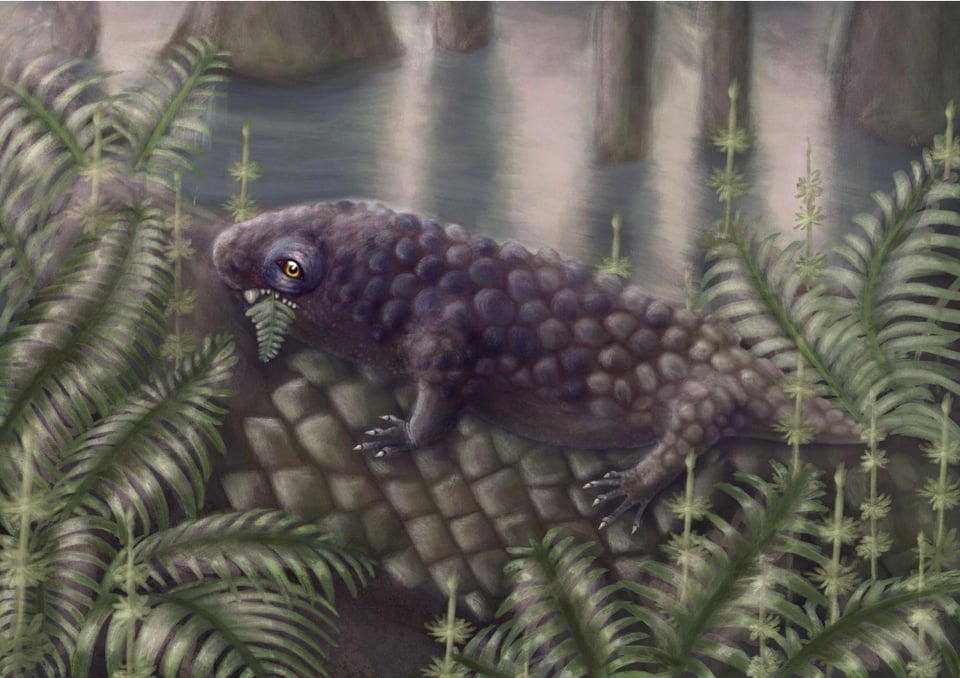
I want to pet Tyrannoroter. I can’t help it. The moment the little creature appeared in my inbox, I wanted to cradle the Carboniferous plant-eater in my hand, stroke its scales, and tell it that it’s a very good lump.
The lovely art by Hannah Fredd, of course, required some restoration. All we know of Tyrannoroter herberti is the animal’s skull, found within the petrified walls of 307 million-year-old tree stump preserved in what’s now Nova Scotia. But the anatomy of those skull bones and teeth allowed Field Museum paleontologist Arjan Mann and colleagues to not only determine that Tyrannoroter belonged to a mysterious group of early land vertebrates called “microsaurs,” but that this adorable nipper was one of the earliest vertebrates to start feeding on plants.
We don’t have a good, common term for what Tyrannoroter is. The fossil dates from the time of vast, green coal swamps, habitats thriving with arthropods, early amphibians, and a slew of tetrapods that were becoming terrestrial in their own unique ways. The new animal is a “microsaur,” the quotes signaling paleontological suspicion that various animals placed into this group of reptile-like vertebrates are actually members of a broader array of groups. They just haven’t been all described and sorted out yet. Still, the resemblance of Tyrannoroter to other “microsaurs” immediately stood out. “As soon as I saw the skull, even in its unprepared form, I exclaimed how pantylid-like the features were, such as the heart skull shape,” Mann says.
